


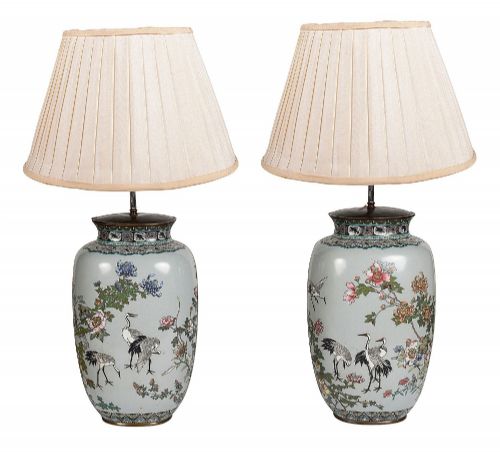


Antique Meiji Cloisonne Pair
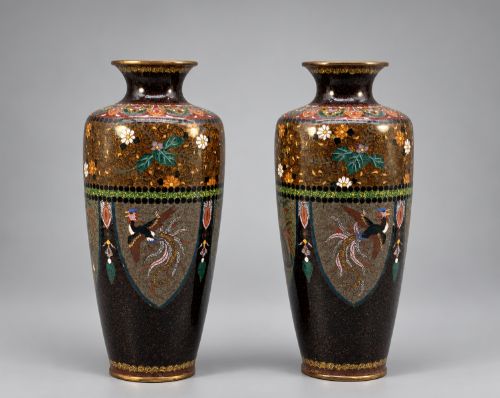
An antique meiji cloisonne pair brings together balanced Japanese design and meticulous metalwork, offering matching symmetry for a mantel or table.
Antique Meiji Cloisonne Pair
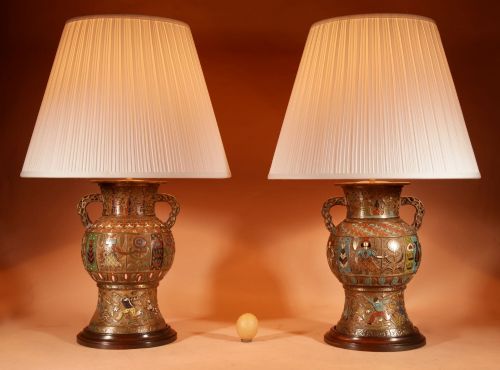
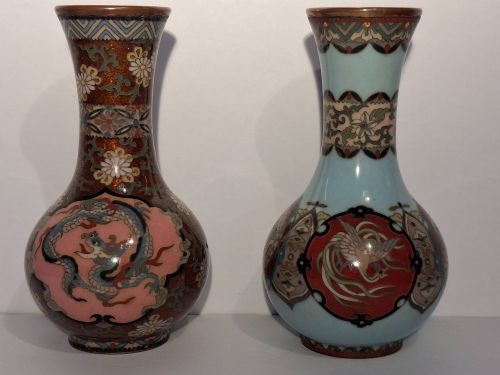
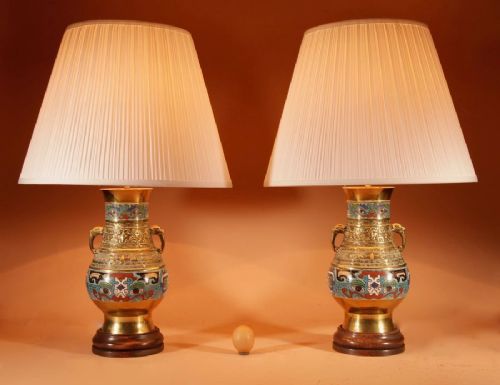
When you search for an antique meiji cloisonne pair, you are looking at matched sets of decorative metalwork objects created during the Meiji period and associated late nineteenth or early twentieth eras. These items predominantly take the form of vases, ginger jars, lidded gourd pots, chargers, and table lamps.
The most common versions met on this page are pairs of baluster or ginger vases, alongside decorative plates and chargers featuring traditional Japanese motifs. Lamps converted from period vases also appear frequently, reflecting later adaptations of these decorative vessels.
How they were made
The foundation of these pieces relies on a metal body, typically formed from copper or brass, onto which thin metal wires are soldered to outline the design cells. Enamel paste is then packed into these individual compartments before the object is fired in a kiln and polished to a smooth finish.
Alternative variations incorporate porcelain bases known as totai shippo, or utilise silver foil beneath translucent enamel to create textured backgrounds like tree bark or ginbari patterns. Bronze mounts and champlevé techniques also appear, where the design is carved directly into the metal rather than wired.
Antique Meiji Cloisonne Pair Retail Price Guide 2026
Typical asking prices for meiji cloisonne pair among the pieces listed under this phrase on Sellingantiques today, from the lower quarter to the upper quarter. They describe what is for sale here now, not the wider market.
Listings feature items spanning the 1870s to 1910, encompassing the Victorian and Edwardian eras alongside the core Meiji period.
What varies in quality
The distinction between ordinary and superior examples lies in the precision of the wirework and the complexity of the enamel filling. Finer pieces demonstrate exceptionally fine, perfectly straight wire outlines and smooth, evenly polished enamel surfaces free from pitting or cloudiness.
Design ambition and symmetry also separate the range, as top-tier pairs display intricate pictorial motifs like dragons or complex floral arrangements that match precisely across both objects. Lesser examples rely on simpler geometric fills and heavier, more visible wire grids.
The Antique Meiji Cloisonne Pair Glossary
- Cloisonne enamel
- A decorative metalwork technique where fine wires form cells to hold coloured glass paste. These wires create the outline of the pattern seen on the finished surface.
- Meiji period
- The era of Japanese history lasting from 1868 to 1912. This period marked a peak in the export of highly detailed decorative arts to Western markets.
- Totai shippo
- A Japanese technique using a porcelain body instead of metal for cloisonne enamel work. The wirework and enamel are applied directly to the ceramic base.
- Ginbari
- A method involving textured silver foil applied beneath translucent enamel. It creates a patterned background effect visible through the coloured glass layer.
- Champleve
- A technique where troughs or cells are gouged directly into a thick metal surface to hold enamel. This differs from soldered wire cloisonne.
Antique Meiji Cloisonne Pair: Frequently Asked Questions
How do I date an antique meiji cloisonne pair?
Dating relies on stylistic markers, materials, and documented production eras spanning the late nineteenth and early twentieth centuries. Pieces often align with Victorian or Edwardian import periods.
Examine the base metal, wire thickness, and mounting style for clues to the manufacturing decade. Earlier Meiji items often feature finer copper foundations and meticulous wirework.
How were cloisonne lamps made?
Many lamps are created by converting original period vases or jars with fitted electrical hardware. This allows decorative vessels from the Meiji era to function as household lighting.
The conversion process typically preserves the main enamel body while adding mounts and wiring. Original vases retain their primary decorative function despite the later adaptation.
What motifs appear on these pairs?
Common decorative subjects include dragons, floral arrangements, birds, and natural landscapes. These designs reflect traditional Japanese aesthetics popular during the Meiji period.
Some examples incorporate specific regional styles or Chinese export influences. The imagery dictates the visual character of the matched set.