
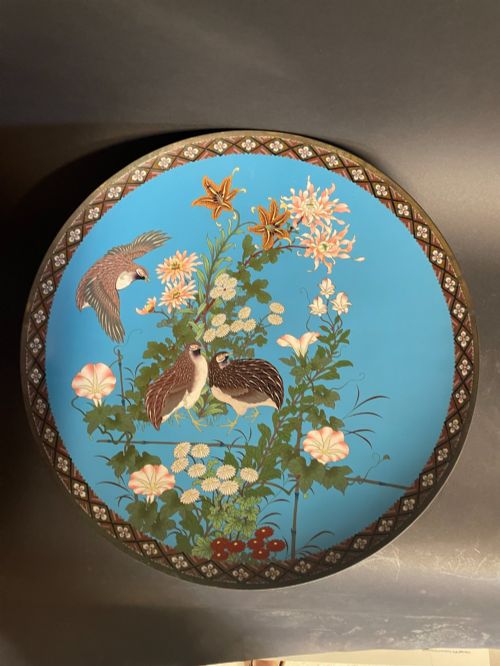



Japanese Ceramic Wall Plaque
A japanese ceramic wall plaque brings bold nineteenth-century craftsmanship into a modern interior.
Japanese Ceramic Wall Plaque
A japanese ceramic wall plaque on this page usually takes the form of a large decorative charger or wall plate from the late nineteenth century. These pieces reflect the output of the Meiji period, combining traditional pottery with elaborate surface decoration.
Buyers encounter substantial chargers and plates measuring across wide diameters, often featuring traditional motifs such as the Ho-o bird, phoenix, bamboo, and intricate tree bark textures. The formats range from classic Imari patterns to specialised wire-worked compositions.
Construction and Materials
Potters and artisans formed heavy porcelain or ceramic bodies to serve as the foundation for vibrant hand painting, enamel work, and gilding. Many examples incorporate copper or brass elements alongside wire in cloisonne techniques to separate rich colour fields.
Advanced surfaces unite porcelain with Totai shippo methods, merging enamel and metalwork over ceramic bases. Artisans finished select pieces with gold leaf, gold gilt, and cinnabar lacquer to build heavy, textured relief.
Artisans sometimes imitated rugged tree bark using smooth porcelain and enamel, playfully tricking the eye before anyone touches the surface.
Judging Quality
The finest examples display meticulous hand painting and complex surface integration, such as the combination of porcelain with cloisonne tree bark and lacquer. Lesser pieces rely on simpler repetitive patterns and standard glazes.
Scale and ambition dictate distinction within this field, where masterworks feature signed panels and unusual techniques like cinnabar lacquer or raised phoenix motifs. Superior items maintain crisp definition in the enamel and secure application of gold leaf.
The Japanese Ceramic Wall Plaque Glossary
- Charger
- A large decorative plate designed primarily for display on a wall or sideboard rather than for dining. These substantial dishes command visual attention in any room.
- Cloisonne
- A technique where metal wires are applied to a surface to create cells that are subsequently filled with enamel paste and fired. This method produces intricate geometric and pictorial designs.
- Imari
- A traditional style of Japanese export porcelain characterised by a palette of underglaze blue, iron red, and gilt highlights. The style originated in the town of Arita.
- Meiji Period
- The era in Japanese history spanning from 1868 to 1912, marked by opening trade with the West and prolific decorative arts production. Pieces from this time show exceptional technical ambition.
Japanese Ceramic Wall Plaque: Frequently Asked Questions
How do I hang a heavy charger?
These large plates require robust wall fixings and specialised spring-loaded brass hangers designed to support considerable weight safely.
Ensure the wire or mounting bracket grips the rim securely without placing undue pressure on the ceramic body.
Are these pieces signed?
Certain exceptional chargers feature artist signatures or workshop marks integrated into the base or enamel surface.
These signatures help attribute the work to specific Meiji period makers, though many fine decorative plates remain unmarked.
How do I clean my wall plaque?
Dust the surface gently with a soft, dry brush to remove particles from recessed cloisonne wires and painted details.
Avoid using liquid cleaners or abrasive cloths, which can damage delicate gold leaf, gilding, and lacquer finishes.
What is the difference between Imari and cloisonne?
Imari relies on painted porcelain glazes in blue and red with gold accents, while cloisonne uses raised metal wires and coloured enamels.
Some advanced items combine both traditions by layering enamel work directly onto painted porcelain bodies.
Where were these plates displayed?
Victorian collectors frequently displayed large Japanese chargers on walls, within cabinets, or upon specialised wooden easels.
This tradition of decorative display allowed the intricate hand-painted patterns and rich textures to catch the light.