



Japanese Ceramic Cachepot
A Japanese ceramic cachepot brings hand-painted colour and sculptural presence to an interior, offering a traditional vessel for indoor plants.
Japanese Ceramic Cachepot
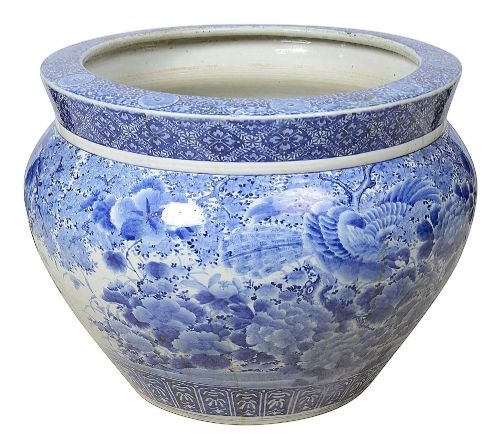
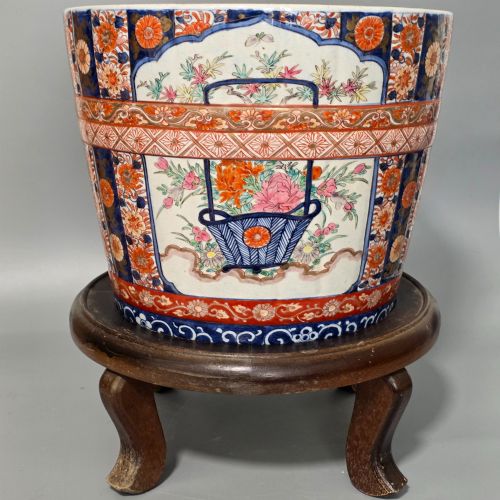
A Japanese ceramic cachepot encompasses large jardinieres, planters, and associated vessels designed to hold potted plants within domestic spaces. These pieces span centuries of production, appearing in forms such as deep circular vessels and oval jardinieres accompanied by hardwood stands.
The versions most frequently met on this page date from the nineteenth century, particularly the Meiji period, alongside eighteenth-century Arita Imari examples. They present varied decorative schemes ranging from blue and white cobalt designs to rich Imari palettes and Satsuma wares.
How they were made
Potters utilised materials including porcelain, stoneware, and earthenware, shaping substantial bodies to support the weight of soil and water. Cobalt underglaze and enamel pigments were applied by hand to decorate the ceramic surfaces.
Vessels were fired in kilns to vitrify the glazes and secure the pigments. Many jardinieres were subsequently paired with carved hardwood stands to complete the display.
Several heavy porcelain jardinieres require two pairs of hands to move them safely across a polished hardwood floor.
What varies in quality
The distinction between tiers rests upon the precision of the hand-painted decoration and the depth of the glaze colours. Examples featuring crisp cobalt underglaze work or intricate Imari enamel detailing stand apart from simpler production.
Structural heft and the preservation of the ceramic body also define the standard. Pieces retaining their associated hardwood stands demonstrate a higher degree of original completeness.
Makuzu Kozan II
The Japanese Ceramic Cachepot Glossary
- Cachepot
- An ornamental container used to conceal a plain flowerpot. These vessels lack drainage holes in the base.
- Imari
- A style of Japanese export porcelain decorated in underglaze blue, iron red, and gold. This palette creates a rich, patterned surface across the ceramic body.
- Jardiniere
- A large ornamental pot or stand for holding plants or flowers. They are typically rendered in ceramic, stoneware, or porcelain.
- Meiji Period
- The era of Japanese history lasting from 1868 to 1912. Production from this time is noted for high-relief decoration and refined export wares.
Japanese Ceramic Cachepot: Frequently Asked Questions
How were ceramic cachepots used historically?
These vessels functioned primarily as ornamental holders for potted plants inside grand nineteenth-century reception rooms and parlours.
They stood upon tables or dedicated hardwood stands, protecting fine furniture from damp soil and water runoff.
How do I care for an antique jardiniere?
Keep the ceramic vessel indoors away from extreme temperature shifts and direct frost. Use a separate plastic liner inside the cachepot rather than planting directly into the antique ceramic.
Clean the glazed surface gently with a soft, dry cloth to preserve the hand-painted enamels.
How can I tell Meiji period pieces apart?
Meiji period items often display denser enamel work, varied glazing techniques, and specific stylistic nods to international export tastes. Stoneware and porcelain from this era frequently bear artist signatures or workshop marks.
Compare the weight, glaze thickness, and brushwork detail against eighteenth-century Arita examples to gauge the period.
Are hardwood stands original to the pots?
Some jardinieres arrive with associated hardwood stands that were carved specifically to elevate the heavy ceramic bodies. These stands complement the form but may date to a similar or slightly different period of assembly.
Examine how the base of the pot rests within the carved wooden rim for clues about their pairing.