
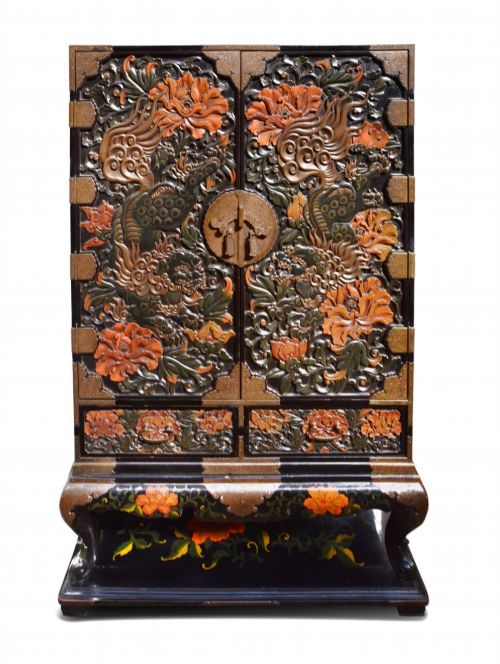


Japanese Carved Cabinet
A japanese carved cabinet brings intricate Meiji craftsmanship and rich lacquerwork directly into a room.
Japanese Carved Cabinet
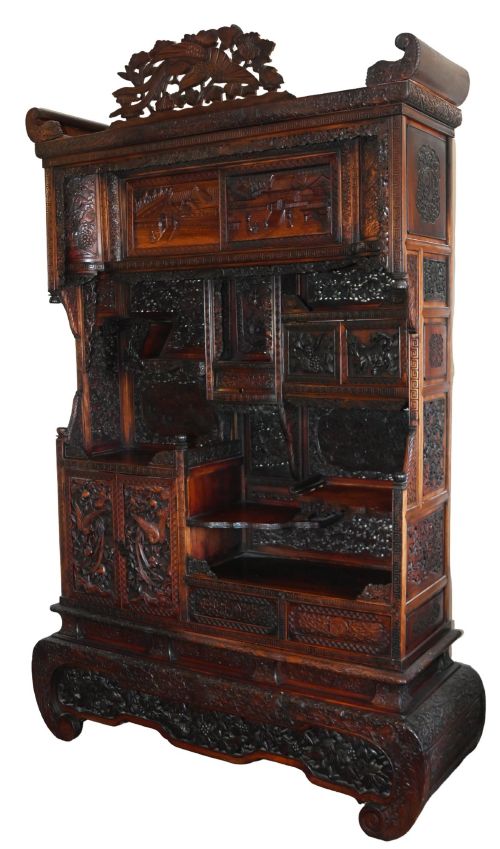
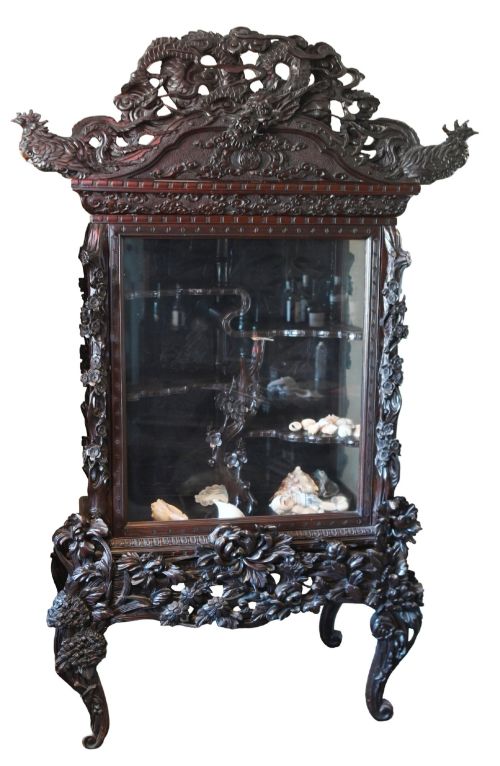
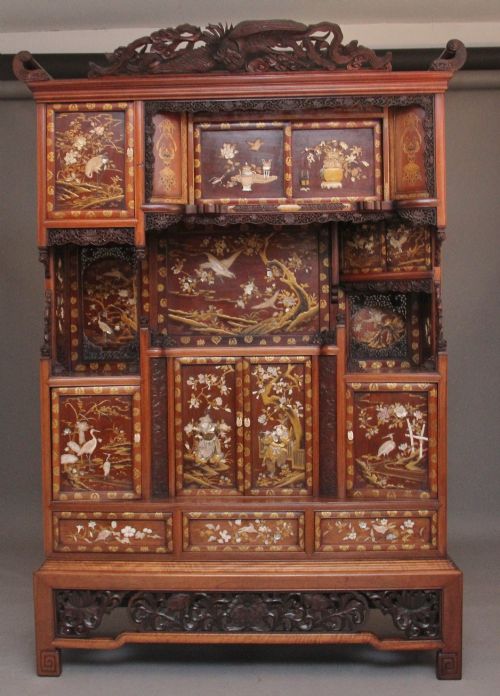
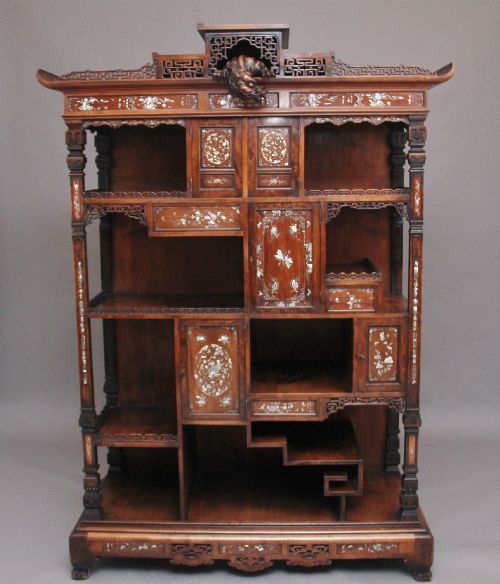
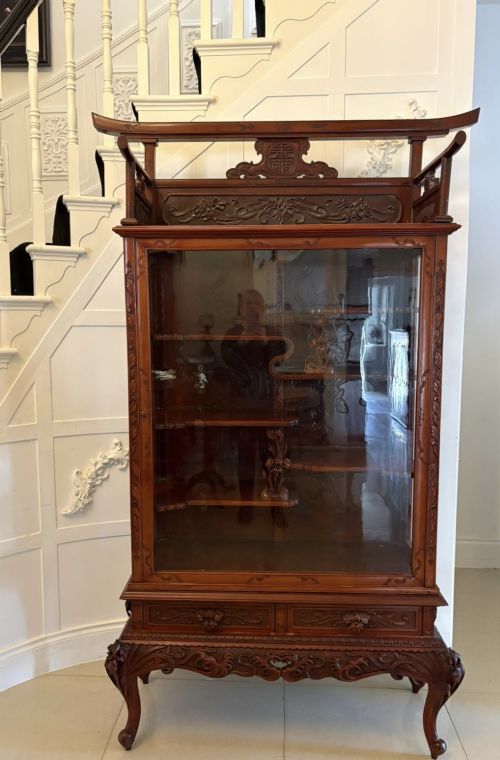
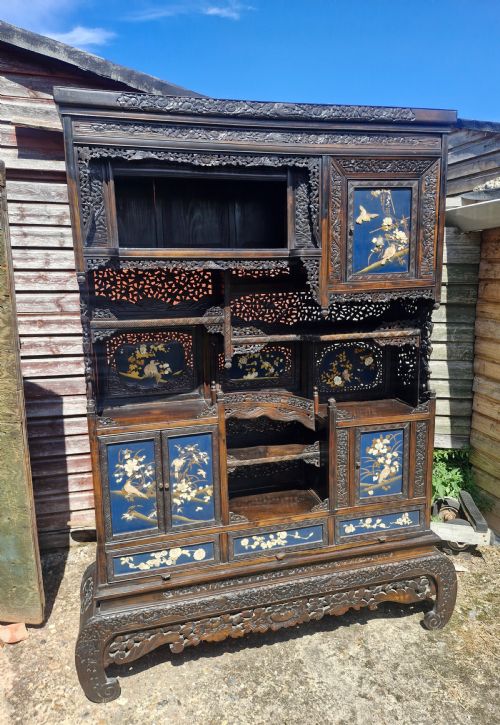
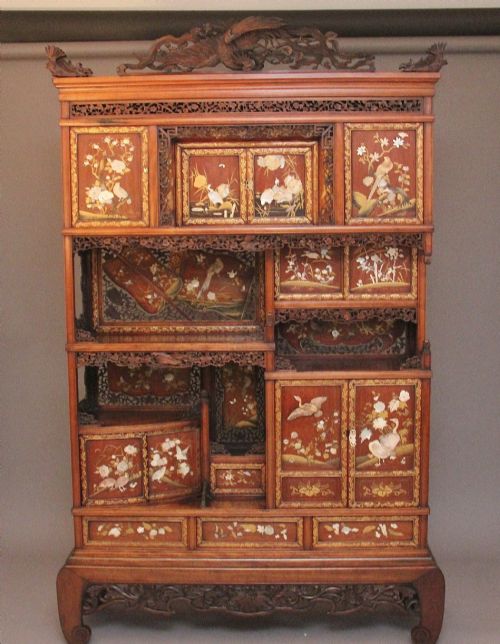
A japanese carved cabinet encompasses elaborate tabletop pieces, display cabinets, and large shodona stands designed for visual impact. Most examples originate from the nineteenth century, spanning the Meiji period and the broader Victorian interest in Eastern design.
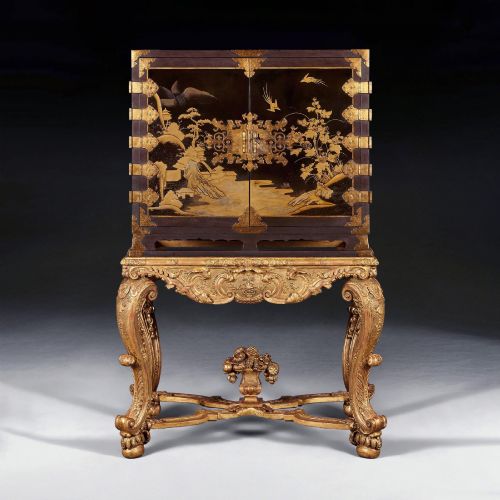
The form frequently combines storage with tiered display space, often elevated upon carved wooden stands or incorporated into European giltwood and mahogany mountings. Buyers encounter both pure export pieces from Japan and Western interpretations created during the Aesthetic Movement.
How they were made
Artisans built the carcasses using dense hardwoods, walnut, or mahogany, applying deep layers of red, black, or cinnabar lacquer to the surfaces. Structural elements often rely on ebonised timber or padouk, providing a dark, uniform tone that sets off decorative panels.
Carved details frequently incorporate inlaid mother of pearl, bone, and brass to depict floral and avian motifs. Cabinetmakers combined traditional Japanese joinery with European framing techniques, particularly visible on pieces created during the height of the Japonisme movement.
Several cabinets sit upon French Regence stands, proving that seventeenth-century European gilding and nineteenth-century Japanese lacquer make surprisingly harmonious neighbours.
What varies in quality
Depth of carving and precision of inlay determine the distinction between standard export goods and exhibition pieces. Superior examples display crisp relief work across every panel, with meticulously fitted components that remain stable across changing climates.
The integrity of the lacquer finish and the complexity of the accompanying stand also dictate value. Pieces retaining untouched surface patination and intricate internal compartment work command greater attention than heavily restored or simpler domestic variants.
Gabriel-Frederic Viardot
The Japanese Carved Cabinet Glossary
- Shodana
- A traditional Japanese tiered display cabinet featuring asymmetrical shelving, sliding doors, and small cupboards. These pieces were designed to showcase small decorative objects and works of art.
- Japonisme
- A Western artistic movement during the late nineteenth century that embraced Japanese aesthetics, techniques, and subject matter. European makers adopted these motifs in furniture and interior design.
- Cinnabar
- A bright scarlet mineral pigment used to create thick, carved lacquer coatings on wooden objects. Artisans carved intricate scenes directly into the hardened layers.
- Yosegi
- A traditional Japanese mosaic woodwork technique utilising natural coloured woods to create geometric patterns. This labour-intensive craft appears on high-grade cylinder desks and panels.
- Chinoiserie
- European decorative style inspired by Chinese and East Asian artistic traditions, often blended with Rococo or Regence furniture forms. It uses painted and lacquered surfaces.
Japanese Carved Cabinet: Frequently Asked Questions
What is a shodana cabinet?
A shodana is a traditional Japanese display cabinet characterised by asymmetrical shelving, small cupboards, and sliding panels.
Craftsmen created these pieces to house scholarly items and decorative objects within traditional interiors.
How do I care for lacquer furniture?
Lacquer surfaces require protection from direct sunlight and extreme humidity fluctuations to prevent cracking or lifting.
Dust the timber gently with a dry, soft cloth and avoid chemical polishes or abrasive cleaning agents.
What defines the Aesthetic Movement style?
The Aesthetic Movement championed art for art's sake, drawing heavy inspiration from Japanese design principles.
Pieces from this era often feature ebonised woods, simplified structural lines, and distinct Eastern ornamentation.
Are these cabinets purely decorative?
While many pieces serve primarily as display furniture for ceramics and small treasures, most include functional storage compartments.
Table cabinets and larger stands provide enclosed spaces alongside open shelving for balanced utility.