





Japanese Bird Vase
A Japanese bird vase brings the meticulous metalwork and painted ceramics of the late nineteenth and early twentieth centuries directly into a modern room.
Japanese Bird Vase
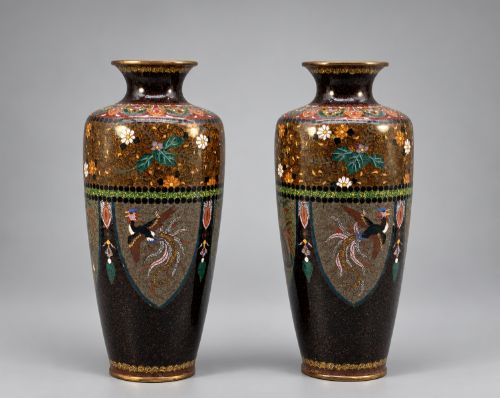
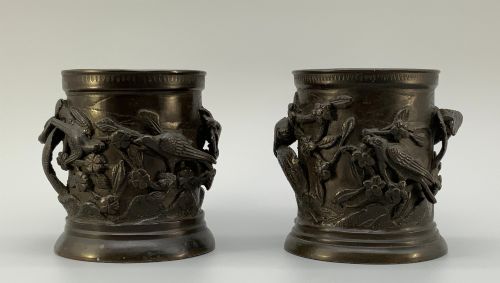
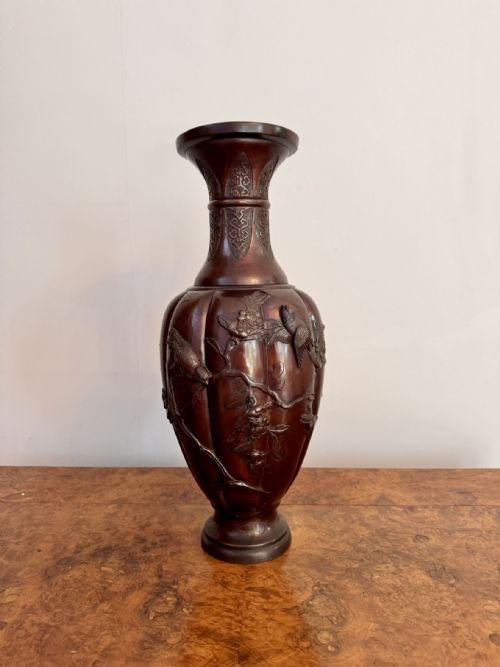
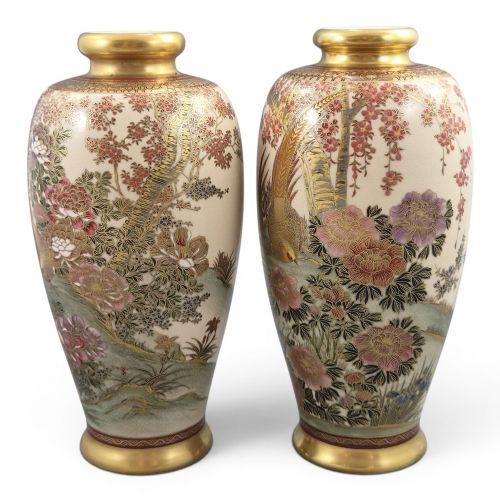
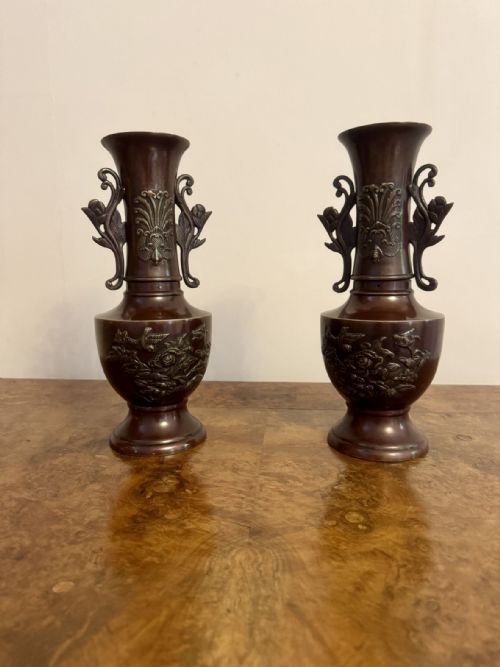
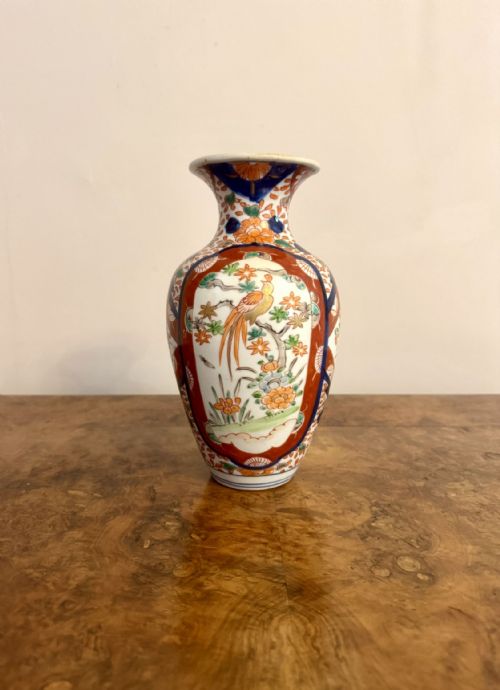
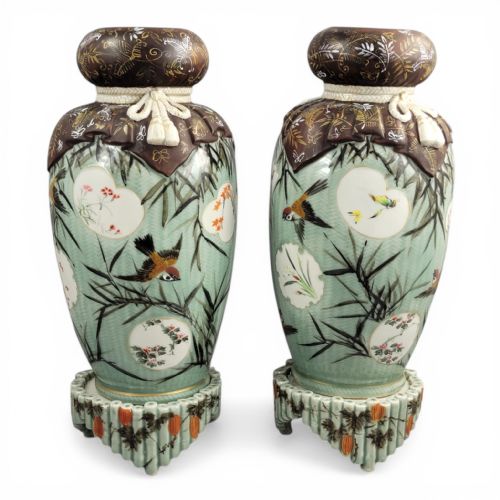
When you search for a Japanese bird vase, you encounter a distinct variety of vessels created primarily during the Meiji period and the decades immediately following. These pieces span heavy bronze baluster urns, delicate cloisonne cylinders, and hand-painted ceramic vessels depicting native fauna.
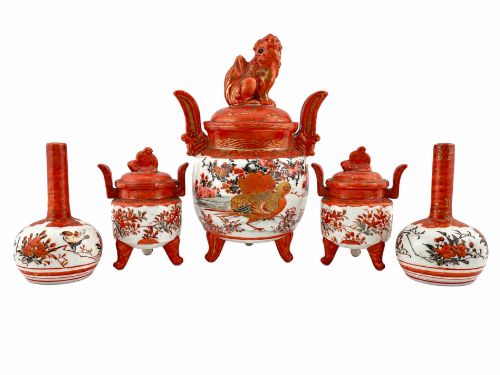
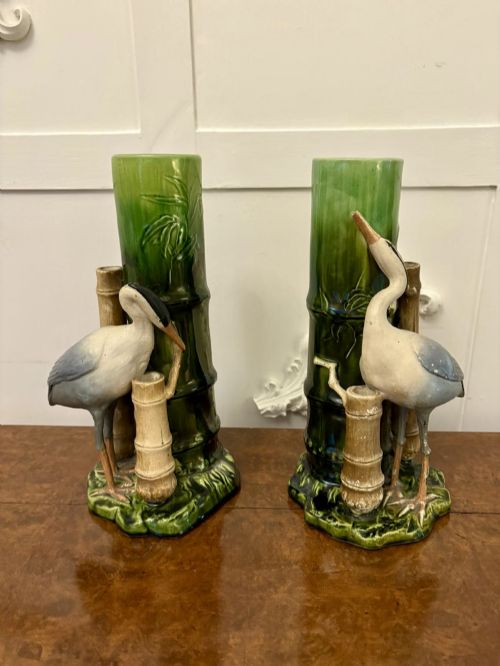
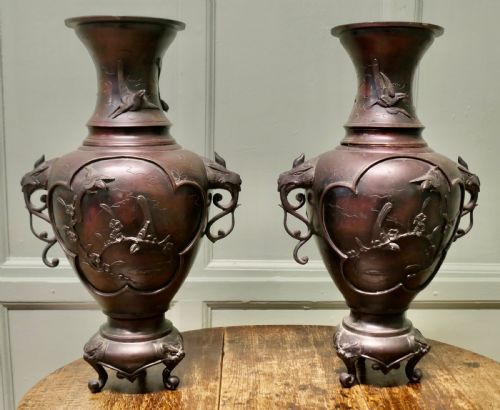
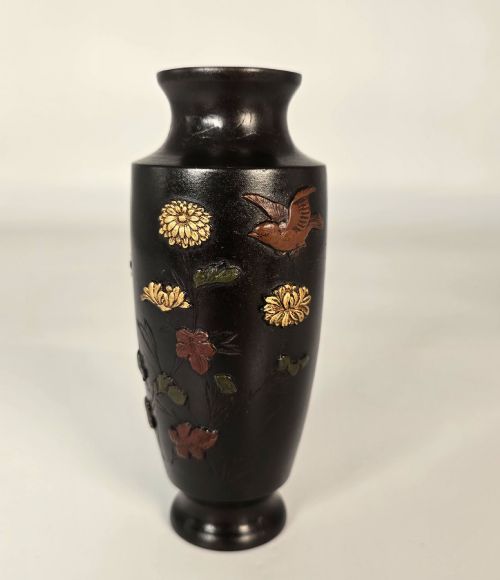
The most common examples on this page are bronze urns and mixed metal vessels featuring birds and blossom decoration, alongside Satsuma earthenware and cloisonne enamel cylinders. Makers utilised diverse forms ranging from small posy vases to monumental palace urns intended for display.
Origins stretch from Kyoto workshops and regional kilns to specialised metalworking studios, reflecting a period of immense technical ambition in Japanese decorative arts. Buyers find both single display pieces and matched pairs suited for mantelpieces or table lamps.
Materials and techniques
Bronze and patinated bronze form the backbone of these vessels, frequently enriched with mixed metal applications of silver, copper, and gold leaf to render plumage and flora in relief. Artisans also employed cloisonne enamel, running silver wire to contain vibrant coloured pastes across copper bodies before firing and polishing.
Ceramic pieces rely on earthenware such as Satsuma with fine crackle glazes, alongside porcelain and studio pottery painted with enamels and underglaze blue. Lacquer over-paint and geometric inset panels occasionally supplement the primary ceramic and metal surfaces.
Japanese Bird Vase Retail Price Guide 2026
Typical asking prices for japanese bird vase among the pieces listed under this phrase on Sellingantiques today, from the lower quarter to the upper quarter. They describe what is for sale here now, not the wider market.
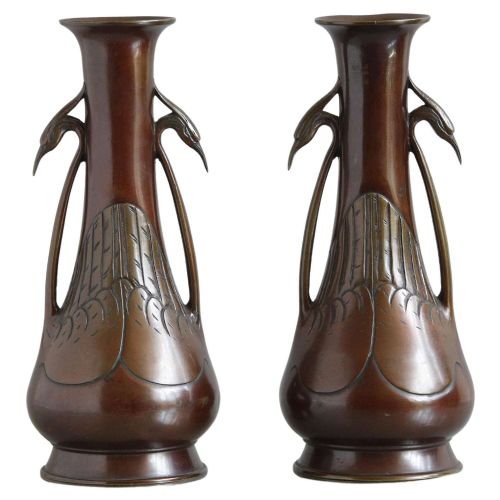
Some bronze vases feature clever egret handles that make the birds appear as if they are perched on the rim.
Judging the standard
The distinction between ordinary production and top-tier work rests on the precision of the hand-applied detail, such as the fineness of silver wire in cloisonne and the crispness of chased relief on bronze. Master workshops achieved subtle depth through graduated patination and multi-layered enamelling rather than flat, repetitive stamping.
Scale and ambition also dictate tier, moving from small cabinet pieces to monumental palace vases with complex handles, original matching stands, and signed maker plaques. The harmony between the avian subject and the surrounding natural motifs reveals the designer's disciplined composition.
Manpei·Kinkōzan·Kato Sanhei·Ando Jubei·Makuzu Kozan II·Kinrin Workshop·Hododa
The Japanese Bird Vase Glossary
- Meiji Period
- The era in Japanese history spanning from 1868 to 1912, characterised by intense artistic innovation and increased export of decorative metalwork and ceramics to the West.
- Cloisonne
- A technique where thin metal wires are soldered to a metal body to create compartments, which are then filled with enamel paste and fired.
- Satsuma
- A type of Japanese earthenware featuring an ivory-coloured, crackled glaze that serves as a canvas for detailed polychrome enamel and gilt decoration.
- Baluster Urn
- A vase with a rounded body that tapers toward a narrow neck and wide mouth, echoing traditional classical architectural forms.
- Mixed Metal
- The decorative practice of combining contrasting metals such as bronze, copper, silver, and brass on a single object to create varied colour and texture.
- Mon
- A traditional Japanese heraldic emblem or badge used by families and clans, often stamped or enamelled onto fine ceramics.
Japanese Bird Vase: Frequently Asked Questions
How do I identify a Meiji period piece?
Examine the base and surface for evidence of high-relief mixed metalwork, fine silver wire cloisonne, or traditional maker signatures typical of late nineteenth-century export standards. Many pieces from this era reflect the rapid opening of Japanese trade and the peak of traditional artisanal guilds.
Look closely at the patination on bronze vessels and the characteristic fine crackle within Satsuma glazes. These physical traits distinguish genuine Meiji items from later reproductions or unrelated decorative styles.
How should I clean my bronze vase?
Dust bronze and mixed metal surfaces gently with a soft, dry brush to prevent the accumulation of grit in recessed chasing and bird relief details. Avoid using commercial metal polishes, abrasive cloths, or water, as these can strip away the original historical patination.
Keeping the piece in a stable environment away from direct sunlight and excessive humidity preserves the delicate balance of the bronze, copper, and silver elements over time.
Can I convert these vases into lamps?
Some historical examples arrive wired as table lamps, while others retain their original hollow interiors designed strictly to hold floral arrangements. Converting an antique vessel requires careful consideration, as drilling or altering the base of a bronze or porcelain piece diminishes its historical integrity.
Collectors generally prefer preserving the original uncompromised form of the vase rather than adding modern electrical components.