










Japanese Arita Dish
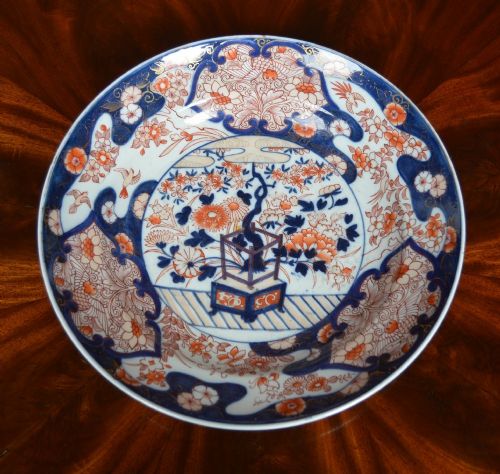
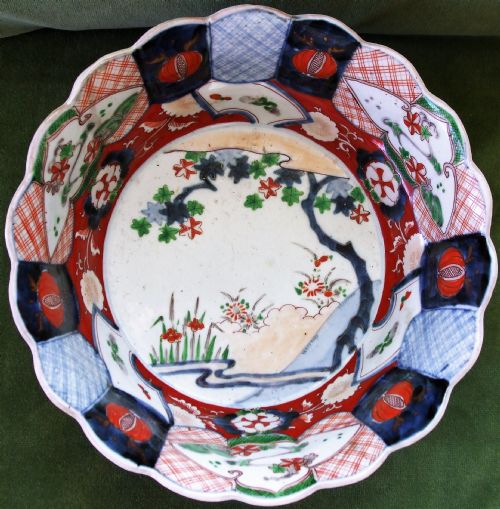
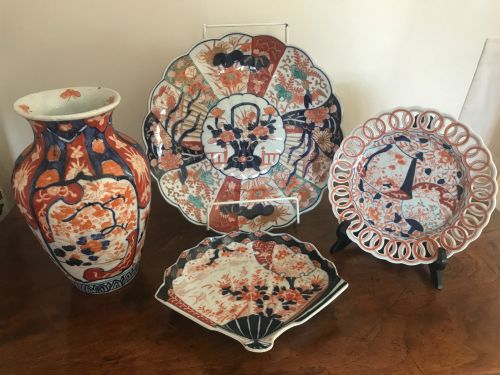
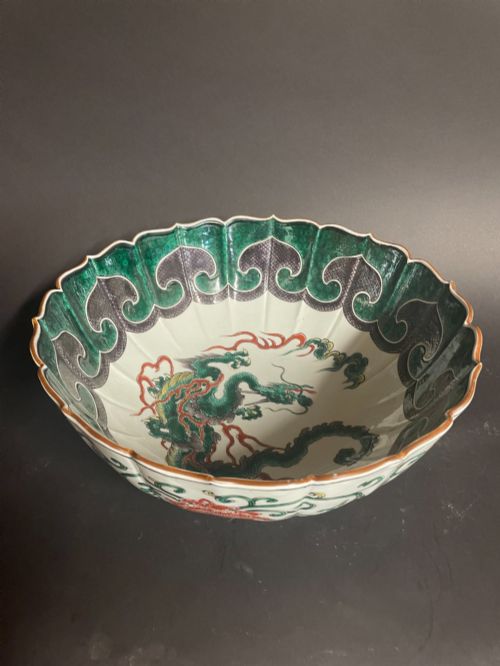
These Japanese Arita dish examples combine centuries of ceramic mastery with striking hand-painted palettes to anchor any collection.
Japanese Arita Dish
A Japanese Arita dish encompasses a rich array of porcelain forms originating from the Hizen province, spanning deep chargers, shallow dishes, and scalloped bowls. Collectors encounter output stretching from the late 17th century through the Edo and Meiji periods up to 1900.
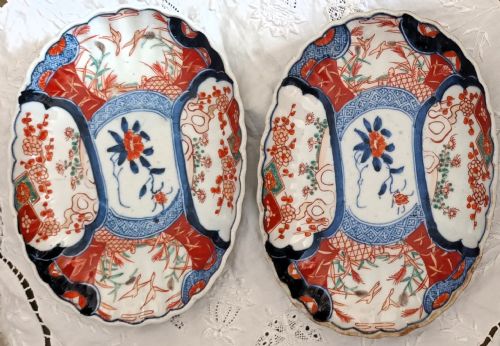
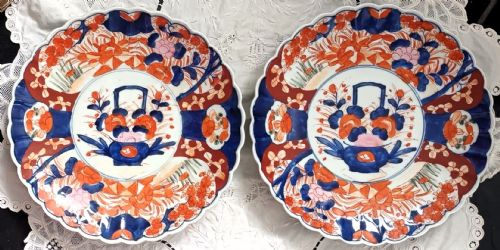
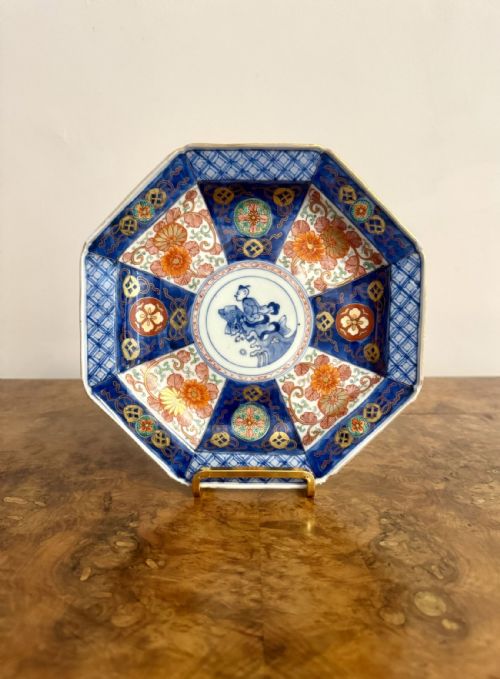
The selections on this page lean heavily towards the exuberant Japanese Imari style alongside crisp blue and white porcelain variants. Forms range from hexagonal plates and ribbon edges to clam shell dishes and large armorial platters.
Earlier pieces from the 17th and 18th centuries often feature refined blue and white decoration or Kakiemon palettes, while later 19th-century examples showcase bolder floral and bird motifs.
Distinctions in quality
Superior examples reveal themselves through the precision of the hand-painted brushwork and the clarity of the cobalt underglaze against the white porcelain ground. Richness in the application of enamel and gold gilt separates standard decorative output from finer works.
Form complexity further elevates a piece, with unusual shapes like hexagonal rims, scalloped edges, and clam shell mouldings demonstrating greater ceramic skill. Age also plays a role, as intact 17th-century pieces reflect distinct historical manufacturing standards.
Japanese Arita Dish Retail Price Guide 2026
Typical asking prices for japanese arita dish among the pieces listed under this phrase on Sellingantiques today, from the lower quarter to the upper quarter. They describe what is for sale here now, not the wider market.
Listings span multiple centuries, ranging from 17th-century Edo period pieces to late 19th-century Meiji examples in porcelain and enamel.
The Japanese Arita Dish Glossary
- Imari
- A style of Japanese porcelain decorated in underglaze blue, iron red, and gold, named after the port from which these wares were shipped. This aesthetic dominated export markets during the Edo and Meiji periods.
- Arita
- The Japanese town and surrounding region in Hizen province where porcelain production began in the early 17th century. It remains the historic heartland of Japanese ceramic manufacturing.
- Meiji Period
- The era of Japanese history running from 1868 to 1912, characterised by extensive export of decorative arts to Western markets. Pieces from this time frequently combine traditional motifs with high production volumes.
- Edo Period
- The period spanning from 1603 to 1868 in Japan, noted for the initial development and refinement of Arita porcelain types. Surviving domestic and export wares from this time are prized by collectors.
- Kakiemon
- A style of Japanese enamel decoration featuring asymmetrical designs of birds, flowers, and figures on a milky white porcelain body. It developed in Arita during the late 17th century.
Japanese Arita Dish: Frequently Asked Questions
How do I care for antique porcelain?
Wash porcelain by hand using lukewarm water and a mild detergent, avoiding abrasive sponges or modern dishwashers that can damage old enamels.
Keep pieces away from direct sunlight and extreme temperature fluctuations to protect the delicate gold leaf and overglaze colours.
Were these dishes meant for dining?
While originally produced for functional use and dining, many export pieces served decorative purposes or graced royal and aristocratic European households.
Larger chargers and wall plates were frequently displayed on sideboards or hung in formal rooms rather than used for food.
How can I tell an 17th-century dish from a 19th-century one?
Examining the weight, foot ring finish, and pigment depth helps distinguish earlier pieces from later Meiji period output.
Seventeenth-century wares often exhibit specific potting characteristics and distinct cobalt hues compared to the mass production of the late 19th century.
What does Imari mean?
Imari refers to the shipping port in Japan rather than the kiln site itself, serving as an umbrella term for a specific decorative palette.
These wares combined strong blues, rusty reds, and gold highlights to appeal to international trading companies.