
Japanese Animal Statue
A Japanese animal statue brings sculpted bears, elephants and monkeys from the Meiji, Taisho and Showa periods into modern interiors.
Japanese Animal Statue
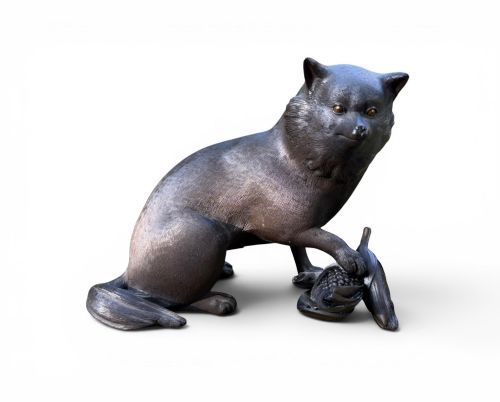
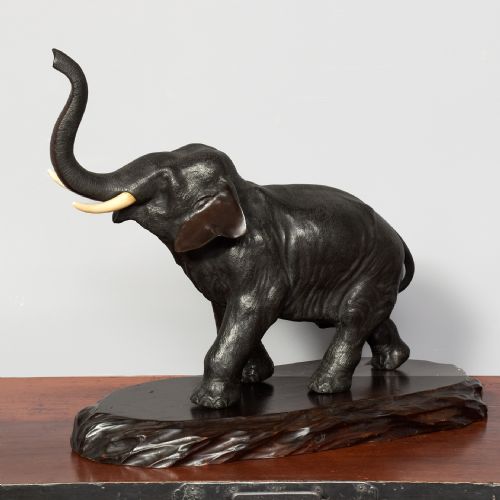
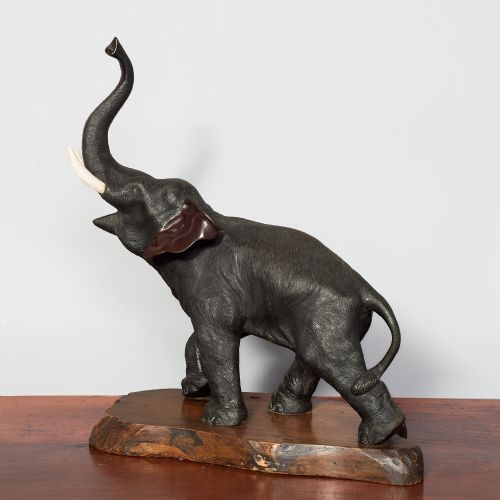
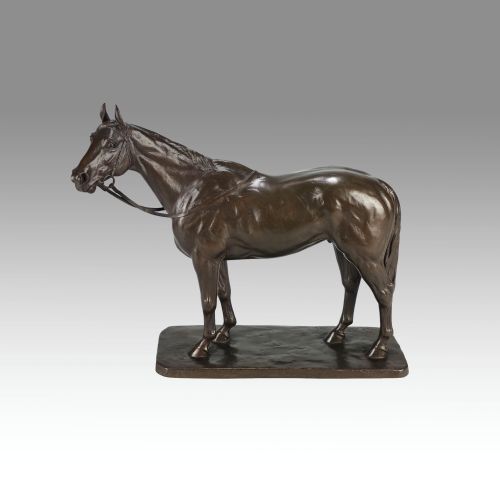
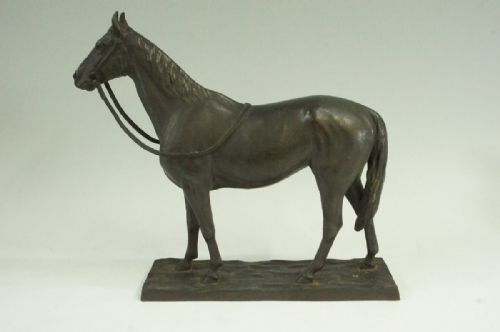
A Japanese animal statue captures creatures in bronze, carved wood, porcelain and bone, ranging from small okimono to large floor sculptures. These works span the late Edo, Meiji, Taisho and Showa periods, representing subjects such as bears, horses, elephants, tigers and monkeys.
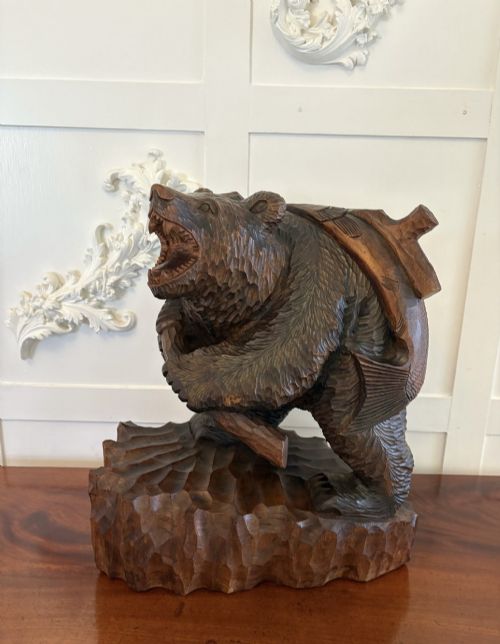
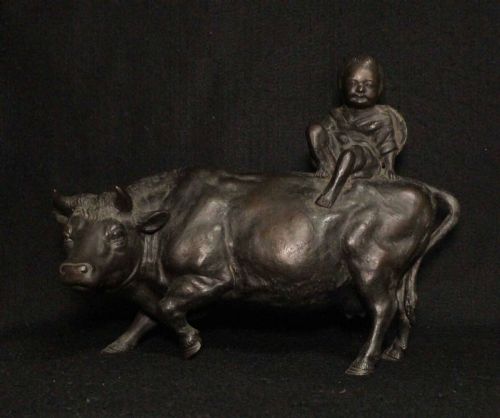
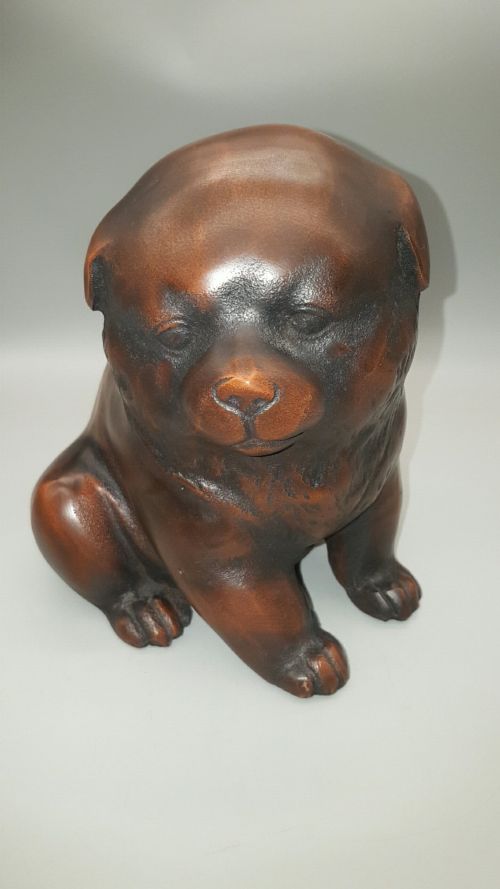
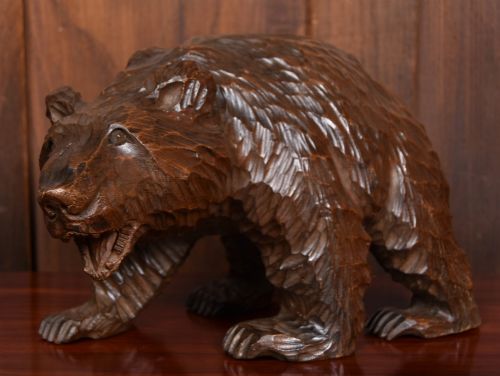
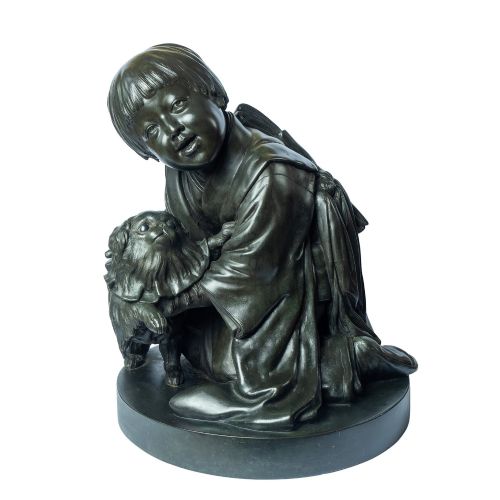
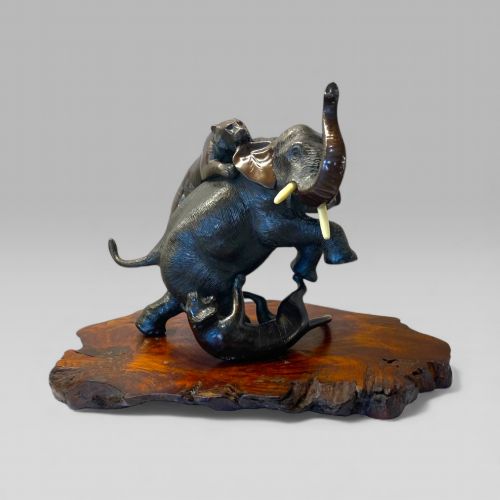
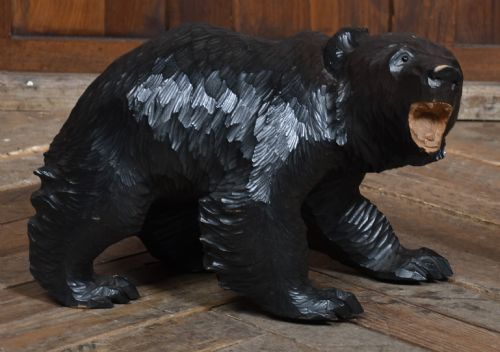
Bronze okimono dominate the selection, often depicting dynamic scenes like elephants fighting tigers or solitary figures like dogs and puppies. Wooden bear sculptures, including the traditional kibori kuma carved from linden wood and hardwood, represent the folk art tradition.
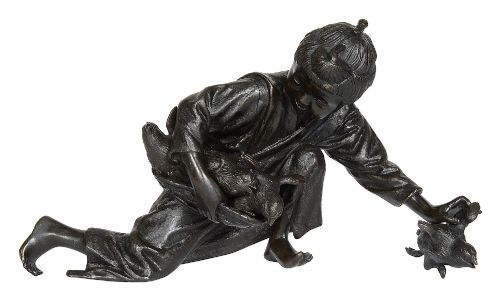
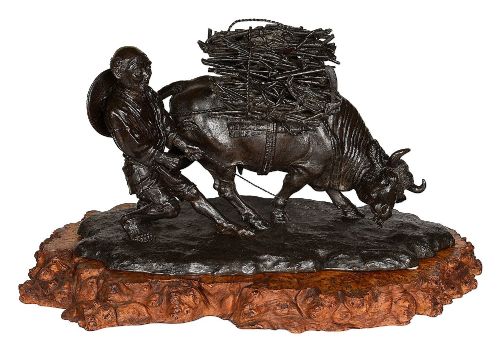
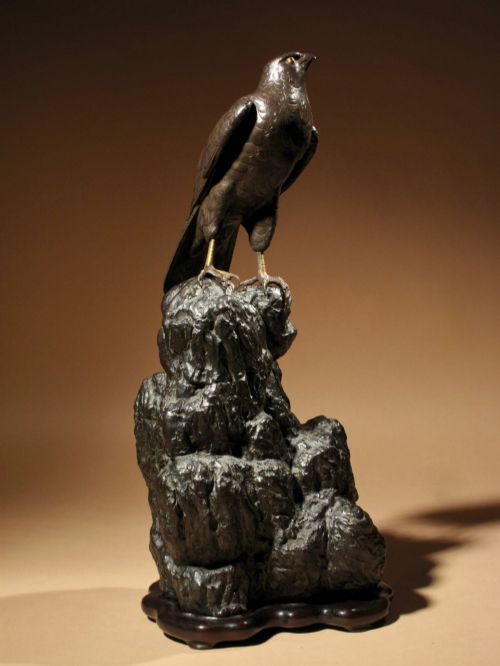
Figures appear both as standalone studies and as complex sculptural groups involving human handlers, rocks or naturalistic bases. Most examples date from the late nineteenth century and the early decades of the twentieth century.
Materials and technique
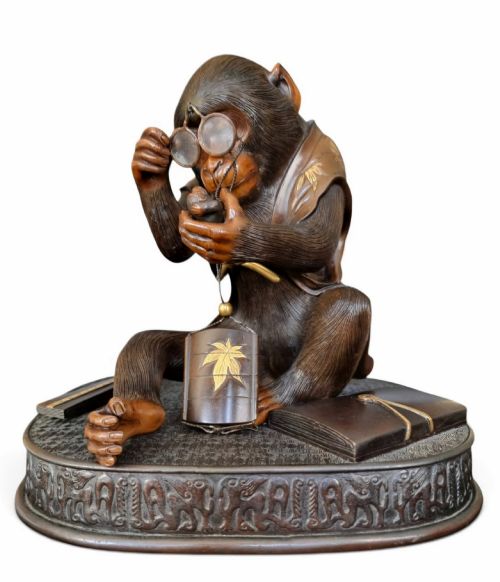
Bronze works utilise lost-wax casting methods, often enhanced with gold inlay, mixed metals or applied ivory tusks and diamond eyes. Foundries such as Tokyo Foundry produced finely detailed pieces bearing signature cartouches.
Wooden sculptures rely on hand-carving techniques applied to linden wood and local hardwoods, defining fur texture and anatomical contours with chisel marks. Porcelain pieces originate from regional kilns like Mikawachi, employing traditional glazing methods.
Several bronze rats are caught mid-thought while clutching a single chestnut.
Craftsmanship and distinction
Quality rests in the precision of anatomical rendering, the crispness of chisel or cast detail, and the subtlety of patination on bronze surfaces. Works by identified artists demonstrate superior mastery of proportion and expression compared to unsigned studio pieces.
The integration of secondary materials, such as contrasting metal inlays or carved ivory elements, separates standard decorative casts from exceptional sculptural achievements.
Kunio Itô·Tsunemitsu·Masaaki·Kaniya Kuniharu·Sakai Kōzan
The Japanese Animal Statue Glossary
- Okimono
- A standalone Japanese display object intended for placement on a shelf or in a tokonoma alcove rather than for ritual use.
- Kibori Kuma
- A traditional Japanese wood-carved bear, typically depicted carrying a fish and originating from the northern regions.
- Meiji Period
- The historical era from eighteen sixty-eight to nineteen twelve, noted for major shifts in metalworking and sculpture production.
- Patina
- The surface coloration and sheen developed on bronze and metalwork through age, chemical treatment or handling.
- Showa Period
- The historical era spanning from nineteen twenty-six to nineteen eighty-nine, encompassing later artistic production.
Japanese Animal Statue: Frequently Asked Questions
What is an okimono?
An okimono is a decorative statue designed for display inside a home, often depicting animals, figures or nature scenes.
These pieces were produced extensively during the Meiji period for both domestic appreciation and export markets.
How do I identify a Meiji period piece?
Meiji period items often display detailed casting, rich patination and artist signatures, reflecting the apex of Japanese metalwork.
Stylistic cues include naturalistic animal behaviour, complex multi-figure compositions and traditional workshop stamps.
Where were wooden bear carvings made?
Wooden bear sculptures, known as kibori kuma, originated in Hokkaido as part of regional folk art traditions.
Carvers utilised local linden wood and hardwoods to render bears with fish or in seated postures.
How should I clean bronze statues?
Bronze statues require minimal intervention, generally needing only gentle dusting with a soft, dry cloth.
Avoid commercial polishes or water, as these can strip the historical patina accumulated over decades.