





Jacobean Style Wooden Chair
A jacobean style wooden chair brings heavy timber, deep carving and solid presence to a room.
Jacobean Style Wooden Chair
A jacobean style wooden chair encompasses sturdy seating forms built from heavy timber, drawing on centuries of historical revivals alongside surviving originals. When you search for a jacobean style wooden chair, you encounter a range of formats from simple side chairs to high-backed armchairs and wainscot designs.
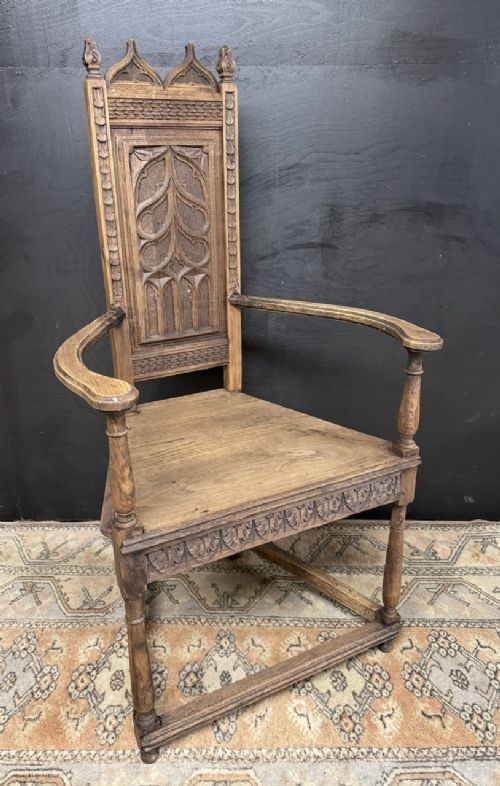
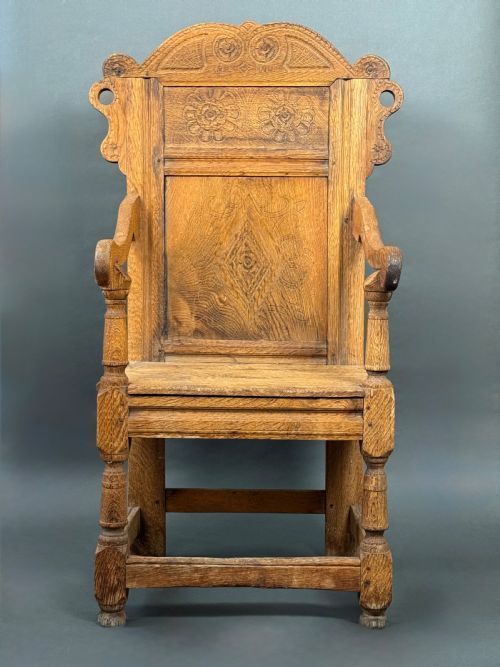
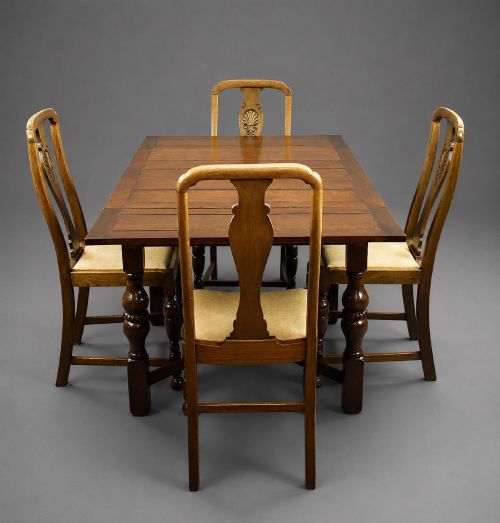
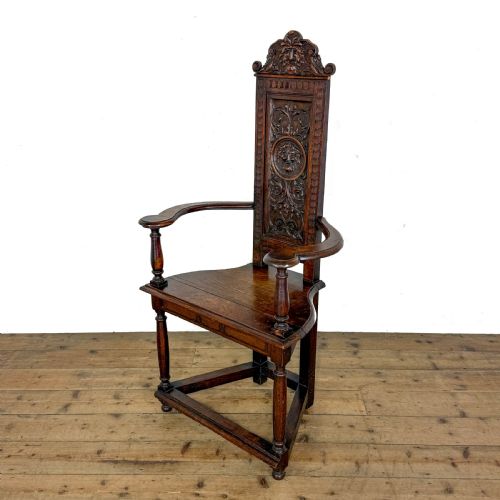
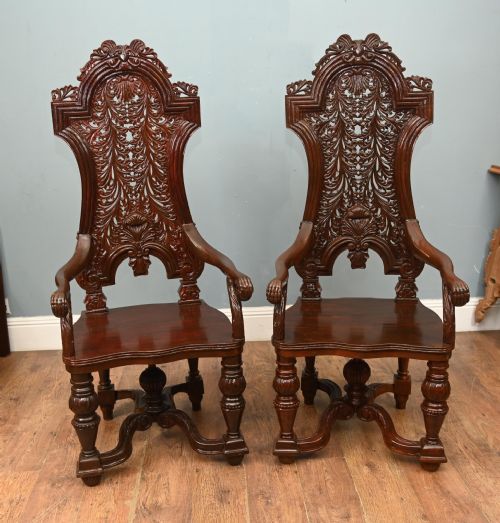
The pieces appearing on this page span several eras, including genuine seventeenth-century examples as well as nineteenth-century revivals and twentieth-century interpretations. Wainscot chairs and carved oak dining chairs dominate the selection, often featuring panelled backs and substantial armrests.
Makers across the Victorian period and the early twentieth century frequently recreated these heavy forms for country houses and formal interiors. Buyers select them to anchor a dining space or hallway with tangible historical weight and robust construction.
Assessing Craftsmanship and Condition
Quality in these chairs rests upon the depth and crispness of the hand carving, where sharp, deliberate tool marks distinguish superior work from softer, mechanical reproductions. The choice of timber also dictates grade, with quarter-sawn oak displaying prominent medullary rays that signal superior selection by the maker.
Structural integrity separates ordinary examples from the finest pieces, particularly the tightness of the joints and the retention of original timber elements without extensive modern replacements. The proportion of the chair, especially the balance between the heavy back panel and the supporting legs, defines the aesthetic success of the piece.
Jacobean Style Wooden Chair Retail Price Guide 2026
Typical asking prices for jacobean style wooden chair among the pieces listed under this phrase on Sellingantiques today, from the lower quarter to the upper quarter. They describe what is for sale here now, not the wider market.
Four seventeenth-century chairs on offer carry polychrome paint, proving that our ancestors liked their oak remarkably colourful.
The Jacobean Style Wooden Chair Glossary
- Wainscot chair
- A heavy wooden armchair with a solid panelled back, typically constructed from oak during the sixteenth and seventeenth centuries or in later revivals. These pieces often feature box seats and carved arms.
- Turners chair
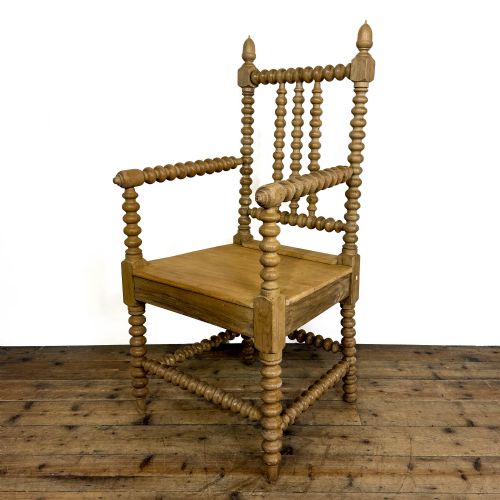
- A type of chair constructed entirely from cylindrical turned wooden spindles fitted together in a geometric framework. It is also known as a thrown chair.
- Caquetoire
- A lightweight armchair originating in the sixteenth century, featuring a narrow body and a high back designed to allow conversation. The name derives from a French term meaning to chat.
- Baroque revival
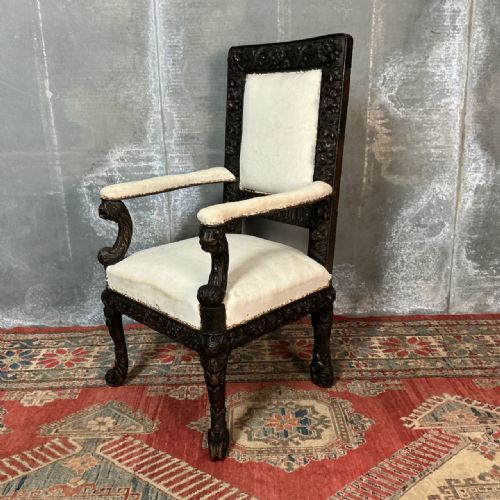
- A nineteenth-century design movement that emulated the ornate, theatrical styles of the seventeenth century, incorporating dramatic scrolls and heavy carving. Pieces from this era often feature exaggerated proportions.
- Carolean
- Pertaining to the reign of King Charles II, characterised by exuberant carving, cane work and scrolling woodwork. Revivals of this aesthetic appear frequently in later nineteenth-century seating.
Jacobean Style Wooden Chair: Frequently Asked Questions
How do I spot a true seventeenth-century chair?
Authentic pieces from the seventeen hundreds show tool marks appropriate to hand-working, distinct timber oxidation and pegged joints that have shifted naturally over time.
Revival pieces from the Victorian era or the twentieth century often display more uniform machine sawing and cleaner, tighter joints that lack centuries of wear.
Where should I place a wainscot chair?
Due to their solid wooden backs and imposing presence, these chairs suit hallways, studies or the head of a dining table.
They require space to be appreciated visually and work best away from damp areas that might damage old oak.
Are these chairs comfortable for daily use?
Most variants offer an upright, firm seating position dictated by historical design rather than modern ergonomics.
Adding a loose textile cushion provides extra comfort without altering the physical structure of the wooden seat.
What is the difference between wainscot and hall chairs?
Wainscot chairs typically feature enclosed solid wooden panels and arms, functioning as substantial armchairs for domestic use.
Hall chairs generally omit arms and often incorporate lighter frames or carved backs designed for occasional seating in entryways.