


Jacobean Style Server
Jacobean style server forms and related sideboards bring sturdy oak construction and deep historical character to modern dining rooms.
Jacobean Style Server
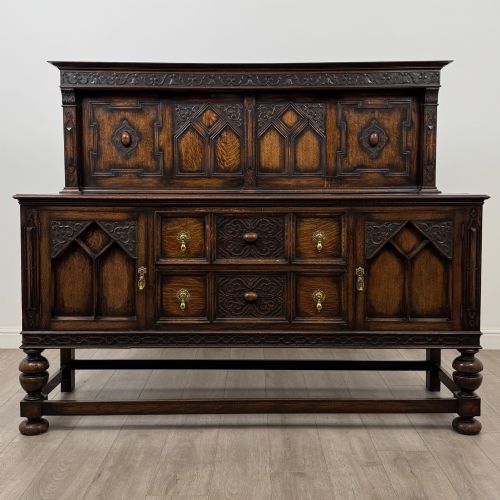
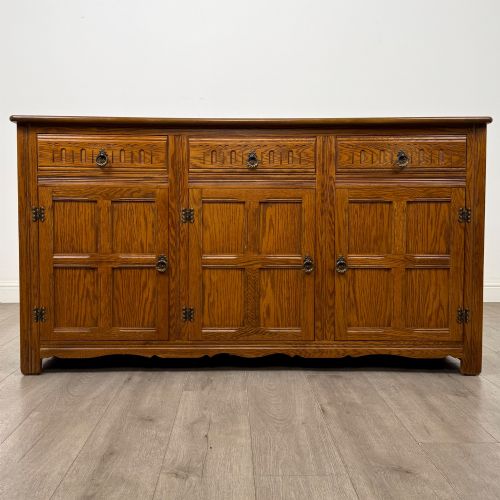
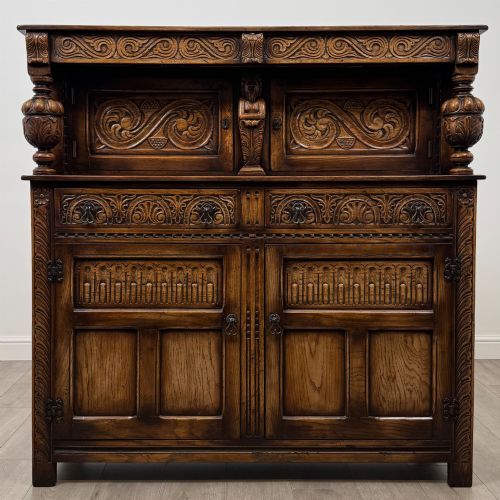
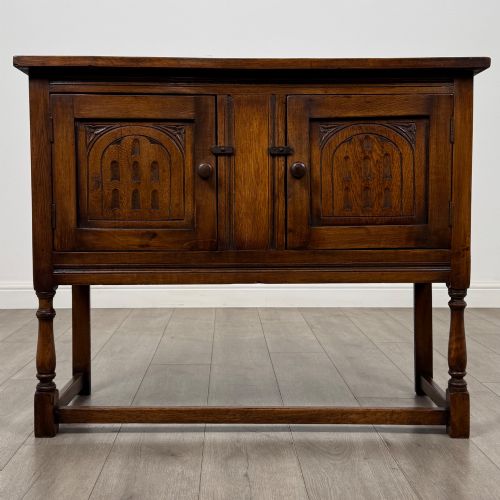
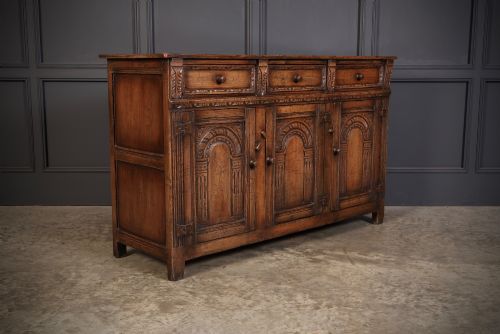
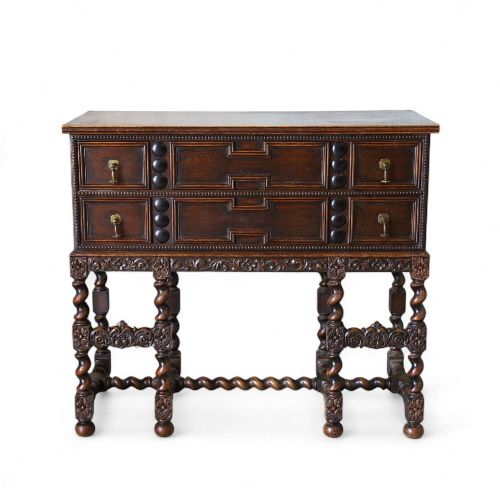
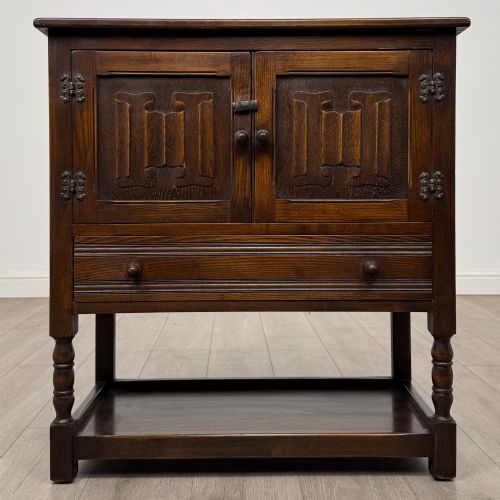
A jacobean style server encompasses heavy oak sideboards, dresser bases, side cabinets and court cupboards originating from periods including the seventeenth century, Edwardian era, Victorian times and the nineteen-twenties. These substantial items serve practical dining room storage needs while establishing a strong historical aesthetic in domestic interiors.
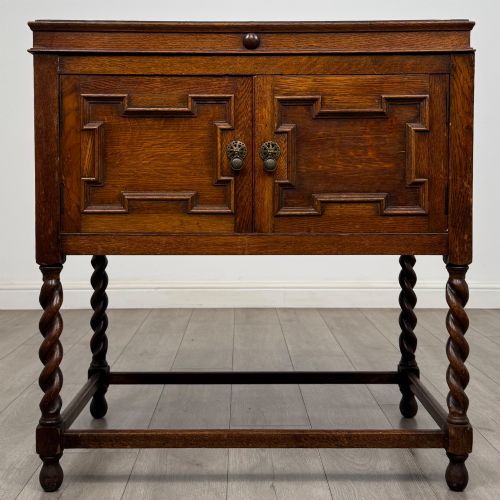
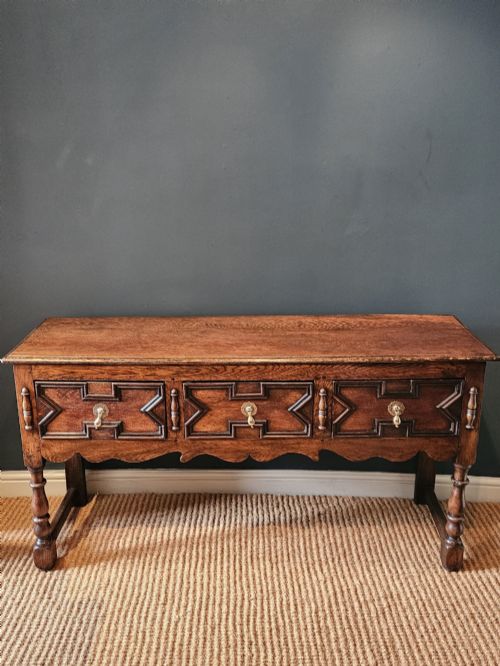
The version most commonly encountered on this page is the Edwardian or nineteen-twenties oak sideboard and dresser base, often displaying revival carving and substantial proportions. These pieces adapt early seventeenth-century design elements for twentieth-century homes without losing their traditional utility.
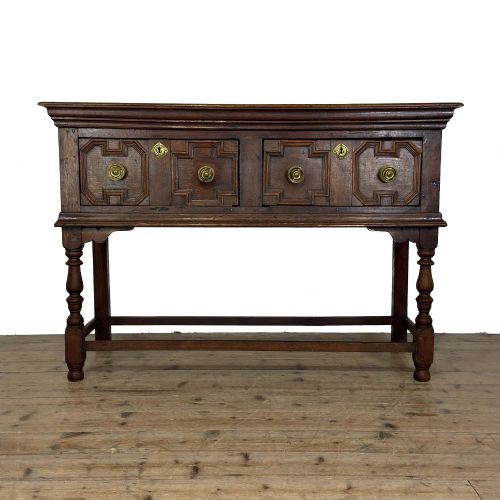
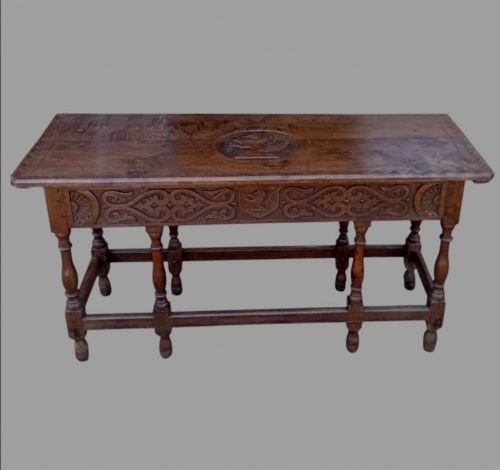
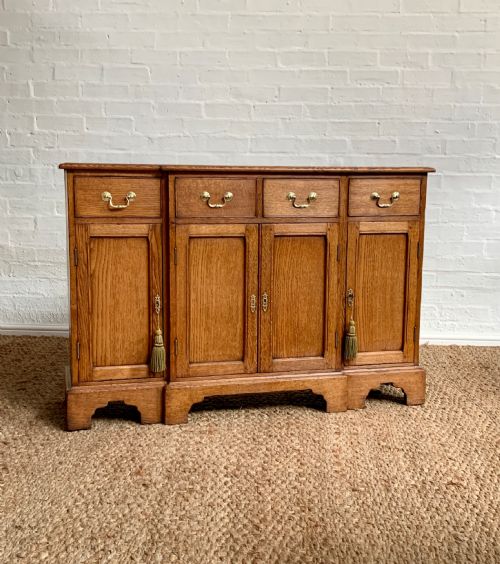
Alongside standard sideboards, the selection includes related forms like hall tables, side cabinets and potboard dressers built from solid timber. Buyers encounter diverse regional interpretations ranging from simple English country designs to more elaborate Victorian Gothic or Baroque expressions.
What varies in quality
The degree of refinement in the carved detailing and geometric mouldings dictates the visual hierarchy of these pieces. Crisp, deeply chiselled ornamentation separates standard production from examples possessing superior sculptural presence.
Proportion and timber selection heavily influence overall merit, with dense golden or dark oak and balanced scaling marking out the better examples. Substantial construction and well-figured grain distinguish the more successful interpretations of early styles.
The furniture spans seventeenth-century originals through Georgian, Victorian, Edwardian and nineteen-thirties revival interpretations.
The Jacobean Style Server Glossary
- Court cupboard
- An enclosed upper cabinet supported on pillars above a lower section, used historically for displaying plate. These pieces offer substantial vertical storage with heavy timber framing.
- Dresser base
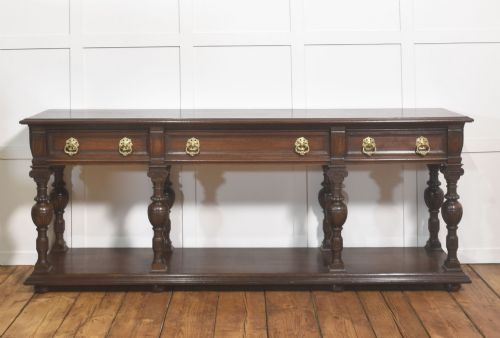
- A low sideboard or cabinet featuring drawers and often a lower shelf known as a potboard. They provide accessible surface area and drawer storage for dining rooms.
- Linenfold
- A style of wood carving that imitates folded fabric, popular on panels during the Tudor and Jacobean periods. This technique adds texture and depth to flat wooden surfaces.
- Barley-twist
- A type of turned furniture support resembling a twisted rope or spiral column. It appears frequently on legs and stretchers of revival pieces from the late nineteenth and early twentieth centuries.
- Geometric moulding
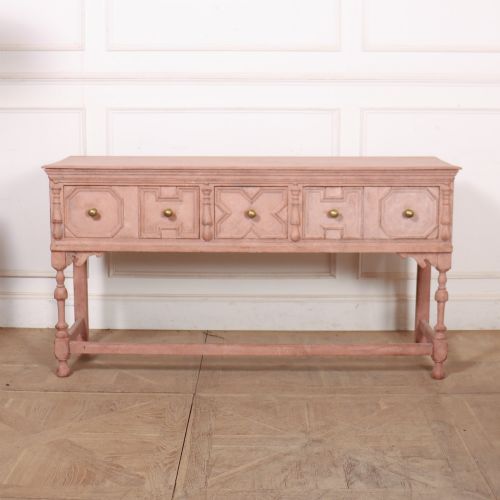
- Raised wooden profiling applied in rectilinear or geometric patterns to drawer fronts and door panels. This decorative treatment creates shadow and relief on otherwise plain surfaces.
Jacobean Style Server: Frequently Asked Questions
What is a jacobean style server used for?
These pieces function primarily as sideboards and storage units in dining spaces, offering surface space for serving food and drawers or cupboards for tableware. Their sturdy construction also suits placement in hallways or living rooms.
Historically rooted in early domestic storage, they accommodate modern storage requirements while introducing traditional character to a room.
How do I identify a revival piece?
Revival items combine seventeenth-century stylistic elements like geometric mouldings and heavy carving with timber and construction methods typical of the Victorian, Edwardian or interwar periods. Examination of the interior timber and backboards often reveals the true age of the piece.
Makers working in the nineteenth and twentieth centuries adopted these motifs to satisfy a demand for historic styling within contemporary homes.
Are these pieces made from solid oak?
The majority of listings in this category utilise solid oak or painted oak, chosen for its strength and traditional association with early English furniture. Some examples incorporate secondary woods or metal hardware like brass and iron.
This robust timber choice accounts for the heavy, durable nature of the surviving sideboards and tables.
How do I style a heavy oak sideboard?
A substantial oak sideboard pairs well with both traditional dining furniture and contrasting modern surroundings, where its dark or golden wood tones create a focal point. Keeping the surface styling balanced prevents the heavy timber from overwhelming the space.
Allowing sufficient clearance around the piece ensures its architectural proportions remain visible in the room.