

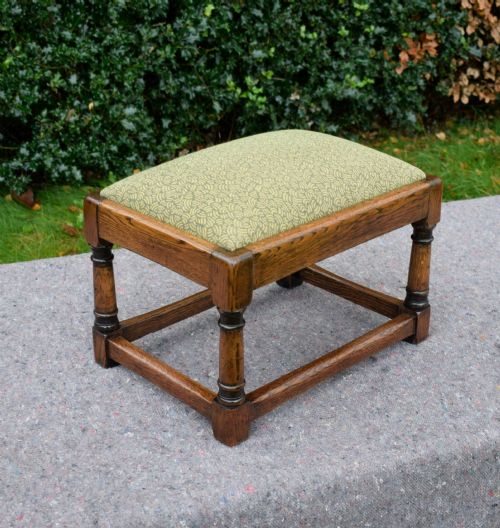


Jacobean Style Footstool
A jacobean style footstool brings solid timber presence and low-slung seating to a room, offering sturdy seventeenth-century character.
Jacobean Style Footstool
When you search for a jacobean style footstool, you encounter heavy timber seating built with seventeenth-century lines and later revival craftsmanship. These pieces draw on historic forms, though the items listed here span from the late seventeenth century through to the Edwardian period and the early twentieth century.
The selection on this page centres primarily on joint stools and low timber frames, frequently rendered in oak and often complemented by upholstery or cane work. You will also find square joint stools and longer framed variants reflecting rustic English country and Carolean influences.
Buyers choose these items to anchor traditional interiors or to introduce genuine heft and architectural line to a modern scheme. Their low profiles and robust construction make them practical for fireside placement or occasional seating.
How they were made
Makers constructed these pieces predominantly from solid oak, utilising traditional jointing methods such as mortise and tenon to create rigid, enduring frames. The timber often exhibits deep graining and dark wood tones achieved through age or finishing.
Surfaces frequently feature hand carving, whilst upper sections incorporate woven cane or padding covered in various upholstery fabrics. Brass tacks occasionally secure the edges of the textile coverings, adding metallic detail to the wooden structures.
Jacobean Style Footstool Retail Price Guide 2026
Typical asking prices for jacobean style footstool among the pieces listed under this phrase on Sellingantiques today, from the lower quarter to the upper quarter. They describe what is for sale here now, not the wider market.
Materials recorded across the inventory include solid oak, brass tacks, upholstery fabric, and woven cane.
What varies in quality
The standard of a piece rests heavily on the crispness of the timber carving and the integrity of the structural joints. Superior examples display tight joinery and substantial timber weight without excessive modern intervention.
Finishing touches also differentiate the tier of craftsmanship, such as the neatness of brass tack work and the evenness of cane weaving. Pieces featuring older oak timbers and more ambitious decorative carving command greater attention from discerning collectors.
The Jacobean Style Footstool Glossary
- Joint stool
- A sturdy wooden stool constructed with pegged mortise and tenon joints rather than turned legs glued into a seat. These forms date back centuries and provide exceptional load-bearing strength.
- Cane work
- Woven plant material, often split rattan, used to create breathable and decorative panels for seats. It requires skilled hand manipulation to achieve tension across the frame.
- Carolean
- A style of British design spanning the reign of Charles II, characterised by rich ornamentation, scrolling carving, and turned woodwork. It heavily influences later revival seating.
- Brass tacks
- Small decorative metal nails used to fasten upholstery fabric securely to wooden frames. Their placement often forms a neat line along the border of the seat.
- Jacobean Revival
- A nineteenth and early twentieth-century design movement that reinterprets the heavy, straight-lined oak furniture of the early seventeenth century. Makers utilised older styling cues on contemporary domestic items.
Jacobean Style Footstool: Frequently Asked Questions
Are these stools actually from the seventeenth century?
Most examples found here date from later revival periods, such as the Victorian era, Edwardian period, or the early twentieth century, drawing inspiration from seventeenth-century aesthetics.
Only a small number originate from the late seventeenth or early eighteenth centuries, meaning careful inspection of the timber ageing and construction is necessary to determine true antiquity.
How do I use a joint stool at home?
These low wooden items function well as occasional seats, fireside perches, or sturdy platforms for holding books and small lamps.
Their compact dimensions allow them to tuck easily beneath tables or sit unobtrusively in hallways and living spaces.
What is the difference between joint stools and cane footstools?
Joint stools consist entirely of rigid wooden frames and solid tops designed for heavy utility and firm seating. Cane footstools incorporate woven plant material into the top surface, offering a lighter visual appearance and a slightly yielding texture.
Both styles utilise robust wooden framing but serve different aesthetic and functional roles within a room.
How do I care for antique oak and upholstery?
Protect the wooden frames by keeping them away from direct heat sources and applying appropriate wax polish sparingly to maintain the grain. Vacuum upholstered or cane surfaces gently with a soft brush attachment to prevent dust accumulation.
Avoid using harsh chemical cleaners on either the dark wood or the fabric coverings to preserve the original materials.