

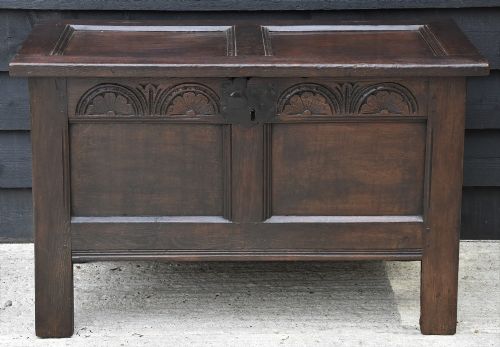
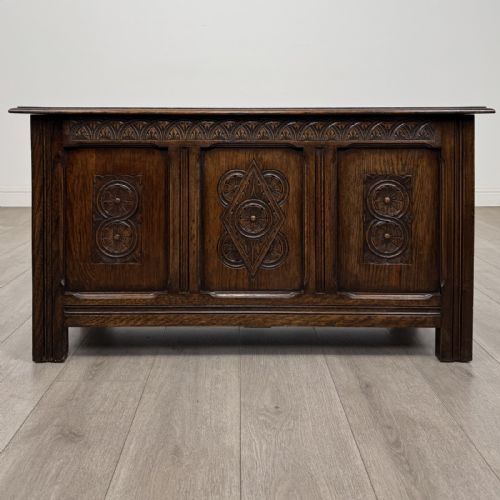
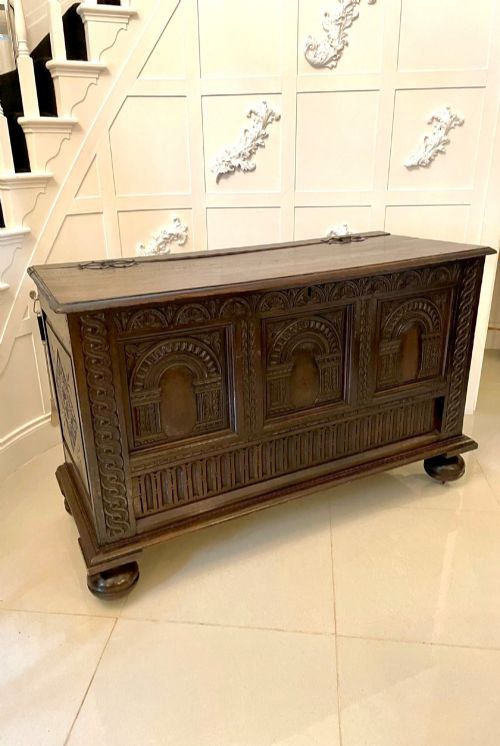
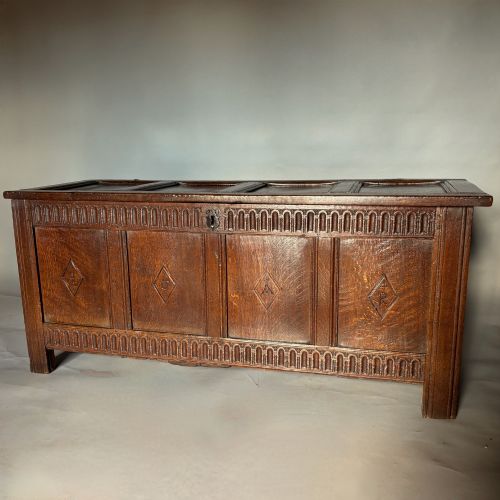

Jacobean Storage Trunk
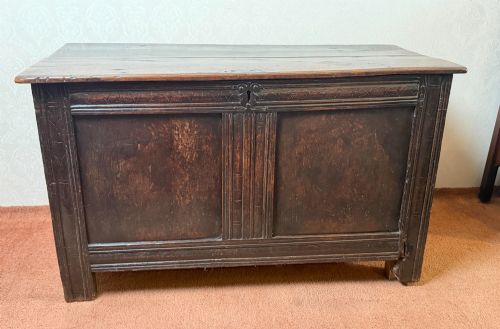
A jacobean storage trunk is a substantial piece of early furniture built to hold household goods, offering a robust surface and deep interior.
Jacobean Storage Trunk
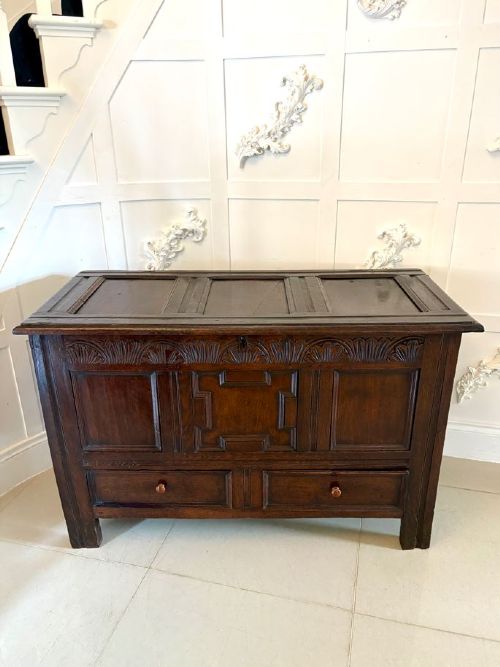
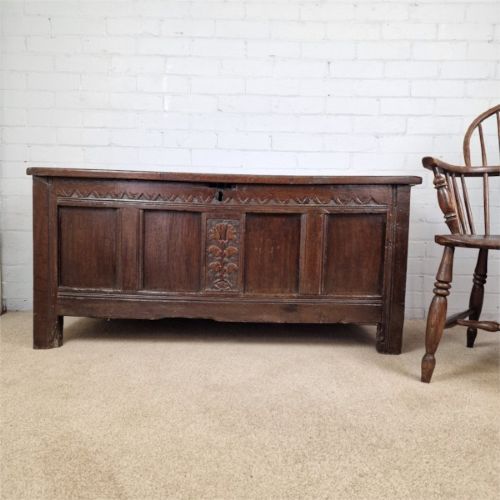
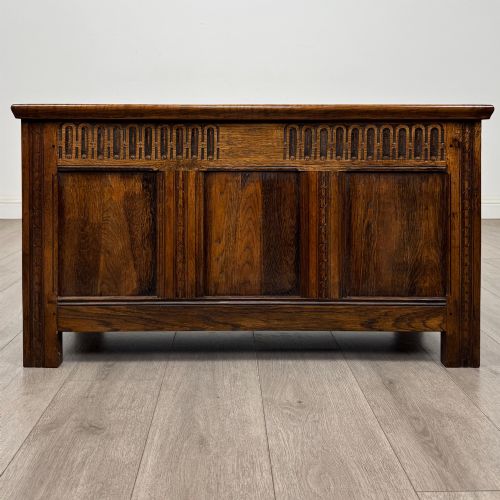
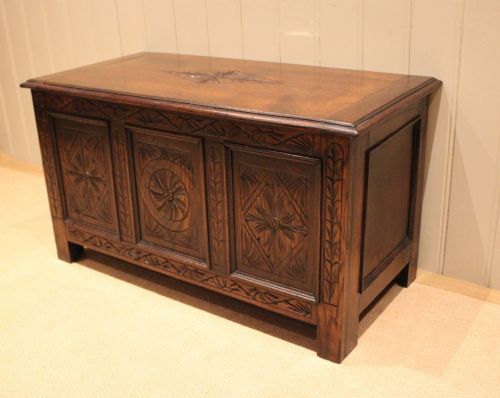
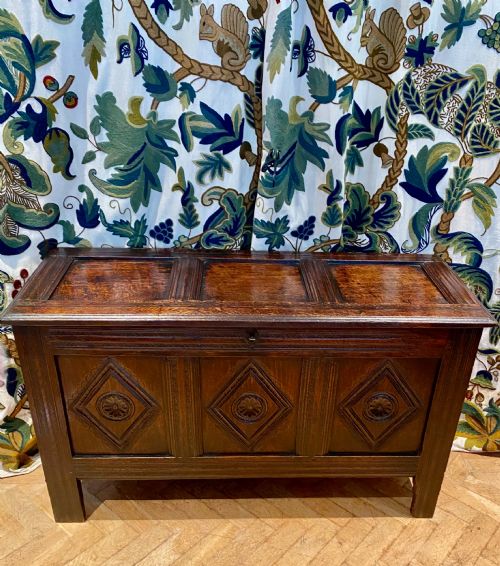
When you examine a jacobean storage trunk, you encounter pieces primarily constructed during the seventeenth century alongside revival interpretations produced in the nineteenth and twentieth centuries. These objects appear under various traditional headings including coffers, blanket chests, mule chests, and cassones, designed originally to safeguard valuables, textiles, and domestic stores.
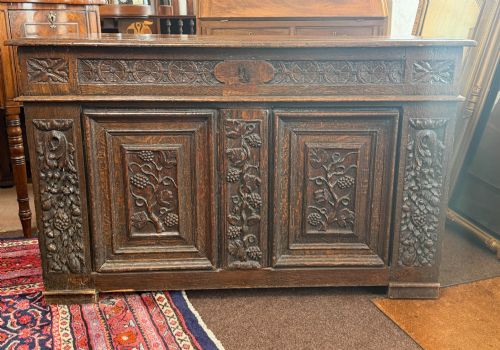
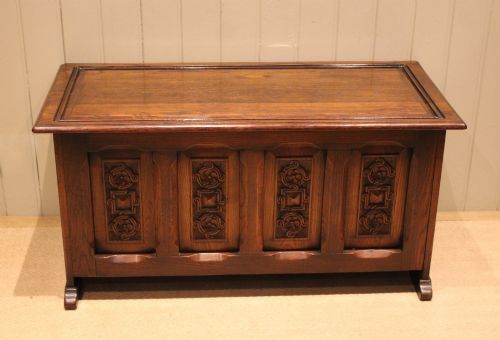
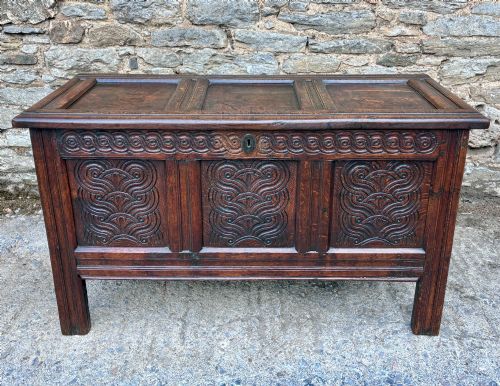
The dominant material across these pieces is oak, frequently worked as solid timber or formed into joined frameworks with panelled construction. Certain examples display regional distinctions, such as Dorset origins, while others incorporate carved decoration across the front panels and stiles.
Materials and construction methods
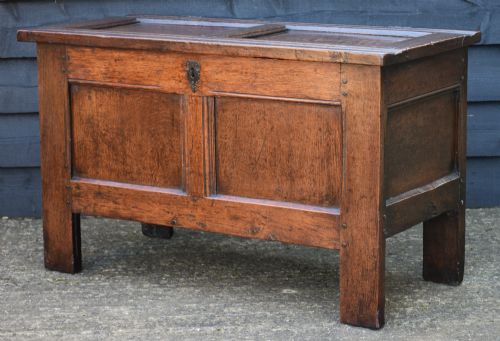
Makers utilised English oak for its density and durability, building frameworks through traditional joinery where tenons locked into mortises secured by wooden pegs. Panels floated within grooved frames to accommodate the natural expansion and contraction of the timber over time.
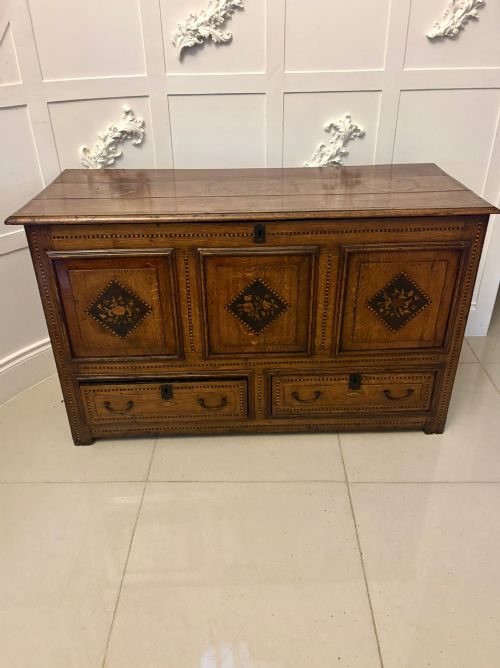
Surface ornamentation involved hand carving with gouges and chisels to produce geometric patterns, foliage, or architectural motifs. Selected examples incorporate wood inlay, marquetry inlay, and iron or brass hardware to reinforce lids and corners.
Discerning quality in storage trunks
The distinction between standard utility items and superior examples lies in the crispness of the hand carving and the integrity of the original joined construction. Pieces retaining their original timber lids, floor boards, and operational hinges command greater respect among collectors.
The Jacobean Storage Trunk Glossary
- Coffer
- A large wooden chest used for storage, typically fitted with a hinged lid and standing on stiles or feet. They served as primary furniture for holding clothes and valuables before fitted wardrobes became common.
- Mule chest
- A storage chest featuring one or two drawers beneath the main compartment. This form developed as domestic storage needs evolved to separate smaller items from bulk textiles.
- Joined oak
- Furniture construction utilising mortise and tenon joints secured with wooden pegs rather than metal nails. This technique provides structural rigidity for heavy timber frames.
- Linenfold
- A style of carved wooden panelling resembling folded vertical linen fabric. This motif appears frequently on panels of period boxes and chests.
- Marquetry inlay
- Decorative patterns formed by fitting contrasting pieces of wood veneer into a prepared surface. It adds visual complexity to the front panels of selected chests.
Jacobean Storage Trunk: Frequently Asked Questions
What were jacobean storage trunks used for?
These trunks served as secure receptacles for household textiles, family silver, and important documents. Their flat lids also allowed them to function as tables or benches within domestic spaces.
In period households, they were often kept in bedchambers or halls to hold bulky woollens and linens safe from damp and pests.
How do I distinguish 17th century pieces from revival copies?
Examination of the timber surfaces, tool marks, and construction methods reveals the age of a trunk. Period pieces exhibit hand-riven oak, shrinkage cracks, and wear patterns consistent with centuries of use.
Revival versions from the nineteenth and twentieth centuries often display mechanical saw marks, uniform patination, and modern fixings that contrast with authentic early work.
Where should I place a trunk in my home?
These pieces suit placement at the foot of a bed, along an entrance hallway, or as a coffee table in a living space. Their sturdy lids provide functional surface area alongside internal storage.
Keep them away from direct heat sources and strong sunlight to prevent the dry oak from splitting or the historic finish from degrading.
What is the difference between a coffer and a mule chest?
A coffer consists of a single deep box compartment accessed strictly via the top lid. Accessing items at the bottom requires removing everything stacked above.
A mule chest incorporates one or more drawers at the base beneath the main well, allowing access to smaller items without lifting the heavy lid.