


Jacobean Storage Cabinet
A jacobean storage cabinet provides heavy oak storage through cupboards, chests, and sideboards built for period interiors.
Jacobean Storage Cabinet
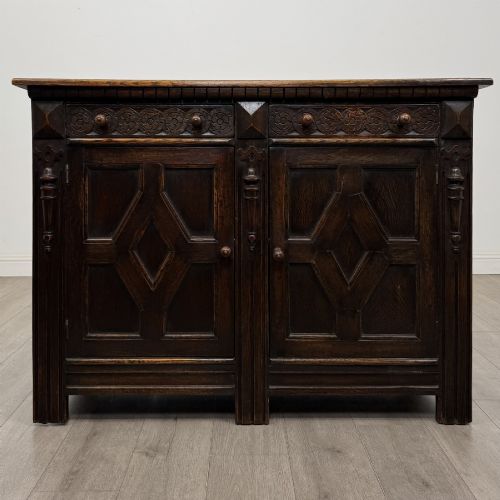
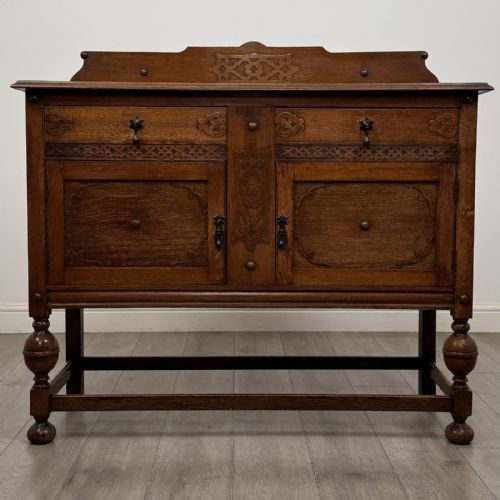
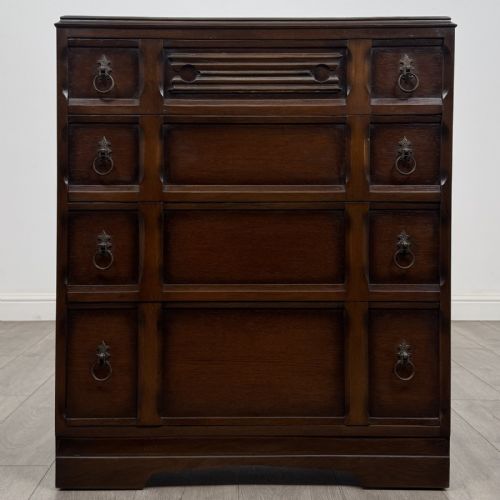
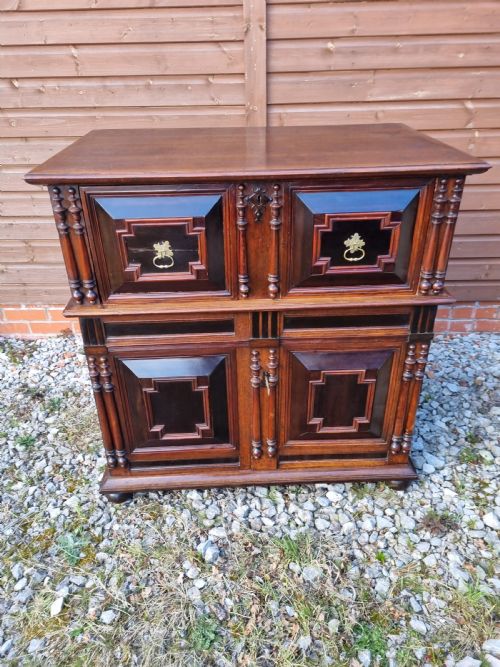
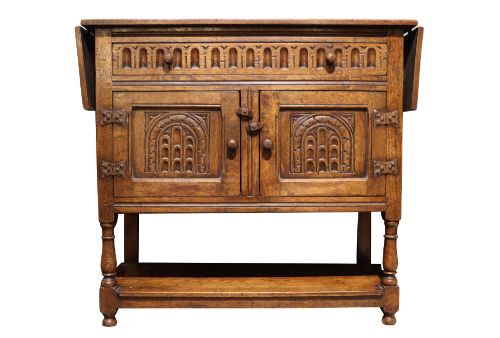
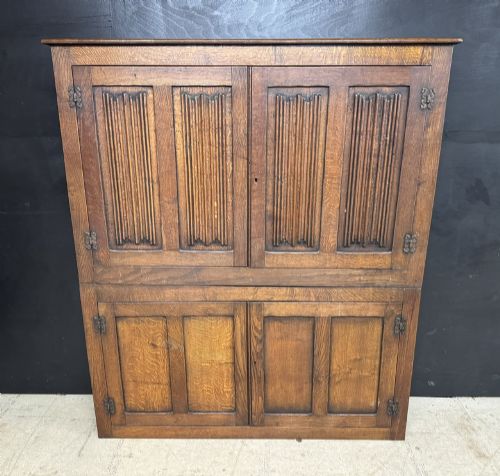
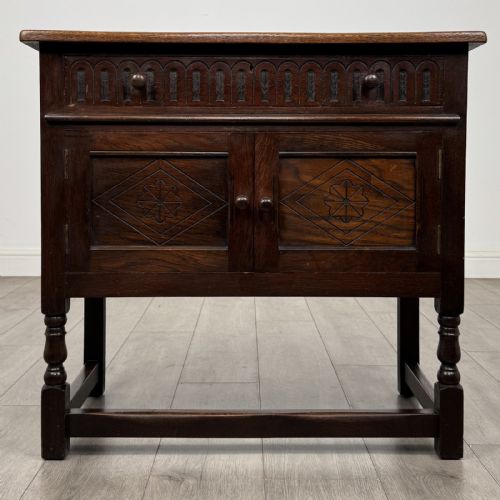
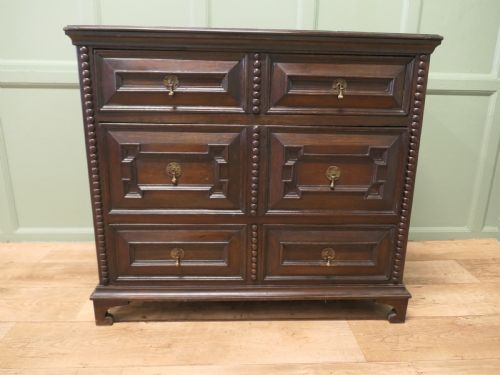
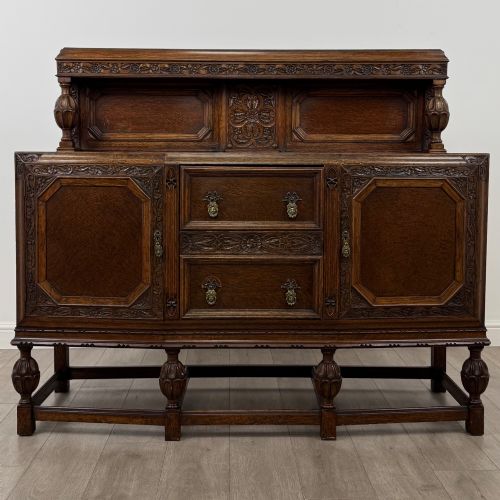
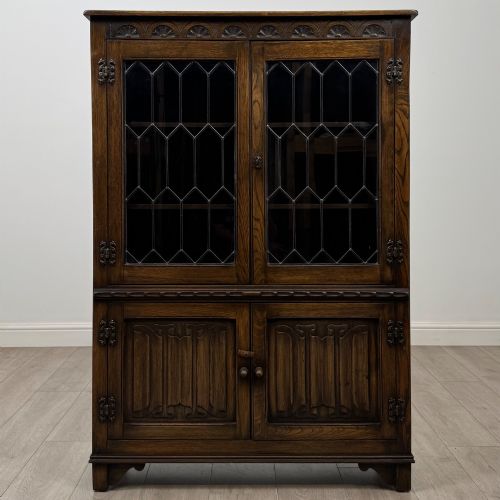
A jacobean storage cabinet encompasses heavy wooden furniture designed for domestic storage, ranging from genuine seventeenth century joined cupboards to later revival pieces produced in the twentieth century. Buyers encounter forms such as court cupboards, sideboards, chests of drawers, and display cabinets that utilise traditional silhouettes.
The selection on this page relies heavily on twentieth century revivals alongside pieces from the seventeenth, eighteenth, and nineteenth centuries. These items serve as practical storage units for modern homes while retaining traditional stylistic references through heavy timber construction.
How They Were Made
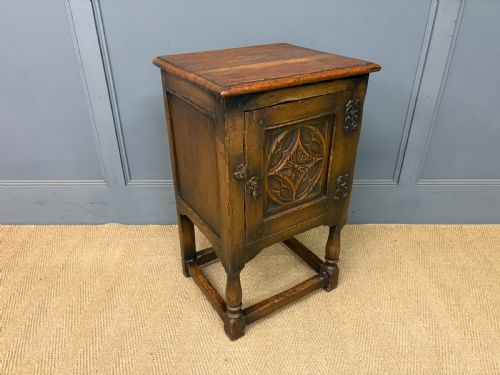
Construction relies primarily on solid oak, often complemented by secondary timbers like walnut and fruitwood, assembled with traditional joinery. Metal elements appear as brass face handles, iron hinges, and lead framing for glass panels.
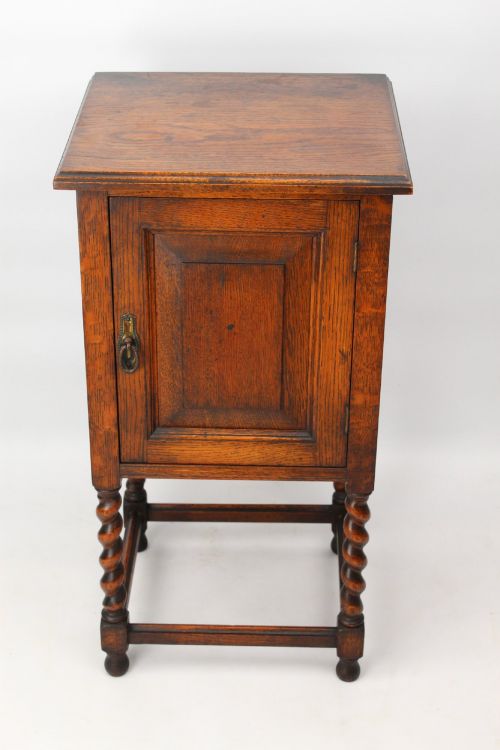
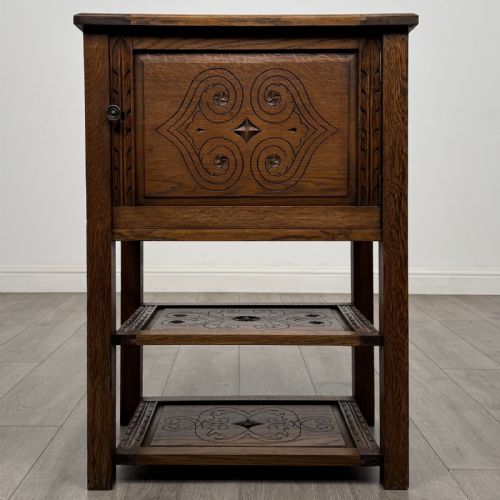
Surface decoration involves carved detail, linenfold panels, raised mouldings, and turned legs including barley twist supports. Finish is applied through dark or golden staining, occasionally featuring paint or bleached tones.
Jacobean Storage Cabinet Retail Price Guide 2026
Typical asking prices for jacobean storage cabinet among the pieces listed under this phrase on Sellingantiques today, from the lower quarter to the upper quarter. They describe what is for sale here now, not the wider market.
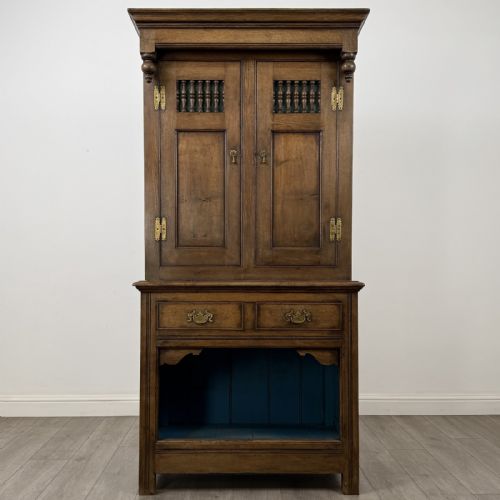
Some nineteenth century food cupboards feature clever ventilation slats designed to keep the Sunday joint away from curious cats.
What Varies in Quality
Quality rests upon the integrity of the timber and the depth of the hand carving executed across the panels and friezes. Pieces retaining original seventeenth century construction methods demonstrate superior joinery compared to later twentieth century revival iterations.
Hardware elements such as brass face handles and leaded glass components influence the overall finish. The crispness of carved pillar panels and linenfold details distinguishes standard production items from finer workshop output.
Maple and Co
The Jacobean Storage Cabinet Glossary
- Court cupboard
- A traditional heavy oak storage unit featuring an upper recessed cabinet supported by pillars above a lower section. These pieces date from the seventeenth century and later revivals.
- Linenfold
- A carved wooden panel motif designed to resemble folded cloth hanging in vertical folds. This technique is frequently seen on cupboard doors from the period.
- Barley twist
- A turned wooden furniture leg or support carved in a helical screw pattern. This detail is prominent on Edwardian and twentieth century revival pieces.
- Joined oak
- Furniture constructed using mortise and tenon joints secured with wooden pegs rather than metal nails. This method defines seventeenth century cabinet making.
- Raised gallery
- A low decorative railing positioned along the top surface of a chest of drawers or sideboard. It prevents items placed on top from sliding off.
Jacobean Storage Cabinet: Frequently Asked Questions
How do I date a jacobean storage cabinet?
Dating relies upon examining the construction methods, timber patination, and hardware used in the piece. Seventeenth century examples utilise pegged mortise and tenon joinery with hand sawn boards.
Twentieth century revival pieces often show machine tooling marks and standardised fixings beneath the traditional carved exterior.
What is a court cupboard?
A court cupboard is a traditional form of enclosed storage featuring a recessed upper stage supported by turned columns over a lower cabinet base. These were originally used for displaying plate and storing food or textiles.
They serve as focal points in dining rooms or hallways, offering substantial enclosed shelf space.
Are these cabinets made of solid oak?
The majority of pieces are constructed from solid oak, sometimes combined with walnut or fruitwood for secondary elements. Lighter or bleached finishes appear alongside traditional dark wax treatments.
Revival versions from the twentieth century utilise the same heavy timber tradition to replicate earlier forms.
How do I care for antique oak furniture?
Antique oak benefits from occasional applications of beeswax to nourish the timber and maintain the polished surface. Avoid placing wooden furniture near direct heat sources or strong sunlight to prevent splitting.
Dusting with a soft dry cloth preserves the carved details and hardware finishes without damaging the patina.