

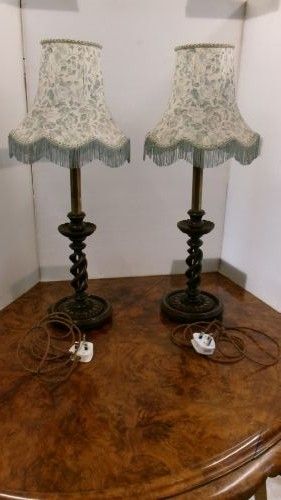


Jacobean Revival Table Lamps
These jacobean revival table lamps and transformed oak tables bring heavy timber presence and turn-of-the-century craftsmanship straight into a room.
Jacobean Revival Table Lamps
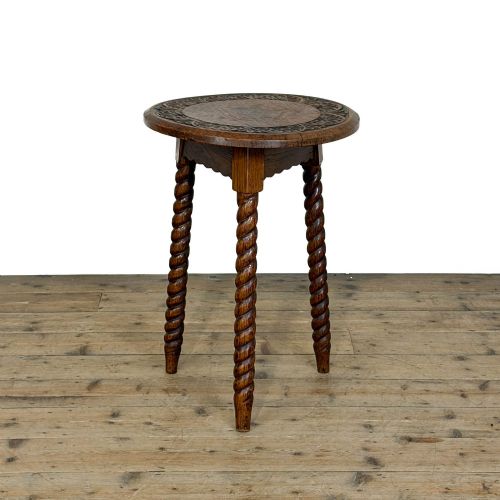
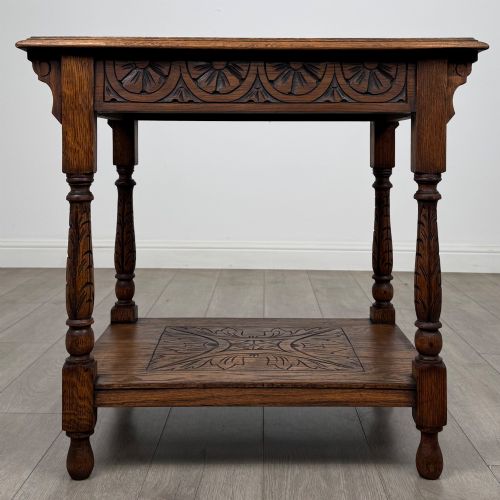
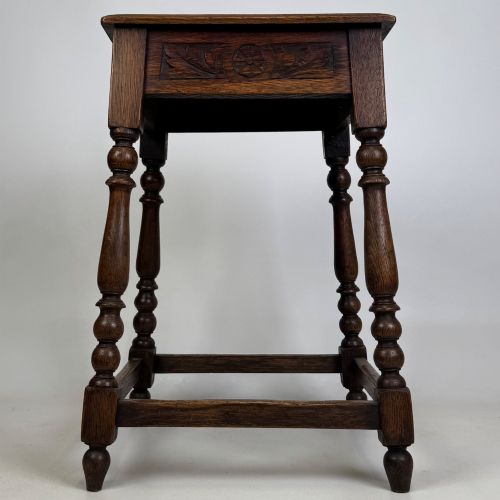
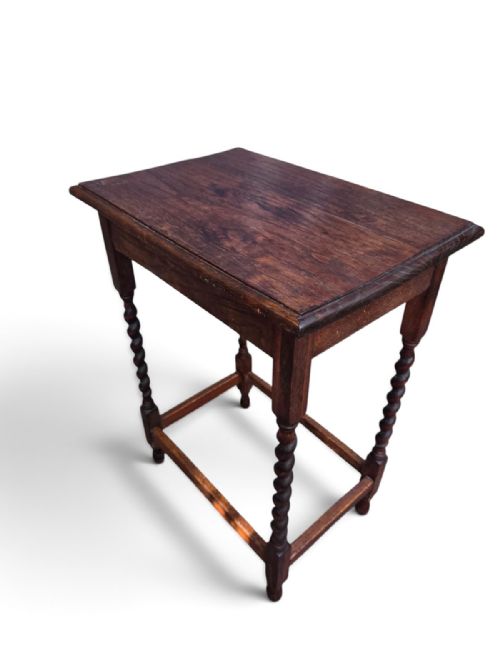
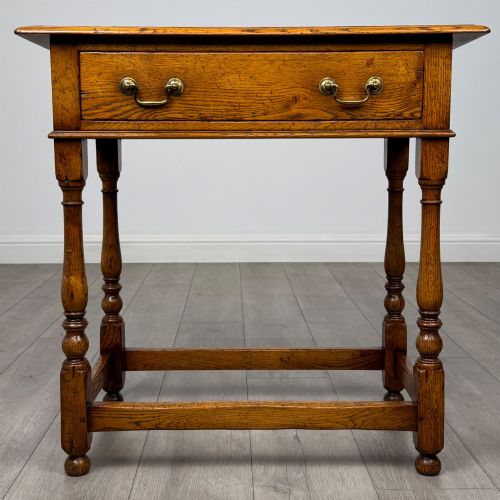
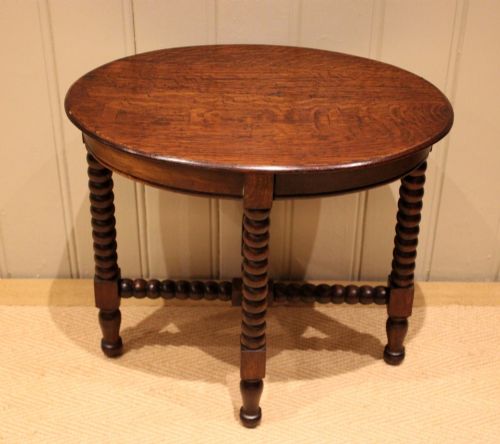
Jacobean revival table lamps and related lamp tables draw upon centuries-old British furniture traditions, surfacing mostly as pieces converted from solid oak side tables, occasional tables, and cricket tables. These forms date primarily across the Victorian, Edwardian, and 1920s periods, echoing heavier historical aesthetics through substantial timber construction.
Buyers searching this category encounter sturdy occasional tables and low side tables featuring carved details and turned woodwork. The selection leans heavily on oak furniture adapted for modern lighting, combining period character with functional illumination.
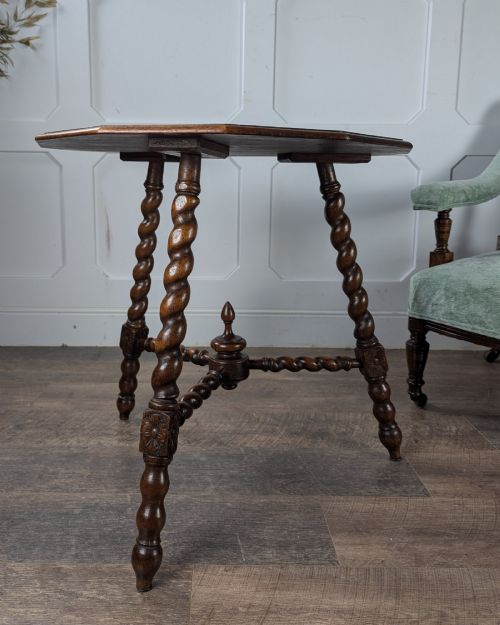
Origins span the nineteenth and early twentieth centuries, capturing a sustained Victorian and Edwardian fascination with revival styles. The tables themselves range from simple tripod bases to hexagonal and octagonal tops supported by distinctive turned legs.
How they were made
Makers utilised solid oak and hardwood timbers, shaping them with traditional joinery techniques to create durable lamp tables and occasional stands. Surfaces frequently display intricate hand carving, reflecting the revivalist desire for tactile, textured wood.
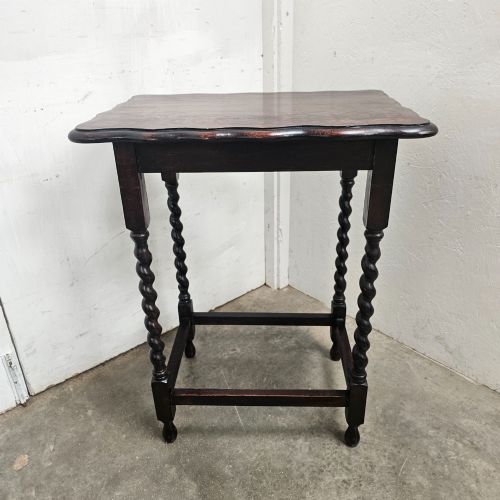
Turned components play a central structural role, notably in the production of barley twist legs that provide both stability and visual rhythm. Brass fixtures and fabric shades complete the conversion of these historical tables into functional lighting.
Many of these sturdy tables spent a century holding heavy porcelain bowls before someone wisely decided they made exceptional companions for reading lamps.
What varies in quality
The standard of carving determines much of the distinction across these pieces, moving from crisp, deep relief work on Victorian and Edwardian examples to simpler surface embellishments. Timber selection also dictates overall presence, with dense golden oak and figured hardwood displaying superior grain depth.
Structural integrity relies on the execution of the turned legs and joints, where firm weight and precise alignment separate robust examples from loose assemblies. The subtlety of the wood finish further defines the character of each piece.
The Jacobean Revival Table Lamps Glossary
- Barley twist
- A decorative turning style resembling a spiralling rope, commonly found on the legs of Victorian and Edwardian oak tables. This technique creates strong vertical lines that catch the light.
- Cricket table
- A small, lightweight three-legged table traditionally used in domestic spaces. Their tripod design ensures stability on uneven floors.
- Occasional table
- A versatile small table intended for flexible placement within a room. These forms provide convenient surfaces for lamps and small objects.
- Marquetry
- The art of applying decorative veneer pieces to a structure to form intricate patterns. This technique appears on select revival surfaces.
- Pie crust table
- A small table featuring a raised, shaped rim carved directly into the perimeter of the wooden top. The edge profile mimics pastry work.
Jacobean Revival Table Lamps: Frequently Asked Questions
How do I identify a true revival table?
Examine the timber colour, grain texture, and tool marks visible beneath the surface finish. Genuine period pieces show honest signs of age and traditional joint construction.
Look closely at the turning on the legs and the depth of any carved motifs to confirm nineteenth or early twentieth-century origins.
Were these originally made as lamps?
Most pieces in this category began life as side tables, occasional tables, or cricket tables before being adapted to hold modern electrical fittings. The conversion process integrates lighting components while preserving the historic wooden base.
This practical adaptation allows heavy timber furniture to serve contemporary living spaces without losing its period identity.
How do I care for antique oak?
Maintain the timber by applying natural beeswax occasionally to nourish the grain and protect the surface from drying out. Avoid placing oak furniture near direct heat sources or strong sunlight.
Dust regularly with a soft, dry cloth to preserve the depth of the carved details and the warmth of the wood.
What rooms suit these lamp tables?
These solid oak pieces anchor traditional studies, hallways, and living rooms where heavier textures complement the interior. Their compact footprints allow them to fit easily beside armchairs or sofas.
The rich tones of the wood bring warmth and historical weight to both period properties and eclectic modern spaces.
What defines Edwardian oak furniture?
Edwardian interpretations of earlier styles combine sturdy construction with slightly lighter proportions than their Victorian predecessors. Workshops frequently utilised golden oak to create bright, heavily figured surfaces.
Carved details on these tables remain crisp and decorative, honouring seventeenth-century motifs while suiting early twentieth-century homes.