

Jacobean Period Coffer
A jacobean period coffer provides sturdy timber storage rooted in seventeenth century domestic life, valued for honest joinery and deep historic character.
Jacobean Period Coffer
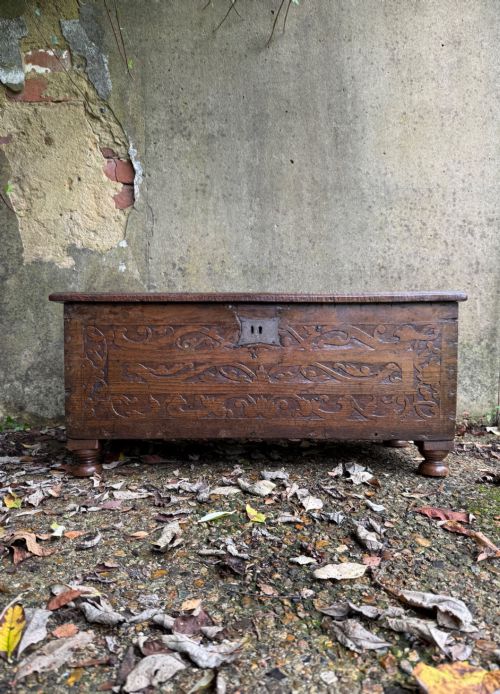
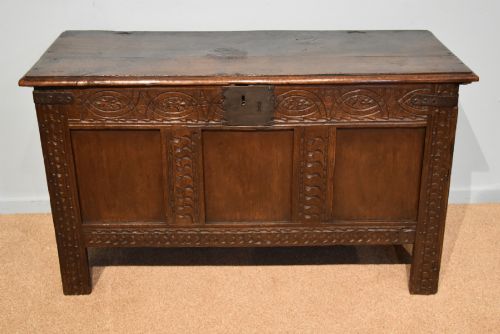
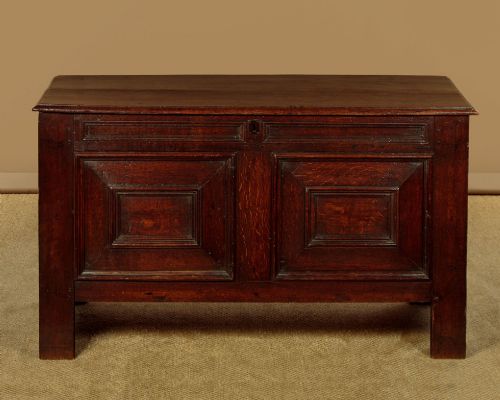
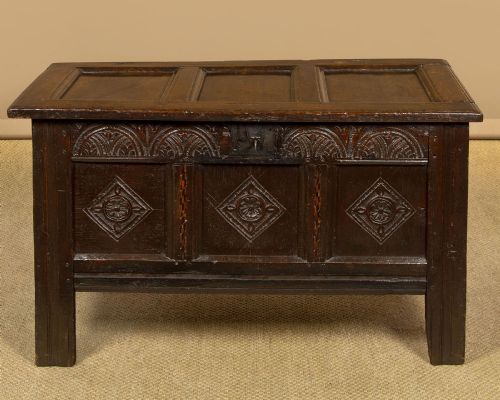
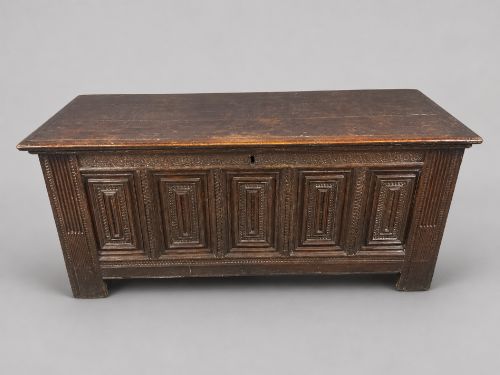
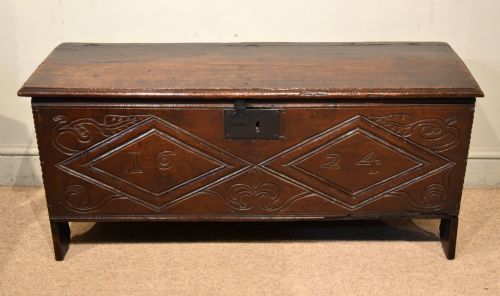
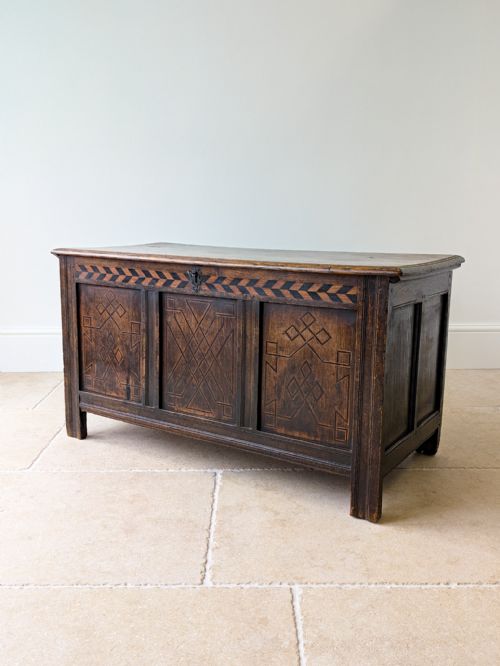
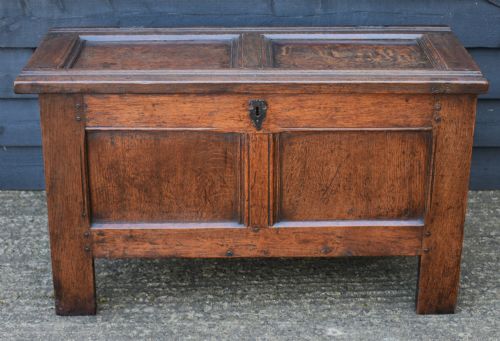
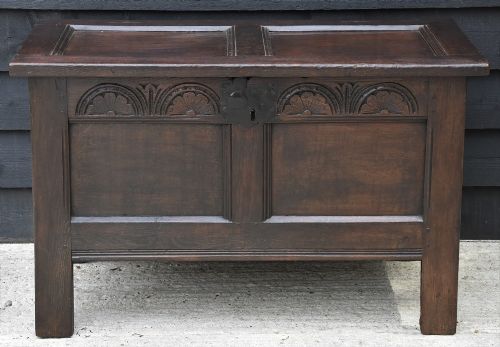
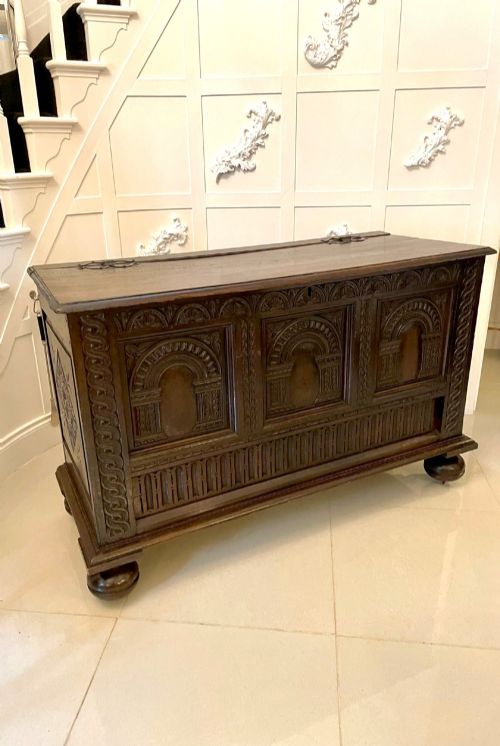
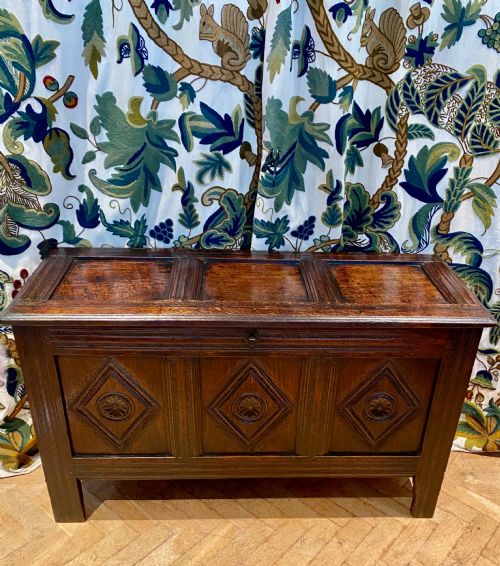
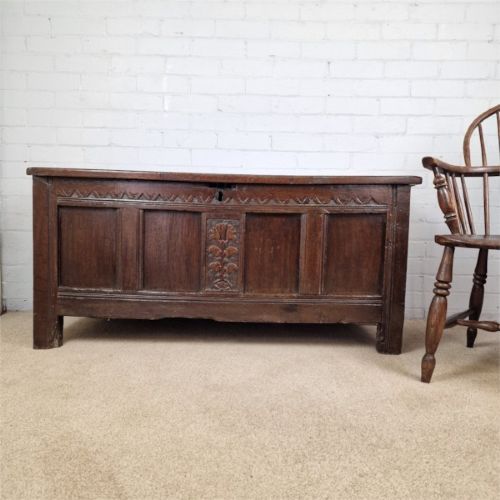
When searching for a jacobean period coffer, buyers encounter heavy timber boxes designed for secure domestic storage during the seventeenth century. These sturdy repositories range from plain panelled storage chests to carved examples bearing regional English origins.
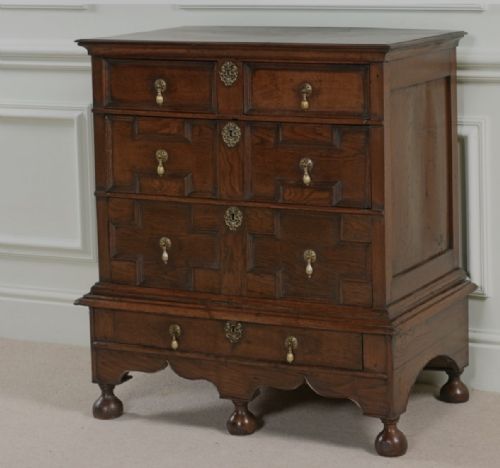
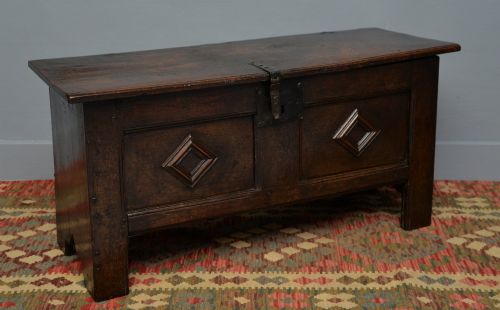
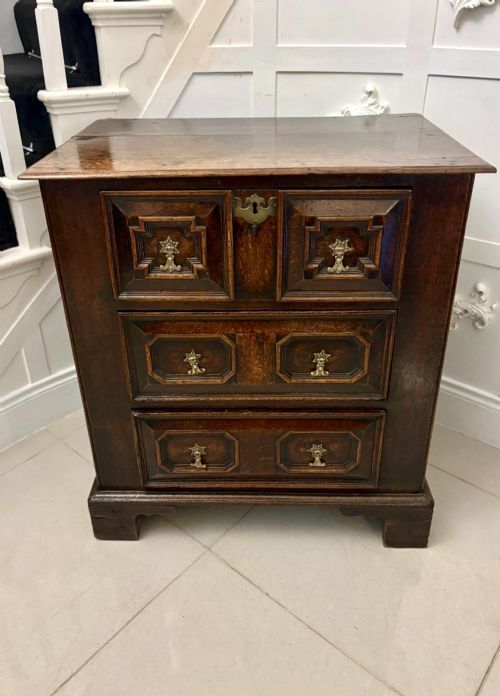
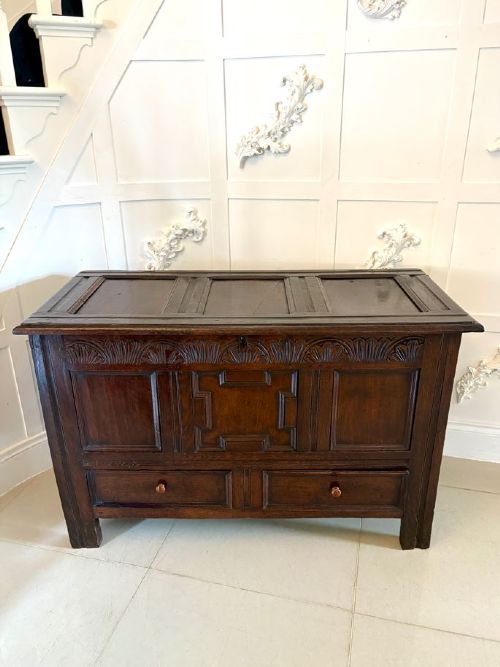
The pieces appearing on this page extend beyond simple blanket boxes to include related forms like mule chests, bible boxes, and geometric chests of drawers. Most examples date from the seventeenth century, supplemented by later revival pieces and occasional eighteenth century transitions.
Makers utilised native hardwoods to construct these robust chests for holding household linens, valuables, and documents. Surviving pieces demonstrate the practical evolution of domestic furniture across the Jacobean, Charles II, and Cromwellian eras.
Judging quality and character
The standard of a jacobean period coffer rests upon the depth of the hand-carved ornamentation and the integrity of the original joined framework. Crisp geometric moulding and well-preserved timber patination elevate certain examples above simpler utility boxes.
Proportions and regional characteristics also dictate desirability, with smaller scaled boxes and identifiable county origins holding particular appeal. The survival of original boarded lids and ironwork further distinguishes superior specimens from heavily restored equivalents.
Jacobean Period Coffer Retail Price Guide 2026
Typical asking prices for jacobean period coffer among the pieces listed under this phrase on Sellingantiques today, from the lower quarter to the upper quarter. They describe what is for sale here now, not the wider market.
Early owners often stored heavy woollens alongside dried lavender to deter moths, leaving a faint herbal trace across centuries.
The Jacobean Period Coffer Glossary
- Joined oak
- Furniture constructed using mortise and tenon joints secured with wooden pegs rather than metal nails. This traditional method defined seventeenth century cabinet making.
- Mule chest
- A storage chest featuring one or more drawers built into the base beneath the main compartment. These hybrid forms emerged as domestic storage needs expanded.
- Bible box
- A small tabletop desk or box with a sloping or flat lid designed to hold sacred texts and writing materials. These compact pieces share the construction methods of larger coffers.
- Panelling
- Wooden framework composed of stiles and rails enclosing thinner floating panels. This technique prevented the timber from splitting as humidity shifted.
Jacobean Period Coffer: Frequently Asked Questions
What were coffers used for originally?
Households utilised these heavy chests primarily to store valuable textiles, blankets, and family documents securely. Their robust construction and lidded design kept contents safe from dampness and pests in early homes.
Over time, these versatile pieces also served as seating benches or tables within main living spaces. Their secure locking mechanisms made them essential strongboxes for safeguarding family wealth before fitted closets existed.
How do I care for antique oak furniture?
Keep wooden pieces away from direct heat sources and dramatic humidity swings to prevent the timber from splitting. Apply traditional beeswax occasionally to nourish the surface and maintain the natural sheen.
Avoid modern chemical polishes that can degrade the historic finish over time. Gentle dusting with a dry cloth is sufficient for routine maintenance of older surfaces.
How can I date a seventeenth century chest?
Examine the construction methods, tool marks, and fastener types visible on the interior and underside of the piece. Hand-riven oak, wooden peg assembly, and early wrought iron hinges typically point towards the 1600s.
Stylistic clues such as geometric mouldings, strapwork carving, and regional joinery traits help narrow down the decade of production. Comparative study of dated examples provides further chronological reference points.
Where should I place a coffer at home?
Position these substantial chests against a sturdy hallway wall or at the foot of a bed for practical everyday storage. Their flat tops also provide a convenient surface for displaying lamps or decorative objects.
Ensure the chosen spot remains stable and out of reach of strong sunlight to protect the aged timber. Adequate clearance around the piece allows the lid to open fully without striking walls.