

Jacobean Panelled Chest
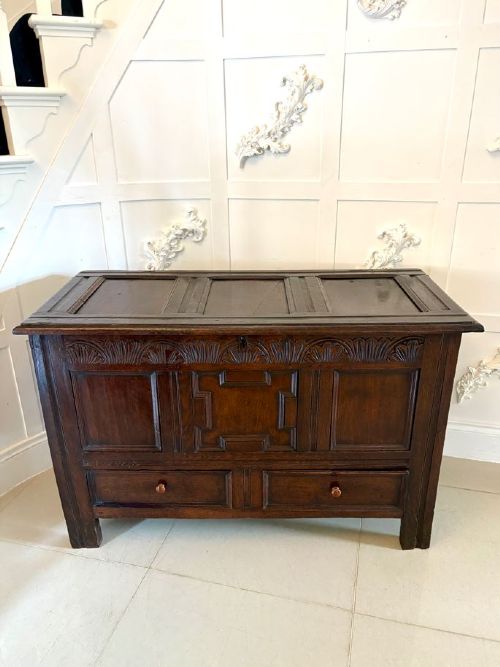
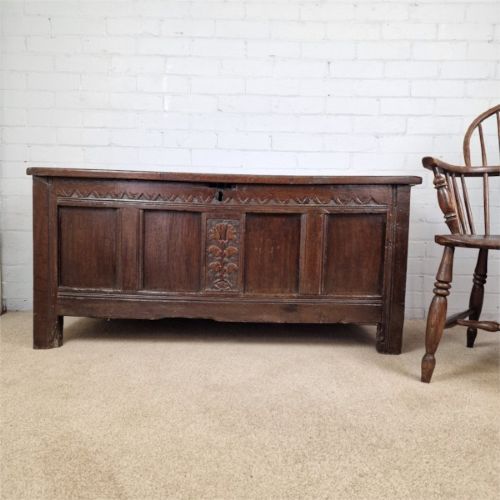
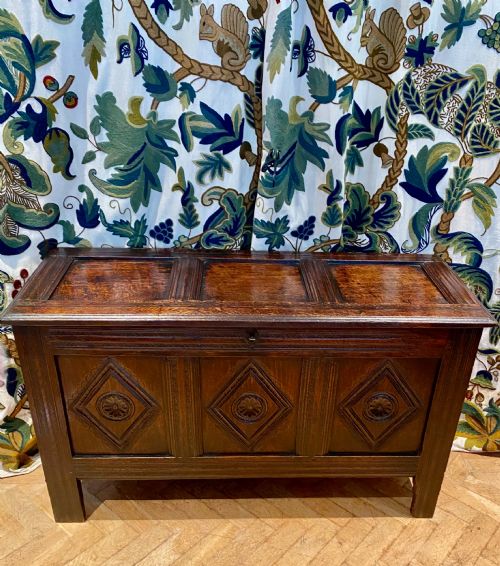
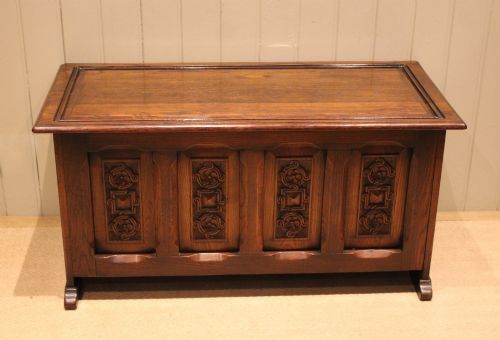
The jacobean panelled chest is a sturdy timber storage piece that brings centuries of history and rich joinery into a room.
Jacobean Panelled Chest
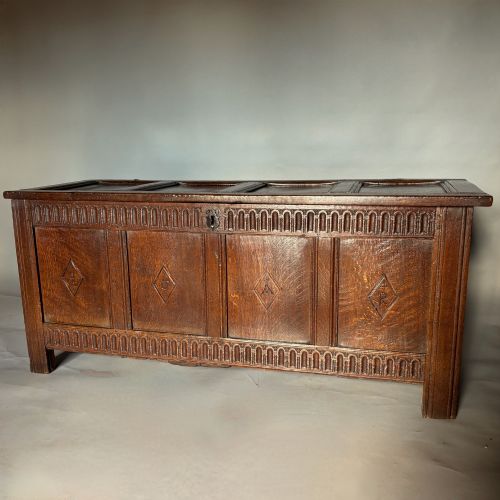
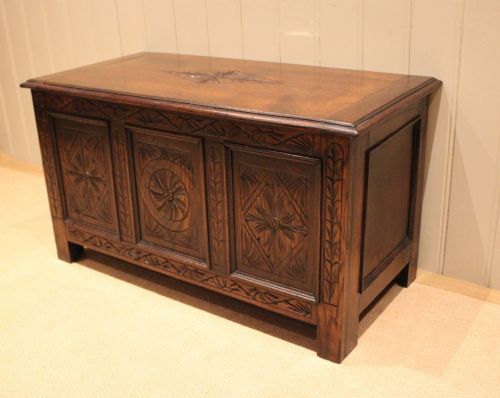
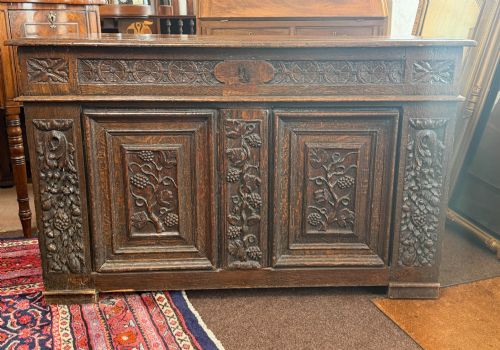
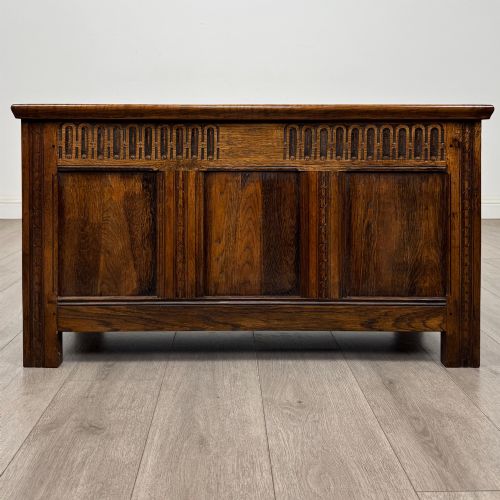
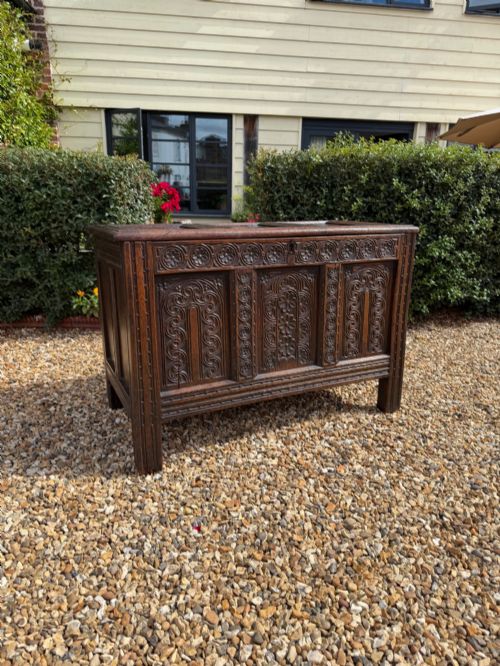
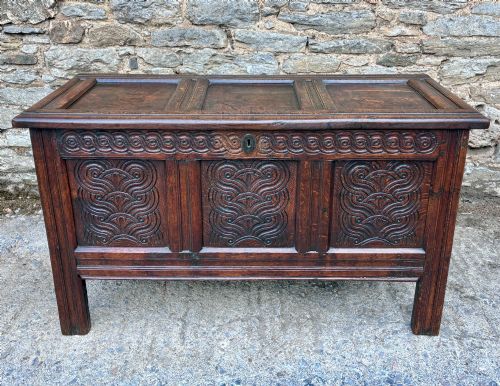
A jacobean panelled chest is a heavy storage box built from solid timber, commonly found in forms such as coffers, blanket chests, and chests of drawers. Most examples on this page date from the seventeenth century or appear in later revival styles from the twentieth century.
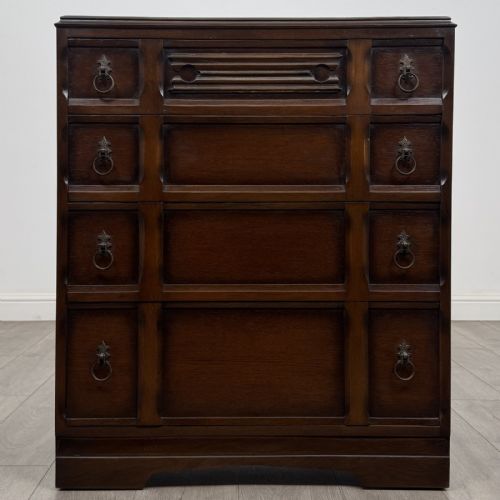
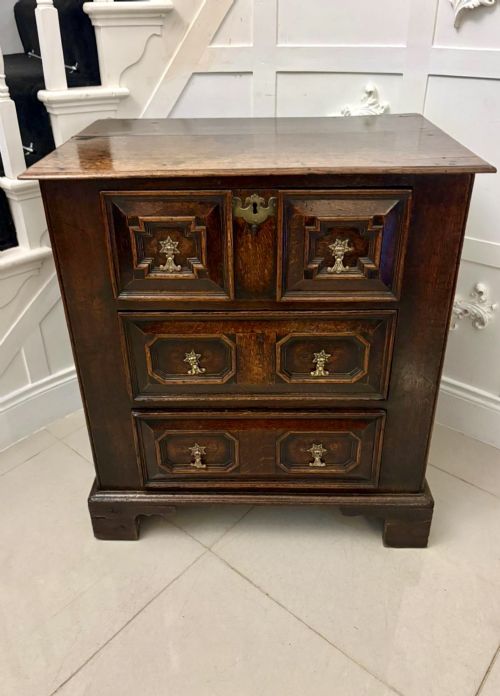
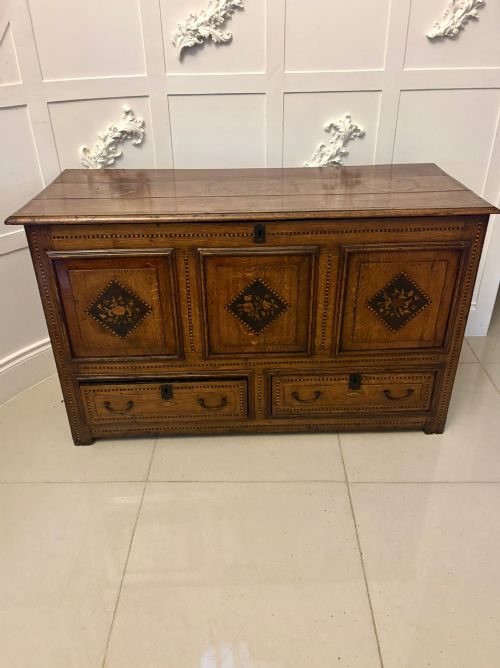
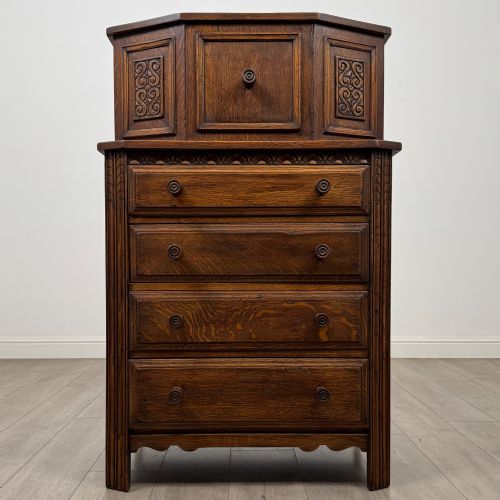
The construction relies on sturdy framing with inset panels, creating a robust box designed to hold household goods, linens, or valuables. Alongside standard coffers, the selection includes mule chests with drawers beneath the main compartment and early chests of drawers.
Originating in English country houses and domestic interiors, these pieces span periods from the James I and Charles II eras through to Edwardian and later revival interpretations. The primary material across nearly every piece is oak, sometimes enhanced with walnut or contrasting inlay.
What Varies in Quality
The standard of a piece depends heavily on the crispness of the hand carving and the depth of the panel mouldings. Early period examples with untouched original surfaces and tight joinery stand apart from later reproductions or heavily restored boxes.
Proportions also dictate desirability, with smaller proportions and intact original bases or stands commanding greater interest among collectors. The integrity of the timber panels and the survival of period hardware influence the overall character of the piece.
Some small-proportion coffers were built precisely compact enough to travel on horseback across seventeenth-century English roads.
The Jacobean Panelled Chest Glossary
- Coffer
- A large wooden chest used historically for storing valuables, documents, or clothes. These pieces usually feature a hinged lid and robust panelled construction.
- Mule chest
- A storage chest that incorporates one or more drawers at the base beneath the main lift-up compartment. This hybrid form gained popularity as domestic storage needs evolved.
- Linenfold
- A style of wood carving that imitates folded cloth, commonly seen on panels of early furniture. This motif provides texture and architectural interest to the front elevation.
- Geometric
- A decorative pattern formed using raised mouldings or contrasting veneers, often associated with late seventeenth-century drawer fronts. Walnut and oak were frequently combined for these striking facade designs.
- Stile
- The vertical upright member in a panelled timber frame. Stiles provide the primary structural support that holds the inset panels firmly in place.
Jacobean Panelled Chest: Frequently Asked Questions
What is the difference between a coffer and a chest?
A coffer traditionally opens from a hinged lid at the top and serves as a deep box for general storage.
A chest often includes drawers or specialised compartments, representing a more evolved form of domestic furniture.
How do I date an antique oak chest?
Dating relies on examining the construction methods, tool marks, timber grain, and joinery style used in the frame.
Seventeenth-century pieces typically show hand-riven oak, pegged mortise and tenon joints, and distinct regional carving patterns.
Where were these chests placed in a historic home?
These robust pieces sat primarily in bedchambers, halls, or parlours to store heavy textiles, bedding, and family documents.
Their solid build also allowed them to double as extra seating or tables when needed within the room.
How do I care for a solid oak chest?
Maintain the timber by keeping the piece away from direct heat sources and sudden humidity changes that cause wood to split.
Apply a traditional beeswax polish occasionally to nourish the dry grain and preserve the historic surface patina.