

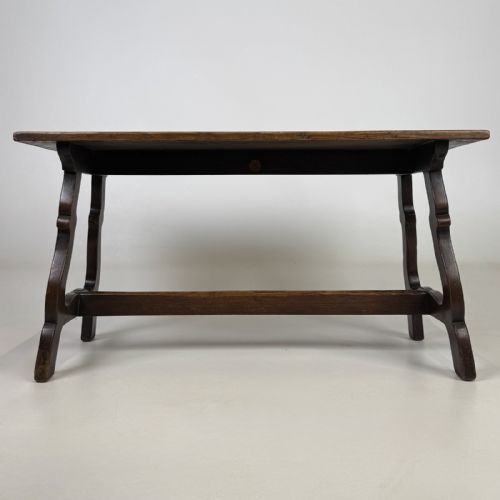
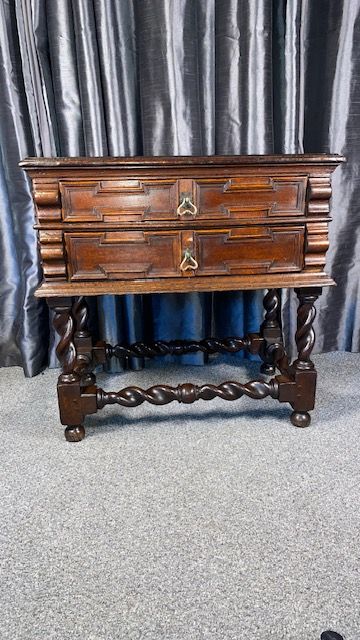
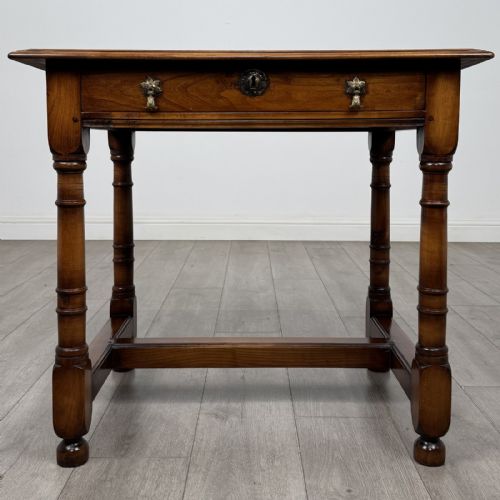
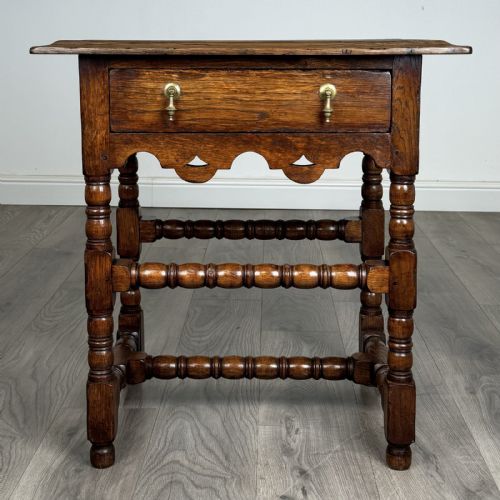



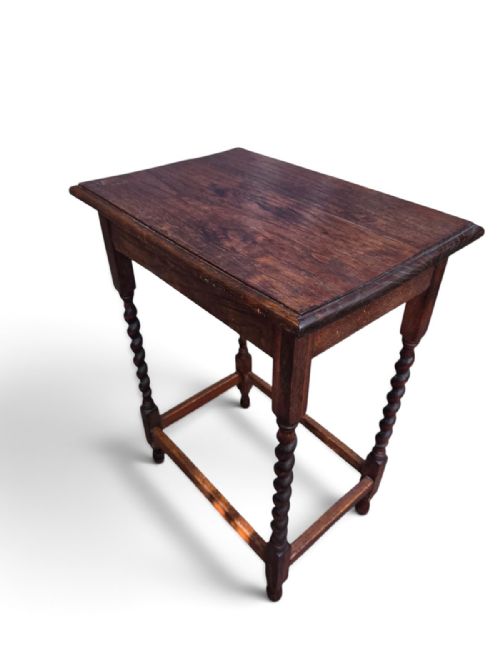
Jacobean Occasional Table
A jacobean occasional table brings the heavy grain and dark tones of seventeenth-century English interiors directly into modern rooms.
Jacobean Occasional Table
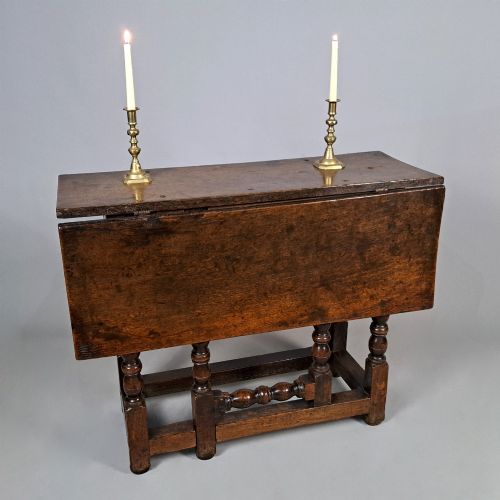
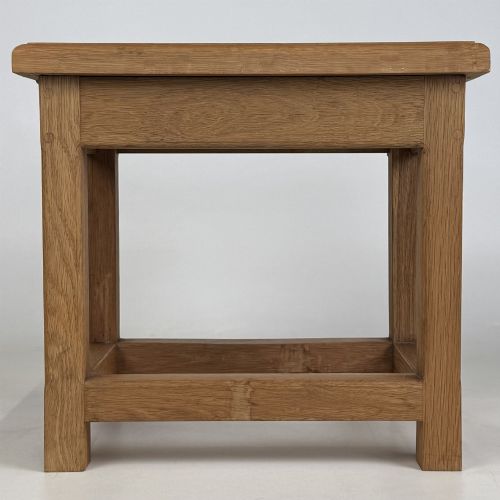
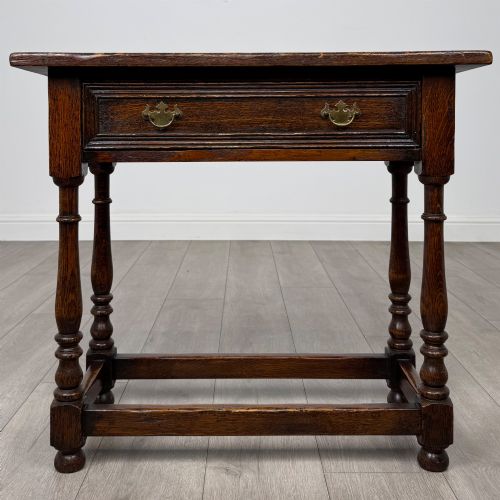
When you search for a jacobean occasional table, you encounter a mix of genuine seventeenth-century survivals and later revivals from the Edwardian era and the nineteen-twenties. These pieces serve primarily as side tables, lamp tables, or small coffee tables within a room.
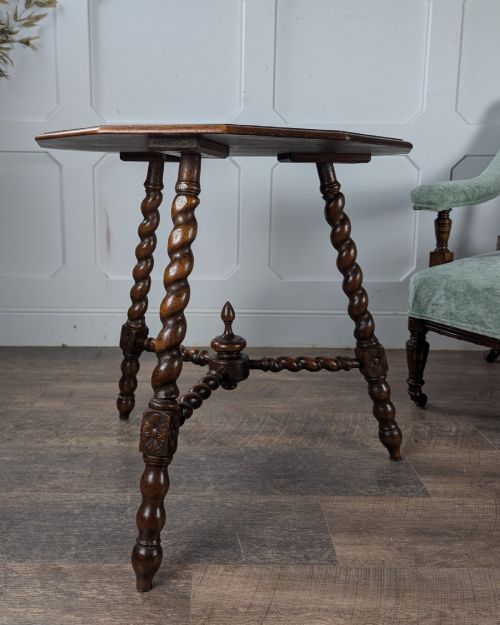
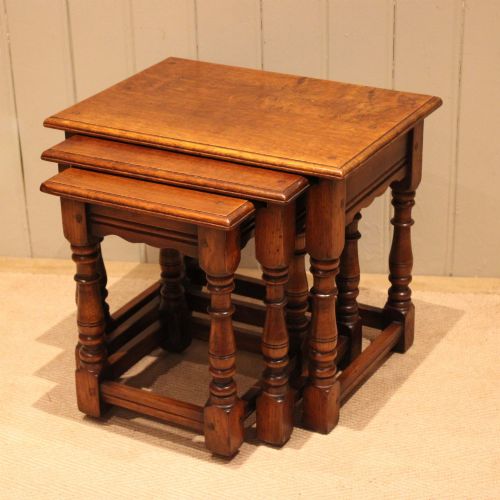
The majority of items meeting this description date from the early twentieth century or the late nineteenth century, built in the Jacobean Revival style alongside authentic period pieces from the seventeen-hundreds. Forms range from simple side tables and gateleg tables to joint stools and nests of tables repurposed for daily use.
Judging the Workmanship
Quality in these pieces rests upon the crispness of the hand-carving and the integrity of the timber selection. Tables featuring deep, well-defined relief work on the frieze or legs stand apart from simpler production items.
The choice between solid oak or mixed timbers and the preservation of original surface patination dictate the standing of an individual piece. Finer examples retain their structural honesty and surface character without excessive modern intervention.
Jacobean Occasional Table Retail Price Guide 2026
Typical asking prices for jacobean occasional table among the pieces listed under this phrase on Sellingantiques today, from the lower quarter to the upper quarter. They describe what is for sale here now, not the wider market.
A Green Man peers out from a nineteenth-century oak table, watching quietly over the room.
The Jacobean Occasional Table Glossary
- Jacobean Revival
- A nineteenth and twentieth century style that copies the heavy proportions, dark oak, and carved ornamentation of the early seventeenth century. It brought seventeenth-century design motifs into Edwardian and later homes.
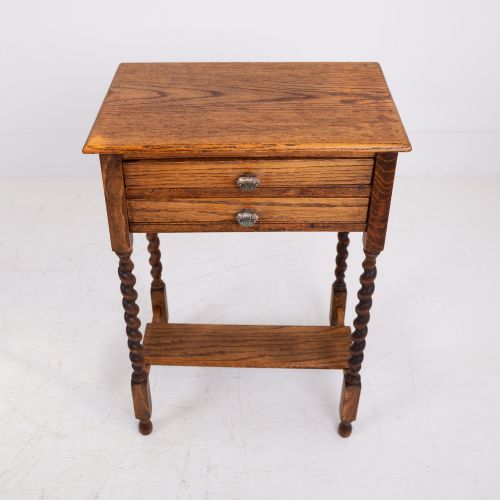
- Barley Twist
- A type of turning shaped like a spiral rope, common on the legs and stretchers of seventeenth-century and revival tables. This technique became especially popular during the late Victorian and Edwardian periods.
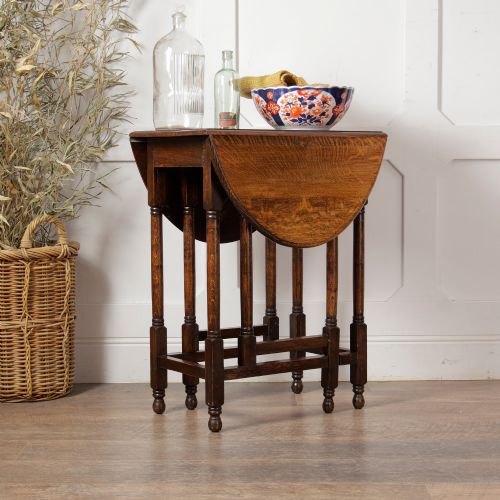
- Gateleg Table
- A table with hinged drop-leaves supported by legs that swing outward like a gate. This form allows the table to expand or contract according to space requirements.
- Joint Stool
- A sturdy wooden stool constructed with mortise and tenon joints, often used historically as seating or small makeshift tables. Many surviving examples date from the seventeenth century or later revival periods.
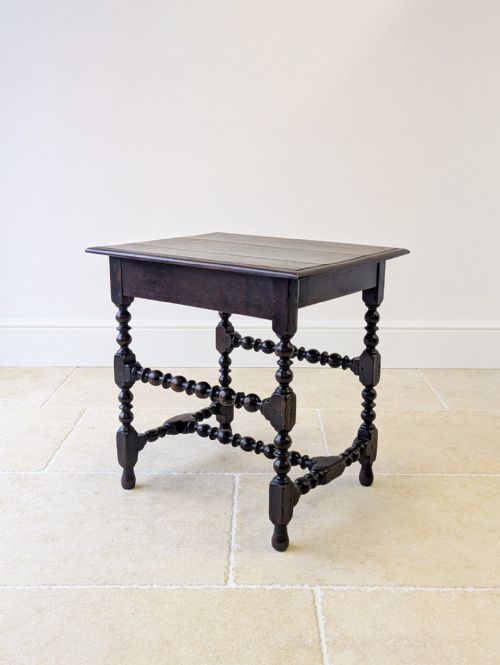
- Bobbin Turned
- A form of woodturning characterised by a series of rounded, spool-like shapes alternating along the length of a leg or stretcher. This decorative turning style frequently appears on seventeenth-century furniture.
Jacobean Occasional Table: Frequently Asked Questions
How do I spot a revival table?
Revival tables usually date from the Edwardian period or the nineteen-twenties, showing standardised machine-cut elements rather than the hand-riven boards of the seventeen-hundreds.
Examine the underside and joints for modern fixings or saw marks that indicate a later twentieth-century manufacture date.
Were these used as lamp tables originally?
Original seventeenth-century tables served diverse domestic purposes for writing, holding food, or supporting small objects, long before electric lamps existed.
Edwardian and later makers adapted these sturdy small forms specifically to hold electric table lamps in period-styled homes.
How should I care for solid oak?
Keep solid oak furniture away from direct heat sources and sudden humidity changes to prevent the timber from splitting or warping over time.
Apply a traditional beeswax polish occasionally to nourish the grain and maintain the natural lustre of the wood.
What is a Green Man carving?
A Green Man is a sculptural motif showing a human face surrounded by or sprouting from foliage, symbolizing rebirth and spring.
This decorative element appears on Victorian Gothic Revival and later oak furniture, adding a distinct mythological detail to the frieze.