

Jacobean Oak Trunk
A jacobean oak trunk brings heavy timber, deep carving and centuries of domestic storage directly into a modern room.
Jacobean Oak Trunk
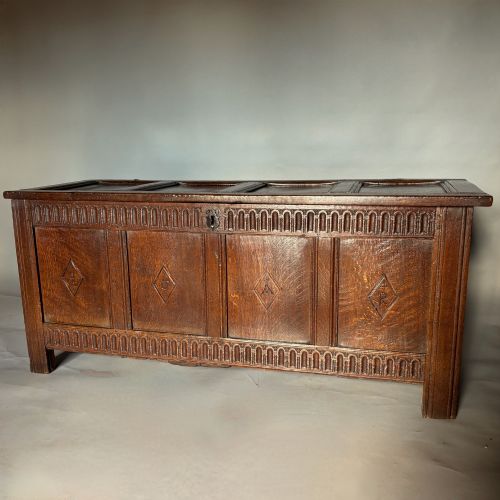
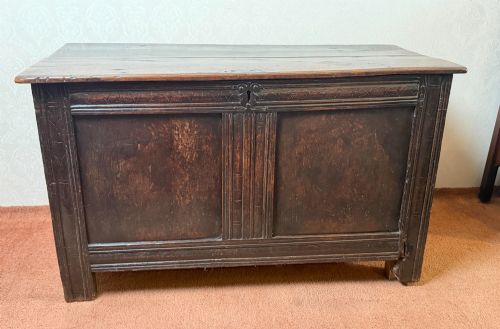
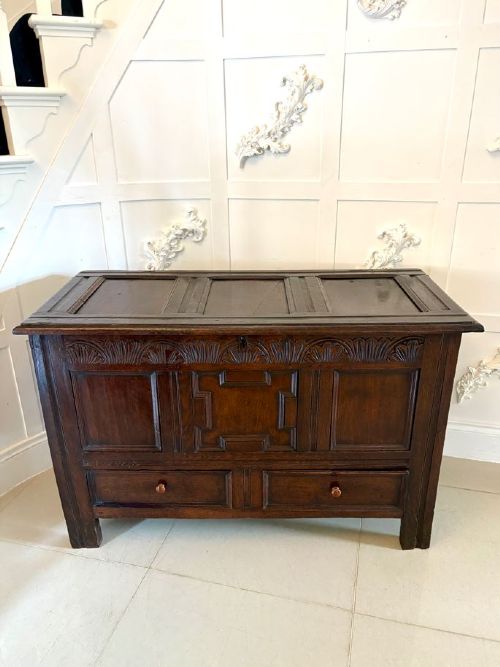
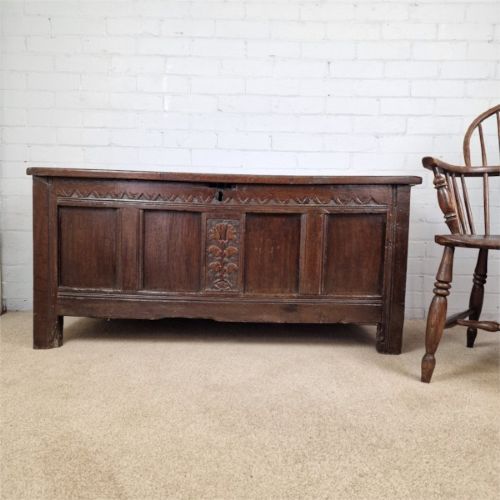
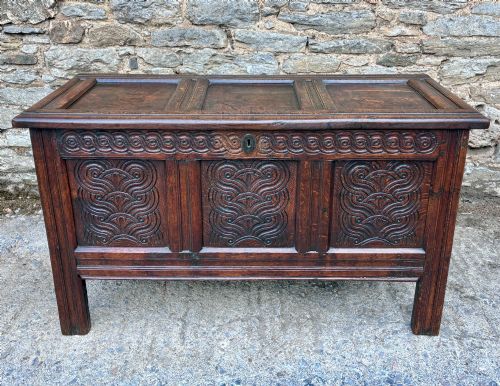
When you search for a jacobean oak trunk, you encounter robust storage furniture primarily built during the seventeenth century or recreated later in revival styles. These pieces function as heavy blanket chests, coffers and mule chests designed to hold household textiles and valuables.
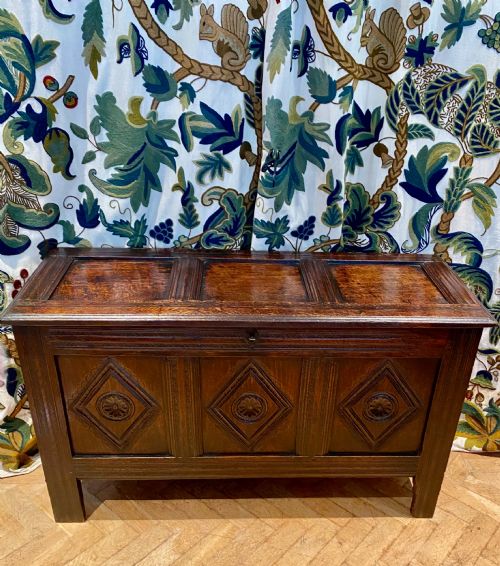
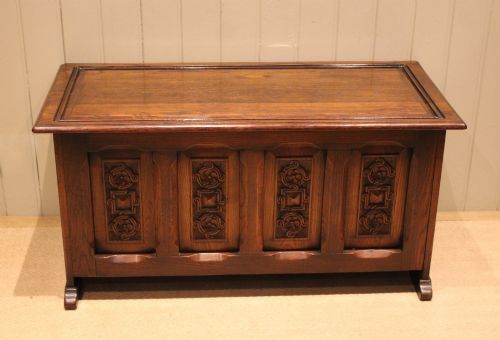
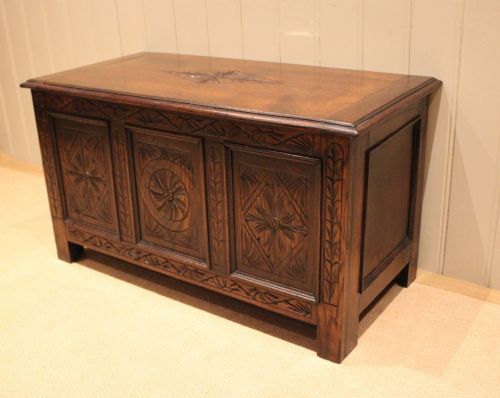
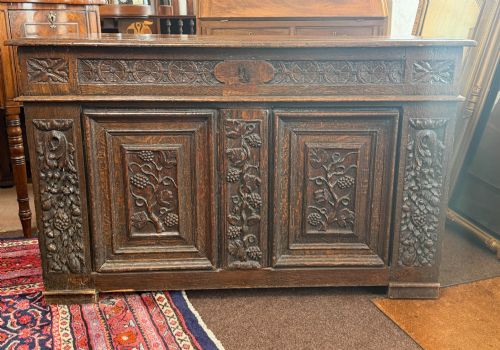
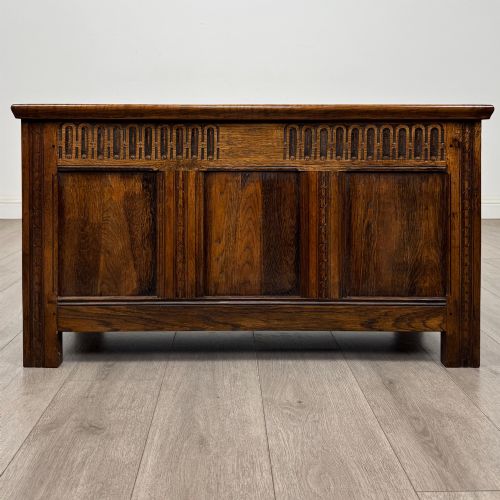
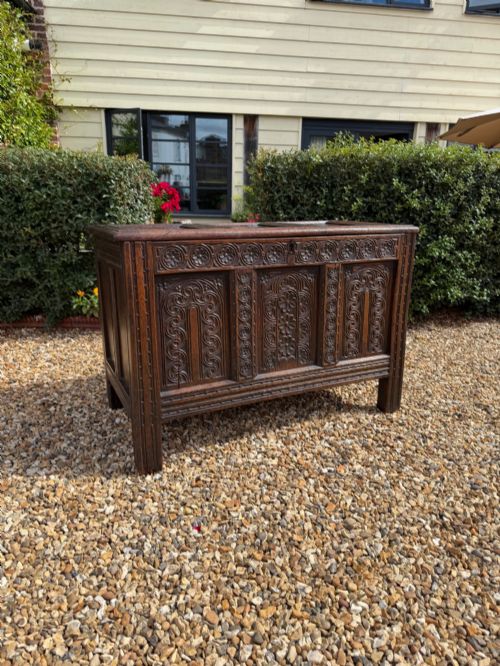
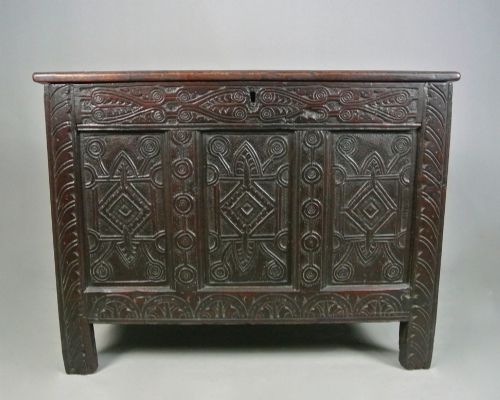
The most common form on this page is the panelled oak coffer, often decorated with carved geometric patterns, lunettes or architectural motifs. Alongside genuine seventeenth-century examples, the selection includes pieces from later centuries built in a seventeenth-century style.
Origins stretch across English country houses and regional workshops, yielding sturdy storage boxes that vary from simple planked constructions to elaborately carved joined boxes.
Materials and Construction
Makers built these trunks using solid oak timber, frequently employing frame and panel construction to accommodate the natural expansion and contraction of wood over time. Iron hinges, latches and brass details reinforced lids and corners while adding utilitarian strength.
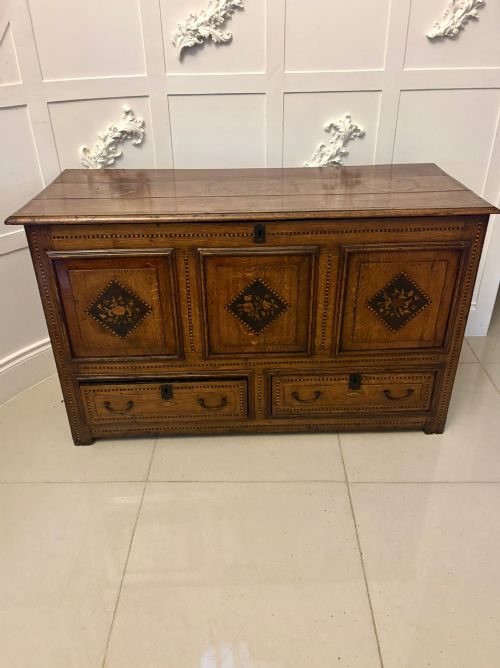
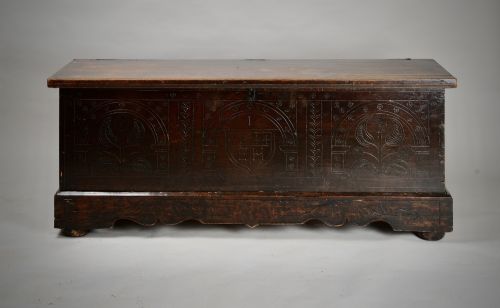
Surface decoration relied heavily on hand carving, utilising gouges and chisels to cut relief patterns directly into the timber. Certain examples incorporate marquetry inlay and mixed inlay woods or ebonised wood to create contrasting geometric designs across the front panels.
Several chests retain centuries of accumulated wax polish in the corners of their carvings, reminding you that generations touched these lids.
Assessing Quality
Quality in these trunks rests on the crispness of the hand carving and the integrity of the original joined timber structure. Pieces retaining their early hinges, original boards and undisturbed surface patination stand apart from heavily restored alternatives.
Proportion and scale also dictate distinction, with smaller proportions and well-balanced panel layouts commanding particular attention from collectors seeking domestic utility combined with decorative restraint.
The Jacobean Oak Trunk Glossary
- Cofer
- A large chest used for storing clothing, valuables or documents. These heavy boxes typically sat at the foot of beds or along hall walls in early homes.
- Mule chest
- A storage chest featuring one or more drawers beneath the main lift-top compartment. This form bridges the traditional cofer and the modern chest of drawers.
- Linenfold
- A style of wood carving panel decoration resembling folded linen cloth. This motif appears frequently on early panels.
- Marquetry
- The art of applying pieces of veneer to a structure to form decorative patterns. Craftsmen utilised various woods to create contrasting pictorial surfaces.
- Cassone
- An Italian-style chest or coffer used for storage. The term occasionally appears in English records for continental or continental-inspired forms.
Jacobean Oak Trunk: Frequently Asked Questions
What did people store in a jacobean oak trunk?
Households used these heavy chests primarily for storing textiles, woollens, linen sheets and valuable household goods.
Because cupboards were uncommon in early domestic interiors, a secure trunk kept precious items safe from dust and damp.
How do I date a seventeenth century oak coffer?
Dating relies on examining the construction methods, tool marks, joint types and the style of the hand carving.
Original hinges, pegged joints and timber shrinkage patterns provide reliable clues to the age of the piece.
Are revival trunks as good as seventeenth century ones?
Revival pieces from later periods were constructed with solid oak and traditional methods to emulate earlier designs.
While they lack the centuries of age associated with seventeenth-century examples, they offer robust utility and craftsmanship.
Where should I place a heavy oak chest at home?
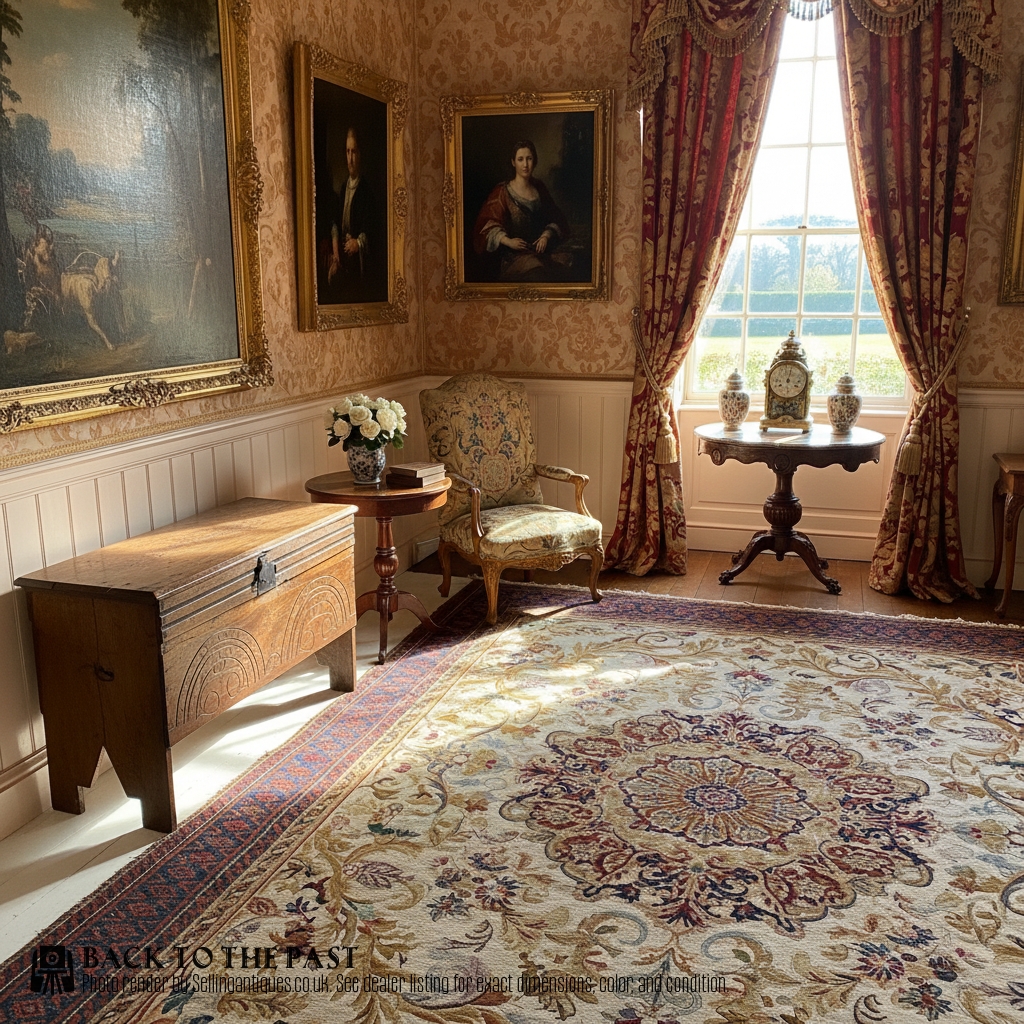
These sturdy chests suit hallways, living rooms or bedrooms where their flat lids can serve as surface display space.
Position them away from direct heat sources and radiators to protect the solid timber and historic finish.