
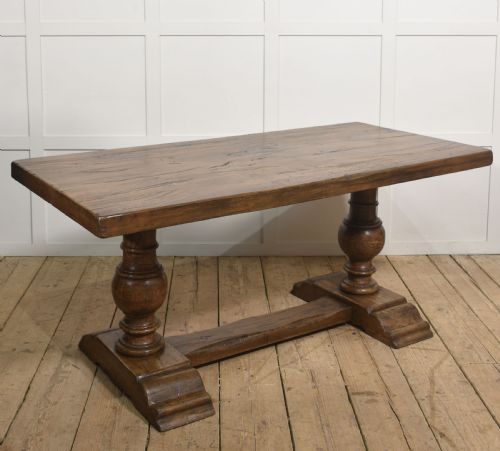
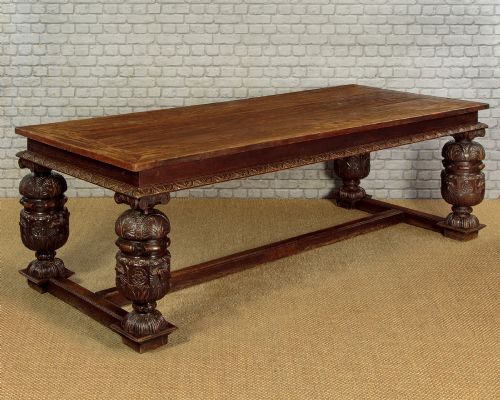


Jacobean Oak Trestle Table
A jacobean oak trestle table brings heavy timber construction and centuries of domestic history straight into a modern dining room.
Jacobean Oak Trestle Table
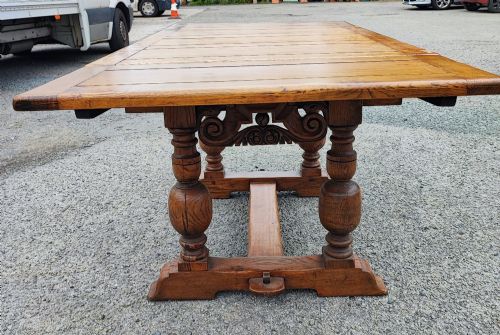
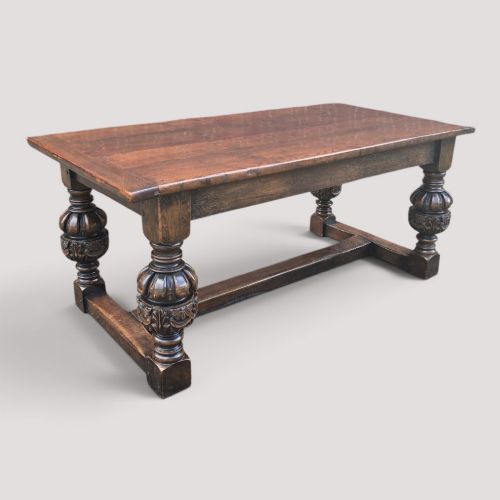
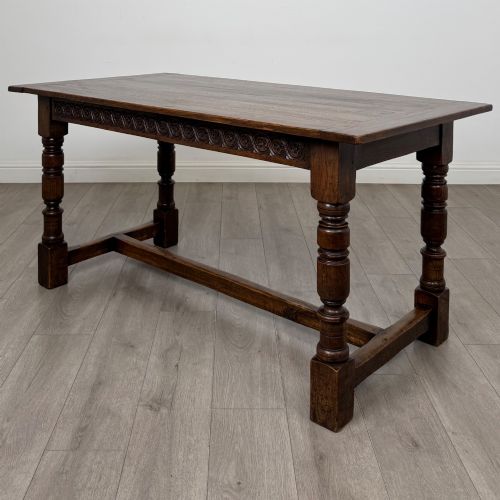
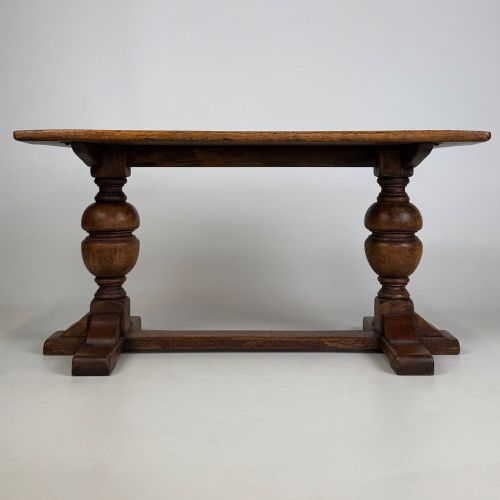
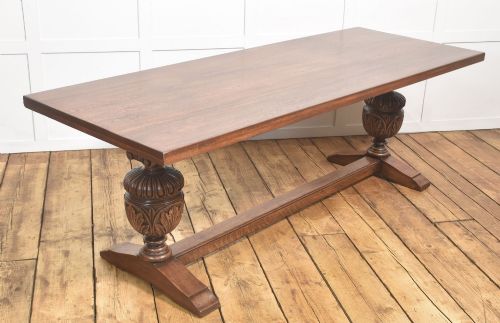
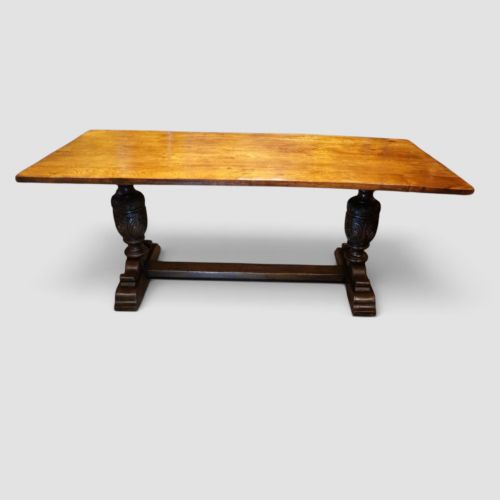
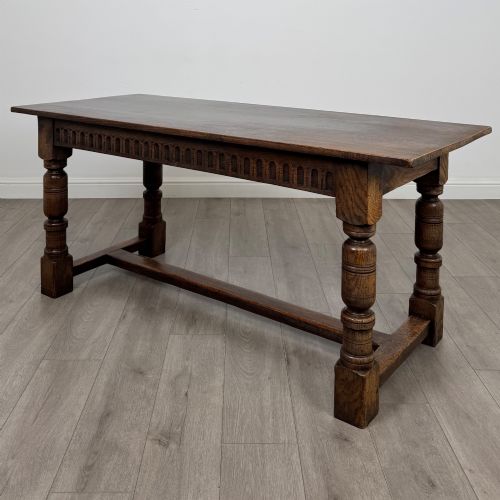
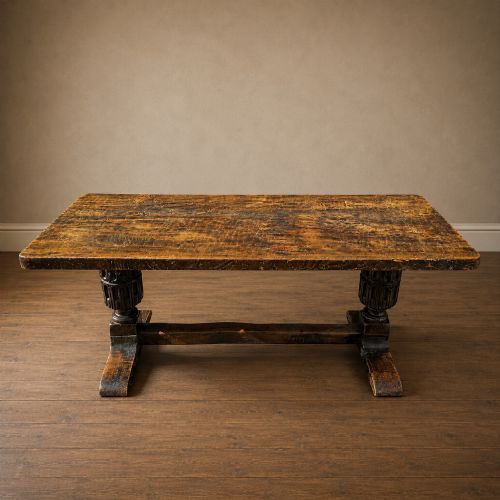
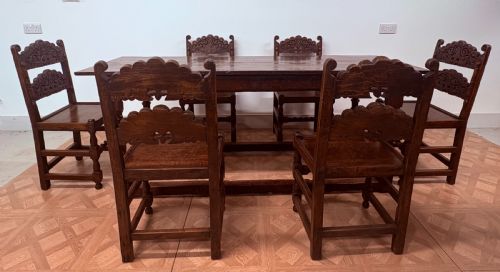
A jacobean oak trestle table is a substantial dining or refectory surface defined by long rectangular boards and sturdy supporting frameworks. These tables emerge from original seventeenth-century contexts as well as later revival periods spanning the nineteenth and twentieth centuries.
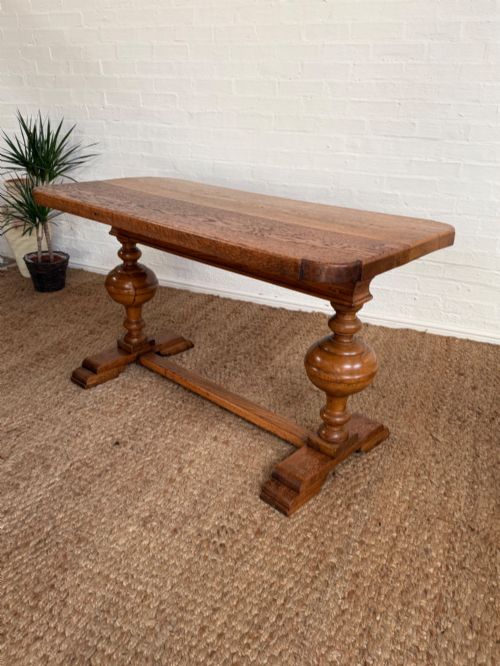
Buyers frequently encounter revival pieces alongside genuine period examples from the seventeenth century. Forms range from large dining tables to smaller coffee and side tables utilising similar structural traditions.
How they were made
Carpenters utilised solid oak alongside secondary timbers such as elm for single plank tops and framing components. Metal and brass fixings occasionally appear in structural joints or hardware details across various periods.
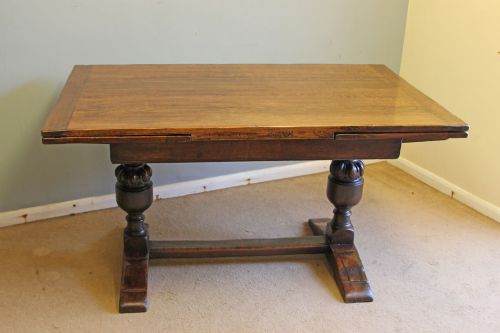
Construction methods relied on heavy timber planks joined to sturdy trestle or refectory bases designed to support heavy daily use. Carved ornamentation and draw leaf mechanisms demonstrate the joinery skills applied by period makers.
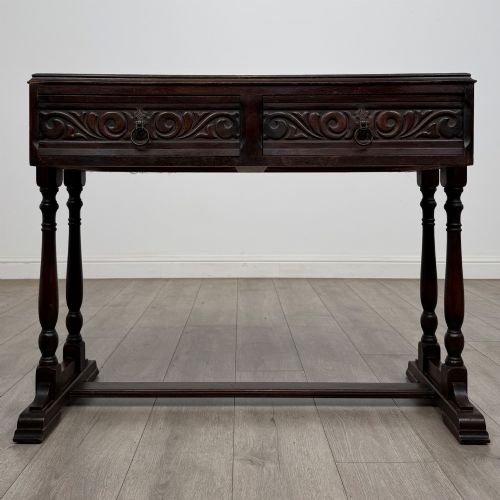
Among the heavy dining furniture hides a single miniature wine table, proving that even historic joiners enjoyed small projects.
What varies in quality
The degree of original timber retention separates standard revival pieces from authentic seventeenth-century survivors. Tables featuring single plank elm or oak tops display greater integrity than those constructed from multiple joined boards.
Carving depth and crispness indicate the skill level of the maker, whether working in the Tudor revival style or during the seventeenth century. Proportional balance between the heavy top and the trestle base determines the visual success of the piece.
The Jacobean Oak Trestle Table Glossary
- Refectory table
- A long narrow dining table historically used in monasteries and large halls. This form dominates the available selection.
- Trestle base
- A support structure consisting of upright posts connected by a horizontal stretcher near the floor. This design provides maximum legroom along the length of the table.
- Draw leaf
- An extension mechanism featuring sliding leaves tucked beneath the main top. It allows the surface area to expand quickly.
- Plank top
- A surface constructed from wide boards joined edge to edge. Single plank versions are particularly prized by collectors.
Jacobean Oak Trestle Table: Frequently Asked Questions
Are these tables suitable for everyday dining?
These robust surfaces handle daily meals easily while adding historic character to a kitchen or dining room.
Their solid construction ensures they withstand regular family use without losing stability.
How do I identify a seventeenth century original?
Original pieces display authentic tool marks, natural timber shrinkage, and period-specific joinery methods.
Revival versions from the Victorian and Edwardian eras often show machine sawing and different surface wear patterns.
What is the difference between a refectory and a trestle table?
Refectory tables generally describe long narrow dining boards, while trestle tables specifically define the style of base support underneath.
Many listings combine these terms because the designs overlap significantly.
How do I care for an old oak surface?
Protect the timber by using mats for hot dishes and wiping up liquid spills promptly with a dry cloth.
Applying occasional beeswax maintains the natural lustre of the wood without sealing the grain.