
Brown Oak Plank Table
A brown oak plank table brings deep timber grain and substantial boards into a room, shaped by centuries of farmhouse and refectory use.
Brown Oak Plank Table
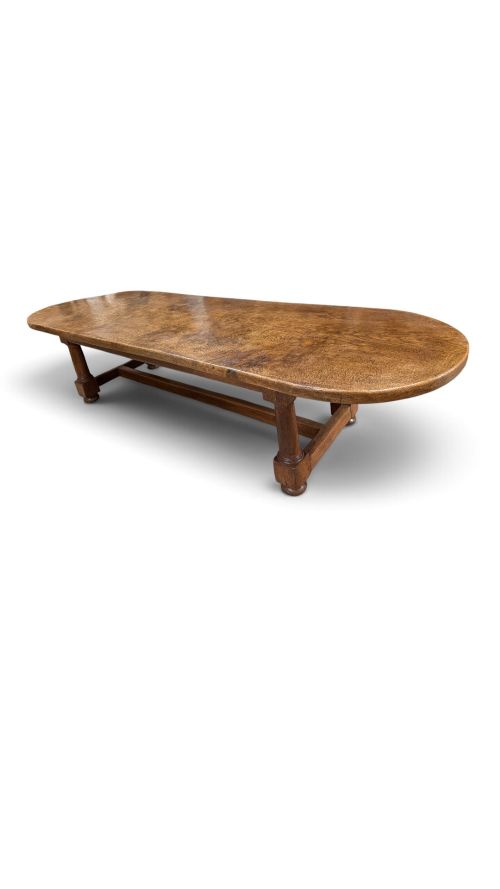
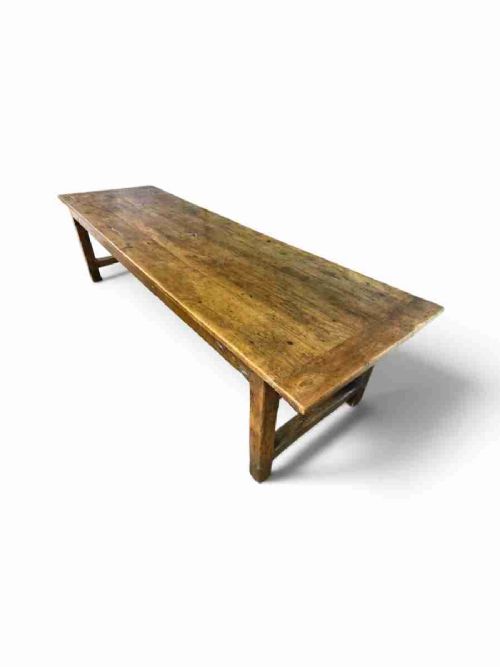
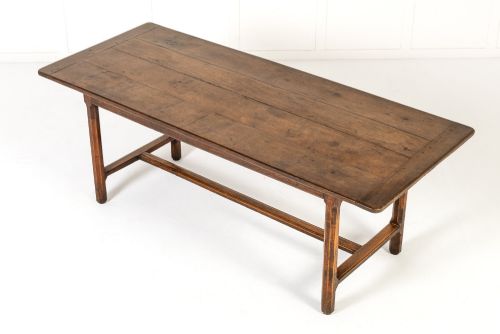
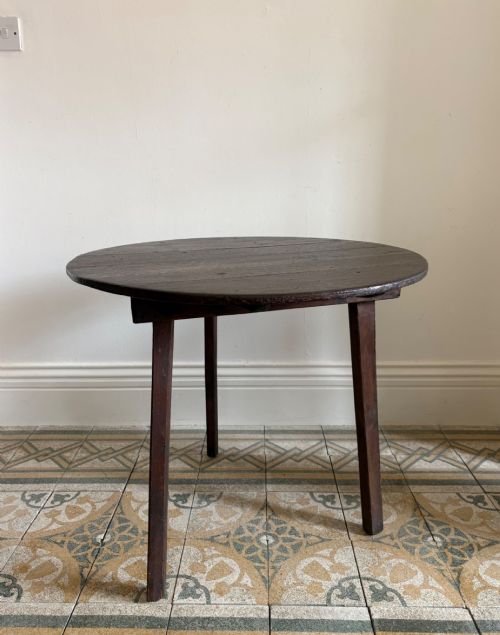
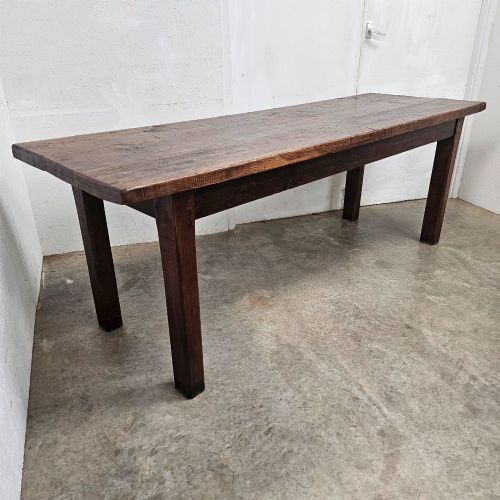
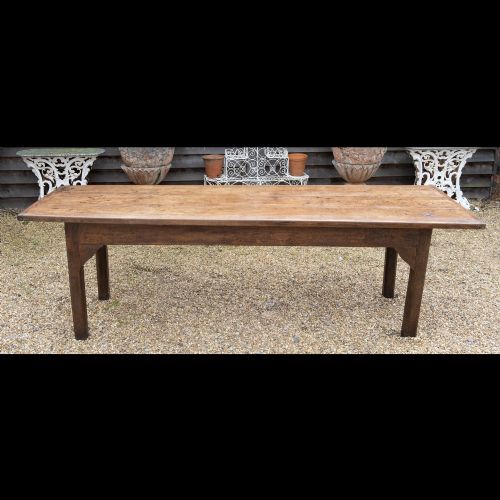
A brown oak plank table is a sturdy domestic surface built from thick timber boards, most commonly found as long dining tables, refectory tables, or smaller kitchen tables. These pieces originate from various periods including the eighteenth and nineteenth centuries, reflecting traditional English and French country utility.
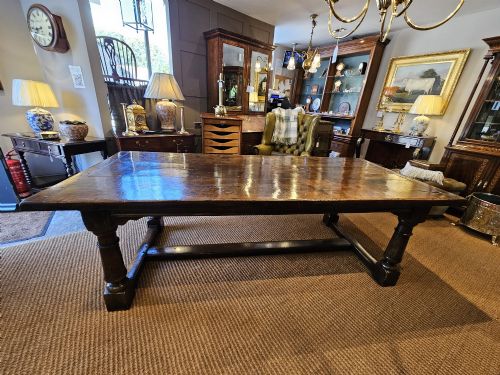
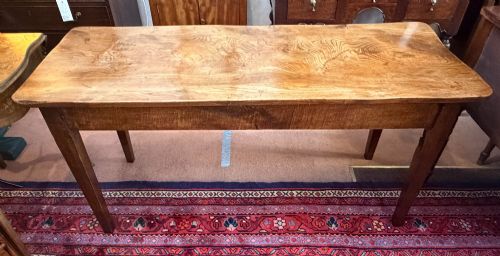
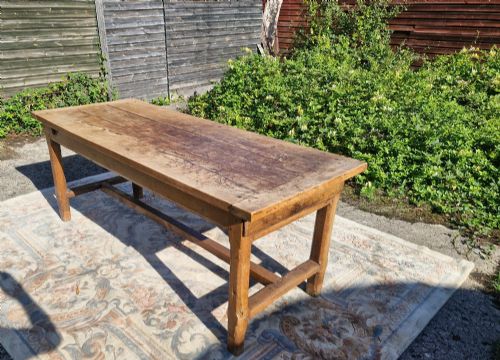
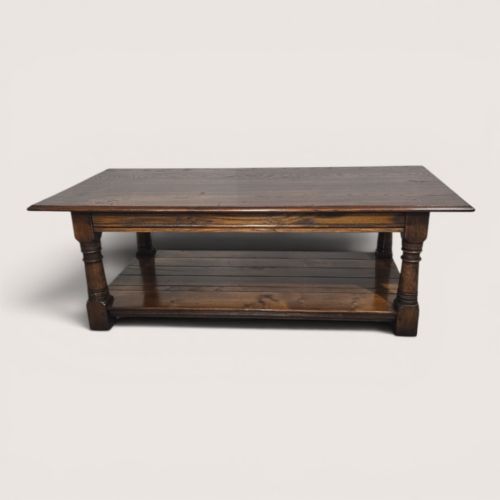
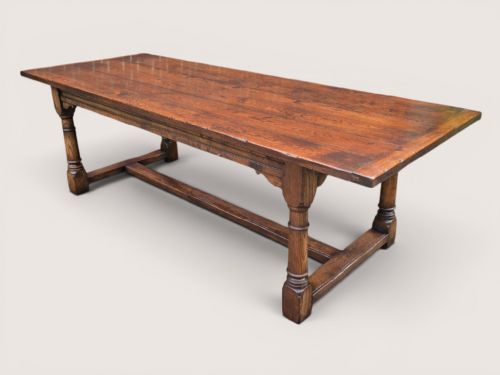
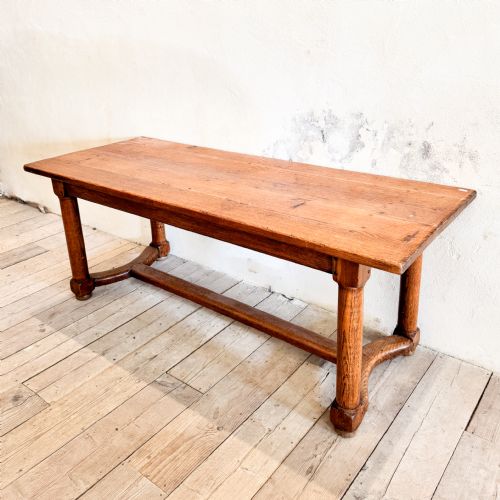
The version most likely to meet a buyer on this page is an oak refectory or farmhouse dining table, often constructed with broad planks joined to form a solid top. Alongside large dining formats, the selection includes occasional coffee tables, side tables, and benches utilising the same durable wood.
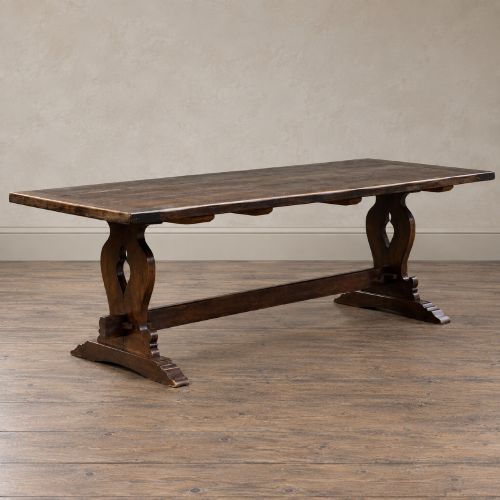
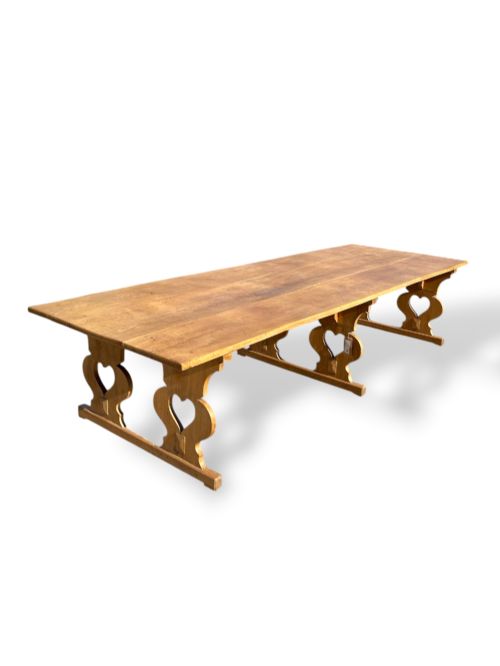
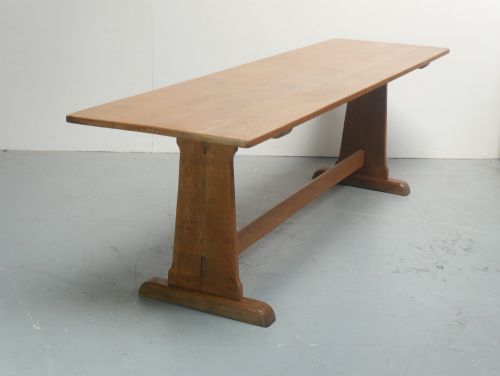
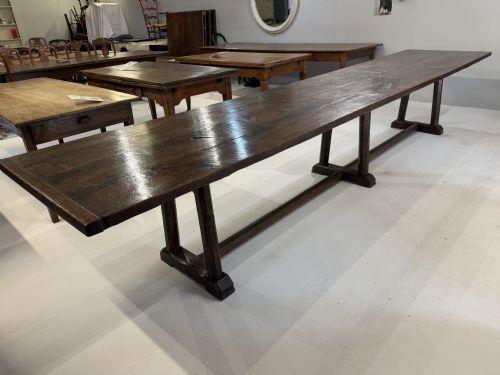
Origins span English country workshops and French provincial settings, bringing styles such as rustic farmhouse, Georgian, and Jacobean revival into domestic interiors. The tables range from simple single plank tops to multi-plank configurations supported by sturdy legs or trestle bases.
How they were made
Construction relies heavily on solid oak timber, frequently paired with secondary woods like beech, pine, elm, or fruitwood for bases and internal framing. Planks were sawn and planed by hand or early machinery, then joined using traditional pegged or mortise and tenon construction methods.
Bases often incorporate turned baluster legs, barrel legs, or trestle supports secured with wooden pegs rather than metal fixings. Many examples feature thick tops designed to withstand heavy daily use in kitchens, taverns, and dining halls.
Listings feature oak alongside elm, fruitwood, pine, and beech, demonstrating a diverse range of secondary timbers used in historical table construction.
What varies in quality
Quality in a brown oak plank table rests on the thickness and width of the timber boards used for the top, alongside the integrity of the underlying frame. Wider single planks or closely matched multi-plank surfaces with minimal warping demonstrate superior initial material selection.
The proportion and stability of the base construction separate standard utility pieces from finer examples. Original pegged joints, well-preserved timber patination, and sturdy leg assemblies indicate higher craftsmanship from the period.
The Brown Oak Plank Table Glossary
- Plank top
- A table surface constructed from individual long boards of timber joined side by side. This method allowed makers to utilise wide trees before modern sheet materials existed.
- Refectory table
- A long narrow dining table traditionally used in communal dining halls and later adapted for domestic kitchens. They typically feature sturdy legs connected by low stretchers for stability.
- Pegged construction
- A method of joining wooden components using tight-fitting wooden dowels rather than metal screws or nails. This traditional technique accommodates natural wood movement over time.
- Gateleg table
- A table with hinged drop leaves supported by legs that swing outward like a gate. It allows the surface area to be reduced when not in use.
- Tavern table
- A small, robustly built table designed for public houses or domestic use, usually featuring a thick top and simple four-legged underframe.
Brown Oak Plank Table: Frequently Asked Questions
How do I clean a brown oak plank table?
Wipe the surface with a damp cloth and dry it immediately to protect the timber grain. Avoid harsh chemical cleaners that can strip the natural wax or polish.
Apply a traditional beeswax periodically to nourish the wood and maintain its protective finish against daily moisture.
Can I use a plank table daily?
These tables were originally built for heavy daily use in kitchens and dining rooms, making them durable for modern family life. Using coasters and mats helps prevent heat rings and moisture marks on the historic wood.
Minor knocks and surface marks often add to the character of antique timber rather than detracting from its appeal.
How do I date an oak plank table?
Examine the underside of the top and the joinery for hand-tool marks, saw patterns, and the presence of wooden pegs. Tool marks left by pit saws or adzes typically point towards eighteenth-century or earlier origins.
Leg styles, such as turned balusters or simple square posts, also offer clues to the period when the piece was constructed.
Are plank tables suitable for small rooms?
While many examples are long refectory or farmhouse tables, smaller coffee tables, side tables, and narrower formats are also available. Selecting a table with a trestle base can also help maximise legroom in compact spaces.
Checking the overall length and width against your room dimensions ensures the proportions remain balanced.