
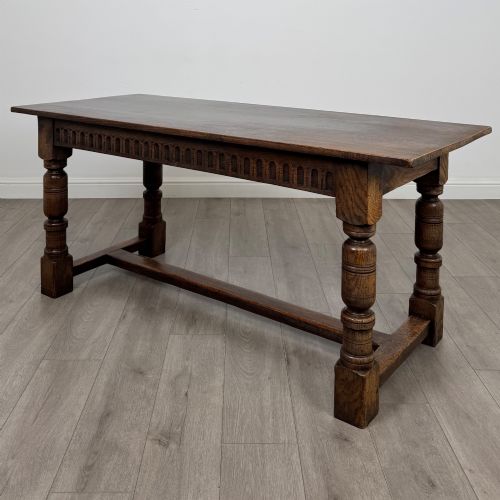
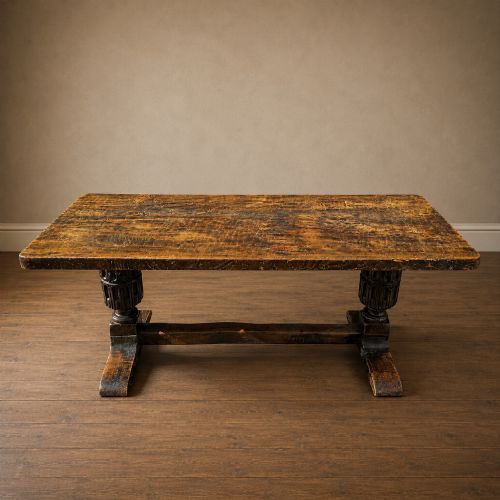


Jacobean Oak Tavern Table
These heavy, honest pieces of a jacobean oak tavern table bring centuries of sturdy utility and rich grain directly into modern rooms.
Jacobean Oak Tavern Table
A jacobean oak tavern table is a robust form of domestic or public furniture designed for daily dining, drinking, and gathering. You will most frequently encounter seventeenth-century examples alongside later revival pieces.
The selection here encompasses various related forms such as refectory tables, gate-leg tables, low side tables, and centre tables. These items originate from the seventeenth, eighteenth, and nineteenth centuries, including Edwardian periods.
Most pieces display straightforward construction intended for functional service rather than delicate display. They function effectively as dining surfaces or central room tables in contemporary homes.
How they were made
Makers utilised solid timbers, predominantly oak and elm, frequently augmented by red walnut and iron components. Tops were occasionally formed from single planks of elm or heavy oak boards.
Construction methods relied upon sturdy framing, visible joints, and baluster posts to support heavy daily loads. Carving appears on certain examples to add architectural detail to the heavy wooden structure.
Listings span four distinct centuries, featuring solid oak, elm, walnut, and iron across dining, side, and centre table forms.
What varies in quality
Quality rests upon the integrity of the primary timbers and the proportion of the frame. Examples featuring single-plank tops and period-appropriate joinery stand apart from later revival pieces.
The degree of original surface wear and patination dictates the visual weight of each piece. Heavy, sturdy frames with honest signs of age outrank overly restored or clumsily altered examples.
The Jacobean Oak Tavern Table Glossary
- Refectory table
- A long, narrow dining table traditionally used in monastic refectories and later adopted for domestic halls. These versions utilise solid oak and elm.
- Gate-leg table
- A drop-leaf table featuring hinged legs that swing out to support the opened leaves. This form saves space when folded down.
- Baluster post
- A turned vertical support resembling a small architectural column. These posts form the legs on many seventeenth-century tables.
- Jacobean Revival
- A nineteenth or twentieth-century style imitating the heavy, carved aesthetic of the early seventeenth century. It utilises older construction methods with newer timber.
- Centre table
- A freestanding table designed to be viewed from all sides in the middle of a room. These pieces function independently of walls.
Jacobean Oak Tavern Table: Frequently Asked Questions
What is a jacobean oak tavern table?
It is a heavy, utilitarian wooden table designed for drinking, eating, and gathering in domestic or public spaces. These items rely on solid timber construction.
The listings include authentic seventeenth-century examples alongside later nineteenth-century and Edwardian revival interpretations.
How do I date an oak table?
Dating relies upon examining the timber species, joinery methods, tool marks, and overall wear patterns present on the surfaces. Early pieces often feature hand-split boards and pegged joints.
Later revival pieces utilise similar wood types like oak and elm but lack the specific patination and structural wear accumulated over centuries.
Can I use an antique table daily?
Yes, these sturdy wooden tables were built specifically for heavy everyday use in communal environments. Their solid oak and elm construction offers lasting durability.
Placing coasters and placemats on the surface helps protect the historic timber from modern heat and moisture.
What woods were used for these tables?
The primary material is oak, often paired with elm for table tops or structural components. Red walnut and iron hardware also appear across the selection.
Solid construction ensures that each timber type contributes to the overall weight and longevity of the furniture piece.