


Jacobean Oak Storage Chest
A jacobean oak storage chest brings seventeenth-century timber into a room, offering sturdy utility and carved panels that anchor modern spaces.
Jacobean Oak Storage Chest
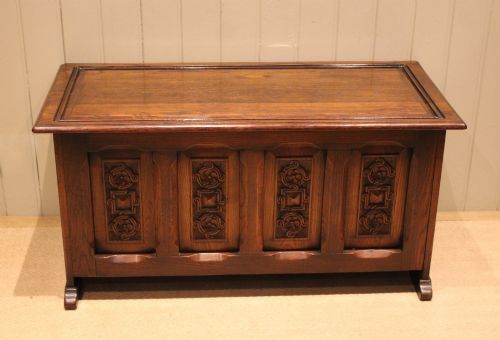
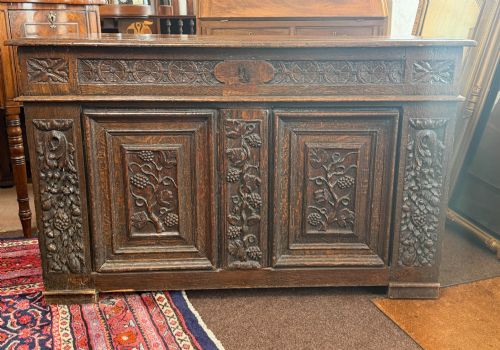
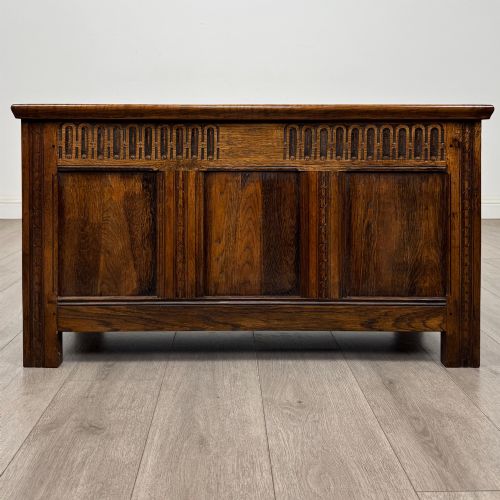
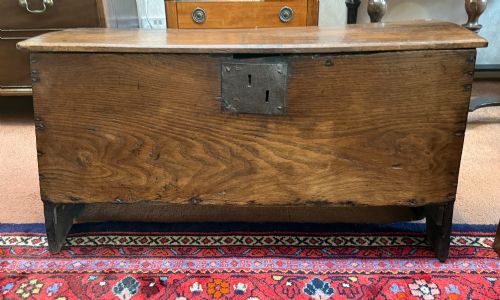
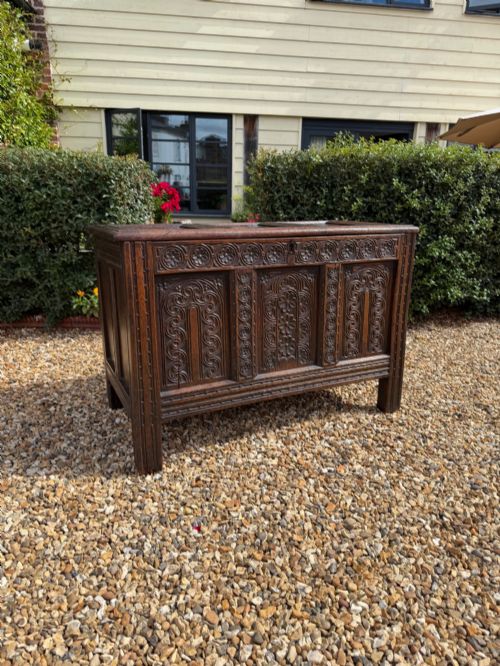
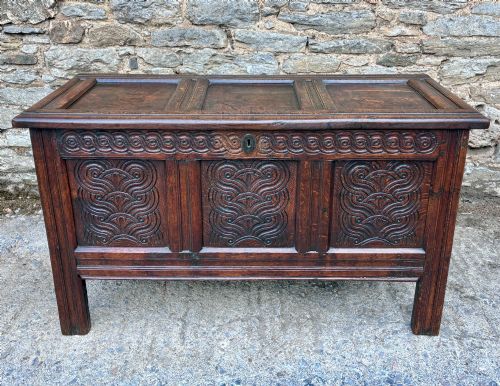
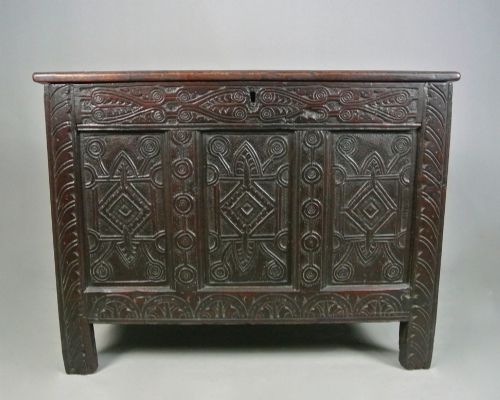
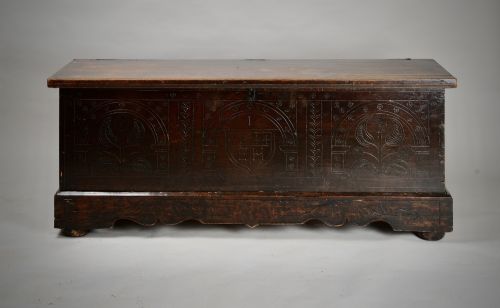
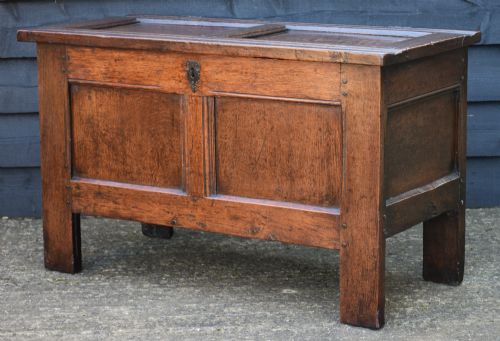
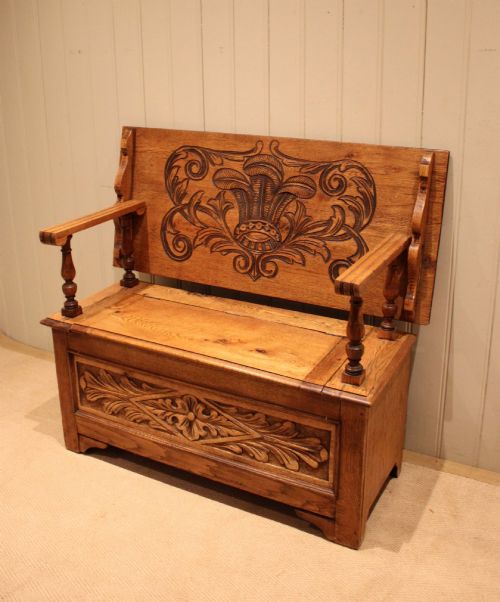
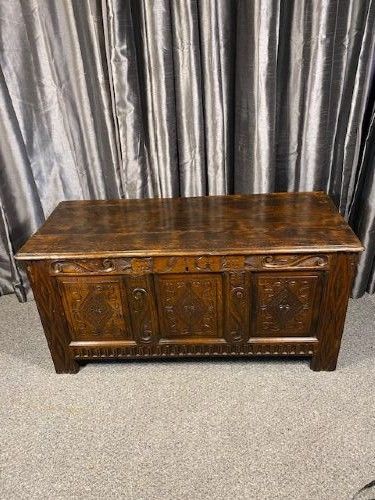
A jacobean oak storage chest is typically encountered as a heavy timber coffer, blanket box, or panelled chest originating from the seventeenth century or constructed in later revival styles. These heavy receptacles served households for storing linens, documents, and valuables before fitted wardrobes and chests of drawers became common domestic fixtures. Buyers searching for a jacobean oak storage chest will find authentic seventeenth-century examples alongside Edwardian and twentieth-century revival pieces modelled after those early forms.
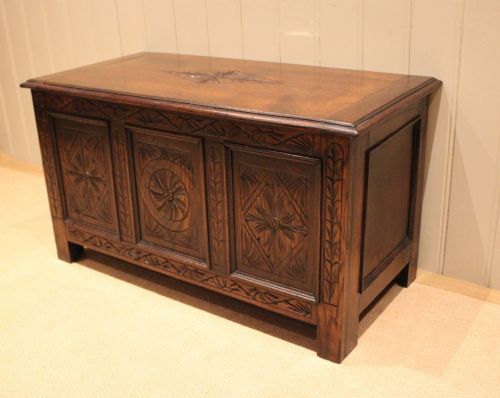
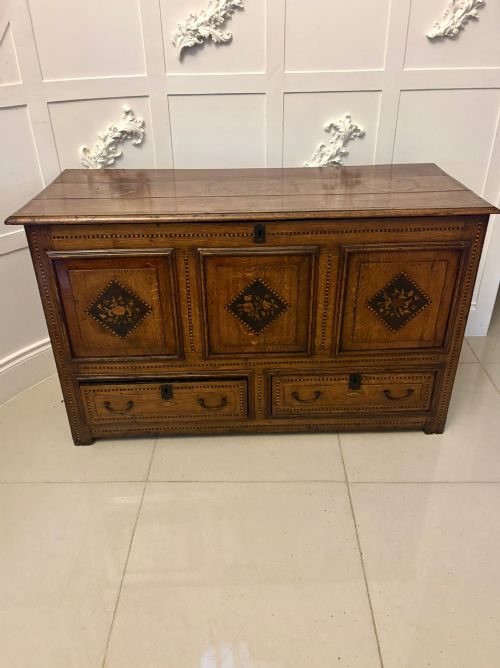
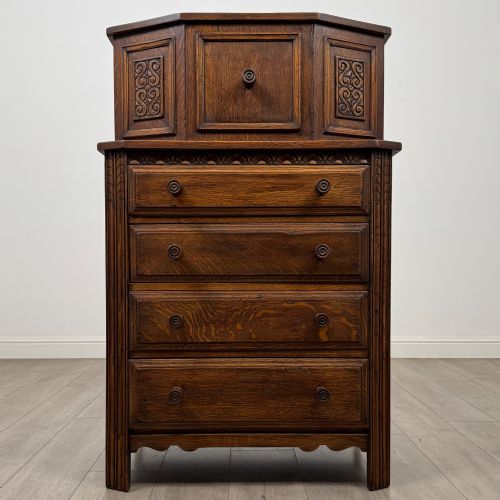
The primary forms on this page include robust coffers, mule chests featuring lower drawers, and panelled box chests. Many pieces exhibit regional joinery techniques from seventeenth-century English workshops, while others reflect early twentieth-century interpretations utilising solid oak and carved details. Each form provides deep interior capacity suited to practical storage in contemporary hallways or living rooms.
Materials and Construction
Construction relies heavily on solid oak timbers joined by mortise and tenon methods secured with wooden pegs. Master joiners shaped heavy planks into panelled frames, often incorporating iron hinges and brass fittings to reinforce lid structures.
Decoration on these chests frequently involves chip-carved geometric patterns, linenfold motifs, or marquetry inlay utilising mixed woods and ebonised wood details. These surface treatments give the timber depth and character while reflecting the decorative vocabulary of the period.
Listings feature oak, iron, brass, and marquetry inlay across periods spanning the seventeenth century through the Edwardian era and 1930.
Judging Quality and Character
Quality in these chests rests upon the integrity of the original timber and the crispness of the hand-carved panels. Pieces retaining their original board lids, period hardware, and untrimmed feet command greater respect from collectors than heavily restored examples.
The balance between structural soundness and surface patination determines the standing of an individual chest. Natural wax finishes built up over centuries reveal the grain of the oak far better than modern chemical strippers or heavy varnishes.
The Jacobean Oak Storage Chest Glossary
- Mule chest
- A storage chest with one or more drawers built into the base beneath the main compartment. This form bridges the gap between the traditional coffer and the chest of drawers.
- Linenfold
- A style of relief carving on wooden panels that resembles folded parchment or linen. It is commonly found on sixteenth and seventeenth-century furniture.
- Marquetry inlay
- The art of applying decorative pieces of veneer to a structure to form intricate patterns. Craftsmen utilised mixed woods to create contrasting geometric designs.
- Joinery
- The method of connecting pieces of wood without relying heavily on metal nails. Seventeenth-century makers relied on interlocking joints secured by wooden dowels.
Jacobean Oak Storage Chest: Frequently Asked Questions
How do I clean a historic oak chest?
Dust the surface regularly with a soft, dry cloth to prevent dirt accumulation in the carved recesses. Apply a traditional beeswax polish sparingly once or twice a year to nourish the dry timber.
Avoid modern liquid cleaners or silicone-based sprays, as these can penetrate open wood pores and damage the historic finish. Gentle care preserves the natural patination built up over centuries of use.
Can I store blankets inside safely?
Woollens and linens benefit greatly from the dark, enclosed environment provided by a timber chest. Ensure textiles are completely clean and dry before storage to prevent moisture retention.
Place acid-free tissue paper between delicate fabrics and the raw oak interior if the wood has an unsealed finish. Check the contents periodically to maintain proper ventilation.
How do I spot a later revival piece?
Twentieth-century revival chests often display machine-cut joinery marks rather than the irregular hand-tool impressions seen on seventeenth-century work. Examining the interior floor boards and nail types helps clarify the manufacturing era.
Revival makers frequently utilised lighter oak species and applied uniform dark stains to simulate age. Comparing the proportion and weight against documented period examples reveals discrepancies.
Where should I place a heavy chest?
Position the chest against a stable interior wall away from direct sunlight and strong heat sources like radiators. Rapid temperature fluctuations cause solid oak planks to warp or split over time.
Ensure the floor beneath can support substantial weight, particularly with large seventeenth-century examples. Allowing a small gap behind the back panels ensures adequate air circulation.