
Jacobean Oak Seating
Jacobean oak seating spans heavy wainscot armchairs from the seventeenth century and revival dining sets that anchor a room with timber character.
Jacobean Oak Seating
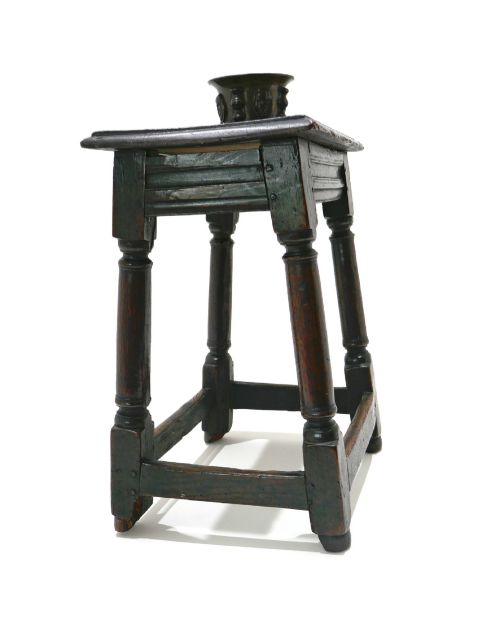
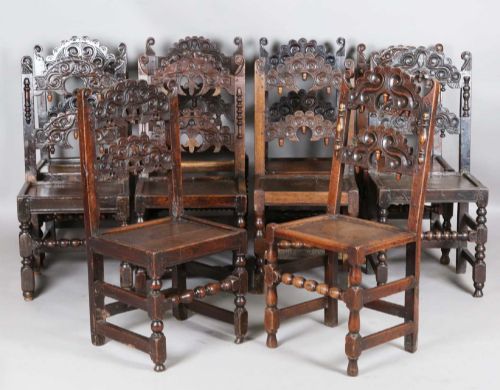
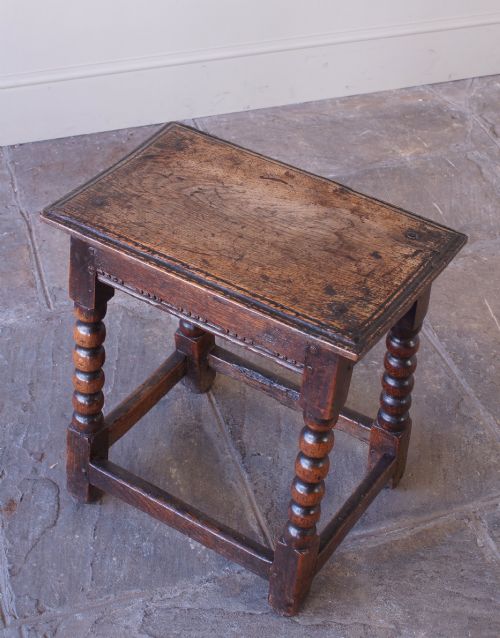
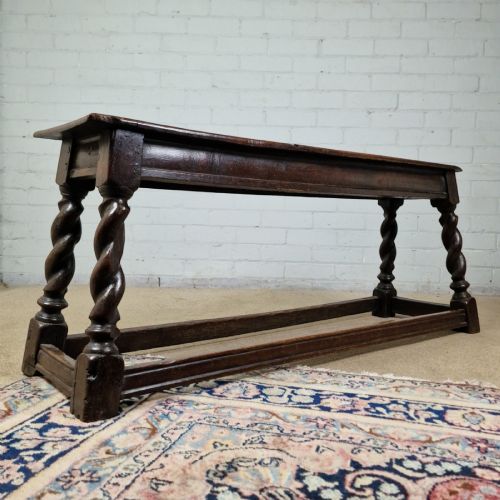
Jacobean oak seating encompasses a broad spectrum of domestic and formal furniture, ranging from seventeenth-century originals to later revival pieces. Buyers seeking this category encounter dining chairs, armchairs, settles, hall benches, and stools fashioned from solid timber.
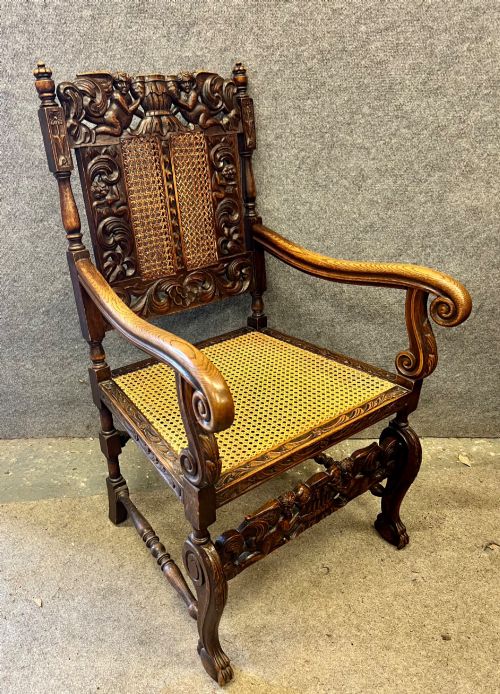
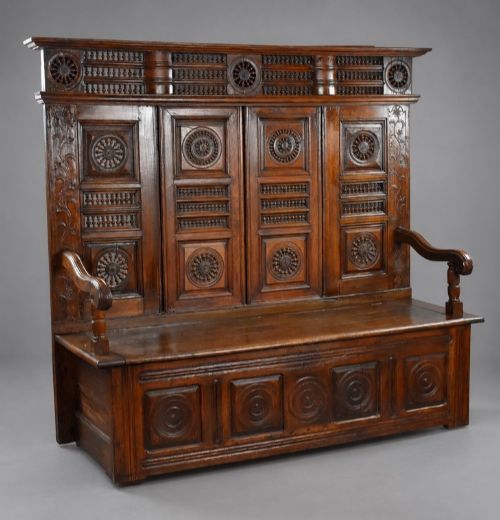
The seventeenth-century pieces include wainscot chairs, box settles, and armorial seating originating from English and Scottish regions. Alongside these early examples, revival pieces from the Victorian era and the early twentieth century populate the selection.
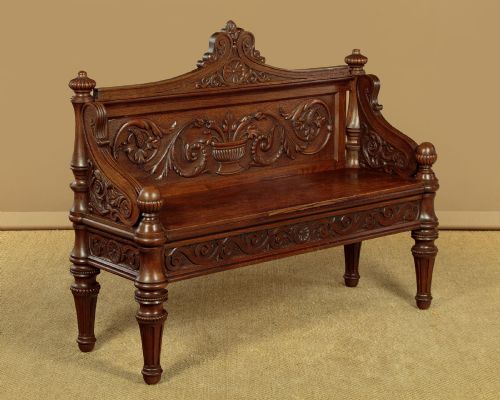
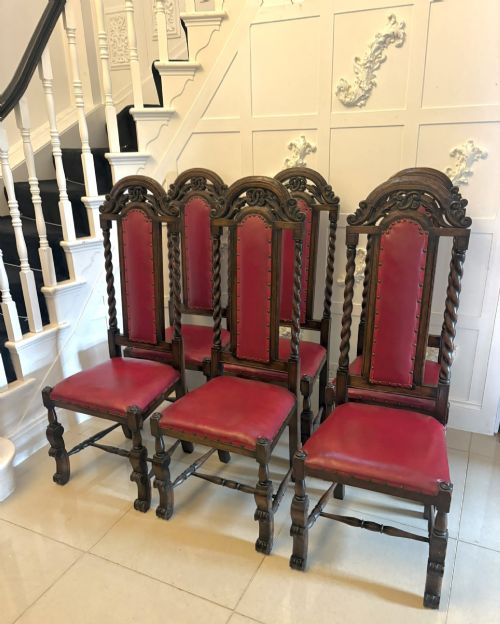
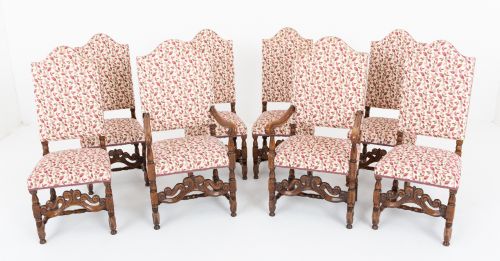
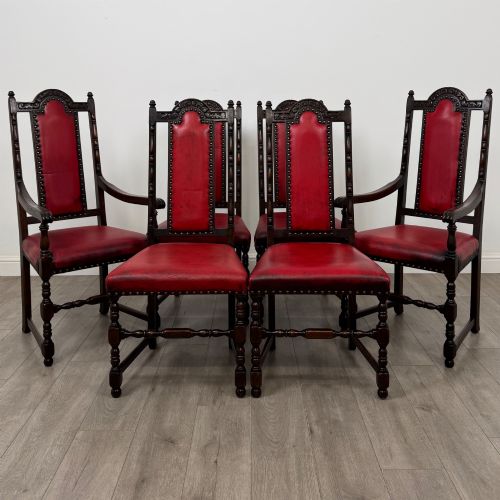
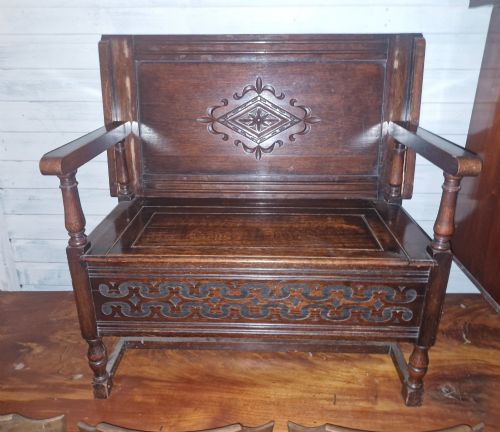
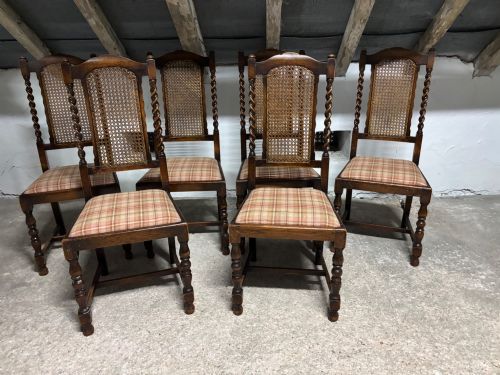
Sets of dining chairs frequently appear in groups of six or eight, often styled in Jacobean, Queen Anne, or Gothic revival tastes. Hall benches and monks benches provide multifunctional seating with lift-up lids or fold-over tops.
Materials and Construction
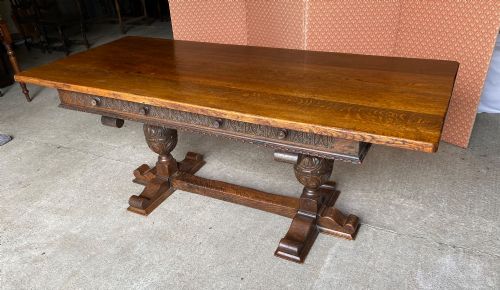
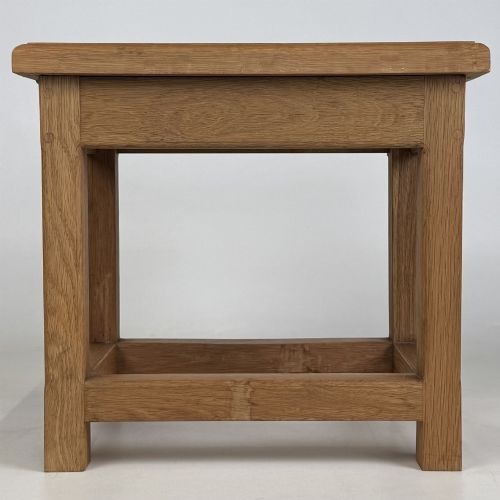
Solid oak serves as the primary material for framing and panels, frequently complemented by secondary timbers and surface carvings. Joinery relies on traditional methods such as mortise and tenon joints secured with wooden pins.
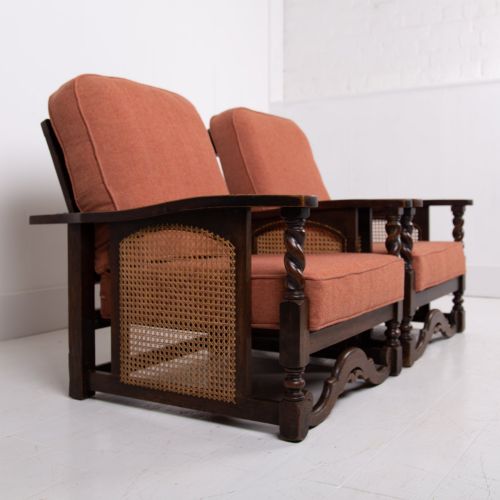
Upholstery materials vary from period textiles to later additions of cane, leather, tapestry fabric, velvet, and brass details. Turnings, bobbin frames, and carved panels give texture and structural support to backs and legs.
Clan chairs bearing heraldic crests allow modern owners to sit in formal Scottish judgment every time they put their boots on.
Assessing Quality and Character
The distinction between pieces rests upon the crispness of hand-carving, the integrity of the timber, and the balance of proportions. Early seventeenth-century joinery displays tool marks and structural honesty that differ from mass-produced revival milling.
Surface patination, depth of colour in the waxed oak, and the survival of original structural members elevate an example. Later additions such as replacement upholstery or re-secured joints alter the original state of the timber.
The Jacobean Oak Seating Glossary
- Wainscot chair
- A heavy wooden armchair with a solid panelled back, wooden seat, and turned legs typical of the seventeenth century. These chairs often sat near the head of a table for the head of the household.
- Settle
- A high-backed wooden bench with solid arms and a closed base, sometimes featuring a storage compartment beneath the seat. They stood near hearths to block draughts in older homes.
- Jacobean revival
- A nineteenth or twentieth-century style that imitates the architectural carving, heavy turnings, and dark finishes of the early seventeenth century. Makers utilised these motifs to satisfy demand for historicist interiors.
- Monks bench
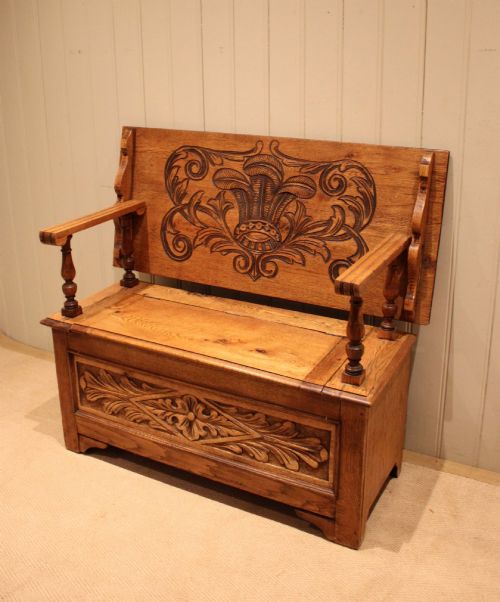
- A convertible piece of furniture functioning as a table with a hinged back that folds down over the seat. This dual purpose suited smaller domestic spaces.
- Bergere
- An enclosed upholstered armchair with woven cane sides and back panels. It offers a lighter silhouette within oak frames.
Jacobean Oak Seating: Frequently Asked Questions
How do I identify a 17th-century piece?
Seventeenth-century pieces display hand-riven oak, pegged joints, and vernacular carving characteristics specific to regions like Lancashire, Cheshire, or Yorkshire. Tool marks and natural timber movement provide clues to their age.
Revival pieces from the Victorian and Edwardian eras often use more uniform machine-sawn timber and standardised hardware underneath the frame.
What is a monks bench used for?
A monks bench serves as a hall seat with storage beneath the lift-up lid, while the hinged back folds forward to form a small table top. This clever design saved space in historical hallways.
Today, they function well in entryways as a place to sit while putting on shoes.
Are replacement cushions common?
Many surviving chairs and settles have received new cushions, upholstery, or cane work over the centuries to maintain their usability. Drop-in seats and pad cushions are frequently updated to suit modern comfort.
The underlying oak frame remains the primary focus for collectors assessing authenticity.
How should I care for antique oak?
Antique oak benefits from occasional applications of beeswax to nourish the timber and maintain a soft lustre. Avoid placing pieces near direct heat sources or strong sunlight, which can dry out the wood.
Regular dusting with a dry cloth prevents dirt build-up in carved crevices.