
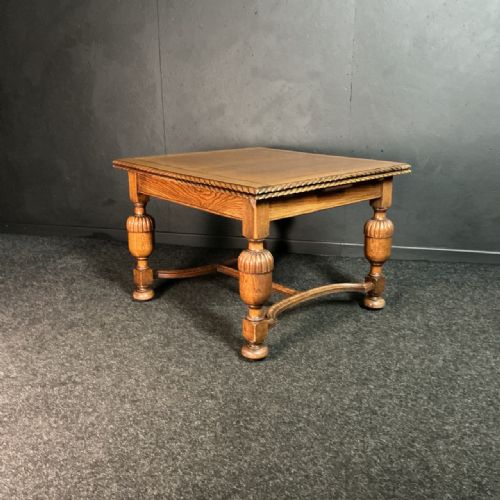
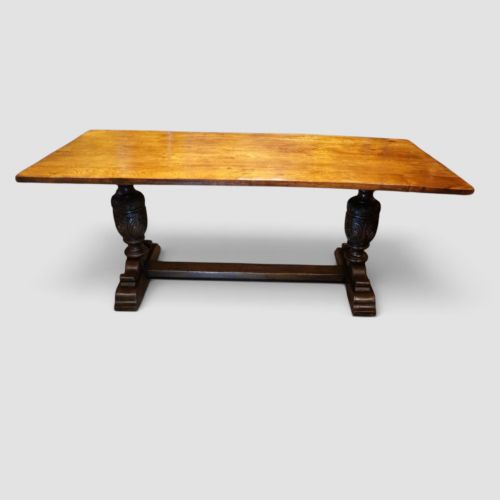
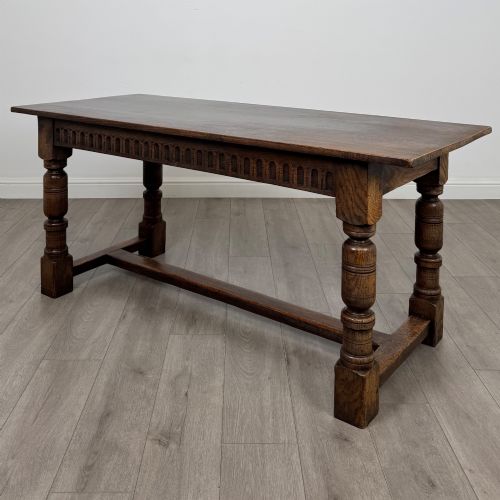
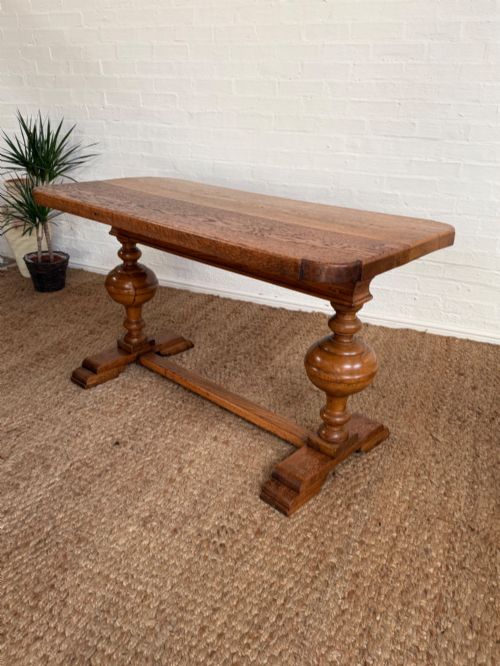
Jacobean Oak Refectory Table
When you want a jacobean oak refectory table, you are looking for a heavy timber dining piece rooted in seventeenth-century proportions and revival craftsmanship.
Jacobean Oak Refectory Table
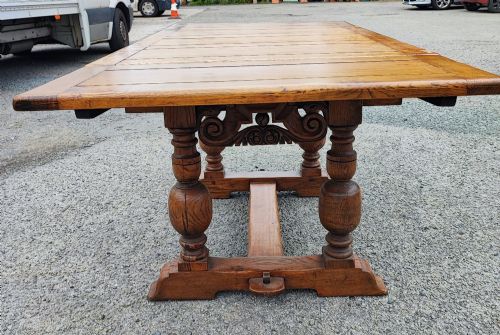
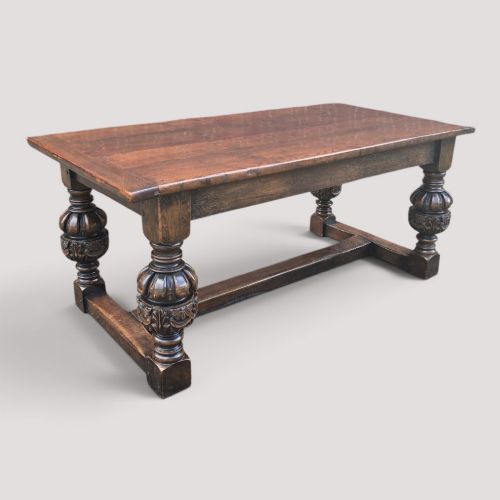
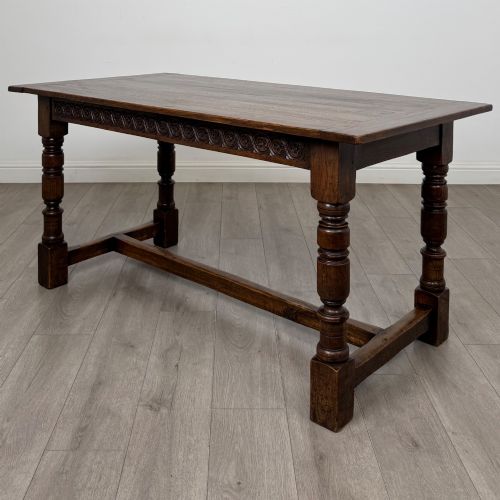
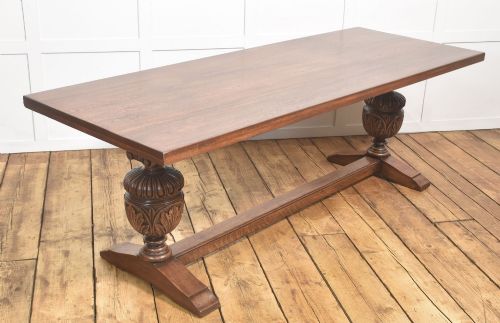
A jacobean oak refectory table is a substantial dining form originally designed for communal monastic or domestic dining, characterised by a long, narrow timber top and sturdy floor-standing supports.
Most examples encountered on this page belong to the late nineteenth and early twentieth-century revival movements, alongside genuine seventeenth-century survivals.
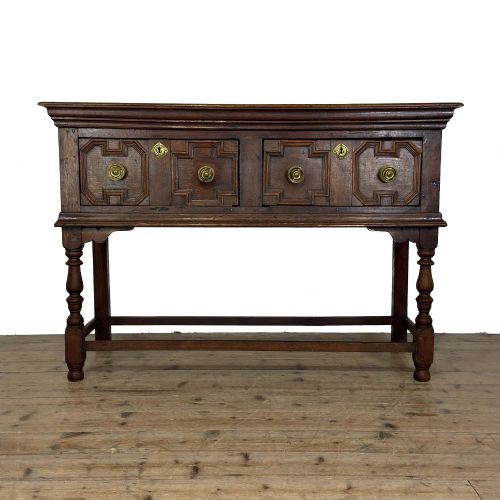
Beyond standard dining tables, related forms include draw-leaf variants, dresser bases, and serving tables that share the same heavy timber vocabulary.
How They Were Made
These tables rely primarily on solid oak, occasionally paired with elm for specific plank tops, and utilise traditional joinery methods such as mortise and tenon joints.
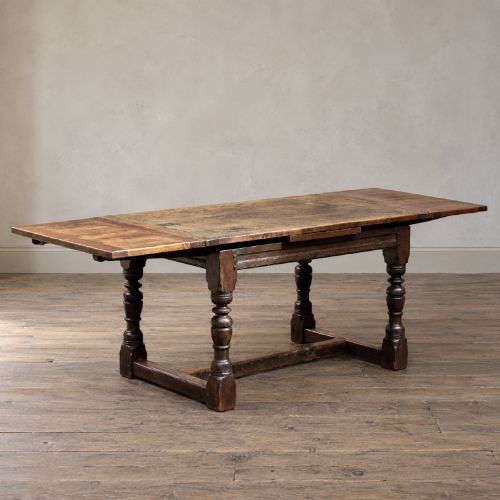
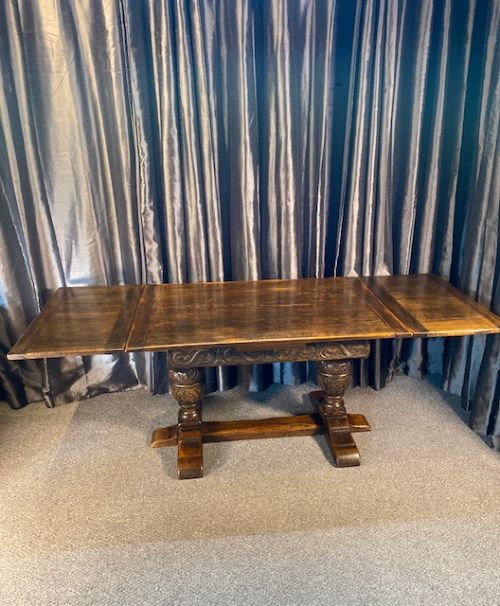
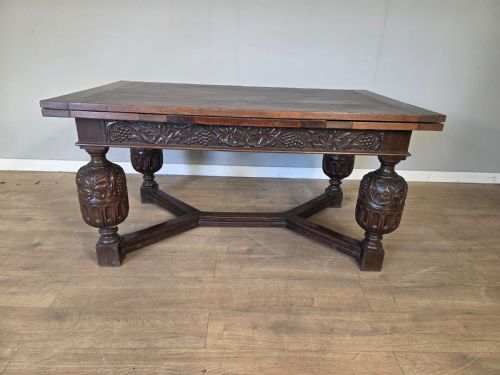
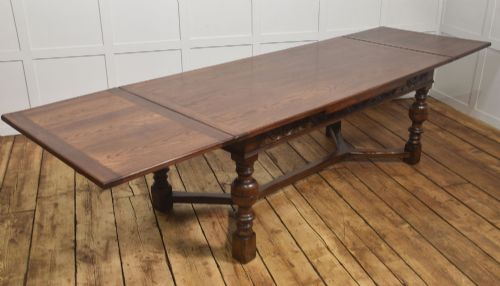
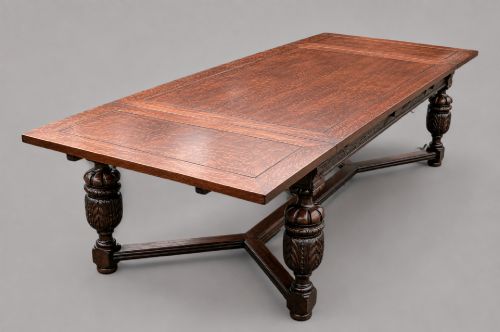
Surface details often incorporate hand-carved ornamentation, stretchers for structural rigidity, and sometimes pull-out extension leaves or draw mechanisms built into the frame.
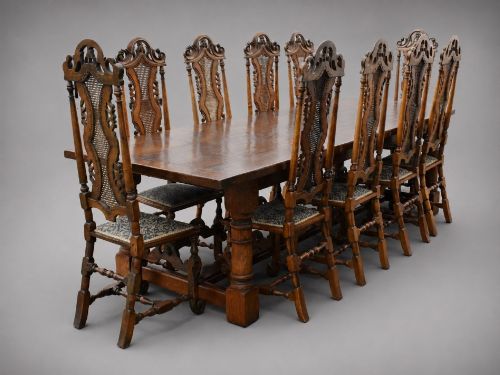
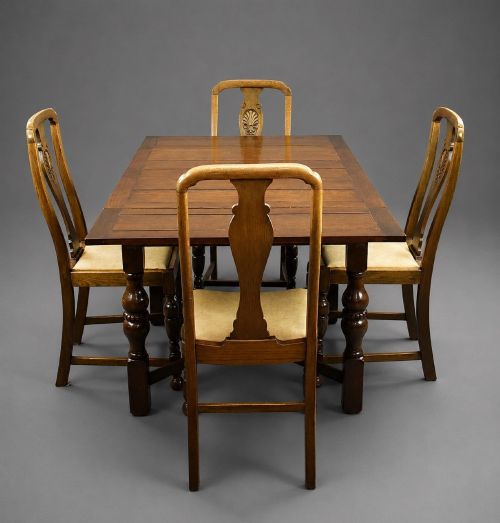
Several tables arrive accompanied by up to twelve high-back chairs, ensuring your dining hall is instantly ready for a medieval feast.
What Varies in Quality
Quality rests on the integrity of the timber, distinguishing single-plank tops and dense old-growth oak from later assembled boards or mixed woods.
The sophistication of the carving and the tightness of the structural joinery separate standard revival output from finely executed workshop pieces.
Maple and Co
The Jacobean Oak Refectory Table Glossary
- Refectory table
- A long dining table traditionally used in monastic dining halls. These pieces feature elongated proportions and sturdy underframes.
- Draw-leaf table
- A table equipped with pull-out leaves hidden beneath the main surface. This mechanism allows the surface area to expand at each end.
- Jacobean revival
- A nineteenth and twentieth-century design movement copying seventeenth-century motifs. Craftsmen utilised heavy turnings and geometric panels during this period.
- Plank top
- A table surface constructed from solid boards running the length of the table. Single-plank variants are particularly sought after by collectors.
- Trestle base
- A support structure where the top rests on vertical frames or feet connected by a horizontal stretcher. This design maximises legroom along the length.
Jacobean Oak Refectory Table: Frequently Asked Questions
How do I seat guests comfortably?
Refectory tables offer long, uninterrupted stretches along the sides, making bench seating or multiple chairs practical for gatherings. The absence of traditional corner legs allows diners to sit closer to the ends.
Consider the placement of the base stretchers underneath when measuring chairs for leg clearance. Proper chair height ensures diners sit at a comfortable distance from the frieze.
Are these tables suitable for daily use?
Solid oak construction provides the durability required for everyday dining and family kitchens. The robust timber handles regular activity while developing a deeper patina over time.
Protecting the surface from excessive moisture and heat preserves the polished finish. Routine maintenance involves simple dusting and occasional waxing to nourish the grain.
How do I distinguish revival from period pieces?
Seventeenth-century originals display hand-adzed tool marks, pegged joinery, and natural timber shrinkage consistent with centuries of age. Revival pieces from the Victorian and Edwardian eras often feature machine-sawn elements and standardised fixings.
Examining the underside and drawer linings reveals the construction methods specific to each era. Secondary woods and fastener types provide reliable clues to a table's true age.
What is a draw-leaf mechanism?
A draw-leaf mechanism consists of two sliding leaves hidden beneath the main top that pull out from either end. This ingenious design extends the dining surface quickly without requiring separate stored leaves.
The clever sliding tracks keep the extension stable and level when fully opened. When closed, the leaves tuck neatly away beneath the primary surface.