

Jacobean Oak Credenza
A Jacobean oak credenza brings substantial timber storage into a room, offering deep grain and period presence for everyday use.
Jacobean Oak Credenza
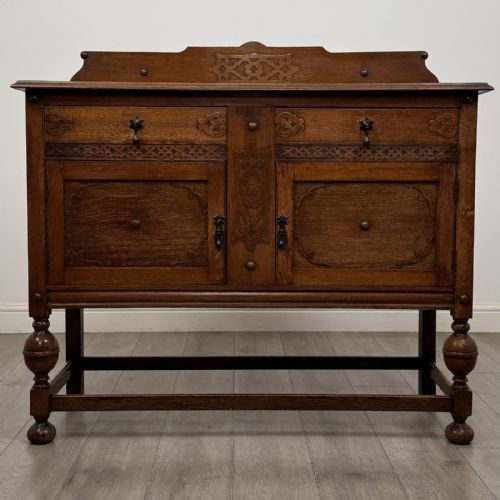
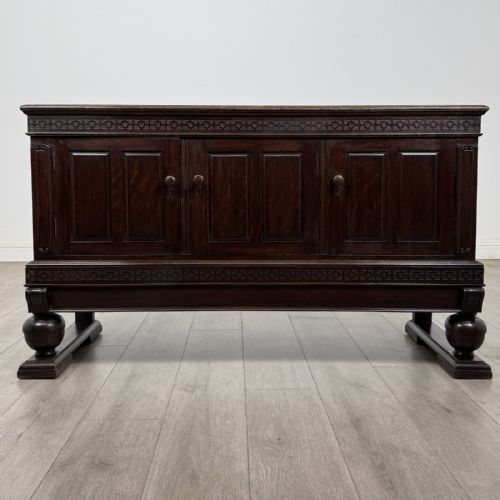
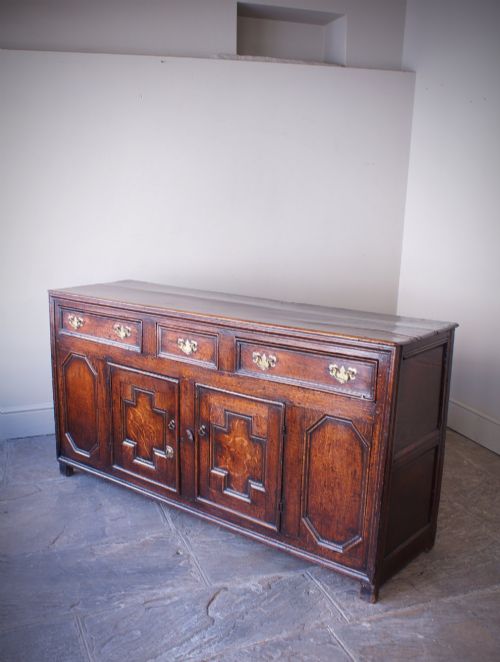
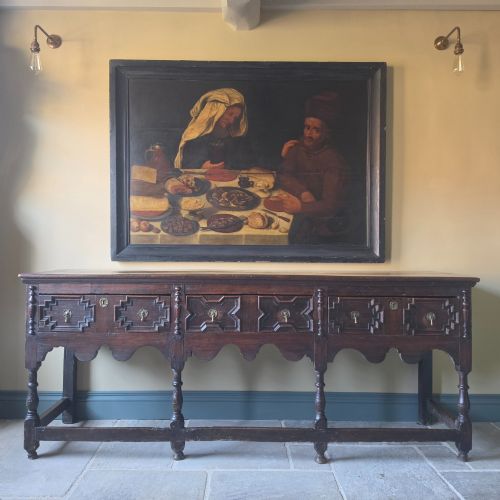
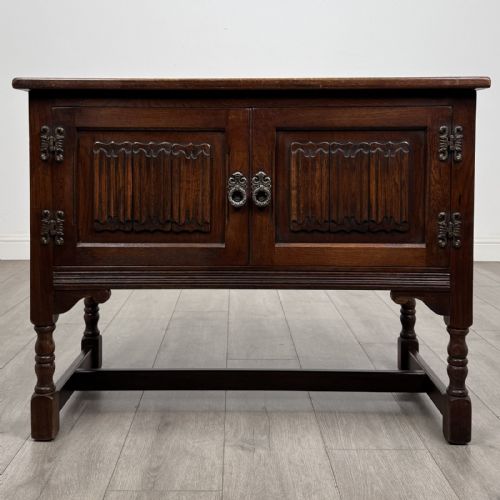
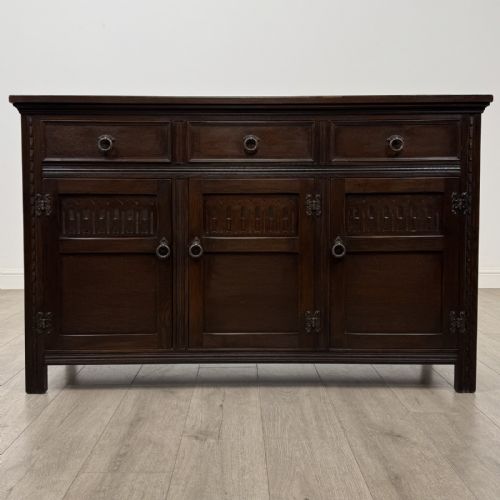
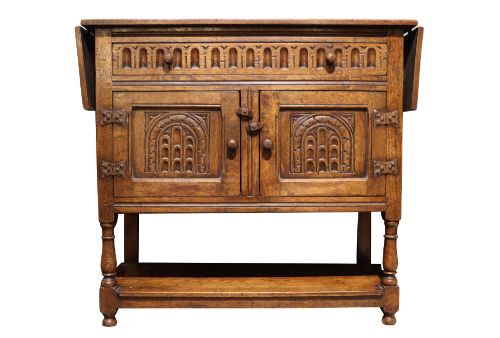
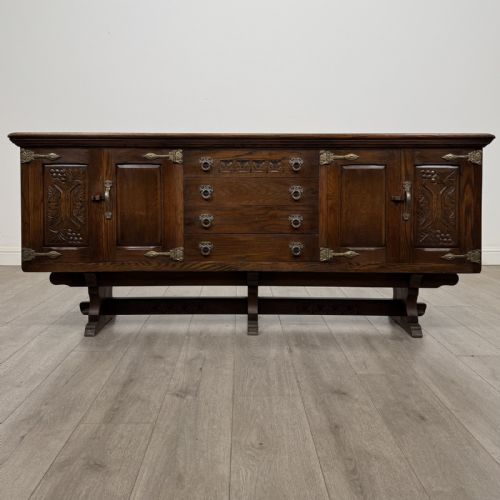
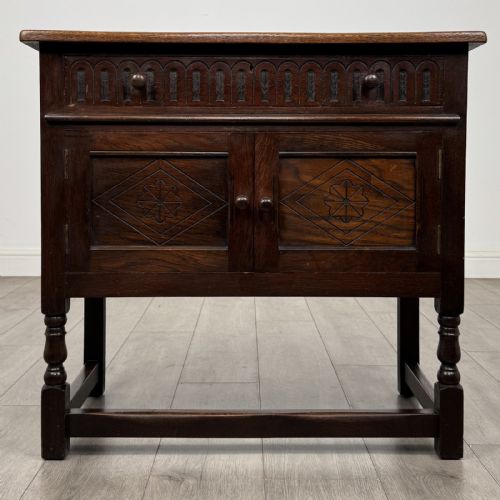
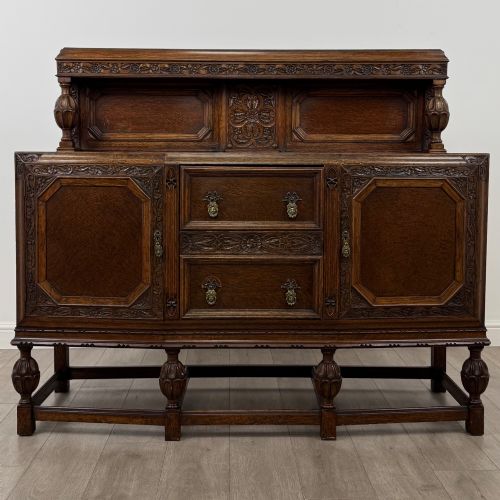
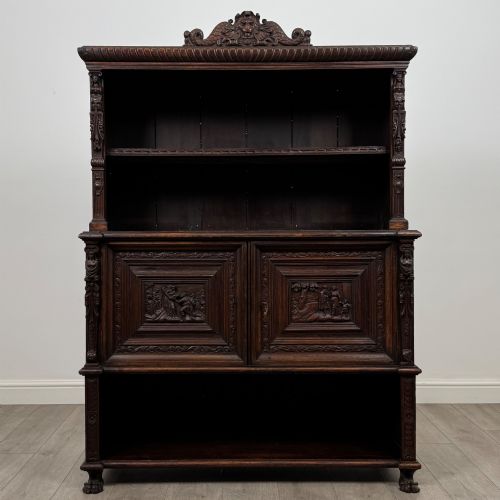
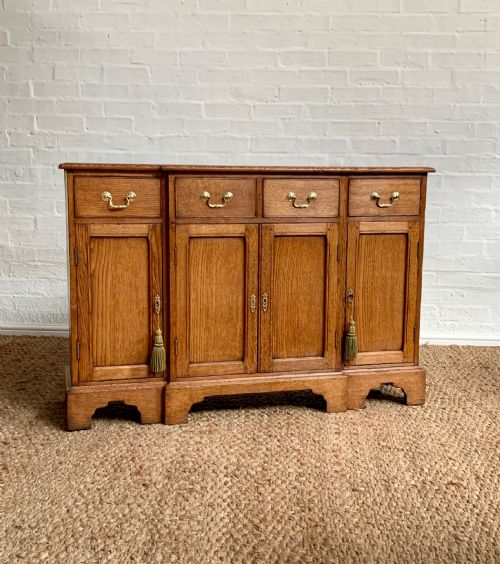
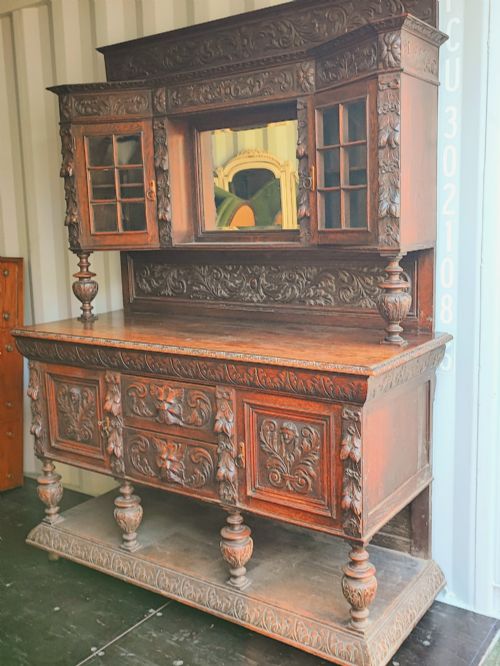
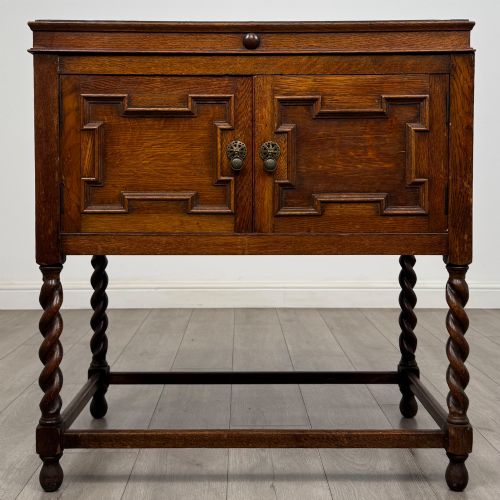
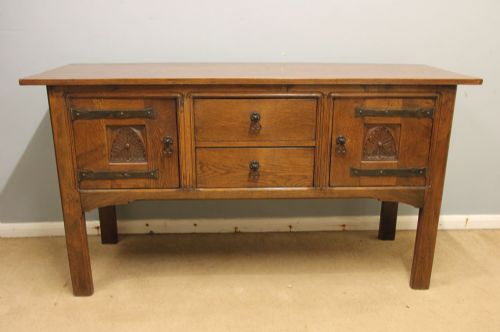
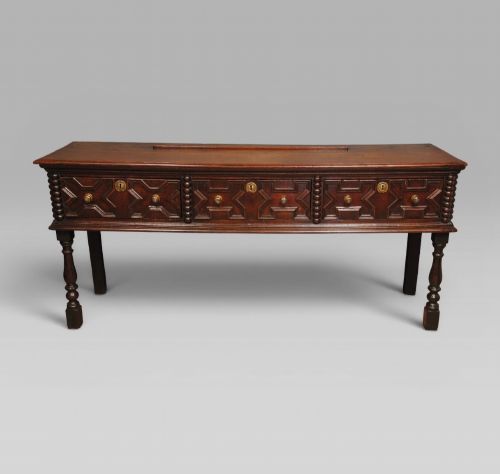
When you search for a jacobean oak credenza, you encounter heavy storage furniture spanning multiple centuries, though the examples on this page predominantly date from the Edwardian era, the Victorian period, and the 1920s, alongside genuine seventeenth-century pieces.
These items manifest primarily as sideboards, dresser bases, cupboards, and cabinets, functioning as serving surfaces and enclosed storage units in dining rooms and halls.
The aesthetic draws heavily on seventeenth-century motifs, combining revival styles with the proportions and functional forms of earlier centuries.
Materials and Construction
Construction relies primarily on solid oak, frequently paired with secondary timbers such as walnut and fruitwood, assembled with traditional joinery to support heavy use.
Surface ornamentation is achieved through hand carving, linenfold panelling, and geometrically moulded drawer fronts, occasionally complemented by brass and iron hardware or glass panels.
Jacobean Oak Credenza Retail Price Guide 2026
Typical asking prices for jacobean oak credenza among the pieces listed under this phrase on Sellingantiques today, from the lower quarter to the upper quarter. They describe what is for sale here now, not the wider market.
Periods represented range from the seventeenth century through Victorian and Edwardian revivals up to the 1930s.
Quality and Proportion
The distinction between standard and superior pieces rests on the depth and crispness of the timber carving and the architectural balance of the proportion.
Finer examples display careful selection of golden or bleached oak grain, integrated hardware, and robust construction that maintains structural integrity across centuries of service.
Maple and Co
The Jacobean Oak Credenza Glossary
- Dresser base
- A low cabinet fitted with drawers and frequently a lower shelf known as a pot board, historically used for food preparation and serving.
- Linenfold
- A style of wood carving that mimics folded linen, commonly seen on fifteenth- and sixteenth-century style panels.
- Block front
- A cabinet front divided visually into three vertical sections, with the outer sections projecting forward from a recessed centre.
- Barley twist
- A turned column resembling a spiralling rope, popular in seventeenth-century furniture and later revival periods.
Jacobean Oak Credenza: Frequently Asked Questions
What is a dresser base?
A dresser base is a low wooden unit featuring drawers across the top and cupboards or an open shelf underneath. It serves as a practical surface for serving food or displaying objects.
Historically placed in kitchens or dining rooms, these sturdy pieces provide substantial enclosed storage while taking up less vertical wall space than a full dresser with shelves.
How do I care for antique oak?
Keep antique oak away from direct heat sources and sudden temperature shifts to prevent the timber from splitting. Regular dusting with a dry cloth and occasional application of appropriate wax maintains the finish.
Avoid silicone-based polishes, which build up over time and attract dust, dulling the natural grain of the wood.
Are these pieces from the seventeenth century?
While the style originates in the seventeenth century, many items on this page date from later revival periods such as the Edwardian era, the Victorian period, and the 1920s. These later pieces emulate earlier cabinet-making techniques.
Examine the construction methods, drawer linings, and hardware to determine whether a piece is a period original or a later interpretation.
Where should I place a credenza?
A credenza or sideboard suits dining rooms, hallways, and large living spaces where surface area and concealed storage are required. Measure your available wall space and clearance for opening doors and drawers before purchasing.
Ensure the floor is level so that heavy wooden doors hang correctly and drawers operate smoothly within their frames.