




Jacobean Leather Chairs
Jacobean leather chairs bring substantial oak frames and patinated hides into rooms that need weight and presence.
Jacobean Leather Chairs
Jacobean leather chairs combine sturdy timber frames with supple animal hides, appearing in forms such as dining chairs, armchairs, desk chairs, and occasional side chairs. When searching for jacobean leather chairs, buyers encounter pieces stretching from original seventeenth-century examples through nineteenth-century revivals up to twentieth-century interpretations.
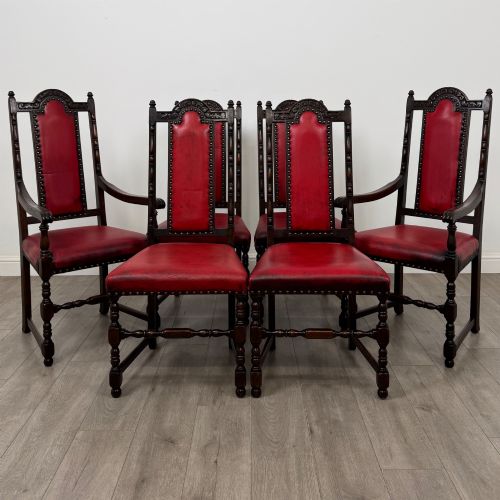
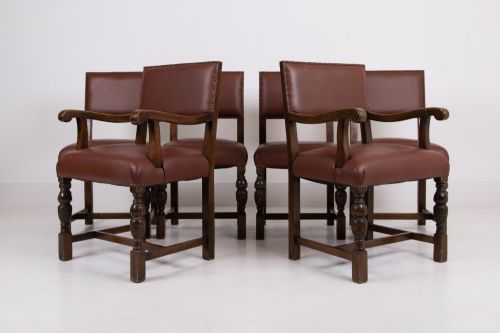
The selection on this page leans heavily towards revival periods, featuring sets of dining chairs alongside individual armchairs and desk chairs produced around nineteen-twenty, the Edwardian era, and the Victorian epoch. These pieces often arrive in sets of four, six, or eight, alongside occasional dining suites containing tables and sideboards.
Origins span authentic seventeenth-century craftsmanship to later Victorian Gothic revivals and Tudor revivals executed in the nineteen-twenties and nineteen-thirties. Buyers find both high-backed carver chairs and low-backed side chairs, reflecting varied domestic seating requirements of their respective eras.
Materials and construction
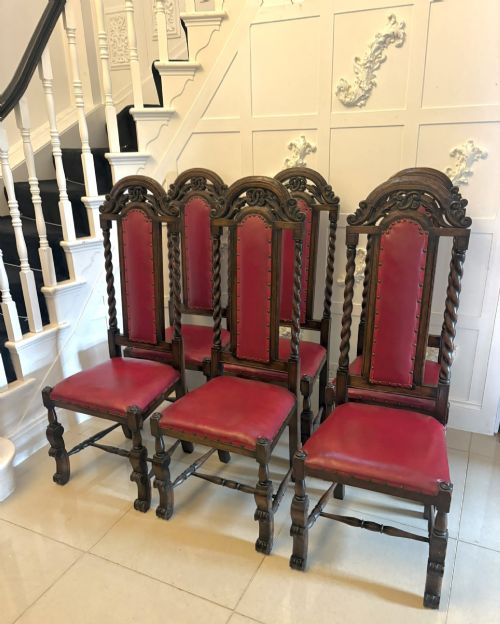
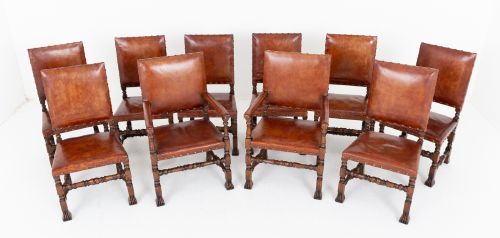
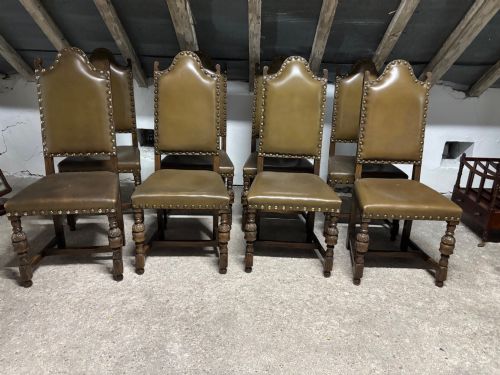
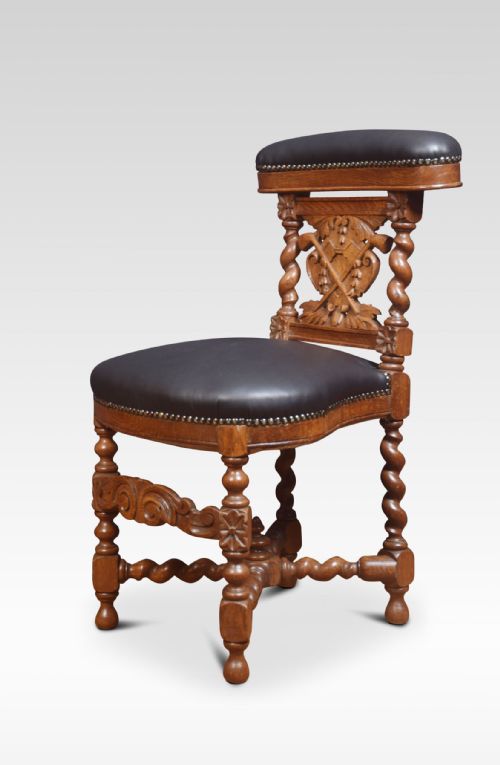
Makers relied primarily on solid oak for the structural frames, utilising its dense grain to support heavy carving and turnings like barley twist legs. Leather formed the primary seat and backrest material, secured tightly to the wooden frames with brass studs or metal tacks.
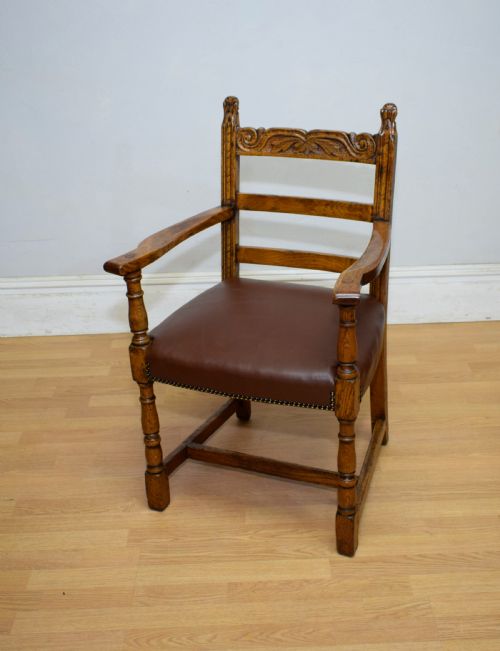
Secondary elements include cane inserts in specific library chair designs and extensive hand-carving applied directly to the oak stiles and crest rails. Joinery techniques involved mortise and tenon joints held together by wooden pegs, ensuring long-term rigidity across large dining sets.
Some highback dining chairs demand proper posture, serving as polite reminders to sit straight during a long meal.
Distinguishing quality
Quality rests upon the crispness of the hand-carved details in the oak and the genuine depth of patina developed on the leather surfaces over time. Superior examples exhibit dense, mature timber frames with tight joints and well-preserved hide that shows natural grain rather than artificial texturing.
Sets that remain entirely matching across all six or eight chairs command greater attention than assembled groups of singles. The weight and thickness of the oak used in the stiles and stretchers also dictate the structural integrity and overall presence of the chair.
The Jacobean Leather Chairs Glossary
- Barley twist
- A turning technique resembling a twisted rope, carved into the wooden legs and stretchers of seventeenth-century style chairs. This decorative motif gained immense popularity during revival periods.
- Carver
- An armchair, often with arms matching a set of smaller side chairs, traditionally placed at the head of a dining table. These pieces usually feature more substantial carving on the backrest.
- Refectory
- A long dining table associated with monastic or large hall settings, frequently found paired with matching sets of leather dining chairs in revival dining suites.
- Stile
- The upright vertical side post of a chair back, which receives the mortise joints from the horizontal rails and supports the primary structure of the seat.
- Cane
- Woven rattan material used for panels in specific library and occasional chair designs, offering a lighter alternative to solid oak or full leather upholstery.
Jacobean Leather Chairs: Frequently Asked Questions
Are these chairs comfortable for daily use?
Most of these chairs feature upright, supportive backs designed for formal dining or desk work rather than lounging. The combination of sturdy oak and taut leather provides firm support during prolonged sitting.
Buyers planning to use them daily at a dining table should check the seat height and depth against their existing table clearance. Cushions can be added if a softer seat is preferred without altering the frame.
How do I care for the leather?
Leather upholstery benefits from regular dusting with a dry, soft cloth to prevent grit from settling into the natural grain. Conditioning products formulated for antique leather help maintain suppleness and prevent cracking over the years.
Keep these chairs away from direct heat sources and strong sunlight, which can dry out and fade both the timber finish and the hide. Spills should be blotted immediately with a clean, absorbent cloth rather than rubbed.
How can I tell the age of these chairs?
Examining the construction methods, tool marks, and wear patterns on the oak frame reveals clues about manufacturing dates. Seventeenth-century originals show hand-adzed timber and pegged joinery, while revival pieces from the Victorian era or nineteen-twenties display machine-sawn consistency alongside period-appropriate hardware.
The type of leather attachment, such as hand-hammered brass studs versus modern staples, also assists in determining whether a chair is an authentic early piece or a later revival.