
Jacobean Carved Chair
A jacobean carved chair brings centuries of timber and chisel work directly into a room.
Jacobean Carved Chair
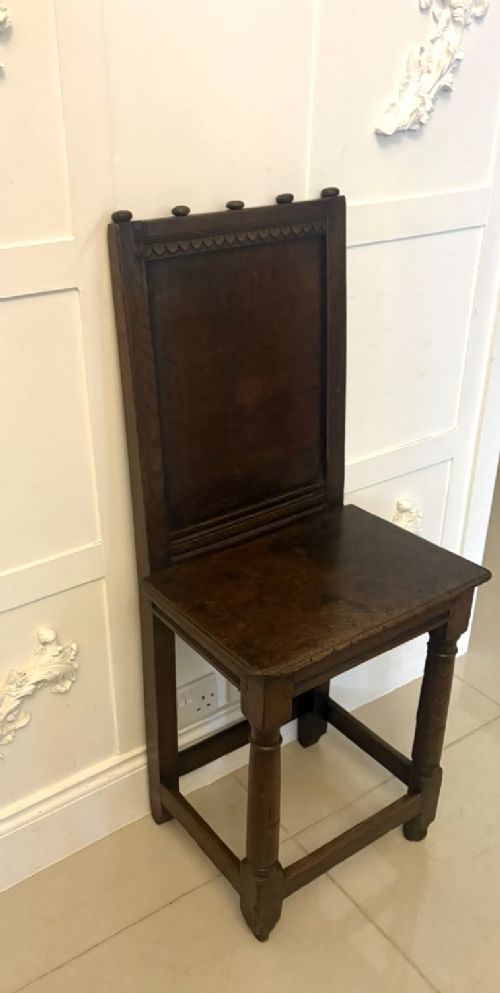
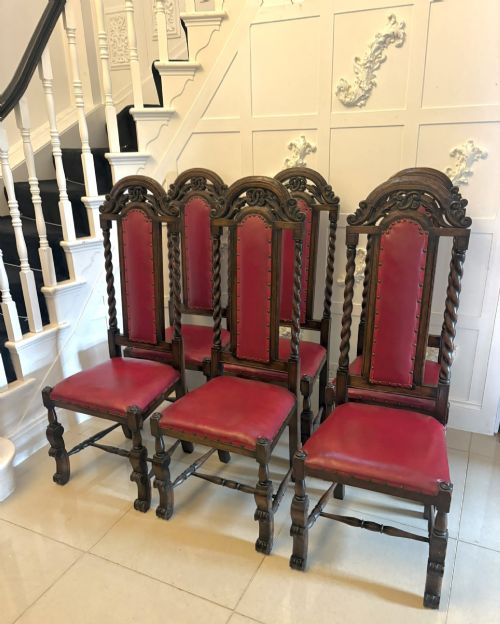
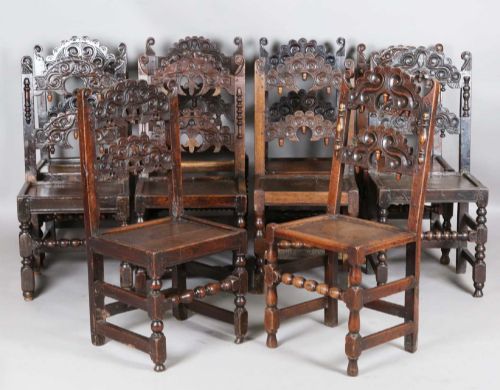
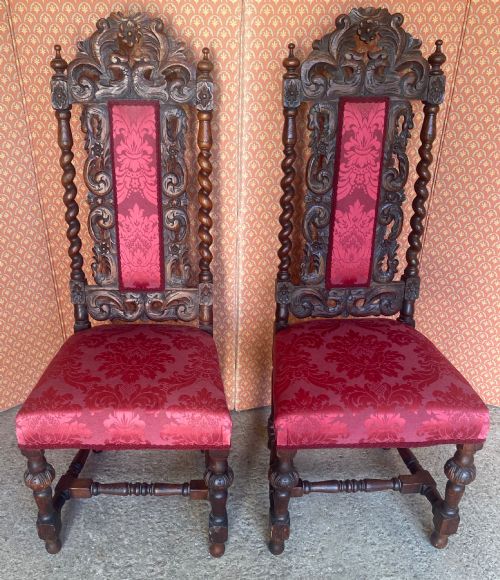
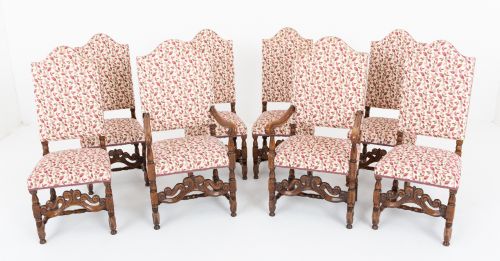
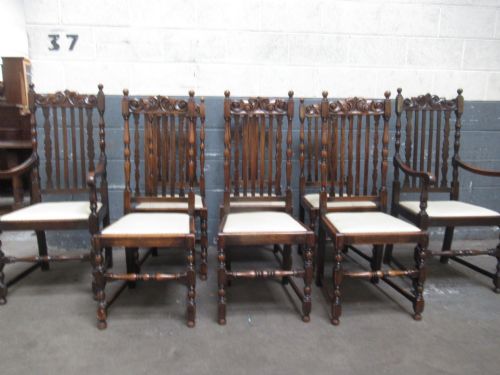
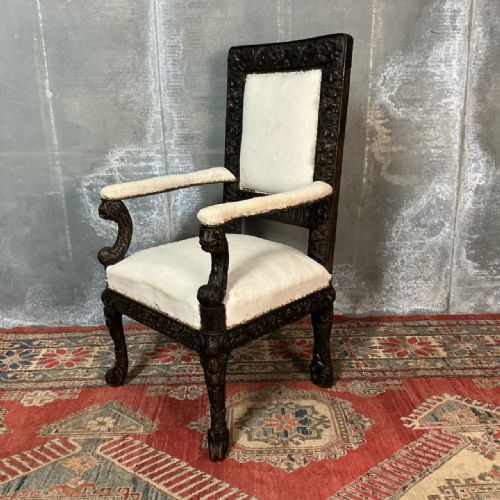
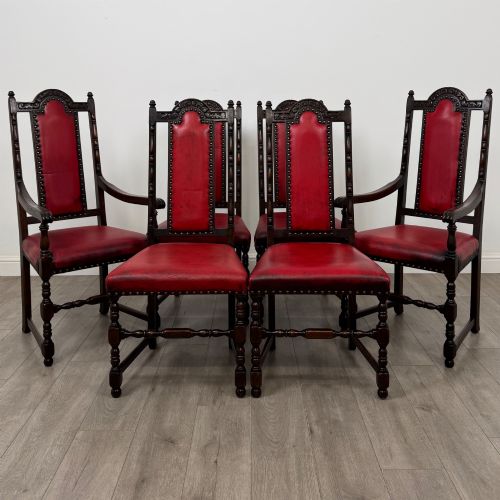
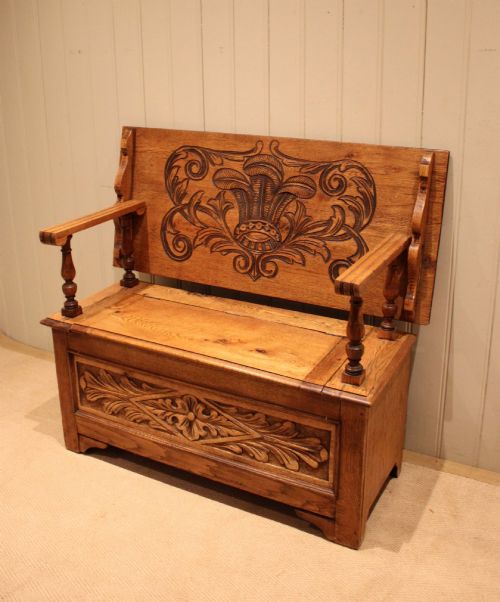
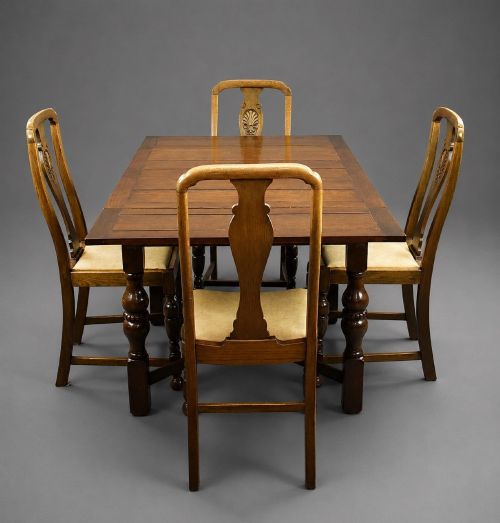
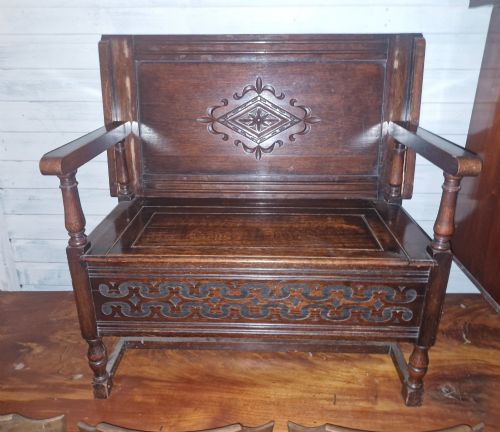
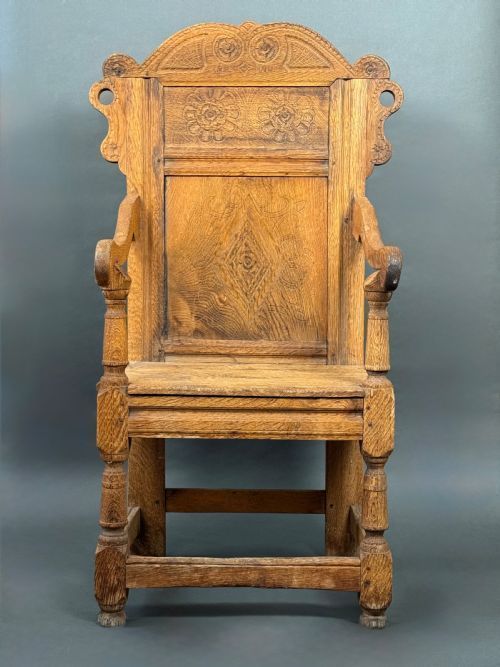
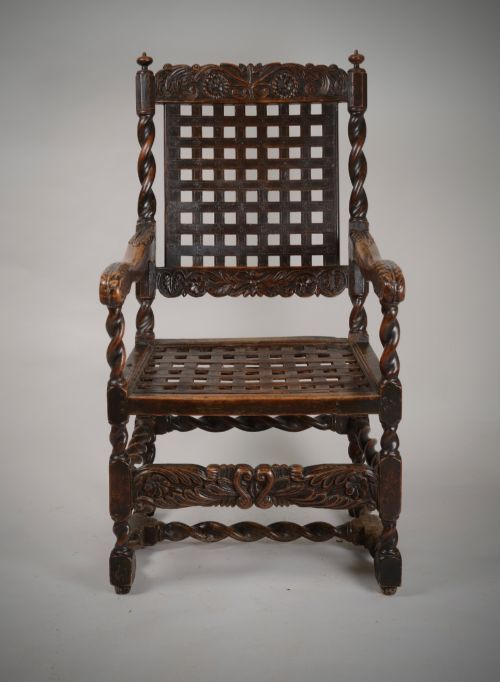
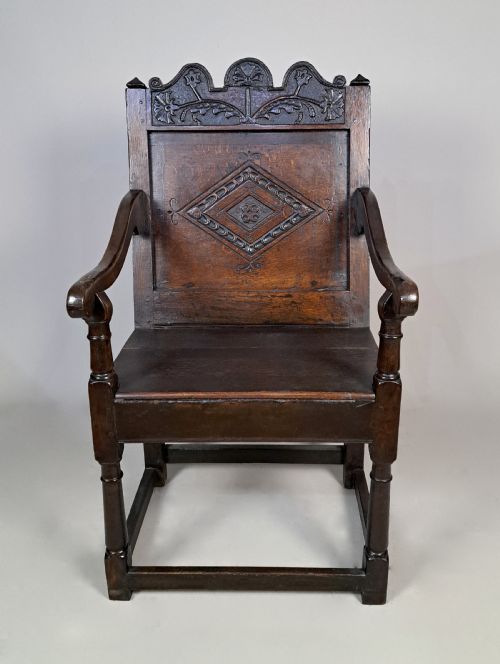
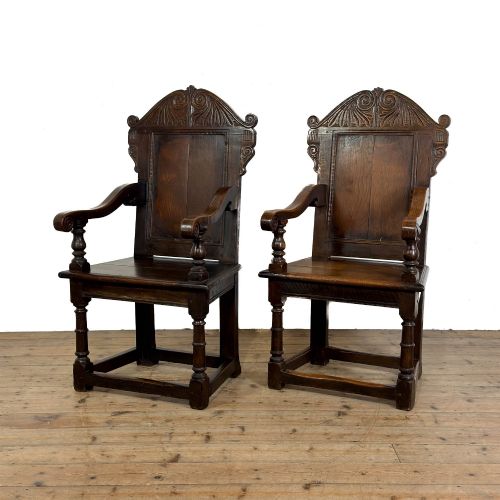
When searching for a jacobean carved chair, buyers encounter solid wooden seating originating from the seventeenth century alongside revival interpretations produced during the Victorian and Edwardian eras. The selection spans robust wainscot armchairs, high-back dining sets, and hall chairs designed with prominent geometric and floral carving.
Materials and construction methods
Cabinet makers relied principally on solid oak, supplemented occasionally by walnut and structural elements in brass, while upholstery incorporated leather, velvet, cane, and textile. Joinery relied on mortise and tenon frames held together with wooden pegs.
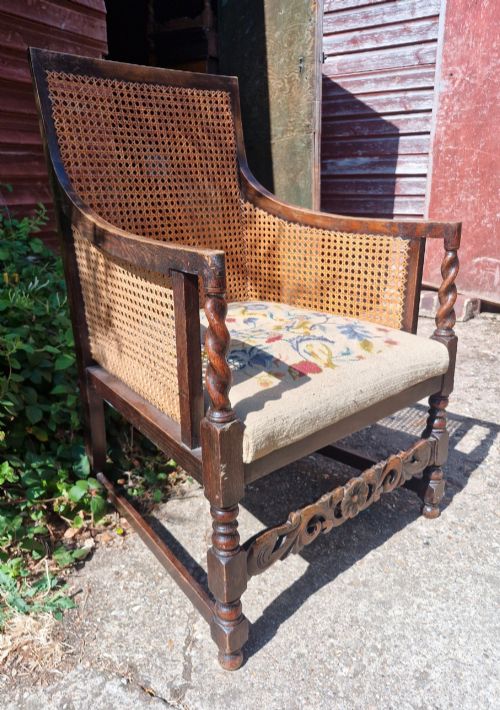
Surface ornament relied on hand chiselling, panel moulding, and turned components such as barley twist legs. Upholstered variants integrated textiles fastened with decorative tacks across cane or webbing.
Listings incorporate solid oak, walnut, leather, and cane across periods ranging from the seventeenth to the twentieth century.
Distinctions in construction and material
Quality depends upon the integrity of the timber frame, the crispness of the hand-carved detail, and the retention of original components. Pieces displaying deep, sharp relief carving and minimal timber replacement command greater interest among collectors.
The choice of primary wood influences longevity, with dense native oak providing structural stability across centuries. Alterations to upholstery systems, replacement stretchers, or mismatched components distinguish utilitarian workshop output from master cabinet work.
The Jacobean Carved Chair Glossary
- Wainscot chair
- A heavy wooden armchair featuring a panelled back and solid seat, common in seventeenth century domestic interiors.
- Barley twist
- A turned wooden furniture leg or stretcher shaped like a spiral rope, frequently seen on revival seating.
- Carolean
- Pertaining to the reign of King Charles II, characterised by elaborate scrollwork, crestings, and cane panels.
- Jacobean revival
- A nineteenth century design movement that reproduced or adapted seventeenth century motifs and heavy oak construction.
Jacobean Carved Chair: Frequently Asked Questions
How do I identify a seventeenth century original?
Original pieces exhibit hand-cut joinery marks, peg construction, and surface wear consistent with age. Timber selection typically favours native oak with distinct medullary rays.
Examination of the underside and interior joints reveals tool marks left by period craftsmen rather than modern machinery.
Can I use these dining chairs daily?
Solid oak dining chairs provide robust seating suitable for daily domestic use. Regular checking of leg joints and stretchers ensures structural stability.
Upholstered pads and cane seats benefit from gentle cleaning and occasional weight distribution care to preserve old materials.
How do I care for antique oak furniture?
Maintaining wooden surfaces requires minimal intervention using traditional wax polish applied sparingly. Avoiding direct sunlight and stable room humidity prevents timber splitting.
Fabric and leather upholstery elements need soft brushing and protection from abrasive cleaning agents.