


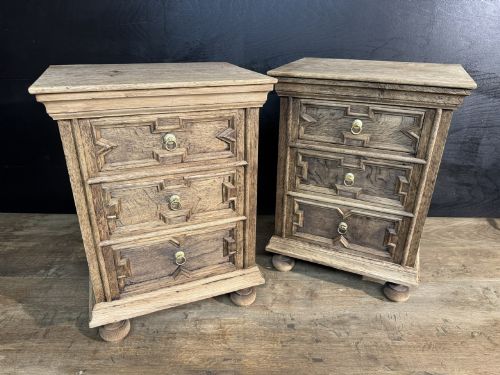
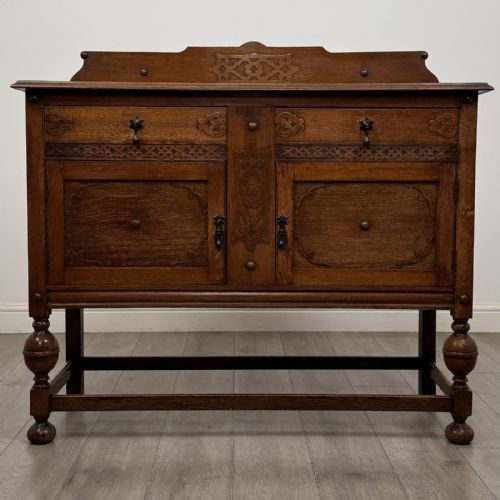
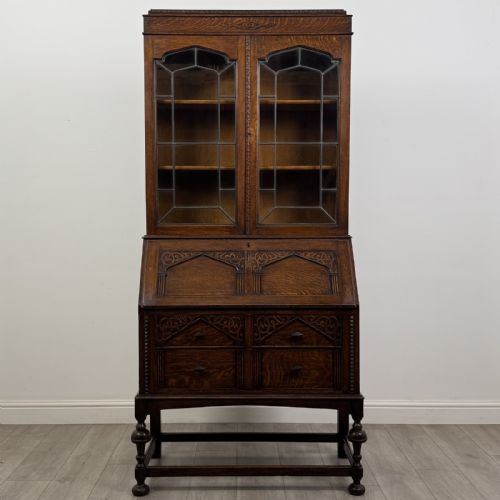
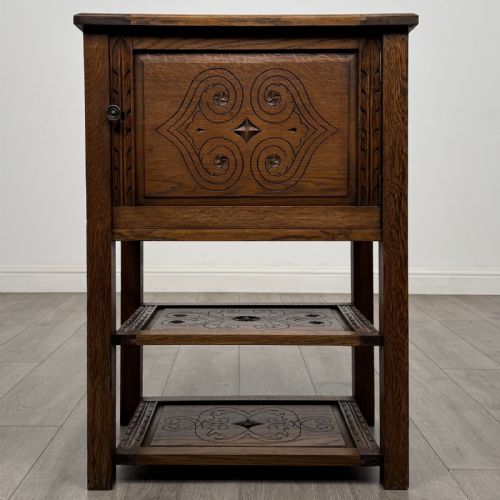
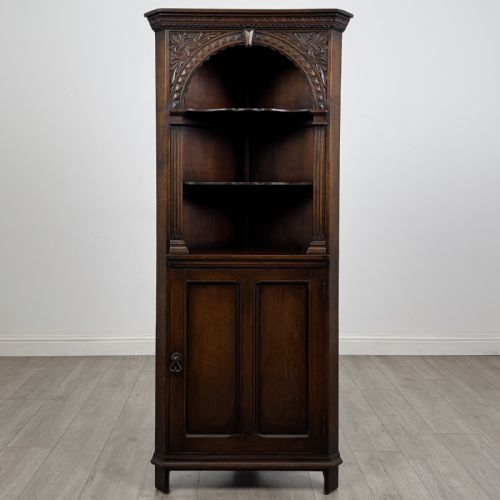
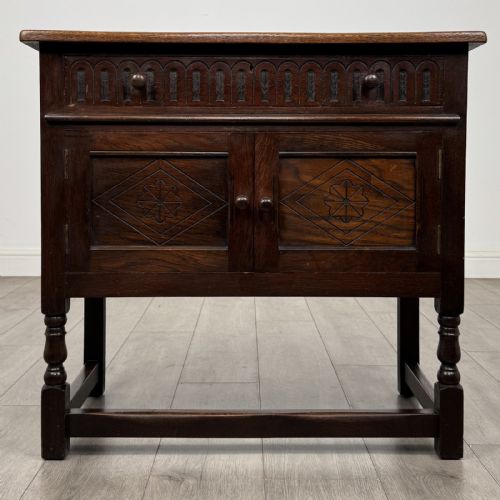

Jacobean Carved Cabinet
A jacobean carved cabinet brings heavy timber and formal ornament into a room, offering deep storage with distinct period presence.
Jacobean Carved Cabinet
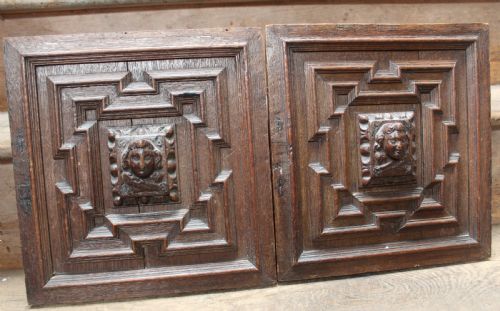
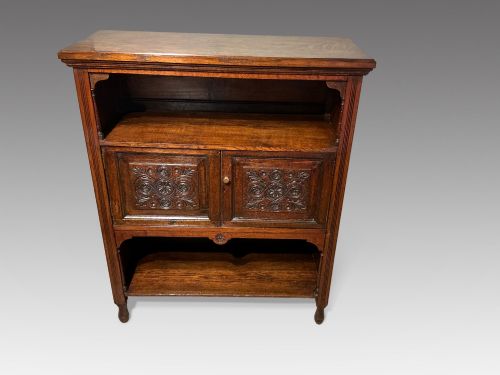
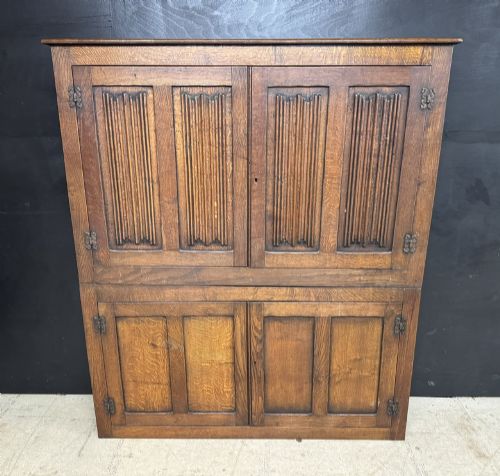
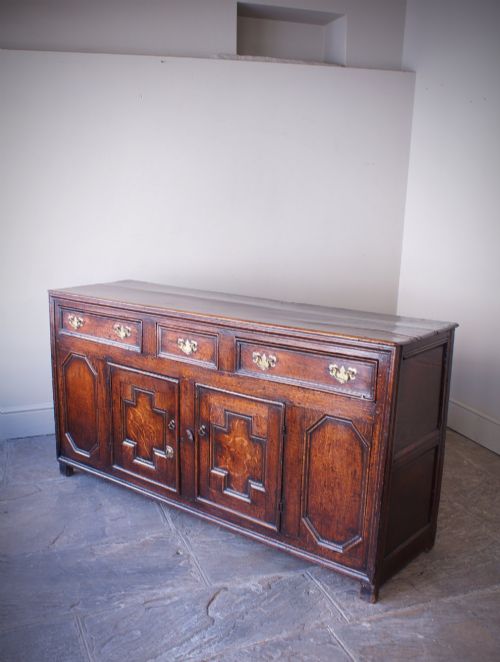
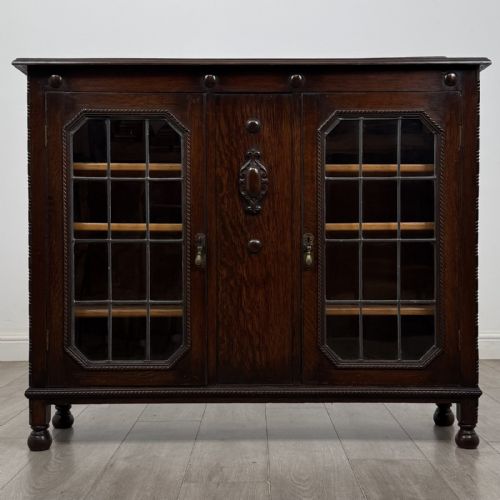
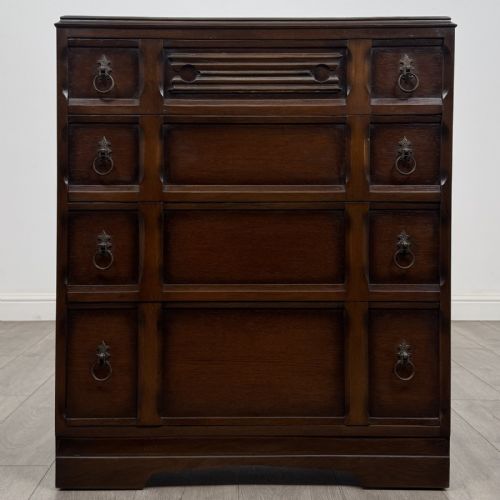
When you search for a jacobean carved cabinet, you encounter sturdy timber storage forms built for utility and display in domestic spaces. The selection includes corner cabinets, court cupboards, press cupboards, and wall-hanging examples.
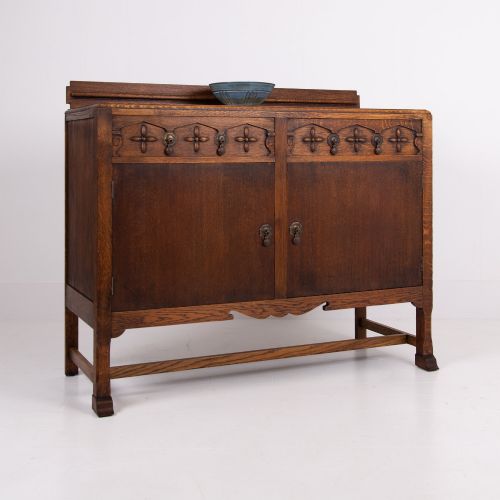
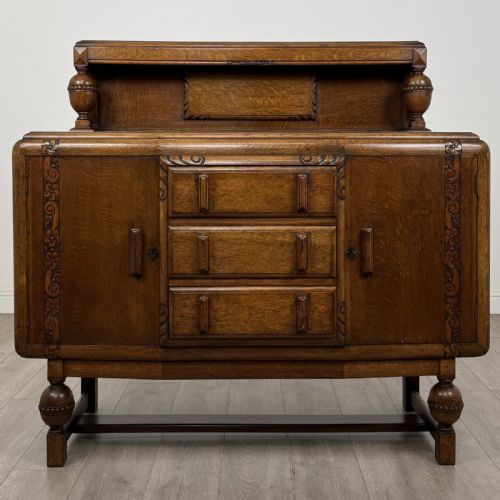
The pieces on this page span from original seventeenth-century examples to later revivals from the Edwardian era and the 1920s. You are most likely to meet revival pieces utilising oak, alongside genuine seventeenth-century survivals featuring joined construction.
Formats range from glazed display cabinets to sideboards and hall cupboards. Each type serves to organise domestic items while presenting heavily ornamented timber surfaces.
What varies in quality
The distinction between ordinary and exceptional pieces lies in the crispness of the carving and the integrity of the timber. Deep, sharp relief work executed with control indicates a more accomplished hand than shallow, mechanical incisions.
Surface condition and the survival of original structural components determine the standing of an example. Untouched surfaces retain patination that younger or heavily restored pieces lack.
Jacobean Carved Cabinet Retail Price Guide 2026
Typical asking prices for jacobean carved cabinet among the pieces listed under this phrase on Sellingantiques today, from the lower quarter to the upper quarter. They describe what is for sale here now, not the wider market.
Some cupboards hide little drop-top secrets and fitted drawers just waiting for your secret love letters.
The Jacobean Carved Cabinet Glossary
- Court cupboard
- A traditional heavy storage piece with an upper enclosed section supported by columns above a lower recess or cupboard.
- Linenfold
- A carved panel decoration designed to imitate folded cloth, frequently seen on Tudor and Jacobean style doors.
- Barley twist
- A spiralling turned wooden leg or column resembling the twist of a barley stalk, popular in seventeenth-century and revival furniture.
- Press cupboard
- A large enclosed storage furniture item designed primarily for linens and clothing, featuring multiple internal compartments.
- Stretcher base
- Horizontal wooden bracing connecting the lower legs of a cabinet to provide structural rigidity.
Jacobean Carved Cabinet: Frequently Asked Questions
Where should I place a jacobean cabinet?
These heavy timber pieces suit hallways, dining rooms, or living spaces where their substantial presence anchors the room. They function well against plain walls that allow the carved details to stand out without visual competition.
Because of their depth and dark wood tones, placing them in reasonably lit areas helps reveal the intricate panels and turned supports without the cabinet overwhelming a smaller chamber.
How do I clean a carved oak cabinet?
Dust the carved recesses regularly with a soft brush to prevent dirt accumulation in the intricate grooves. Apply a quality beeswax occasionally to nourish the oak and maintain the natural sheen of the timber.
Avoid silicone-based sprays or harsh liquid cleaners, as these can strip the historic patina and damage the grain of older wood surfaces over time.
How do I date a carved oak cabinet?
Examine the construction methods visible on the interior and back panels, looking for hand-tool marks, pegged joints, and timber shrinkage patterns. Seventeenth-century pieces typically feature joined frame-and-panel construction with irregular hand-tool signatures.
Revival pieces from the Edwardian period or the nineteen-twenties often display more uniform machine sawing, standardised fixings, and secondary woods inside drawers.
What is the difference between original and revival pieces?
Original seventeenth-century cabinets were built during the period of their style's inception, carrying the wear, structural shifts, and patination of centuries of domestic use. They are constructed using period joinery and hand-wrought iron or brass hardware.
Revival cabinets were manufactured later, particularly during the Edwardian era and the nineteen-twenties, recreating earlier Jacobean aesthetics using period-appropriate timber styles and revival hardware.