


Jacobean Bible Box
A jacobean bible box is a sturdy wooden chest designed to hold scriptures, and collectors prize these compact pieces for their rich seventeenth-century patina and historical utility.
Jacobean Bible Box
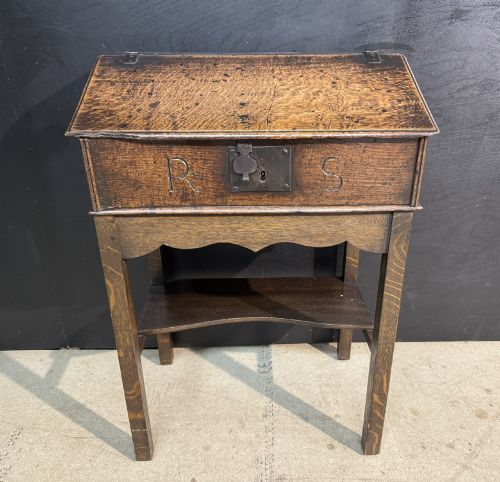
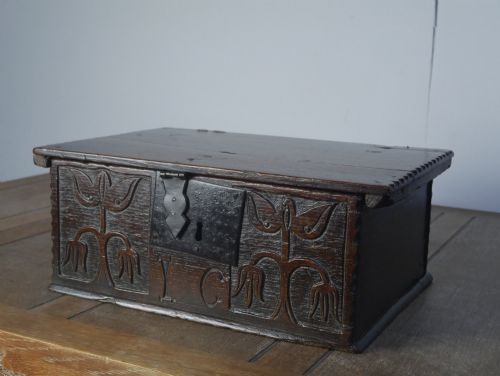
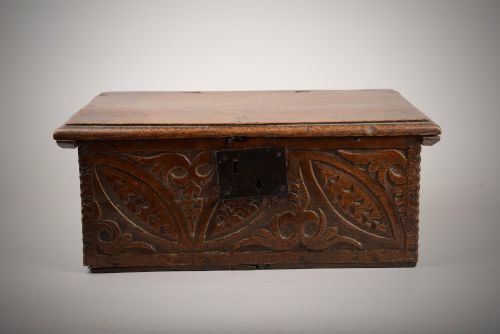
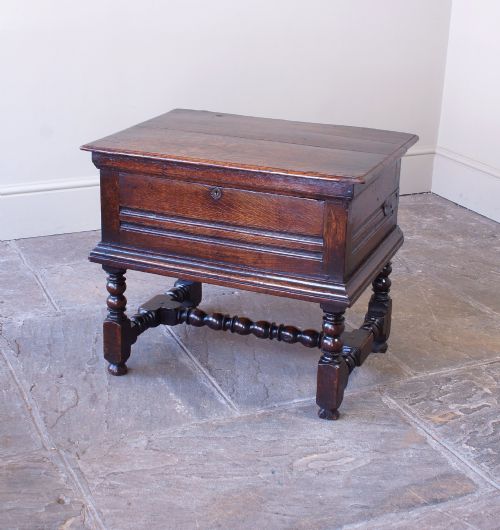
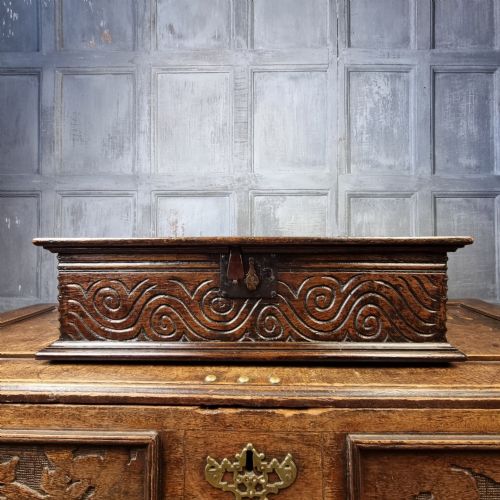
A jacobean bible box is a compact wooden chest built to store sacred texts and important household documents during the seventeenth century. These utilitarian forms appear as desk boxes, table boxes, and writing slopes, often designed to sit on a sturdy table or stand.
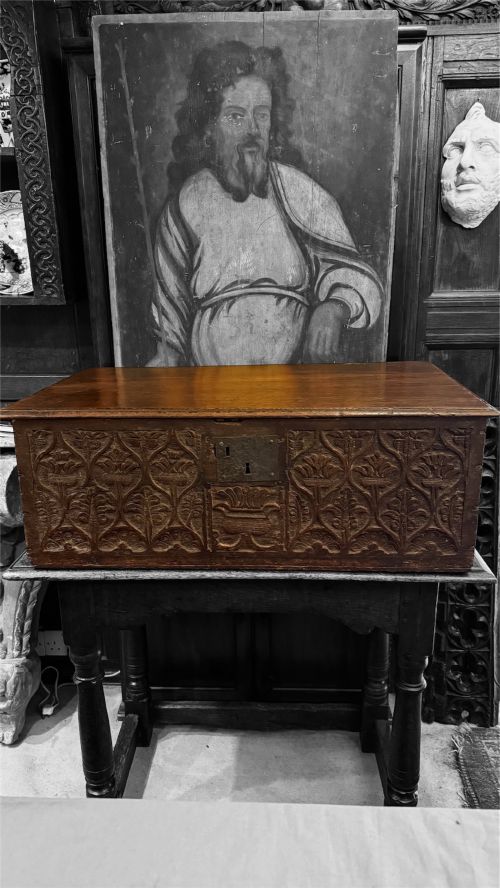
The pieces on this page are predominantly seventeenth-century examples, though eighteenth-century and later interpretations also occur. Many survive as simple oak boxes, while others feature carved panels or internal drawers.
Buyers will encounter regional variations, including English country oak pieces and Welsh writing boxes featuring early dates. Certain forms double as slant-front desks or document boxes with hinged lids.
How they were made
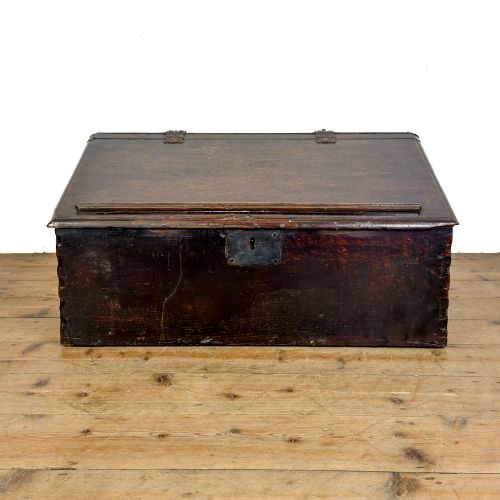
Makers constructed these boxes primarily using solid oak boards joined with traditional pegged framing or dovetails. The heavy timber was hand-sawn and planed, resulting in thick panels that withstand centuries of handling.
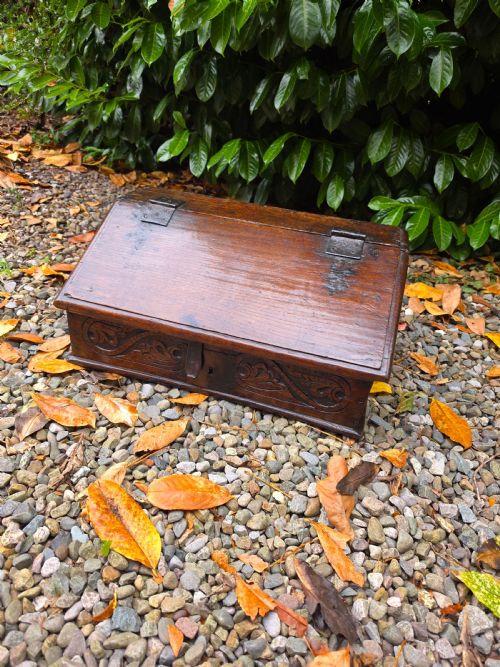
Iron and brass hardware, such as hinges, lock plates, and carrying handles, were forged by hand to secure the heavy lids. Many examples display chip carving, incised geometric patterns, or relief work across the front panels.
Some seventeenth-century boxes doubled as close stools, proving that even holy scripture occasionally shared space with domestic engineering.
What varies in quality
The standard of a box depends on the crispness of its hand carving and the integrity of its original timber. Crisp chip carving and well-preserved surface textures distinguish finer examples from plain or heavily restored pieces.
Original iron or brass fittings and undisturbed internal drawers elevate a piece's integrity. The survival of an original stand or base also significantly alters the character of the box.
The Jacobean Bible Box Glossary
- Bible box
- A small wooden chest historically used to hold a family bible and important papers. These pieces often feature sloping lids that served as writing surfaces.
- Chip carving
- A style of ornamentation created by chipping small triangles or chips out of a wooden surface to form geometric patterns. This technique appears frequently on seventeenth-century oak boxes.
- Slant front
- An angled lid configuration that allows the top of the box to function as a writing slope. This form precedes the development of the full desk bureau.
- Close stool
- A piece of furniture disguised as a box or chest that enclosed a chamber pot. Surviving seventeenth-century examples share similar carpentry with standard desk boxes.
- Provenance
- The documented history of ownership that traces a piece to a specific location or estate. Items associated with notable houses carry distinct historical interest.
Jacobean Bible Box: Frequently Asked Questions
What were jacobean bible boxes used for?
These boxes served as secure storage for household bibles and valuable legal documents during a time when books were precious possessions. The flat or sloping lids also provided a convenient surface for writing letters or recording family history.
Over time, many families repurposed them as general stationery desks or kept them in parlours to hold small valuables. Their solid construction meant they could be moved safely from room to room.
How do you date a jacobean bible box?
Dating relies on examining the construction methods, tool marks, and style of carving present on the oak panels. Seventeenth-century examples typically show hand-sawn timber, pegged joints, and characteristic chip-carved geometric motifs.
Later copies or eighteenth-century adaptations often reveal different hinge types, machine-sawn boards, or softer patination. Comparing the wear patterns around the keyholes and lid edges also helps confirm period authenticity.
Where should you place a bible box in your home?
These compact boxes sit well on side tables, chest tops, or dedicated stands where their carved front panels remain visible. Placing them away from direct heat sources prevents the old oak from drying out and splitting.
They also function effectively as desktop organizers for modern correspondence or stationery. Their historic presence adds character to both traditional studies and contemporary living spaces.
What is the difference between a bible box and a desk box?
While both terms describe similar portable wooden receptacles from the seventeenth century, a bible box traditionally accommodated a specific volume and religious texts. Desk boxes often incorporated internal compartments, small drawers, or writing slopes designed for paperwork.
In practice, makers and historical inventories used the terms interchangeably as domestic storage needs overlapped. Today, collectors look at the interior layout and lid angle to determine the primary intended use.