


Ivory Watercolour Portrait Painting
These ivory watercolour portrait painting examples capture sitters in fine detail, offering intimate likenesses suited for collectors of miniature art.
Ivory Watercolour Portrait Painting
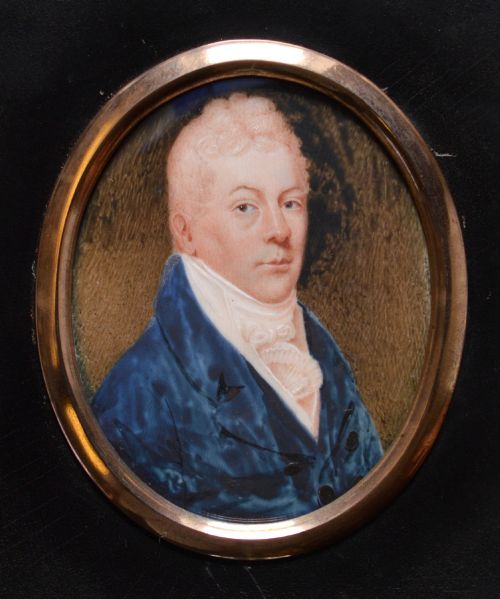
An ivory watercolour portrait painting represents a delicate historical art form, capturing subjects on thin slices of animal tooth rather than paper or canvas. These works span the eighteenth century and the Regency period, depicting ladies, gentlemen, children and officers.
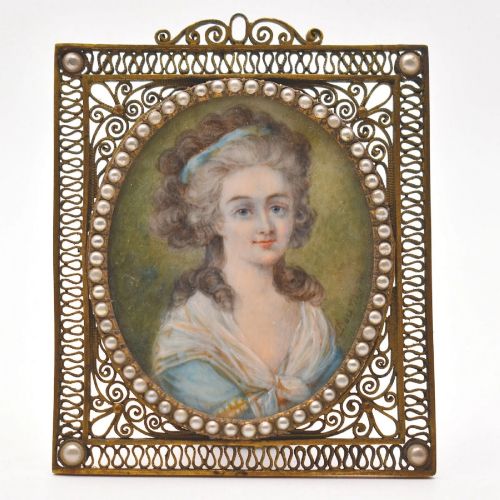
The objects most frequently met on this page take the form of portrait miniatures and miniature paintings. They typically present head and shoulder studies, rendered with precision by named miniaturists or skilled contemporary hands.
Subjects appear in period attire, from white dresses and blue gowns to coral beads and military uniform. Each piece preserves a likeness using watercolour pigments applied directly to the prepared substrate.
How these miniatures were made
Artists painted these works using watercolour on ivory, taking advantage of the material's translucent quality to lend a natural glow to human skin tones. The thin sheet of ivory required careful preparation to hold the delicate pigment without warping.
Makers housed the finished paintings behind glass to protect the water-soluble pigments from moisture and handling. These protective covers were secured within frames fashioned from gold, gilt metal, ebonised wood or brass.
Some eighteenth-century ladies requested their miniatures be painted with tiny seed pearls sewn directly into the gilt frame for extra sparkle.
What varies in quality
The quality of the housing also marks the difference between pieces, with heavy gold or seed pearl gilt frames showing higher craftsmanship than plain ebonised wood. The preservation of the watercolour pigment beneath the glass determines how clearly the original tones survive.
Charles Hayter·Nicolas Freese·Frederick Buck·George Engleheart·Archibald Skirving·William Grimaldi·Henry Jacob Burch·Edward Pugh·Samuel Cotes·Jeremiah Steele
The Ivory Watercolour Portrait Painting Glossary
- Portrait Miniature
- A small painting, usually a likeness of a person, executed on a portable scale. These works were designed to be carried, worn or kept in private spaces.
- Ivory
- A hard, white material derived from the tusks of mammals, sliced thin for use as a painting surface. Its luminous quality mimics the texture of human flesh.
- Watercolour
- A paint consisting of pigment suspended in a water-based solution. It requires a steady hand when applied to a non-absorbent surface like ivory.
- Gilt Metal
- A metal base treated with a thin layer of gold or gold-coloured wash. It provides a decorative and protective border for many miniature paintings.
- Ebonised Wood
- Timber treated to resemble ebony, presenting a dark, polished finish. This material frequently forms the simple frames enclosing Georgian and Regency portraits.
Ivory Watercolour Portrait Painting: Frequently Asked Questions
How should I display my miniature painting?
Keep the piece away from direct sunlight to prevent the watercolour pigments from fading over time. Wall mounting in a stable indoor environment protects the delicate frame and glass.
Ensure the room humidity remains moderate, as excess moisture can damage both the ivory substrate and the paint layer.
How do I identify a Regency period piece?
Regency portraits often display sitters in specific fashions of the early nineteenth century, such as high-waisted dresses for women or distinct cravats for men. Hair styles often feature soft ringlets or crops characteristic of the era.
Frames and mount styles from this time also follow the neoclassical tastes prevalent during the Regency and the reign of George III.
Why is ivory used instead of paper?
Ivory possesses a natural translucency that mimics the warmth of human skin when light passes through the thin sheet and reflects back through the watercolour wash. Painters discovered this effect enhanced the lifelike quality of facial portraits.
Paper absorbs water differently and lacks the smooth, luminous finish that made ivory the preferred surface for miniature painters of the eighteenth and nineteenth centuries.