


Italian Tripod Table
An italian tripod table brings warmth and intricate craftsmanship to a room, offering a stable central pedestal supporting a versatile surface.
Italian Tripod Table
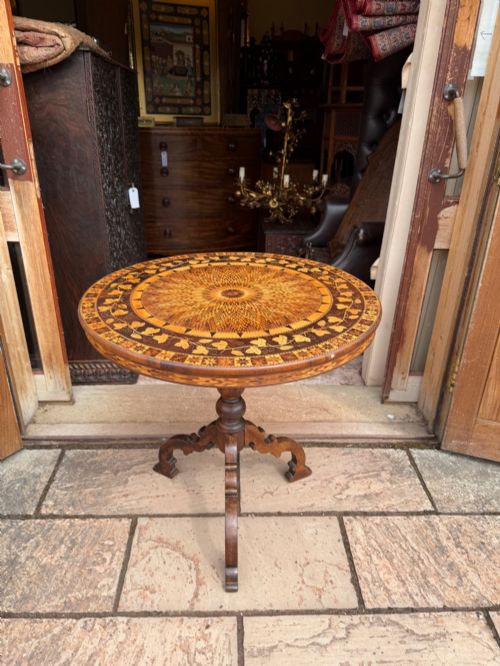
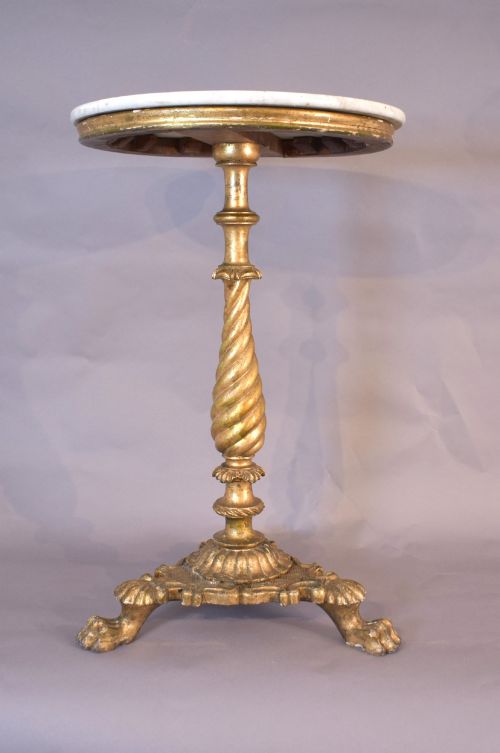
Makers commonly employed walnut, fruitwood, and olive wood, frequently incorporating elaborate marquetry and parquetry. Buyers frequently encounter Sorrento ware alongside marble top examples reflecting the grand tour influence.
The historical styles span from Victorian and William IV to Italian Rococo Revival and art nouveau. Such diversity ensures these tables fit various interior schemes while retaining their distinctive continental character.
How they were made
Cabinet makers utilised dense timbers like walnut and fruitwood for the structural frames and turned stems, often applying complex fruitwood inlay and marquetry to the tops. Olive wood and satin birch also appear, chosen for their distinctive grain patterns and warm colour.
Surface decoration frequently involved intricate Sorrento ware techniques, combining geometric parquetry with pictorial wood mosaics. Alternatively, artisans integrated stone elements, utilising scagliola and specimen marble to create durable, polished tabletops.
Materials span from giltwood and brass to specimen marble and scagliola.
What varies in quality
Quality rests primarily on the precision of the timber work and the complexity of the inlaid designs. Pieces decorated with detailed pictorial marquetry or genuine specimen marble demonstrate a higher level of artisan skill than simpler plain wood versions.
The structural integrity of the turned stem and the three-legged base dictates everyday utility. Finer examples maintain tight joints and balanced proportions, ensuring the table remains steady despite centuries of use.
Almerico Gargiulo
The Italian Tripod Table Glossary
- Sorrento ware
- A style of decorative woodwork originating from the town of Sorrento, characterised by intricate marquetry and parquetry. Artisans cut and fitted small pieces of coloured wood to form elaborate geometric or pictorial scenes.
- Marquetry
- The art of applying decorative veneer pieces to a structure to form intricate designs. This technique allows makers to create detailed pictorial table tops using contrasting wood tones.
- Parquetry
- A geometric mosaic of wood pieces used for decorative floors and tabletops. It differs from marquetry by strictly following repeating geometric patterns rather than pictorial compositions.
- Scagliola
- A composite substance made from selenite, glue, and pigments, used to imitate marble and other fine stones. Craftsmen employed this technique to achieve luxurious coloured tabletops without relying solely on quarried stone.
- Specimen marble
- A tabletop composed of numerous small samples of different natural marbles arranged in geometric patterns. These were popular souvenirs for travellers undertaking the grand tour.
Italian Tripod Table: Frequently Asked Questions
What is an italian tripod table used for?
These tables served historically as occasional, side, or centre tables for displaying decorative objects, holding books, or supporting tea services.
Today, they function well beside armchairs or as accent pieces in living spaces where surface area is needed without occupying much floor space.
How do I identify a sorrento table?
Sorrento tables are characterised by intricate wood inlay depicting floral motifs, buildings, or figures using various naturally coloured timbers.
They often date from the nineteenth century and combine parquetry borders with detailed central wood mosaics.
Are marble top tables heavy?
Yes, tables featuring solid marble or specimen marble tops carry significant weight compared to all-wood versions. This heft provides excellent stability for the central pedestal.
When moving these pieces, it is advisable to lift the marble top separately if it is detachable from the base.
How do I care for inlaid wooden tables?
Maintain the timber by keeping the table away from direct heat sources and strong sunlight, which can dry out the veneer and fade the natural wood colours. Dust gently with a soft dry cloth and avoid excessive moisture.
Applying a suitable wax occasionally helps preserve the sheen of the polished surface without building up residue.