

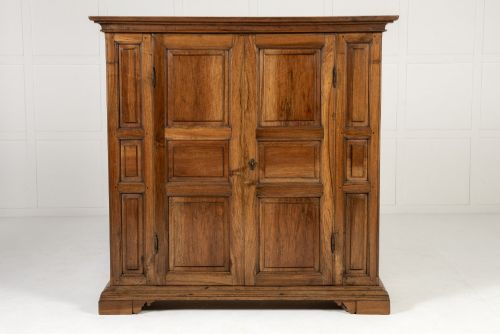


Italian Rustic Cabinet
These italian rustic cabinet examples bring regional character and honest timber into a room, offering practical storage with genuine age.
Italian Rustic Cabinet
An italian rustic cabinet encompasses regional storage pieces from the eighteenth and nineteenth centuries, ranging from tall wardrobes to low pedestal cupboards. Buyers seeking an italian rustic cabinet will most frequently encounter walnut and painted wood examples built for provincial domestic use.
The selection includes marriage cupboards, wall cabinets, and sideboards that reflect local traditions across Tuscany and other regions. These forms span enclosed cupboards with simple panel doors and open shelving units designed for everyday utility.
Materials and construction methods
Construction relies heavily on solid walnut and pine, joined using traditional methods suited to provincial workshops. Iron and brass hardware such as hinges and latches secure the doors on these heavy timber carcasses.
Surface treatments range from polished timber finishes to polychrome painted wood and applied paint. These finishes display the natural grain of the walnut or the layered colours of later decorative schemes.
Italian Rustic Cabinet Retail Price Guide 2026
Typical asking prices for italian rustic cabinet among the pieces listed under this phrase on Sellingantiques today, from the lower quarter to the upper quarter. They describe what is for sale here now, not the wider market.
Judging quality and character
Quality rests in the integrity of the timber, the preservation of original painted surfaces, and the harmony of the proportions. Finer examples retain their structural honesty and period hardware without heavy modern intervention.
The distinction between standard pieces and superior works lies in the depth of the regional carving, the quality of the timber selection, and how cleanly the joinery has survived through the centuries.
The Italian Rustic Cabinet Glossary
- Walnut
- A dense, dark hardwood prized for its rich grain and stability, frequently utilised in fine eighteenth-century furniture construction.
- Polychrome
- Decorated in multiple colours, often found on painted marriage cupboards and decorative storage pieces from the period.
- Pedestal cupboard
- A compact enclosed storage unit raised on a base or pedestal, designed for specific domestic utility.
- Marriage cupboard
- A traditional celebratory piece of furniture commissioned for a wedding, often featuring decorative painted surfaces.
Italian Rustic Cabinet: Frequently Asked Questions
What rooms suit an italian rustic cabinet?
These pieces fit naturally into living spaces, dining rooms, or large hallways where substantial storage and strong regional character are desired. Their practical proportions allow them to function as wardrobes, sideboards, or general cupboards.
The warm tones of walnut and painted timber complement both traditional interiors and modern minimalist rooms. They provide generous enclosed space while adding historical depth to the decor.
How do I date an italian rustic cabinet?
Dating relies on examining the timber species, construction joinery, and the wear patterns on the hardware and surfaces. Eighteenth-century pieces typically feature hand-cut joints and dense regional hardwoods.
Later nineteenth-century examples or pieces from the nineteen-thirties often display different tool marks and surface treatments. Comparing the construction details against known period styles helps clarify the age of the piece.
Are painted finishes original on these cabinets?
Painted surfaces vary between original decorative schemes and later layered applications applied during subsequent decades of use. Close inspection of the paint layers reveals whether the colour dates to the construction period.
Both original and later painted finishes contribute to the decorative appeal of provincial furniture. The key is how well the surface has aged and integrated with the timber beneath.
How should I care for antique timber?
Maintain these pieces by keeping them away from direct heat sources and fluctuating humidity that can cause the timber to split. Regular dusting with a soft, dry cloth preserves the finish without the need for harsh polishes.
Applying natural wax occasionally helps nourish older walnut and painted wood surfaces. Gentle handling ensures the historic hardware and joints remain secure.