




Italian Majolica Ceramics
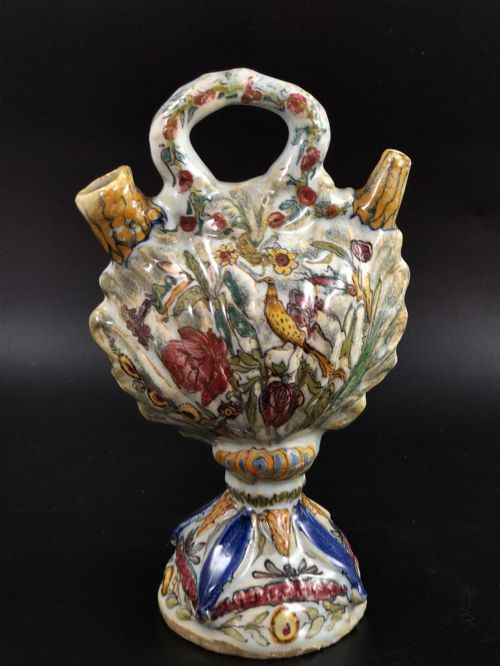
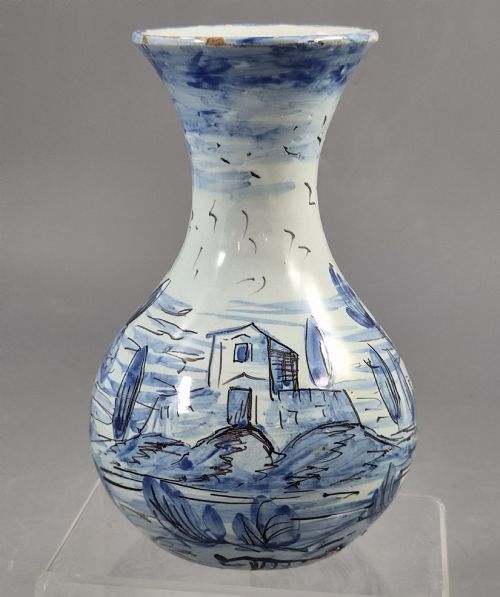
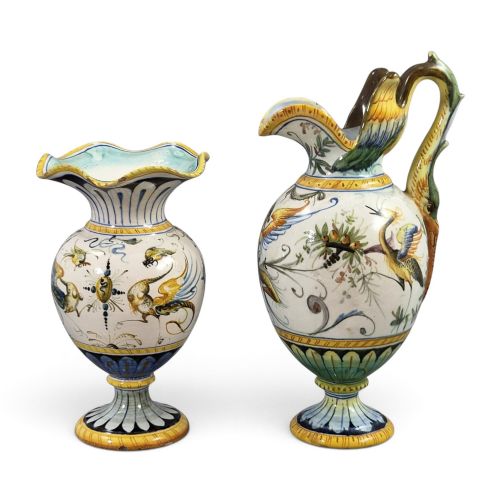
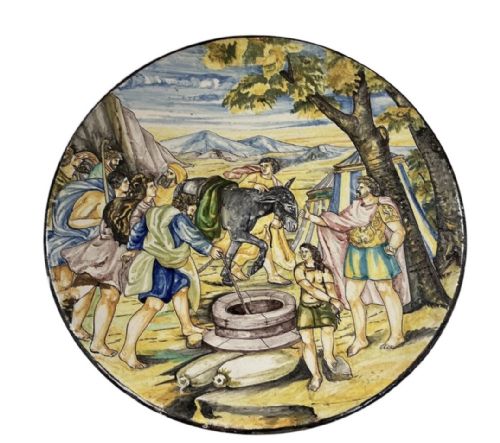
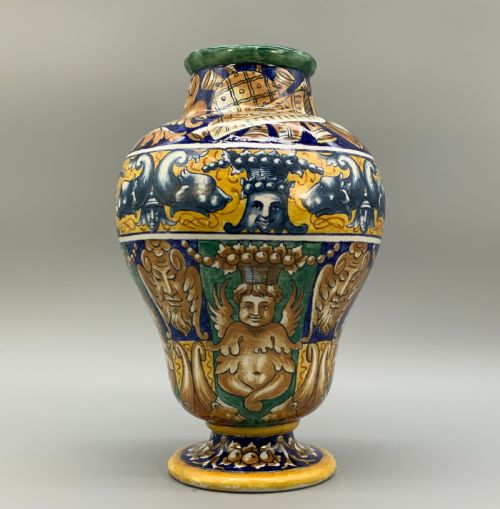
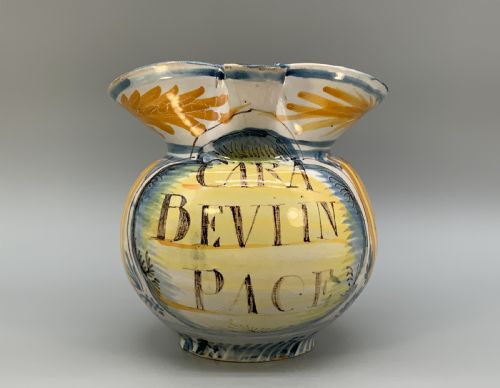
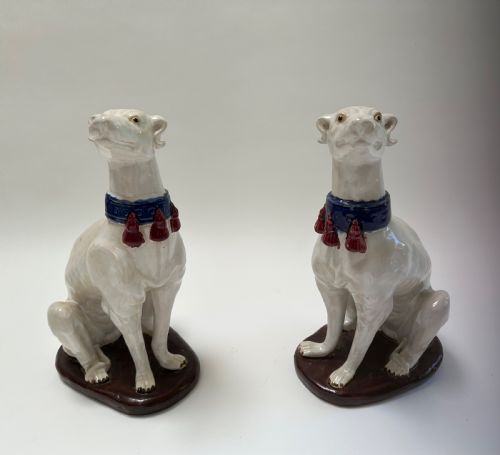
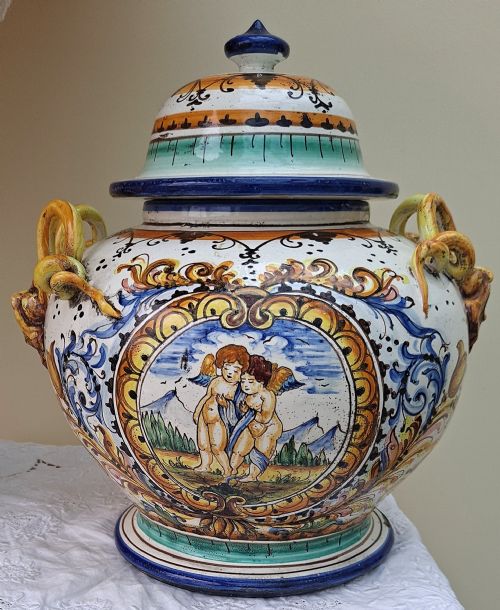
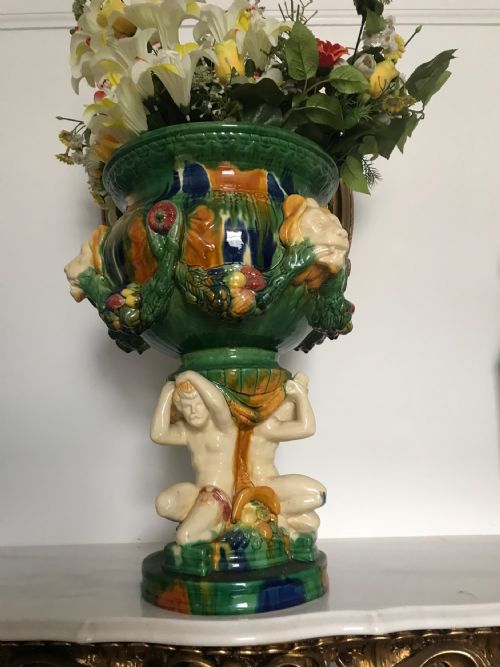
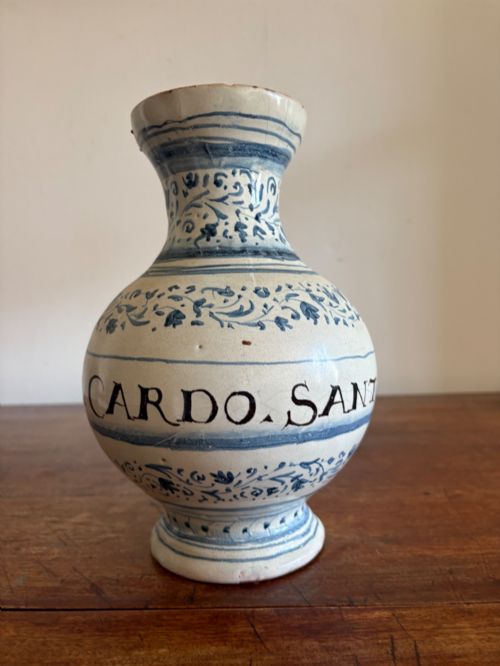
These Italian majolica ceramics bring rich historical colour and painterly narrative into a room, offering the collector tin-glazed earthenware shaped as pharmacy jars, chargers, and vases.
Italian Majolica Ceramics
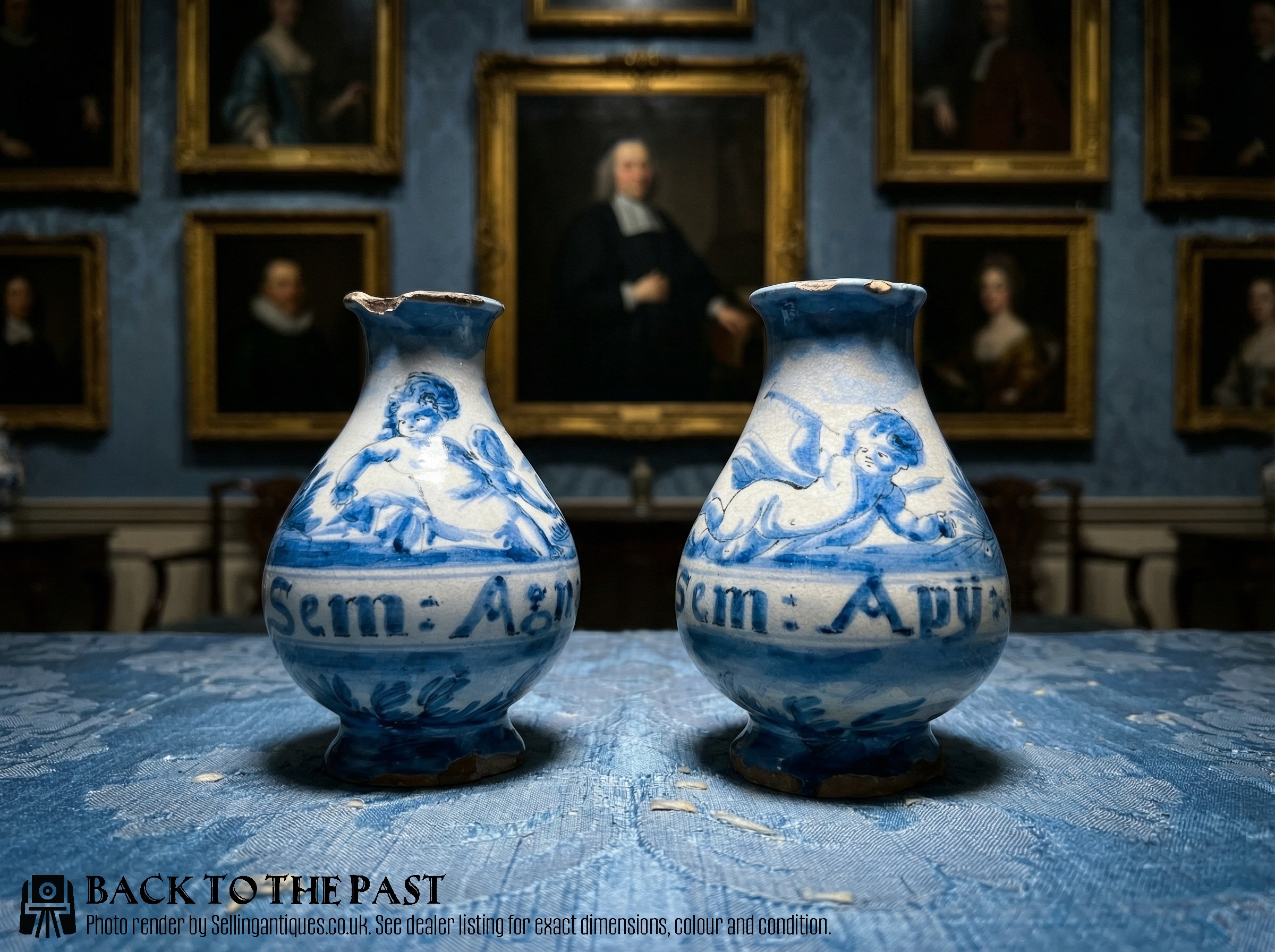
When you search for italian majolica ceramics, you encounter tin-glazed earthenware spanning from the seventeenth century through to the early twentieth century.
The selections on this page appear predominantly in forms such as apothecary jars, albarelli, chargers, ewers, and decorative vases.
Pieces frequently reflect historical revivals, including Renaissance and Baroque styles, alongside traditional regional workshops.
Materials and Technique
Potters shaped local earthenware and terracotta clays before applying an opaque tin glaze that created a smooth white surface for painting.
Artisans decorated these vessels using pigments in blue and white, or richer polychrome palettes, before firing to set the glaze and colours.
A jovial eighteenth-century Pulcinella figure stands among the jars and vases, bringing theatrical charm to the ceramics.
Design and Execution
Superior examples display crispness in hand-painted details, whether handling intricate historical scenes or precise heraldic motifs.
The depth of the glaze and the harmony of the polychrome or blue and white palette distinguish the finest studio work from simpler commercial output.
Cantagalli·Ulisse Cantagalli·C. Ravier
The Italian Majolica Ceramics Glossary
- Majolica
- Tin-glazed earthenware decorated with opaque metal oxides before firing. This technique produced colourful surfaces often associated with Italian pottery traditions.
- Albarello
- A cylindrical earthenware jar designed for holding apothecary drugs and spices. Originating in the Middle East, this form became a staple of Italian pharmacy displays.
- Istoriato
- A style of ceramic decoration featuring narrative scenes from history, mythology, or religion. Painters covered the entire surface of plates and chargers with these complex pictorial compositions.
- Charger
- A large decorative plate intended for display on a wall or sideboard rather than for dining. These wide surfaces provided ample canvas for detailed hand-painted designs.
- Tin Glaze
- A pottery glaze made opaque by the addition of tin oxide. It offered potters a white background that accepted pigments directly without running.
Italian Majolica Ceramics: Frequently Asked Questions
What are Italian majolica ceramics?
These pieces are tin-glazed earthenware objects created in Italy across several centuries, utilising pigmented mineral decoration over a white glaze.
They encompass functional vessels like drug jars alongside purely decorative chargers and vases.
How were apothecary jars used?
Apothecaries and pharmacists utilised albarelli and wet drug jars to store medicinal herbs, syrups, and compounds.
Their labelled surfaces kept contents organised on pharmacy shelves while protecting ingredients from light and air.
How do I display a charger?
Wall chargers and plaques contain integrated hanging holes or sit within specialised display stands to showcase their painted scenes.
Positioning them on a neutral wall highlights the vibrant polychrome or blue and white pigments.
How can I tell periods apart?
Earlier pieces from the seventeenth and eighteenth centuries often display straightforward pharmacy labelling and softer historical tin glazes.
Nineteenth and twentieth-century examples frequently adopt Renaissance Revival motifs or explicit nineteenth-century workshop signatures.