
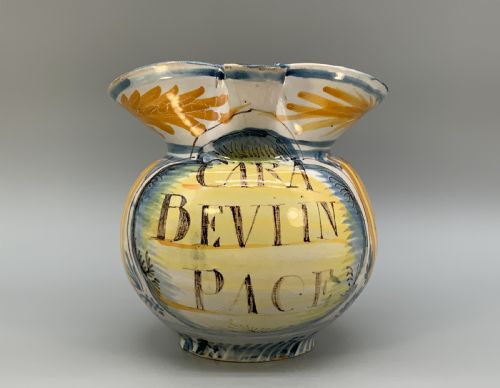
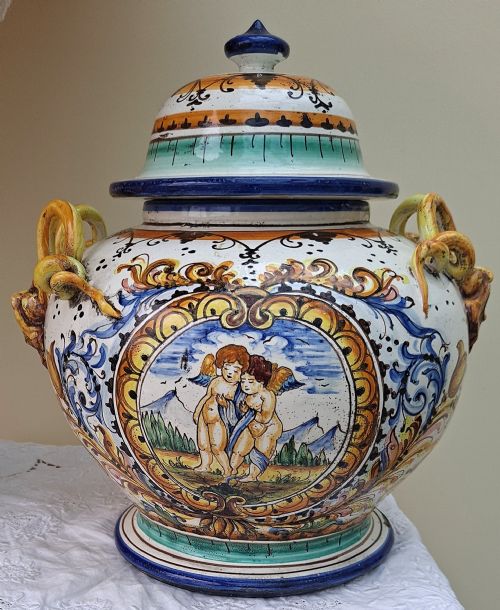
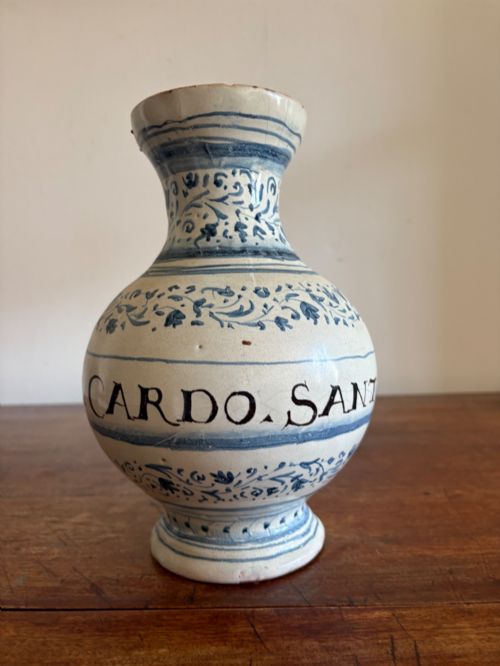


Majolica Tin Glaze Jar
These majolica tin glaze jar examples are vessels carrying centuries of apothecary tradition and painted tin-glazed earthenware surface design into contemporary rooms.
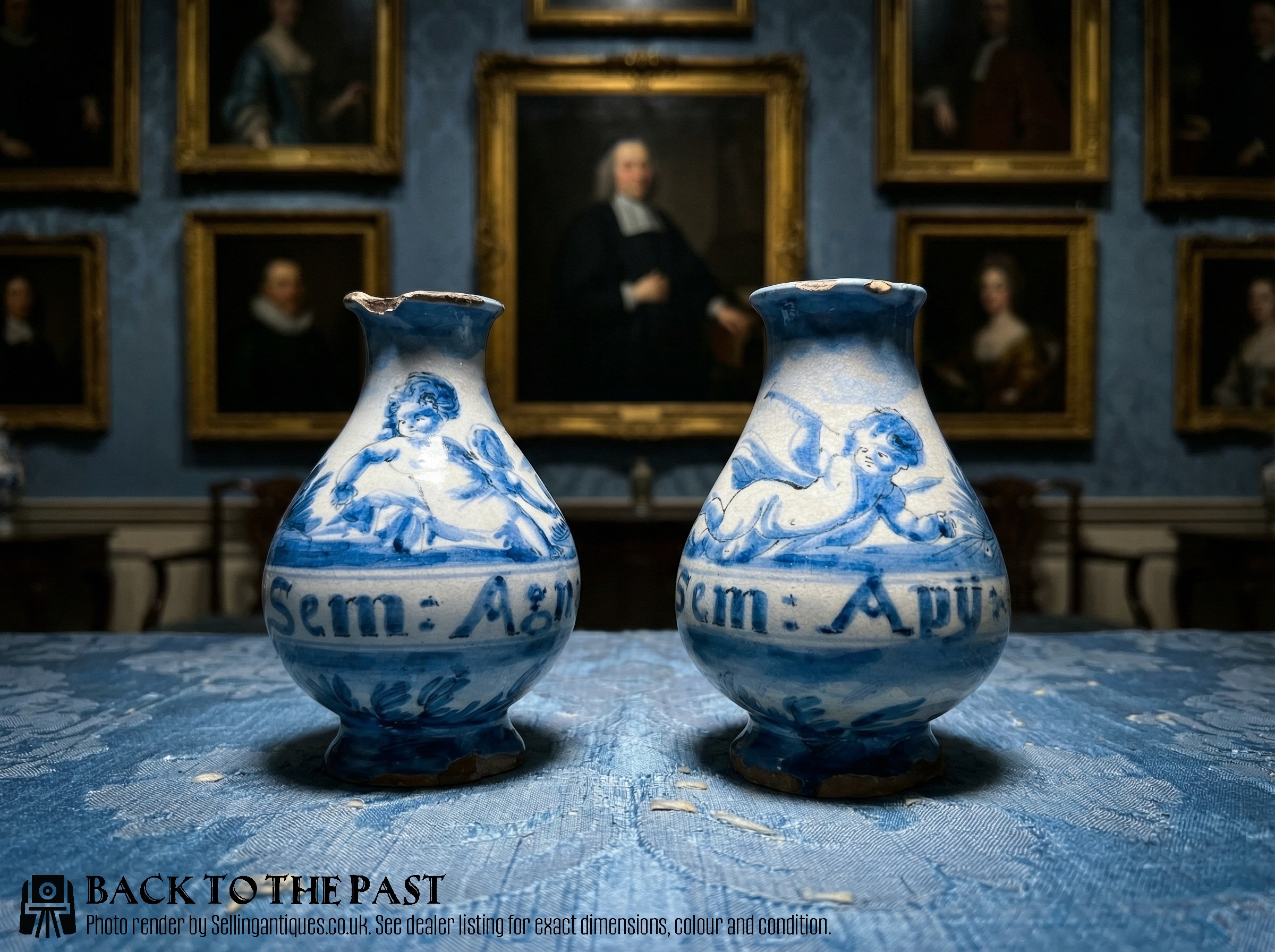
Majolica Tin Glaze Jar
A majolica tin glaze jar sits at the intersection of utilitarian pharmacy storage and decorative Italian or French ceramic tradition. When you search for this phrase, you encounter apothecary jars, albarellos, pharmacy jugs, and lidded vases spanning from the seventeenth century through the nineteenth century.
The version you are most likely to meet on this page is the Italian or French albarello or wet drug jar, frequently decorated in blue and white or polychrome pigments. These cylindrical or waisted vessels once held syrups, ointments, and dry drugs in historic apothecaries.
Examples range from early eighteenth-century pieces originating in centres like Savona and Naples to nineteenth-century revival works and early twentieth-century water vessels. Their forms vary from straight-sided storage cylinders to handled pharmacy jugs and lidded urns.
Materials and construction methods
Potters formed these pieces using earthenware, terracotta, and ceramic bodies, shaping them on the wheel into albarellos, vases, and jugs. The raw clay provided a robust base designed for practical apothecary use.
Makers applied a tin glaze to the fired clay, creating an opaque white surface suitable for painting. Pigments in blue, white, manganese, and yellow were then brushed directly onto the unfired glaze before a final firing fused the colours.
Many pharmacy jars spent centuries holding sticky medicinal syrups before retiring to a life of quiet contemplation on a collector's shelf.
Evaluating quality and execution
Quality rests in the crispness of the painted decoration, from intricate polychrome floral motifs to controlled blue and white brushwork. Superior pieces display confident pigment application and well-balanced proportions across the body and cover.
The historical provenance and the preservation of the tin glaze surface distinguish exceptional examples from standard production. Earlier pieces from seventeenth-century workshops carry distinct regional characteristics that mark them out from later nineteenth-century revivals.
The Majolica Tin Glaze Jar Glossary
- Albarello
- A cylindrical or waisted ceramic jar designed for apothecary use, originating in the Middle East and adopted throughout European majolica traditions. These vessels typically lack handles and feature an indented waist for ease of gripping.
- Tin-glazed earthenware
- Pottery coated with a lead glaze made opaque by the addition of tin oxide, providing a smooth white background for painted decoration. This technique forms the foundation of majolica, delft, and faience.
- Faience
- European tin-glazed pottery, a term applied particularly to French and Italian wares produced from the Renaissance onwards. The body consists of buff or reddish earthenware covered in an opaque white glaze.
- Polychrome
- Decoration employing multiple distinct colours painted onto the ceramic surface, contrasting with monochrome blue and white schemes. On these pieces, manganese, yellow, and green pigments often accompany the primary tones.
- Maiolica
- Italian tin-glazed earthenware decorated with colours on an opaque white glaze, often encompassing narrative scenes or botanical motifs. The style evolved through the Renaissance and influenced subsequent revival periods.
Majolica Tin Glaze Jar: Frequently Asked Questions
What were majolica tin glaze jar vessels used for?
Historic apothecaries and pharmacies utilised these containers to store dry drugs, herbs, ointments, and liquid syrups. Pharmacists labelled the exteriors to identify the medicinal contents.
Over time, many of these utilitarian vessels transitioned from working dispensaries into decorative display pieces within domestic interiors.
How do I date a majolica tin glaze jar?
Dating relies on examining the ceramic body, pigment palette, tin glaze characteristics, and regional stylistic traits. Seventeenth-century pieces often display specific SAVONA or early Italian forms, while eighteenth-century examples introduce distinct waisted albarello profiles.
Nineteenth-century revival pieces tend to exhibit heavier potting techniques and brighter, more uniform pigment applications characteristic of later manufacturing methods.
Where were these pharmacy jars made?
Production centred primarily in Italy, with historic workshops operating in regions such as Savona, Naples, and other traditional pottery towns. French manufactories also produced significant quantities of faience apothecary wares.
Makers in these regions followed established Renaissance and Baroque styles before later revival movements reinterpreted the forms.
How should I clean my apothecary jar?
Dust the exterior gently with a soft, dry cloth to remove surface particles without disturbing the historic tin glaze. Avoid using water, detergents, or abrasive cleaners on antique earthenware surfaces.
Keep the vessel in a stable environment away from direct sunlight and excessive moisture to protect the ceramic body and painted pigments.