



Italian Inlaid Chest
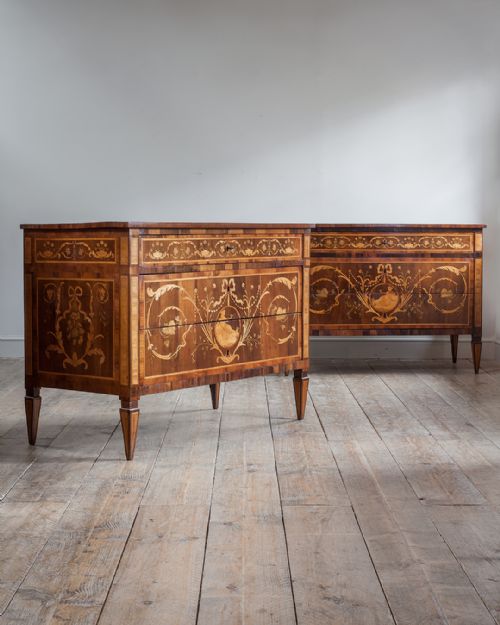
An italian inlaid chest brings classical warmth to a room, offering rich geometric marquetry and figured woods built by master cabinetmakers.
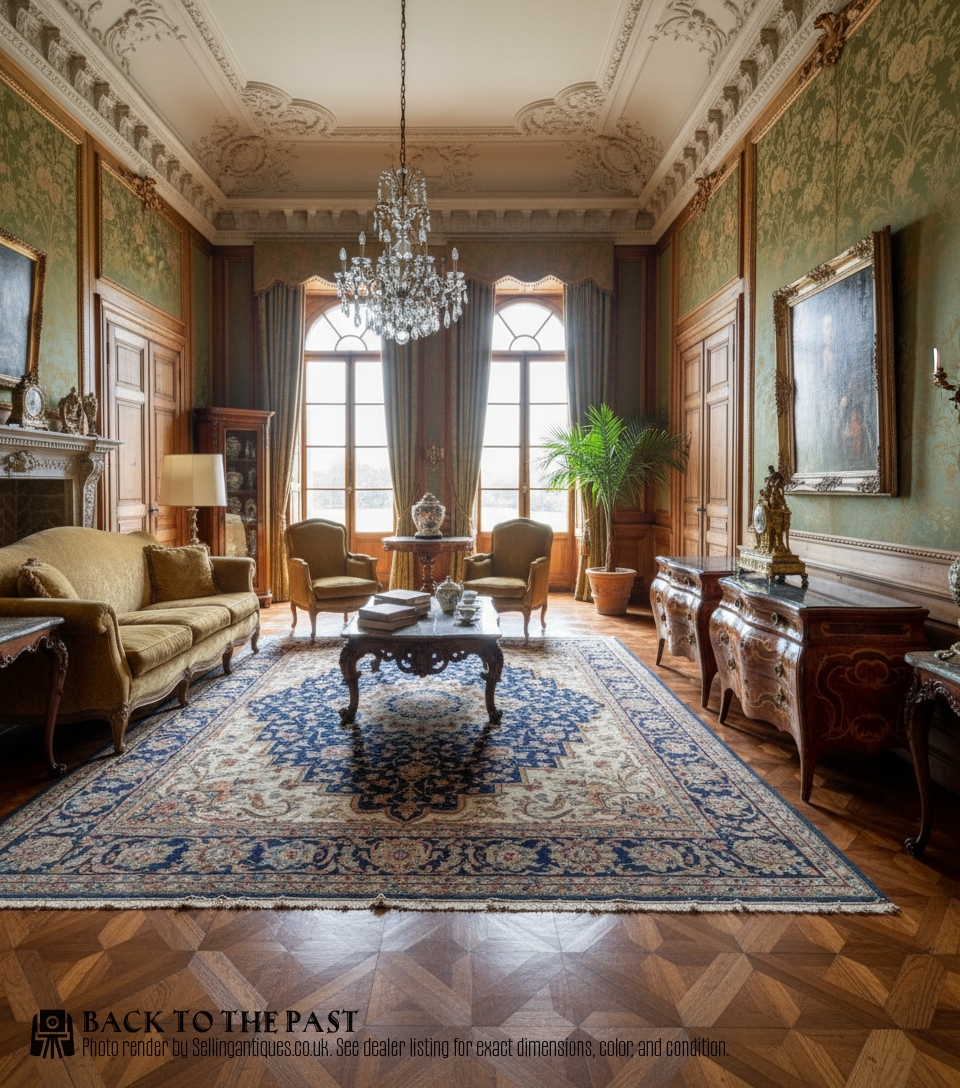
Italian Inlaid Chest
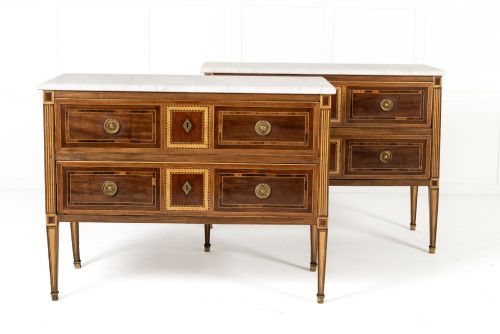
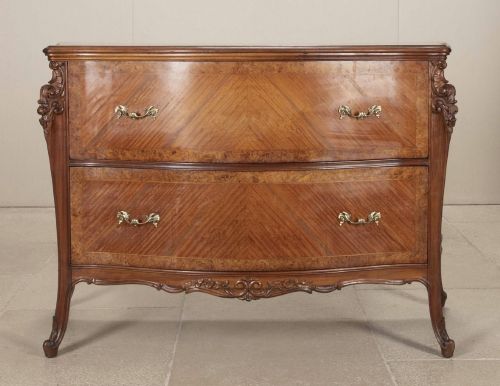
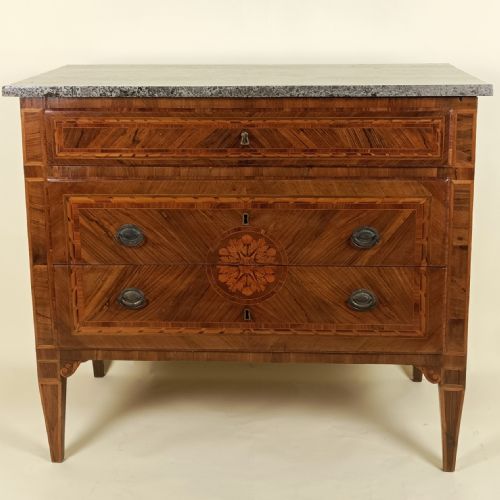
The selection ranges from robust cedar coffers to serpentine commodes featuring marble tops and delicate fruitwood banding. Most examples on this page date from the 18th and 19th centuries, reflecting the enduring European demand for decorative storage.
How They Were Made
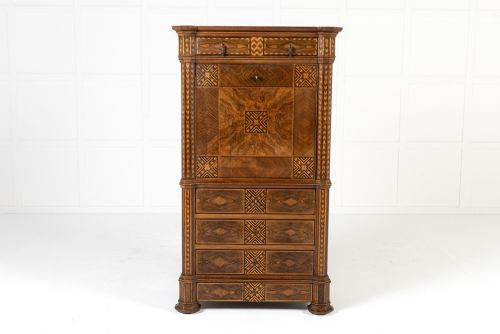
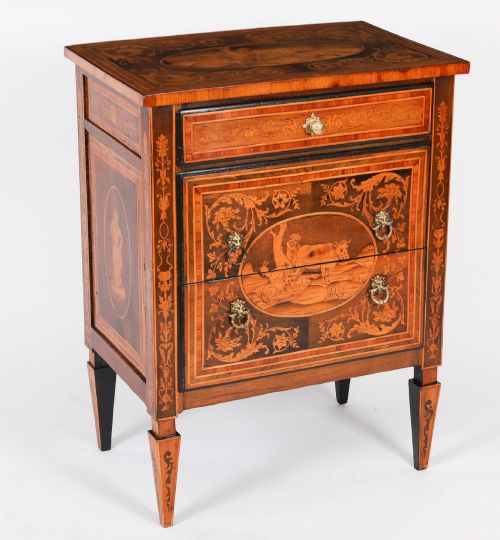
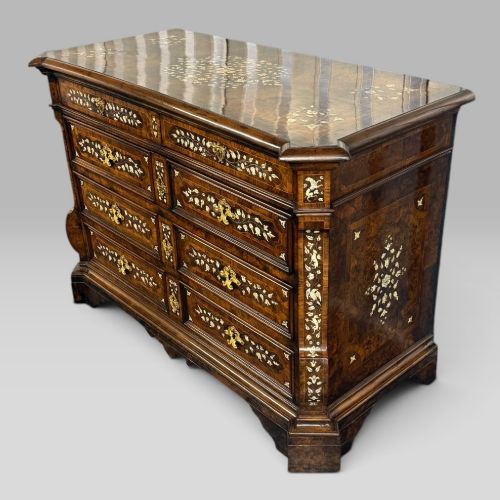
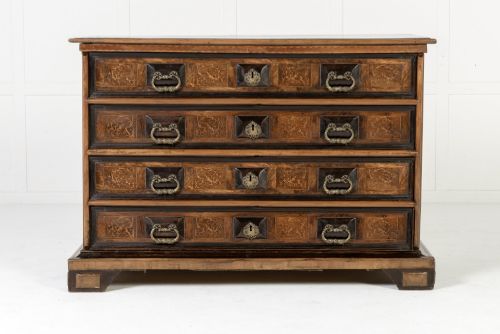
Cabinetmakers utilised dense timbers such as walnut, fruitwood, satinwood and kingwood as the primary carcase and veneer foundations. Artisans then applied complex marquetry and bone inlay alongside brass mounts and ormolu details to create striking visual contrast.
Surfaces often incorporated ebonised wood borders and intricate mosaic banding, particularly in Sorrento ware caskets. Marble slabs were frequently fitted to the tops of later commodes and dressing chests for added durability and display.
Italian Inlaid Chest Retail Price Guide 2026
Typical asking prices for italian inlaid chest among the pieces listed under this phrase on Sellingantiques today, from the lower quarter to the upper quarter. They describe what is for sale here now, not the wider market.
What Varies in Quality
The refinement of the marquetry and the choice of timbers define the upper tier of these pieces, where elaborate pictorial scenes or precise geometric patterns show superior artisan skill. Heavy carcases built from solid walnut with balanced proportions command greater attention than simpler regional work.
Original hardware, integrated marble tops and intact bone inlay significantly elevate an example. The fluidity of the bombe contour and the crispness of the fruitwood and satinwood contrast dictate the distinction between standard provincial items and workshop masterpieces.
Grand Ducal Workshops
The Italian Inlaid Chest Glossary
- Marquetry
- Decorative veneer applied to a furniture structure in patterns or pictorial scenes. It differs from inlay by covering the entire surface rather than being set into hollowed recesses.
- Bombe
- A bulging, outward-curving chest shape popular in baroque and rococo furniture. This swelling profile requires advanced woodworking skill to maintain structural integrity.
- Ormolu
- Gilded bronze mounts applied to furniture edges and handles for ornamentation. The technique involves mercury gilding on bronze, common in high-status continental pieces.
- Commode
- A low chest of drawers designed for domestic storage during the 18th and 19th centuries. The term typically denotes a more decorative, formal piece than a standard utilitarian chest.
- Sorrento Ware
- Wooden objects decorated with micro-mosaic and marquetry, originating from the Italian town of Sorrento. Olive wood and citrus timbers are characteristic materials.
Italian Inlaid Chest: Frequently Asked Questions
How do I spot an 18th-century italian inlaid chest?
Eighteenth-century examples often display deep walnut patination, hand-cut dovetails, and organic marquetry motifs reflecting baroque or neoclassical tastes. The construction uses native European hardwoods combined with iron or wooden fixings rather than modern screws.
Secondary woods inside the drawers provide further clues to age and regional origin, matching local timber availability of the period. Look closely at the underside and backboards for hand-planed tool marks.
What is the difference between a commode and a chest?
A commode is a distinctively decorative chest of drawers, frequently featuring curved serpentine fronts, cabriole legs, or elaborate marble tops. They were built for formal reception rooms rather than private bedchambers.
Standard chests of drawers tended to be more utilitarian in layout, though Italian cabinetmakers often elevated these with fine fruitwood and bone marquetry.
Where should I place an italian inlaid chest at home?
These chests suit entrance halls, living rooms or dining spaces where their detailed marquetry can be appreciated without direct, prolonged sunlight. Placing them away from heat sources protects delicate veneers and prevents timber shrinkage.
Pairing a marble-topped commode with a simple wall mirror creates a balanced focal point in a hallway or bedroom.
How should I clean an antique inlaid surface?
Dust the surfaces gently with a dry, soft cloth, avoiding commercial aerosols or silicone polishes that damage aged wood and veneer. Natural beeswax applied sparingly helps nourish dry timber and maintains a soft sheen.
Keep moisture well away from bone inlay and marquetry joints to prevent the glue from failing and lifting the delicate veneers.