






Italian Hall Chairs
Italian hall chairs are sculptural walnut or oak seats designed to anchor a grand entryway, offering a striking historic silhouette.
Italian Hall Chairs
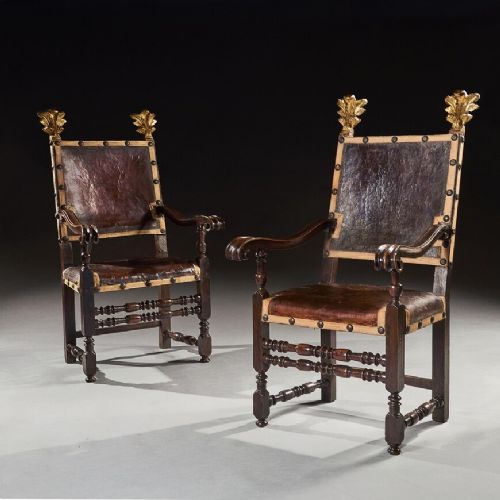
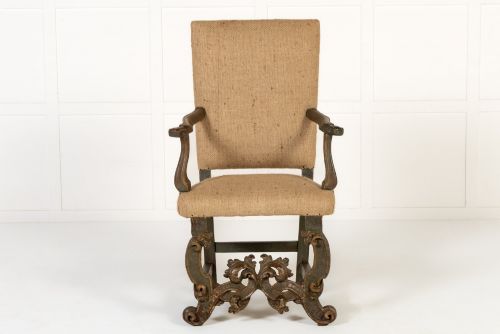
Italian hall chairs encompass sturdy wooden seats designed primarily for grand entryways, hallways, and formal reception spaces. When exploring italian hall chairs, the selection spans centuries of regional craftsmanship, from seventeenth-century baroque armchairs to nineteenth-century revival sgabello forms.
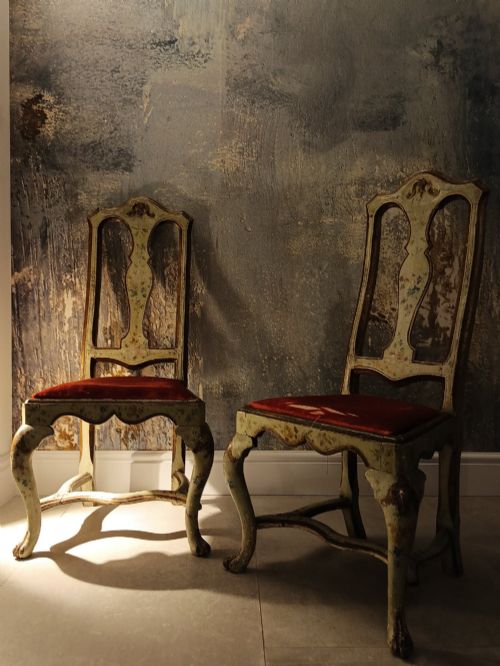
Origins stretch across various Italian regions, featuring the deep carving typical of Lombardy workshops alongside simpler country interpretations. Walnut remains the predominant timber, though oak, lime wood, and painted finishes appear regularly across different periods.
Materials and construction
Makers relied principally on dense hardwoods such as walnut and oak, selecting timber capable of supporting deep, crisp chisel work. These woods were joined using traditional mortise and tenon methods, ensuring the structural integrity of upright backrests and solid bases.
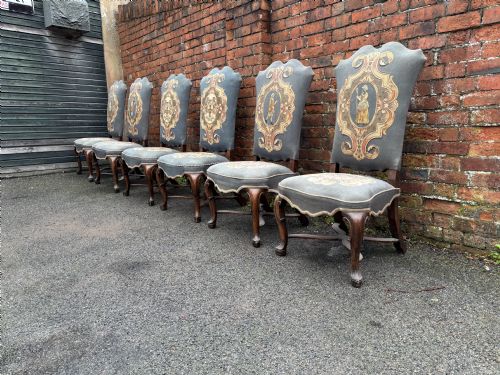
Surface treatments range from waxed natural grain and parcel-gilding to detailed paintwork and intricate bone inlay. Upholstered variants incorporate leather or textile elements secured with decorative metal tacks, marrying comfort with formal display.
Some nineteenth-century makers evidently decided that plain wood simply lacked ambition and reached straight for the bone inlay.
Assessing craftsmanship and condition
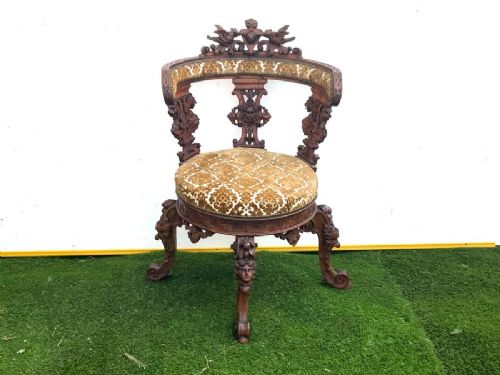
The distinction between ordinary and exceptional pieces lies in the depth and sharpness of the hand carving, particularly around crest rails, armrests, and solid panel backs. Superior examples display confident, three-dimensional figural or foliate relief work executed without stiffness.
Proportion and wood selection also dictate standing, with older seventeenth and eighteenth-century examples showing tighter grain and richer patination. Original surfaces, whether early paint or untouched waxed walnut, hold greater integrity than heavily restored or later re-carved woodwork.
White, Allom & Co.
The Italian Hall Chairs Glossary
- Sgabello
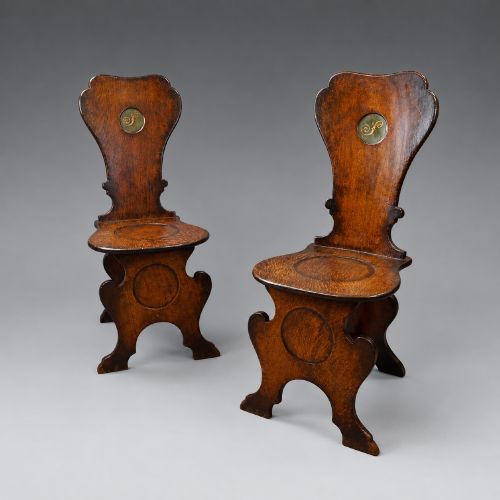
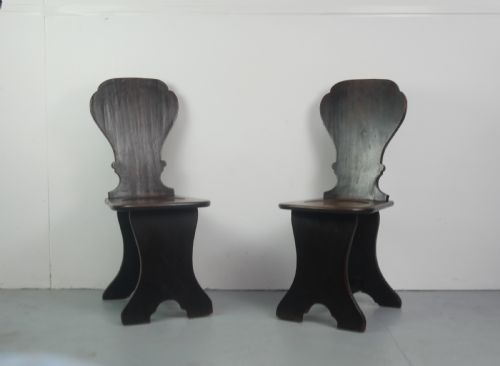
- A light wooden chair popular in the Italian Renaissance, featuring a high back and two sculpted trestle supports instead of four legs. This form was traditionally placed in hallways to display family crests.
- Parcel-gilt
- Partially gilded woodwork where thin gold leaf highlights specific carved details against a painted or dark wood ground. It creates a subtle contrast under candlelight.
- Renaissance Revival
- A nineteenth-century artistic movement that revived sixteenth-century Italian motifs, including heavy scrollwork, strapwork, and classical figures. Makers utilised these older vocabularies for newly built country houses.
- Bone inlay
- A decorative technique where small shaped pieces of bone are set flush into recesses carved into the wood surface. Geometric or floral patterns emerge in pale contrast against dark walnut.
Italian Hall Chairs: Frequently Asked Questions
What is a sgabello chair?
A sgabello is a distinct historic seat form featuring a solid upright back and two flat trestle supports rather than conventional legs. They were made to stand against hallway walls rather than surround dining tables.
These pieces often displayed carved family crests or heraldic motifs on their backrests to announce the status of a household to arriving guests.
Where were italian hall chairs placed?
These seats were positioned along the walls of grand entry halls, corridors, and high-ceilinged reception rooms in historic palazzos. Their upright posture encouraged brief waiting rather than lounging.
Today, they function well in modern hallways or landings as sculptural anchor points that require minimal floor space.
How do I date an antique hall chair?
Dating relies on examining the timber species, tool marks left by hand chisels, construction joints, and stylistic details like Renaissance or baroque carving. Seventeenth-century pieces typically show dense, dark walnut with deep patination.
Nineteenth-century revival pieces often display machine-assisted elements or crisper, more uniform carving styles influenced by historical pattern books.
Are these chairs comfortable for daily use?
Historic hall chairs were designed primarily for formal display and brief seating rather than long hours of relaxation. Most feature rigid wooden backs and upright seats without cushioning.
Upholstered variants with leather or textile pads offer slightly more comfort, though collectors generally prize them for their visual impact in a room.