


Italian Gilded Tables
Italian gilded tables bring dramatic carved ornamentation and rich marble tops into rooms, spanning grand console forms to compact occasional pieces.
Italian Gilded Tables
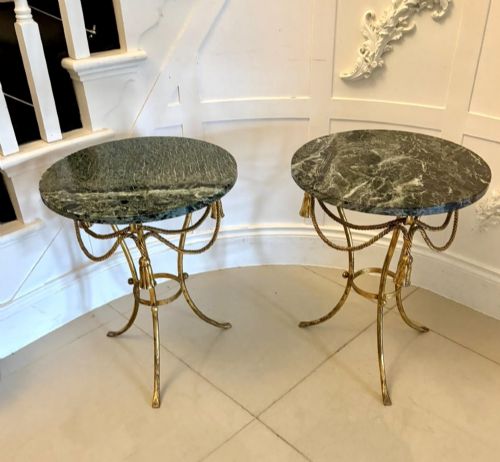
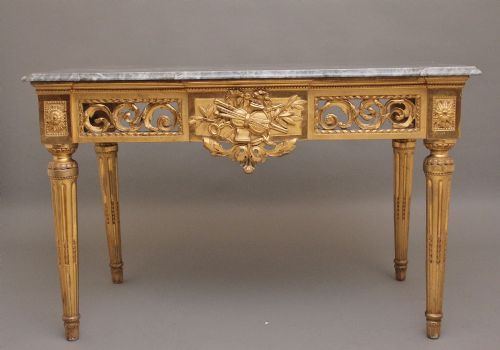
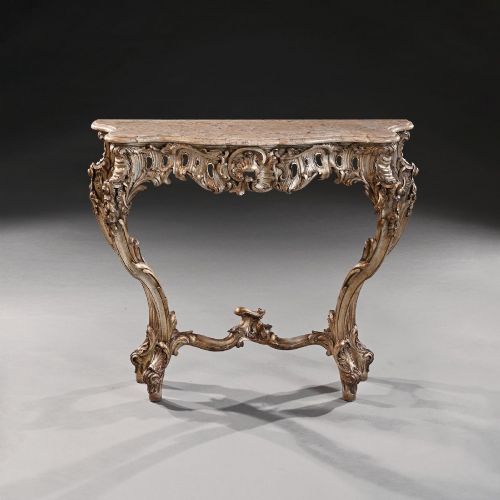
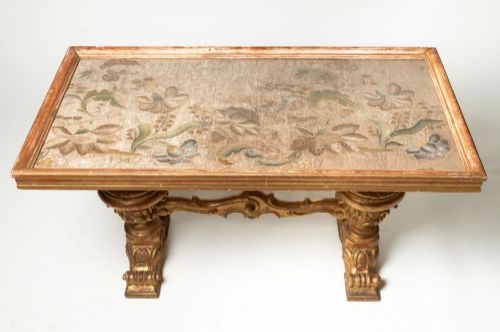
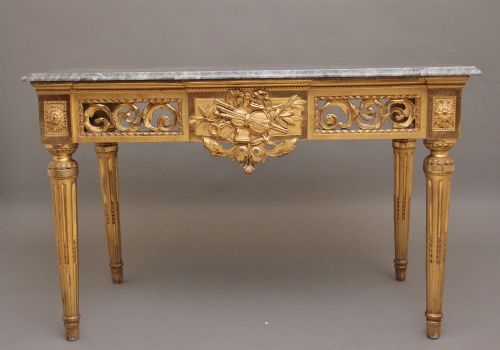
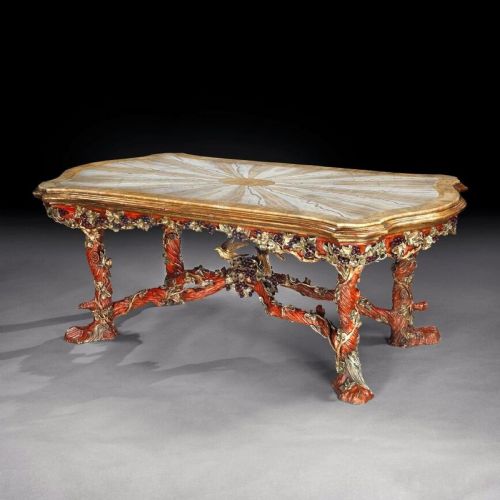
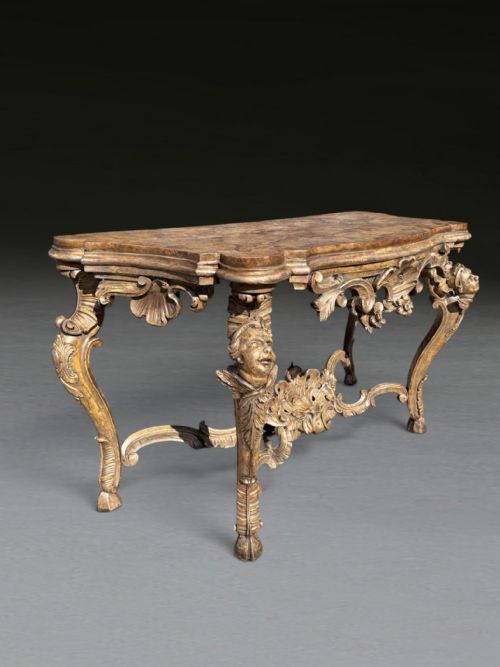
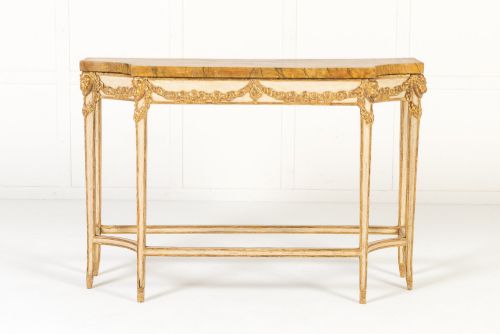
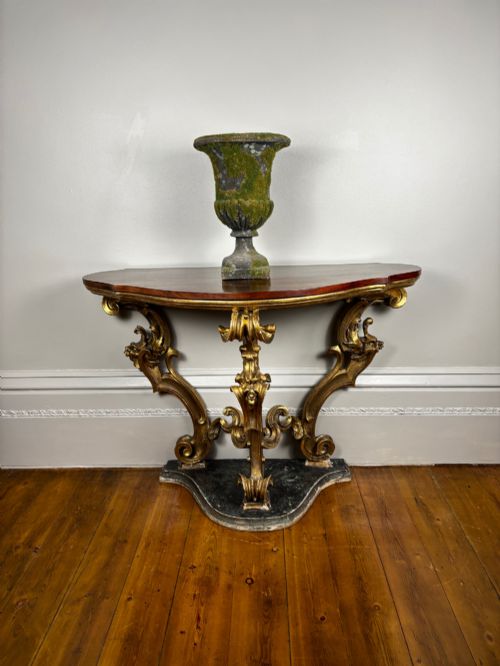
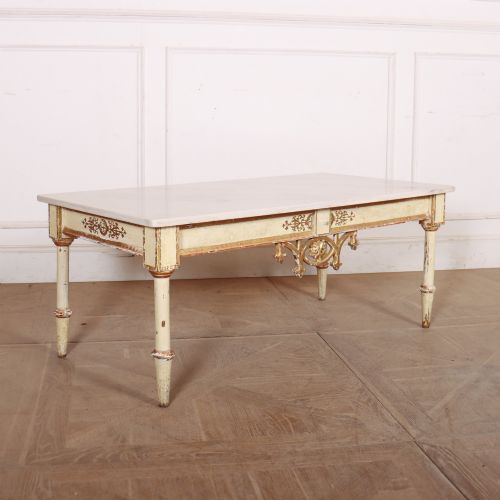
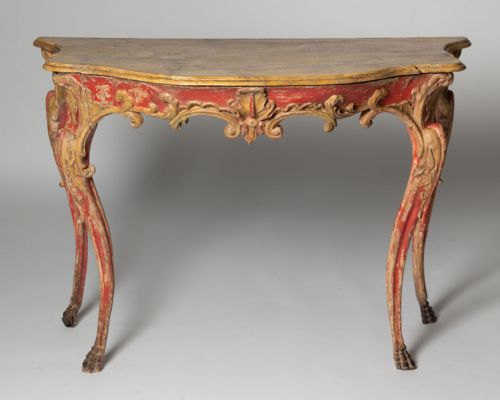
Italian gilded tables encompass a rich variety of forms designed to anchor a room, with console tables and centre tables forming the bulk of what appears.
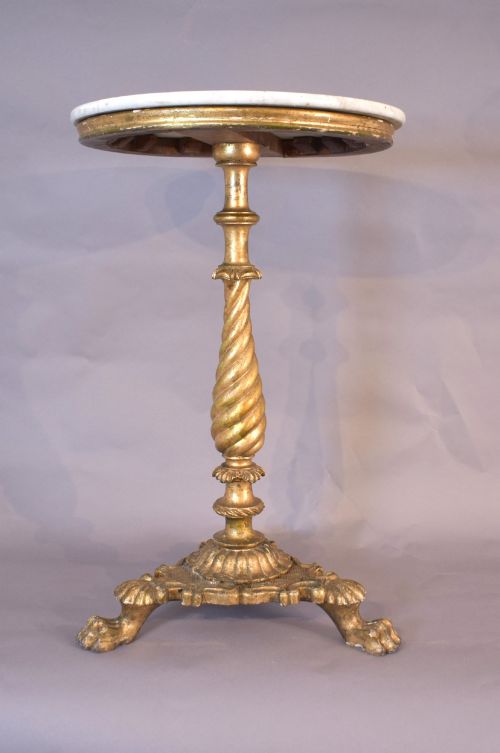
The materials span heavily carved giltwood, gesso, and painted surfaces combined with inset marble, onyx, or specimen stone tops.
Origins stretch from the eighteenth century through the nineteenth century, capturing ornate Baroque, Rococo, and Neoclassical vocabularies.
Construction and materials
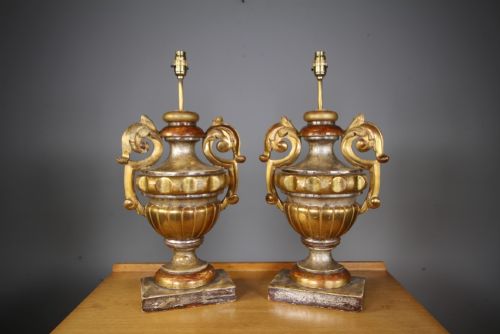
Carpenters typically shaped timber bases from carved wood, pine, lime wood, or flame mahogany, applying layers of gesso to smooth the surfaces before guilding.
Workers then applied gold leaf or silver gilt by hand, often pairing the lustrous frames with heavy stone surfaces including shaped marble, breccia marble, and verde marble.
Listings feature items spanning the 17th, 18th, 19th, and 20th centuries, utilising giltwood, marble, gesso, and carved wood.
Assessing quality and execution
Depth and crispness in the wood carving separate superior items from simpler production, particularly where acanthus leaves, figures, and dolphin supports are rendered with anatomical and botanical precision.
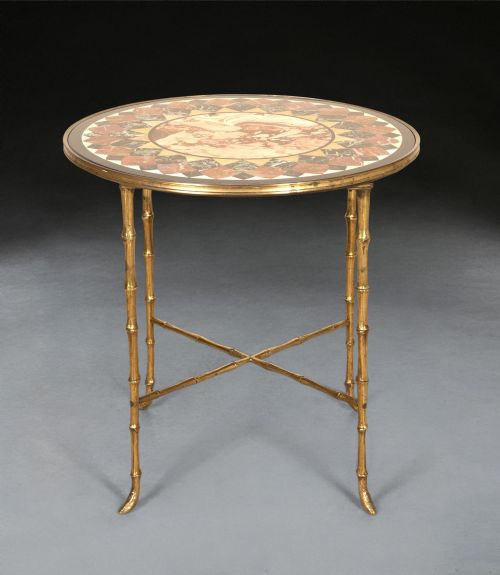
The integration of the stone top dictates the overall calibre, where fitted marble, onyx, or pietra dura inlay sits flush within the gilded wooden frame.
Amleto Bertoni
The Italian Gilded Tables Glossary
- Giltwood
- Wood coated with gold leaf over a prepared gesso ground. This technique creates a luminous metallic finish characteristic of formal European furniture.
- Gesso
- A plaster mixture applied to wood surfaces as a base for gilding or painting. It provides a smooth foundation that holds intricate carved detail.
- Console table
- A table designed to stand against a wall, frequently secured with brackets. These pieces often feature elaborate front legs and flat backs.
- Pietra dura
- An inlay technique using cut and fitted polished coloured stones to create pictorial designs. It appears on table tops from Florentine workshops.
- Breccia marble
- A composite stone made of broken rock fragments embedded in a fine-grained matrix. It yields distinctive patterned surfaces on table tops.
Italian Gilded Tables: Frequently Asked Questions
Where should I place an Italian console table?
These console tables suit entrance halls or principal reception rooms where they can anchor a wall space beneath a mirror or artwork.
Because they often feature flat backs designed to abut walls, they occupy minimal depth while providing a substantial visual statement.
How do I care for the gilded surface?
Giltwood surfaces require gentle dusting with a soft, dry cloth to prevent accumulation without disturbing the delicate gold leaf layers.
Avoid liquid cleaners, moisture, and abrasive materials that can strip or dull the historic metallic finish over time.
What is the difference between Baroque and Rococo styles?
Baroque pieces display monumental symmetry, heavy carved motifs, and robust proportions associated with seventeenth and early eighteenth-century opulence.
Rococo designs shift toward asymmetrical C-scrolls, lighter movement, and playful ornamentation that emerged later in the eighteenth century.
Are marble tops original to these tables?
Many tables retain their original shaped marble, onyx, or pietra dura tops fitted precisely to the wooden rails during manufacture.
Matching the weight and geological type of the stone to the period helps confirm authenticity when evaluating older console and centre tables.