


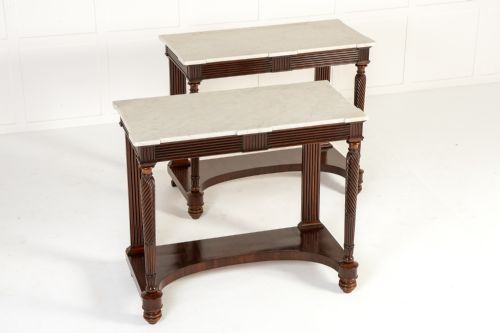

Italian Carved Console Table
An italian carved console table brings architectural presence and grand ornament to an interior, anchored by centuries of European craftsmanship.
Italian Carved Console Table
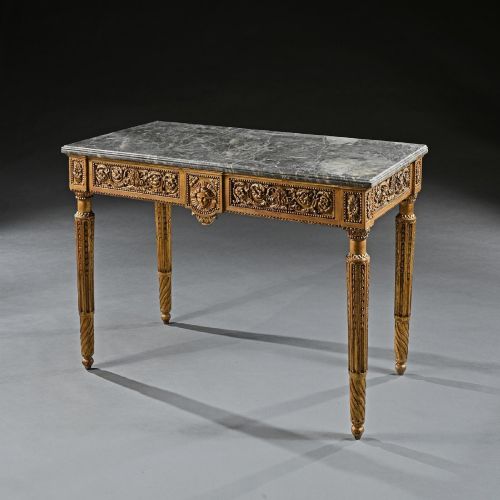
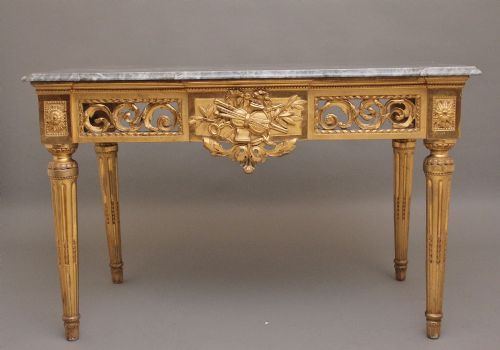
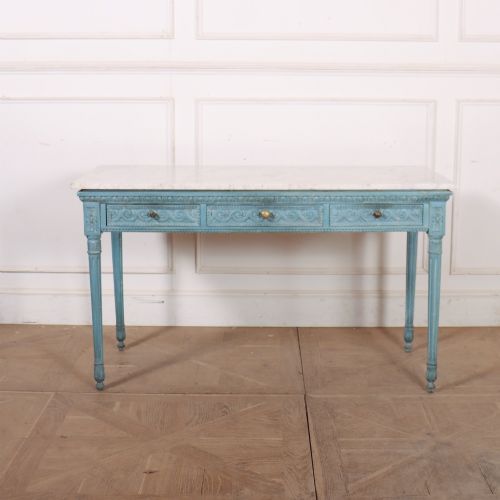
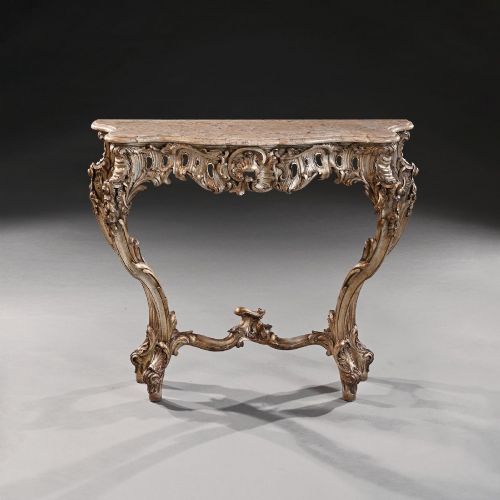
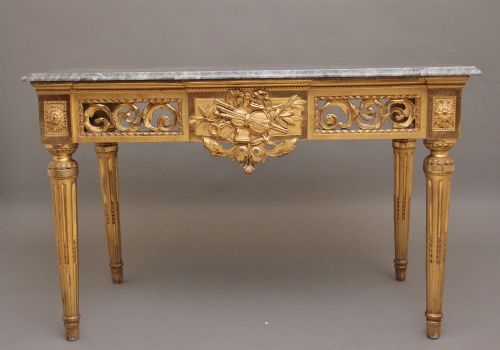
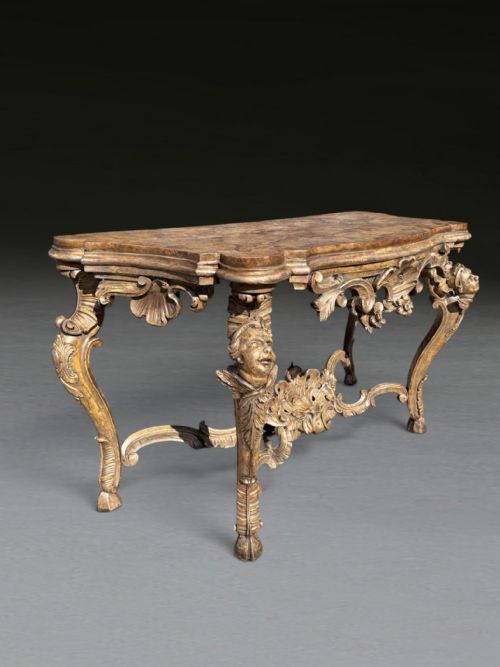
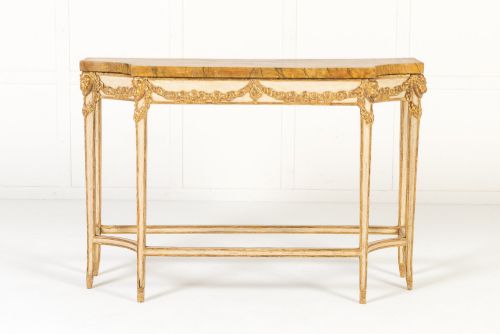
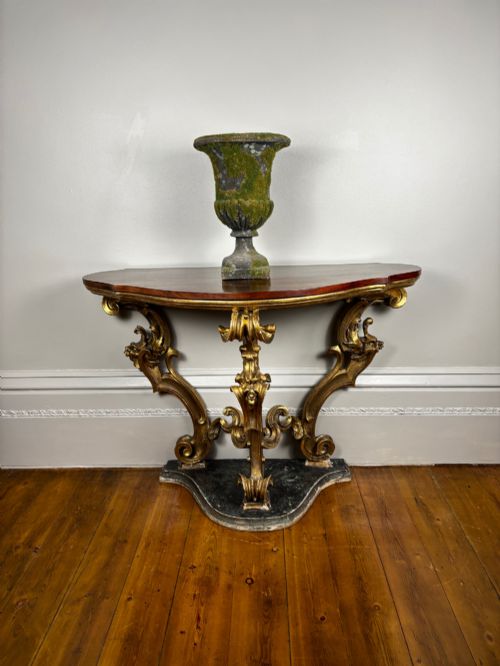
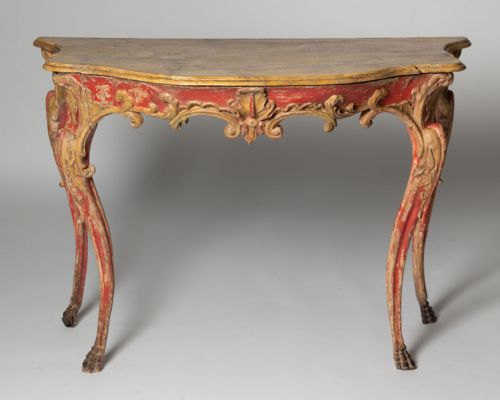
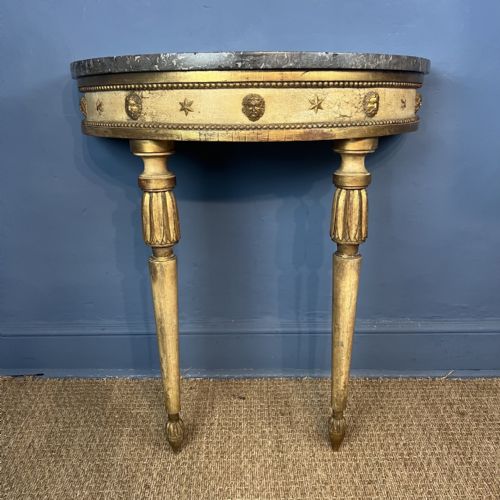
When searching for an italian carved console table, buyers encounter furniture designed to sit flat against a wall, frequently paired with fitted marble or onyx tops. The selection spans the eighteenth and nineteenth centuries, with eighteenth-century pieces often displaying giltwood and rococo carving, while nineteenth-century examples introduce revival styles and painted finishes.
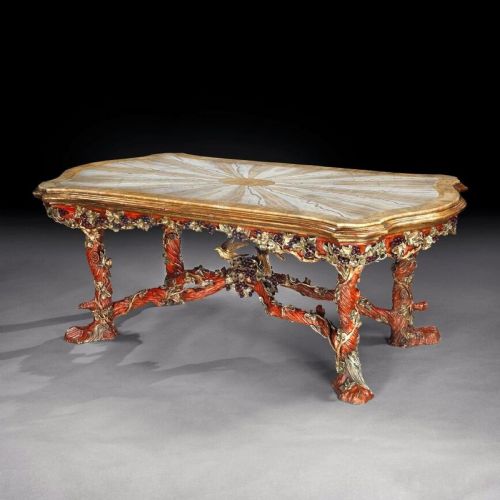
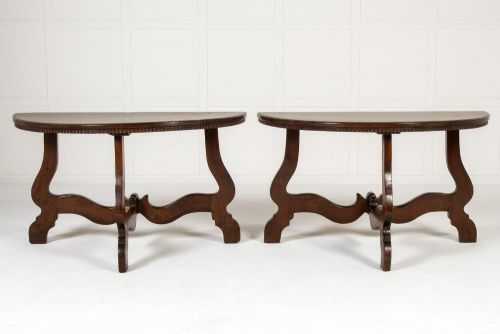
Beyond standard wall consoles, the evidence includes console tables, centre tables, side tables, and wall consoles in varying configurations. Walnut and mahogany appear alongside painted wood, gesso, and gold leaf, showing regional variations from Venetian to Genoese workshops.
Materials and construction
Makers shaped solid woods like walnut and mahogany, or applied gesso and gold leaf over carved wooden carcases to achieve rich surface light. Marble, breccia marble, and onyx formed heavy shaped tops, supported in some instances by carved figures such as dolphins or lions' paws.
Surfaces received decorative treatments ranging from polychrome paint and silver gilt to faux porphyry effects. Carving techniques defined the styles, moving from exuberant rococo scrolls to neoclassical symmetry.
Carved wooden dolphins and lions' paws frequently hold up the heavy stone tops, adding an unexpected splash of marine and beastly life to the grandest hallways.
Defining quality
Quality rests upon the crispness and depth of the wood carving, the harmony of the gilding or paint layers, and the integration of the stone top. Finer examples display hand-carved relief work with distinct detailing on motifs like scrolls and animal supports, rather than shallow or mechanical shaping.
The choice of materials also divides the range, with solid figured walnut and substantial marble or onyx tops marking out pieces produced for prominent settings.
Amleto Bertoni·Pauly et Cie
The Italian Carved Console Table Glossary
- Console table
- A table designed to stand against a wall, traditionally supported by wall brackets or front legs. These pieces often feature decorative aprons that match the style of the room.
- Giltwood
- Wood that has been coated with gold leaf or gold paint over a prepared gesso surface. This finish reflects candlelight and adds visual warmth to reception spaces.
- Breccia marble
- A composite stone made of broken rock fragments embedded in a fine-grained matrix. It provides a patterned, multicoloured surface for table tops.
- Demi-lune
- A half-moon shape used for table tops and furniture footprints. These tables fit flush against flat walls while offering a curved front edge.
- Gesso
- A plaster mixture applied to wood surfaces to prepare them for gilding or painting. It allows craftsmen to carve fine details before applying gold leaf.
Italian Carved Console Table: Frequently Asked Questions
Where should I place an Italian console table?
These tables traditionally anchor entrance halls, drawing rooms, or dining spaces where they sit flat against a wall beneath a mirror or artwork. Their shallow depth allows them to fit narrow passageways without blocking movement.
Because many examples feature finished backs or serve as centre tables, certain versions can also float in the middle of a larger room.
How do I care for a marble top?
Marble and onyx surfaces require gentle cleaning with a damp cloth and mild soap to avoid dulling the natural stone. Acidic liquids like wine or citrus juice can etch the polish if left on the surface.
Using coasters and mats helps protect the historical stone from staining and wear over time.
What distinguishes Rococo from Neoclassical styles?
Rococo pieces feature asymmetric C-scrolls, shell motifs, and dynamic, curving lines designed to create movement. Giltwood and heavy carving dominate this aesthetic.
Neoclassical designs return to straight lines, symmetry, and classical architectural motifs such as columns and urns, often combined with painted finishes.
Are these tables sturdy enough for daily use?
Solid wood carcases and heavy marble tops give these tables considerable weight and stability for supporting decorative objects, lamps, or serving dishes. Wall-mounted versions rely on their structural brackets for primary support.
Care should be taken not to sit or lean heavily on the edges, particularly on pieces with slender carved legs.