




Italian Border Mirror
An italian border mirror brings unmistakable Venetian craftsmanship and luminous reflection to a room, offering the decorative impact collectors seek.
Italian Border Mirror
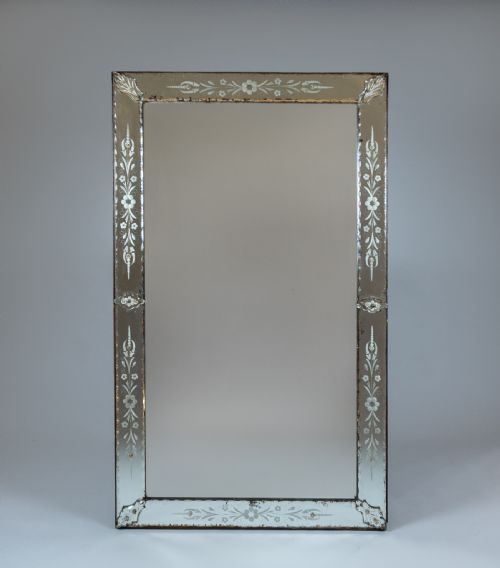
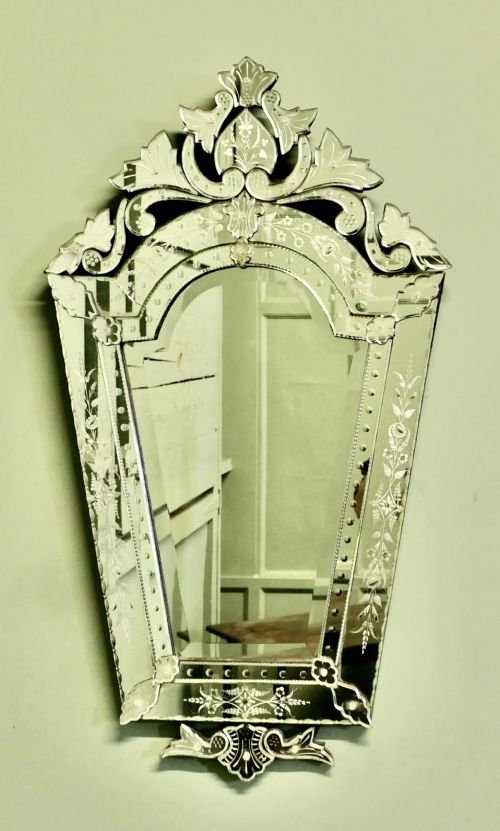
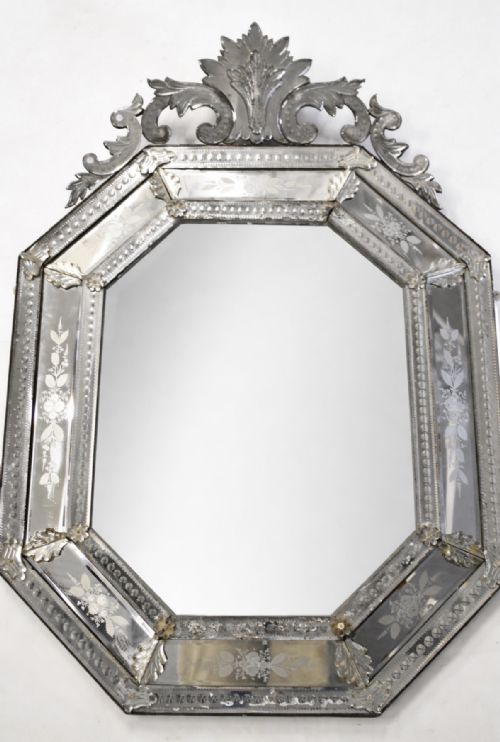
An italian border mirror encompasses wall mirrors and trays created in Italy, most frequently taking the form of Venetian, cushion, marginal, and overmantle designs. These pieces span from the 1800s through the Edwardian era into the mid-twentieth century, showcasing the enduring influence of Venetian glassmaking traditions.
The examples most commonly encountered on this page belong to the nineteenth century and the early decades of the twentieth century. These incorporate decorative glass borders, engraved elements, and wooden or giltwood structures designed to hang as striking focal points in domestic interiors.
How they were made
Makers utilised glass, mirrored glass, and silvered glass alongside timber, wood, and giltwood frames to construct these reflective pieces. Brass also appears in certain constructions, providing structural support or decorative detail for the glass plates.
Techniques relied upon hand-engraving and etching directly onto the glass surface, particularly across marginal and cushion borders. Artisans assembled these mirrored sections onto wooden backings, combining traditional Venetian framing methods with painted or gilt finishes.
Italian Border Mirror Retail Price Guide 2026
Typical asking prices for italian border mirror among the pieces listed under this phrase on Sellingantiques today, from the lower quarter to the upper quarter. They describe what is for sale here now, not the wider market.
One listed item is a glass Murano tray, proving that Italian craftsmanship extended well beyond the wall.
What varies in quality
The distinction between standard examples and superior pieces rests upon the complexity and depth of the glass engraving. Finer items display crisp, detailed hand-etching across the marginal panels rather than simpler surface treatments.
Material integration also separates the range, with skilled joinery in timber, giltwood, or brass providing secure mounting for heavy glass plates. The preservation of original silvering and the intricacy of cushion-moulded frames further define the upper tier of these mirrors.
The Italian Border Mirror Glossary
- Venetian mirror
- A mirror originating from Venice or employing traditional Venetian glassmaking techniques. These pieces often feature elaborate engraved glass borders and decorative crests.
- Cushion mirror
- A mirror style where the frame itself is comprised of angled glass plates sloping outward toward the wall. This construction creates a multidirectional reflective effect.
- Marginal mirror
- A mirror featuring a central plate surrounded by smaller, separate glass borders held in place by clips or decorative elements. The border panels are frequently engraved.
- Overmantle mirror
- A wide mirror designed specifically to be hung above a fireplace mantel. They often span significant horizontal dimensions to balance the hearth below.
- Giltwood
- Wood that has been coated with a thin layer of gold leaf or gold paint. It provides a luminous decorative border that complements the reflectivity of the glass.
Italian Border Mirror: Frequently Asked Questions
How do I hang an italian border mirror safely?
These mirrors require sturdy fixings screwed directly into masonry or wall studs to support the combined weight of the glass and wooden backing. Professional mirror hangers utilise heavy-duty D-rings and steel wire rated well above the actual weight of the piece.
Position the mirror at eye level where it can reflect natural light from windows without sustaining accidental impacts from passing traffic or opening doors.
Where should I place a Venetian mirror in my home?
Venetian mirrors excel in reception rooms, hallways, and dining spaces where they capture and multiply ambient light. Placing one opposite a window maximises illumination in darker corners.
Ensure the wall surface is clear of protruding furniture that might strike the delicate glass borders during daily use.
How do I clean antique silvered glass safely?
Use a soft, dry microfibre cloth to gently remove dust from the glass surface and engraved sections without applying heavy pressure. Avoid commercial liquid glass cleaners that might seep behind the plates and damage the historical silvering or wooden backing.
If moisture is necessary, dampen the cloth very slightly with distilled water and dry the surface immediately afterwards.