


Italian Baroque Chandelier
An italian baroque chandelier brings dramatic presence and rich ornamentation to a high ceiling, offering remarkable focal points for grand spaces.
Italian Baroque Chandelier
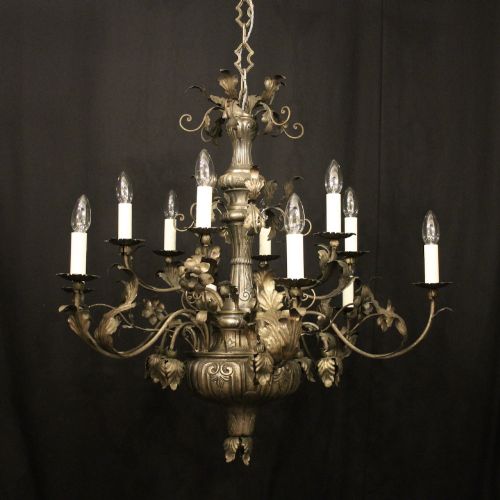
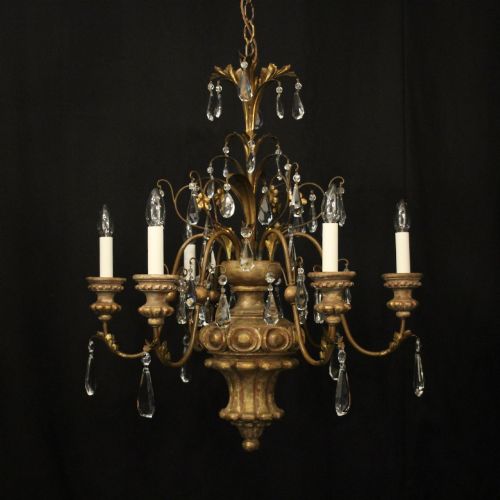
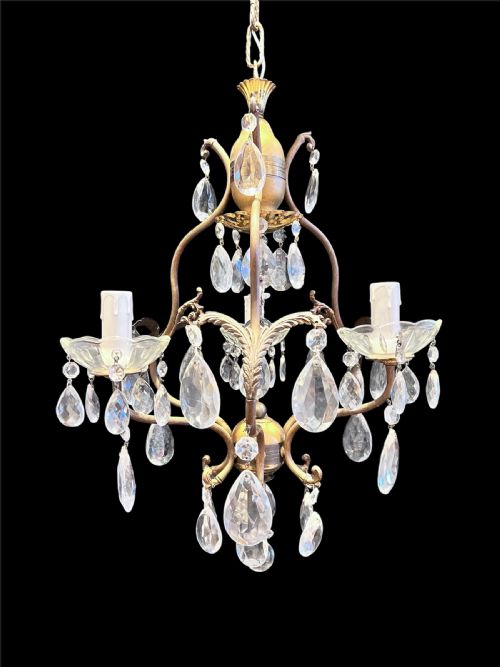
An italian baroque chandelier takes many forms across the evidence, appearing as multi-light chandeliers, ceiling lights, hanging lanterns, and monumental carved fixtures. These fixtures emerge in styles such as Florentine, Venetian, and Rococo Revival, spanning periods from the eighteenth century through to the early twentieth century. Buyers encounter substantial examples holding eighteen lights alongside more compact three-light and six-light configurations.
The dominant aesthetic draws heavily on carved wooden structures finished in gold leaf, alongside metal frameworks carrying glass and crystal elements. Pieces range from grand two-tiered designs down to singular pod chandeliers and large pairs of beaded Florentine fittings. Every variation reflects the theatrical sensibility and ornate craftsmanship characteristic of Italian workshops across different eras.
How they were made
Makers constructed these fixtures using robust foundational materials including iron, brass, and carved wood. Artisans applied gesso and gold leaf to wooden bodies, creating the shimmering surfaces seen on giltwood lanterns and chandeliers.
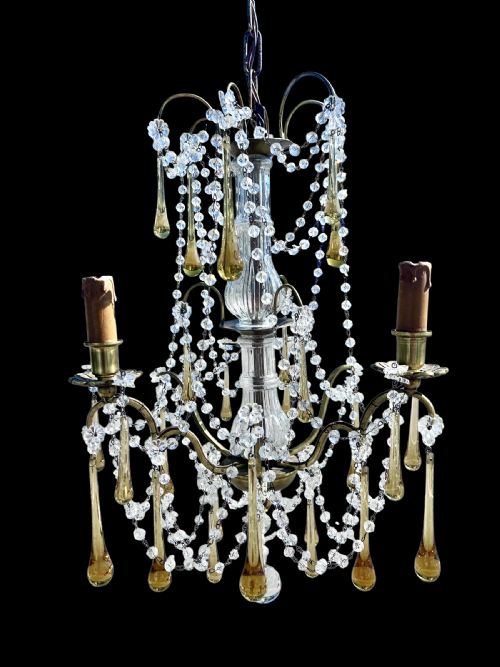
Lighting components incorporated hand-shaped glass and coloured crystals suspended from metal frames or gilt bronze mounts. Structural elements relied on detailed carving, metalwork, and bead-stringing to achieve the layered, multi-branched compositions recorded in the listings.
Some Florentine chandeliers feature delicate glass pods that resemble ripening fruit suspended mid-air.
What varies in quality
The distinction between tiers of quality rests on the depth and definition of the wood carving, the purity of the crystal components, and the richness of the gilding. Heavier, monumental fixtures demand sophisticated structural framing to support numerous branches and heavy glass drops without sag.
Workmanship shows in the precision of the giltwood detailing, the integration of bronze or brass hardware, and the harmony of the proportion between the body and the light-bearing arms. Earlier eighteenth-century examples exhibit distinct hand-carved nuances that differ from the later revival pieces.
The Italian Baroque Chandelier Glossary
- Giltwood
- Wood covered with a thin layer of gold leaf over gesso. This finish creates the luminous appearance central to traditional Italian lighting.
- Gesso
- A plaster mixture applied to wood surfaces as a preparation for gilding or painting. It allows artisans to carve fine decorative details before applying gold leaf.
- Crystal
- High-clarity glass cut into facets to refract light. It is frequently suspended in arrangements across multi-tiered chandeliers.
- Pod chandelier
- A specific compact form of hanging light fixture. The style encloses or shapes the lights within a distinctive rounded or bulbous silhouette.
- Tiered
- A structural arrangement featuring multiple levels of light-bearing arms. This construction increases illumination capacity and visual presence.
Italian Baroque Chandelier: Frequently Asked Questions
How do I clean an antique chandelier safely?
Maintenance requires gentle dusting with soft brushes and careful wiping of individual crystal or glass elements using appropriate conservation cleaning solutions.
Harsh chemical sprays and abrasive cloths should be avoided to protect the delicate gold leaf surfaces and aged metal components from permanent damage.
What rooms suit a large giltwood chandelier?
These dramatic fixtures demand generous ceiling heights and substantial floor space to balance their visual weight and physical proportions properly.
Entryways, formal dining rooms, and high-ceilinged reception spaces provide the architectural scale necessary to showcase multi-light and multi-tiered arrangements effectively.
How do I distinguish eighteenth-century pieces from later revivals?
Dating relies on examining the tool marks on the carved wood, the composition of the gesso underneath, and the specific formulation of the glass or crystal drops.
Revival pieces from the nineteenth and twentieth centuries often employ heavier mechanical fastening methods while adopting the historic decorative vocabulary.
Can these chandeliers be rewired for modern electricity?
Professional electricians can adapt historical fixtures safely by installing contemporary internal wiring that meets current safety standards.
Conservation-minded rewiring preserves the original sockets, metal arms, and decorative components while ensuring the piece functions reliably in a modern home.