



Islamic Style Side Table
These Islamic style side table pieces bring intricate geometric design and inlaid craftsmanship into modern rooms, offering a striking focal point for any interior.
Islamic Style Side Table
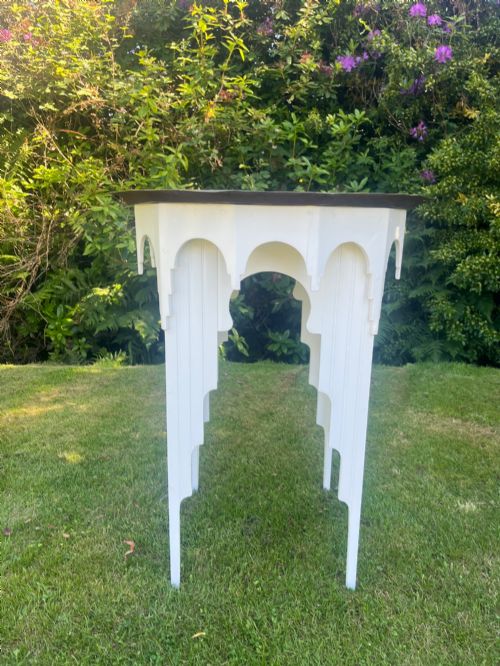
An islamic style side table typically manifests as an octagonal or hexagonal occasional piece, drawing on Moorish Revival, Mamluk Revival, and Syrian or Islamic Revival traditions. These items serve as functional surface furniture while displaying ornate cultural motifs.
The most common versions encountered here span the Victorian era through the early twentieth century, including pieces marked by Liberty style influence or Cairo ware production. Their distinctive geometries and low profiles make them versatile for use as lamp tables or centre tables.
Makers utilised specific regional forms such as the kursi or Quran stand, translating traditional architectural patterns into portable domestic furniture. Buyers searching this phrase will find a strong representation of nineteenth-century and early twentieth-century craftsmanship.
Materials and Construction Techniques
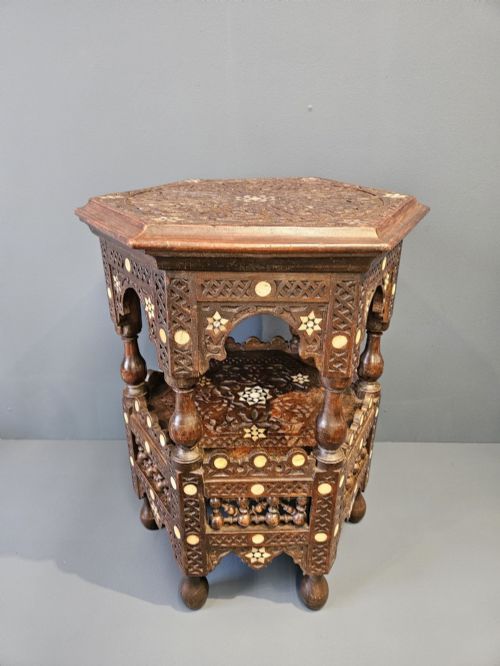
Artisans built the structural framework using hardwoods like walnut alongside painted wood, cutting timber into precise multi-sided geometric shapes for octagonal and hexagonal tops. Openwork carving frequently decorates the aprons and sides of these tables.
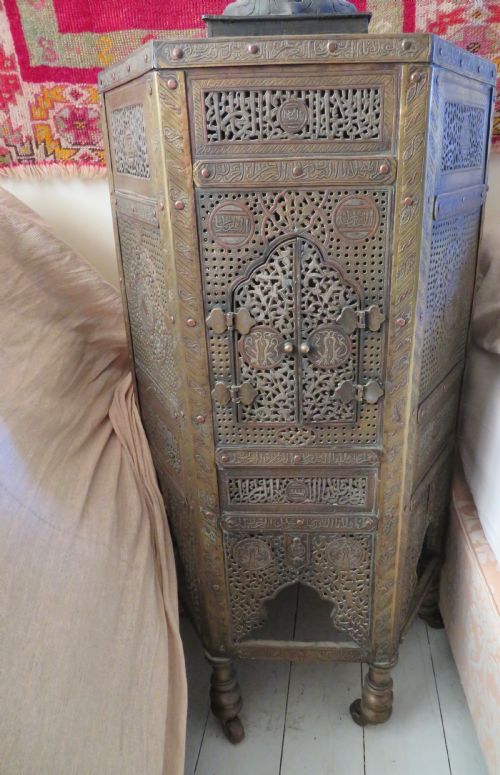
Surface ornamentation relies heavily on intricate inlay work, incorporating materials such as mother-of-pearl, bone, and white-metal to create contrasting geometric patterns. Metal elements also appear as copper-inlaid brass or silver-inlaid brass Cairo ware.
Joinery techniques supported complex decorative programmes without relying on modern fasteners, allowing wood and delicate shell or bone inlays to coexist within the same structural surface.
Islamic Style Side Table Retail Price Guide 2026
Typical asking prices for islamic style side table among the pieces listed under this phrase on Sellingantiques today, from the lower quarter to the upper quarter. They describe what is for sale here now, not the wider market.
Some tables double as cupboards, proving that even a nineteenth-century artisan understood the eternal human need to stash clutter out of sight.
Evaluating Quality and Detail
The sophistication of the geometric inlay work distinguishes finer examples, where materials like mother-of-pearl and bone fit with tight precision into the hardwood ground. Greater density and complexity in the carved openwork indicate a higher standard of workshop execution.
Material combination also plays a role in the distinction between pieces, with mixed-metal inlays on brass or comprehensive shell coverage commanding greater visual depth. The integration of functional elements, such as a built-in cupboard, adds structural complexity to the table design.
The Islamic Style Side Table Glossary
- Cairo ware
- Metalwork vessels and furniture produced in Cairo, typically made of brass and inlaid with silver, copper, or other metals. This technique produced highly decorative surfaces found on tables and Quran stands.
- Kursi
- A traditional low stand or stool, often hexagonal or octagonal, used in Islamic interiors to support objects such as the Quran or lamps. These stands form a direct precedent for the occasional tables seen in revival styles.
- Moorish Revival
- An architectural and decorative style popular in the nineteenth and twentieth centuries that adopted elements of North African and Spanish Islamic design. It heavily influenced the creation of European-market furniture.
- Mamluk Revival
- A design movement drawing inspiration from the art and metalwork of the Mamluk Sultanate, characterised by bold geometric strapwork and inscribed brass surfaces. This aesthetic appears frequently in inlaid tables from the period.
- Octagonal
- Having eight sides and eight angles, a geometry fundamental to the construction and decorative layout of many tables in this category. The multi-sided top allows for symmetrical inlay patterns radiating from the centre.
Islamic Style Side Table: Frequently Asked Questions
What is an Islamic style side table?
An islamic style side table is a piece of occasional furniture drawing on Moorish, Mamluk, or Syrian revival traditions, typically featuring geometric wooden construction and intricate inlay.
These tables were produced in the nineteenth and early twentieth centuries, often incorporating regional forms like the octagonal top or the low kursi stand.
How were these tables used originally?
Historically, these items functioned as low serving tables, lamp supports, or stands for sacred texts within Middle Eastern and North African domestic spaces.
In later European markets, they were adopted as decorative occasional or centre tables to suit the Victorian and Edwardian taste for exotic interior design.
What materials are used in these tables?
Construction relies primarily on hardwoods such as walnut and painted wood, which provide a stable base for detailed carving and surface decoration.
Surfaces are frequently embellished with contrasting inlays of mother-of-pearl, bone, white-metal, and inlaid brass or copper.
How do I identify the period of a table?
Dating relies on stylistic markers such as Revival influences, specific metalwork techniques like Cairo ware, and the integration of materials like bone and mother-of-pearl.
Pieces originating from the Victorian era through the 1930s often reflect shifting European interpretations of traditional North African and Middle Eastern craftsmanship.
How do I live with an inlaid table?
These tables work well as central focal points or lamp stands in rooms that benefit from rich textures and complex geometric patterns.
Care should be taken to protect delicate shell and bone inlays from excessive moisture and direct heat sources during daily use.