

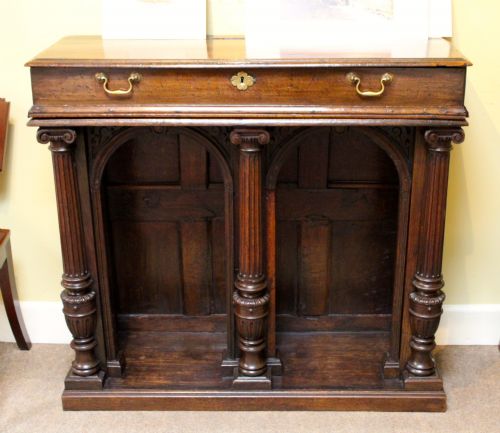


Carved Arch Side Table
A carved arch side table brings distinct architectural character to a room, offering rich geometric ornamentation and solid period construction.
Carved Arch Side Table
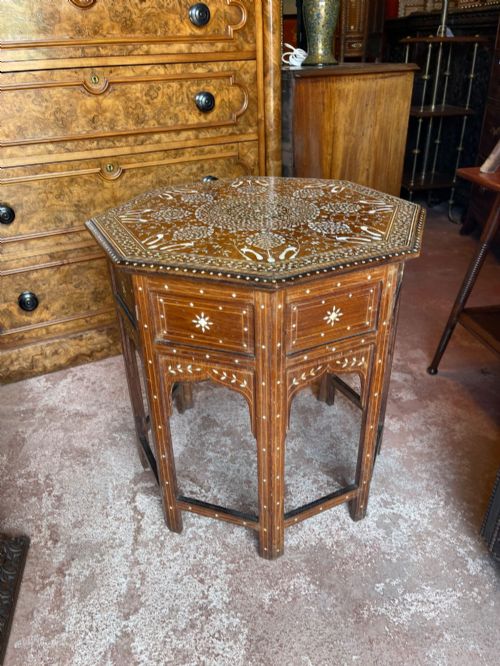
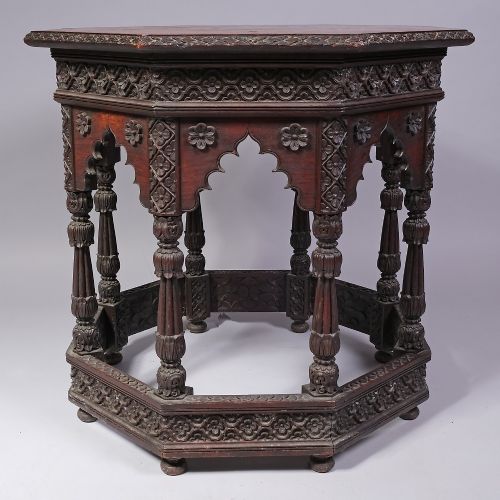
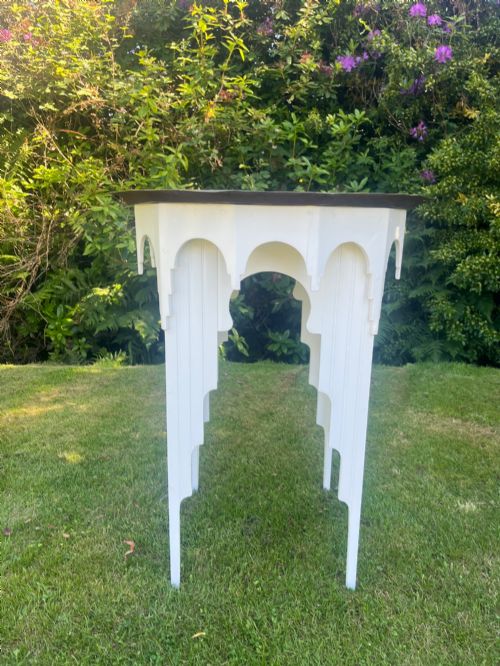
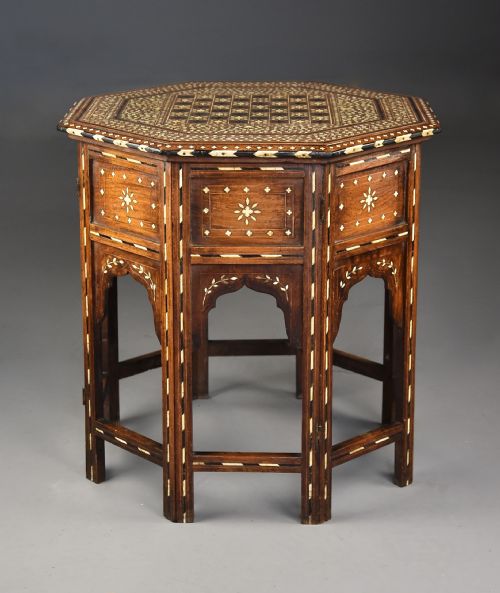
A carved arch side table unites small surface utility with deep surface relief, drawing upon architectural motifs such as pointed or horseshoe arches. These pieces function primarily as occasional tables, library tables, and low stands within domestic interiors.
The selection ranges from Anglo-Indian and Moorish Revival occasional pieces to British Gothic Revival and Georgian oak furniture. Buyers frequently encounter octagonal forms alongside traditional four-legged side tables and adaptable stool combinations.
Originating across distinct stylistic traditions from the eighteenth century through to the nineteen thirties, these tables showcase varied regional craftsmanship. Oak, mahogany, and dense Indian hardwoods dominate the physical evidence on this page.
Materials and construction methods
Makers utilised native British timbers such as oak and mahogany for European Gothic and Georgian designs, employing mortise and tenon joinery for structural stability. Tables produced within the Anglo-Indian and Moorish traditions rely on exotic hardwoods like teak, rosewood, and ebony.
Surface enrichment involves intricate hand-carving alongside detailed inlay techniques using brass and bone. Artisans set bone and metal wire into geometric recesses to define arches and foliage across octagonal tops and friezes.
Carved Arch Side Table Retail Price Guide 2026
Typical asking prices for carved arch side table among the pieces listed under this phrase on Sellingantiques today, from the lower quarter to the upper quarter. They describe what is for sale here now, not the wider market.
Certain tables hide intricate bone inlay so thoroughly that dusting them feels like solving a miniature architectural puzzle.
Assessing quality and execution
Quality rests upon the crispness of the hand-carved arches and the precision of any bone or brass inlay work. Finer examples display deep, sharp relief carving that retains structural integrity without compromising the utility of the table top.
The choice of timber and the complexity of the geometric layout dictate the upper tier of execution. Simpler joinery on straightforward oak tables contrasts with dense, multi-material inlay seen on Moorish and Hoshiarpur occasional pieces.
The Carved Arch Side Table Glossary
- Anglo-Indian
- Furniture made in India during the British period, frequently combining traditional local carving techniques with European forms. These pieces often feature dense overall foliage and geometric arch motifs.
- Gothic Revival
- A nineteenth-century architectural and decorative style drawing inspiration from medieval buildings. It utilises pointed arches, tracery, and solid structural timbers like oak.
- Occasional table
- A small, movable table designed for a specific, intermittent domestic use rather than a permanent central position. They serve well beside seating or as display surfaces.
- Bone inlay
- A decorative technique where small pieces of shaped bone are embedded into the wood surface to create contrasting patterns. This method appears frequently on tables from the Hoshiarpur region.
- Octagonal
- Having eight sides and eight angles. Many eastern occasional tables adopt this geometric footprint to showcase continuous frieze carving around the perimeter.
Carved Arch Side Table: Frequently Asked Questions
Where should I place a carved arch side table?
These tables suit smaller spaces, reception rooms, and quiet corners where an accent surface is required. Their decorated sides look effective when viewed from multiple angles in an open room.
Position them beside armchairs or sofas to hold small lamps and books, allowing the carved details to remain visible.
How do I care for inlaid wood surfaces?
Maintain inlaid tables by dusting regularly with a soft, dry cloth to prevent debris accumulating in the recesses. Avoid placing them in direct sunlight or near heat sources which can dry out the timber and bone.
Apply a microcrystalline wax occasionally to nourish the hardwood without sealing the carved pores or loosening delicate brass and bone elements.
What defines Moorish Revival furniture?
Moorish Revival pieces draw upon Islamic architecture and design motifs, incorporating horseshoe arches, intricate fretwork, and geometric compositions. They gained popularity in Britain during the nineteenth and early twentieth centuries.
Such tables introduce exotic materials and complex surface patterns that contrast with traditional European cabinetmaking.
How do I distinguish Gothic Revival from Gothic Reform?
Gothic Revival broadly mimics medieval ecclesiastical and domestic architecture with heavy tracery and pointed arches. Gothic Reform, emerging around the middle of the nineteenth century, focuses more strictly on honest construction and structural clarity.
Reform pieces often display simplified lines while retaining the architectural arches characteristic of the medieval aesthetic.