

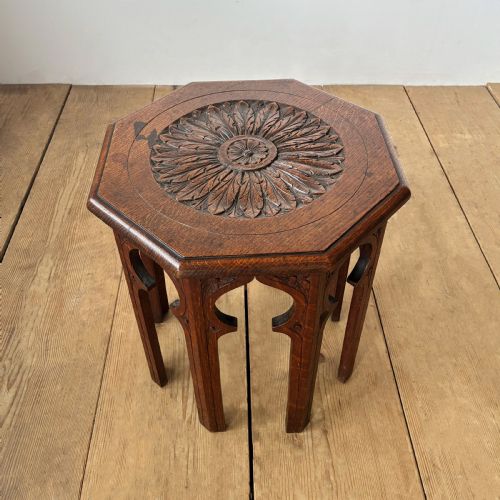


Anglo Moorish Table
An anglo moorish table brings distinct nineteenth century revival character into a room through intricate geometric woodwork and inlaid surfaces.
Anglo Moorish Table
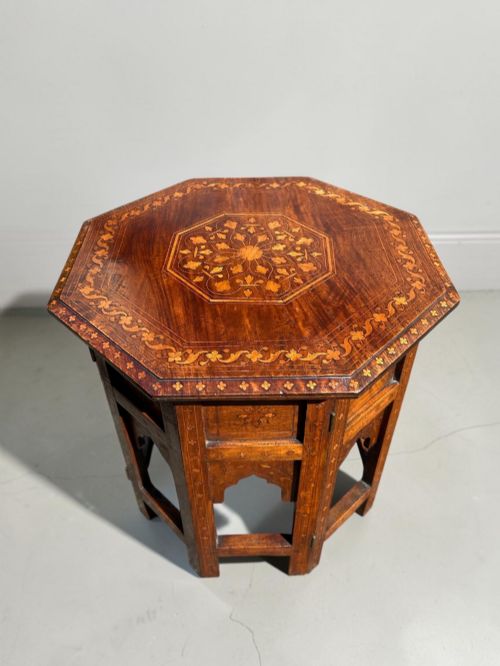
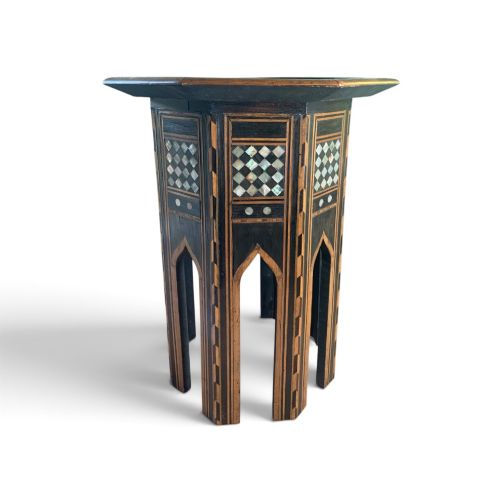
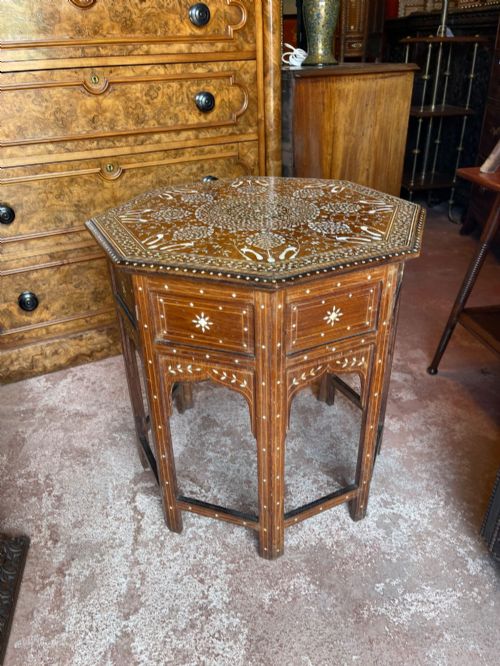
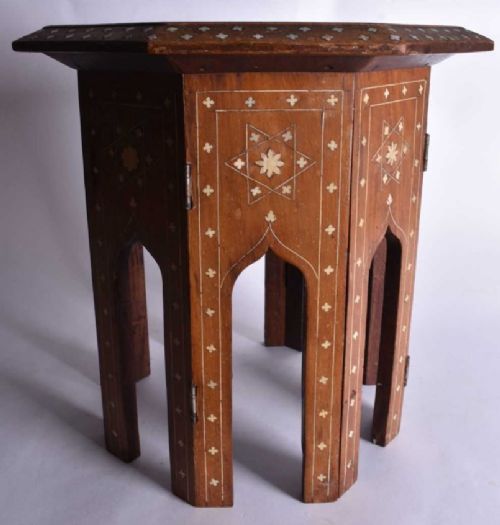
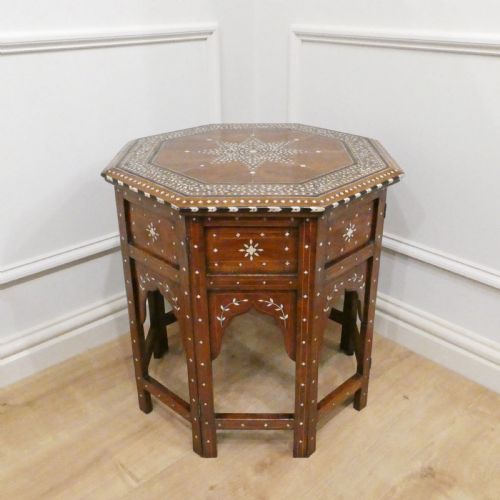
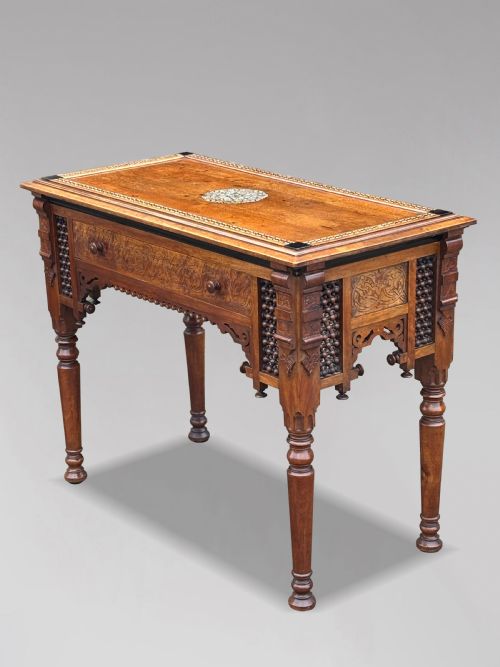
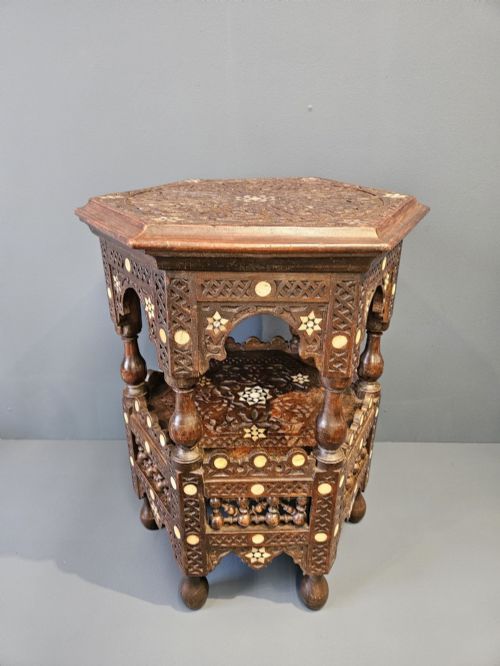
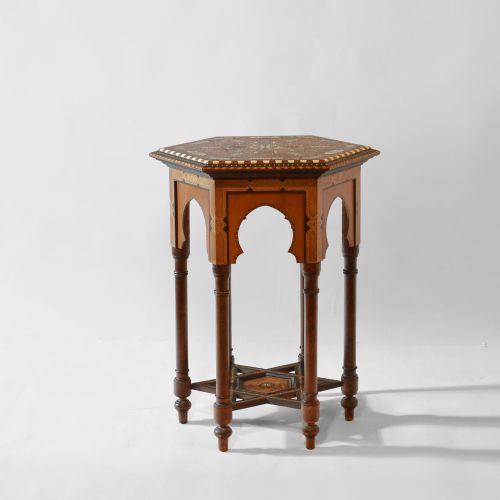
An anglo moorish table typically appears as an octagonal, hexagonal, or square occasional piece designed for domestic use during the nineteenth and early twentieth centuries. These tables frequently take the form of folding or tray top designs originating from maker traditions spanning Moorish revival, Anglo-Indian, and Aesthetic movement aesthetics. The selection includes side tables, coffee tables, and games tables that reflect Victorian and Edwardian taste for exotic furnishings.
Most examples date from the nineteenth century, including specific decades through 1800 to 1930, alongside Victorian era productions. Makers such as Liberty and Co bridged British retail design with Middle Eastern and South Asian craftsmanship to produce ebonised or mahogany occasional furniture. Buyers encounter folding occasional pieces alongside rigid lamp tables and storage tables fitted with small cupboards.
Materials and construction
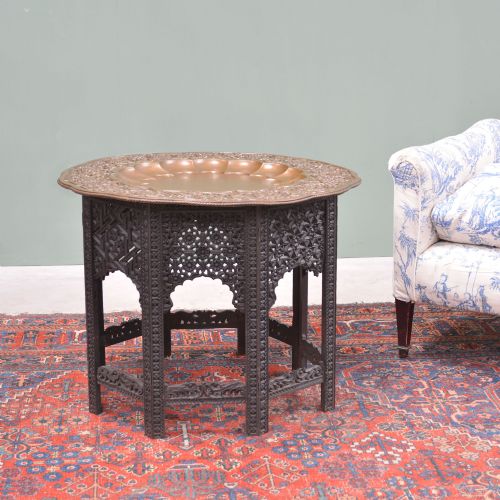
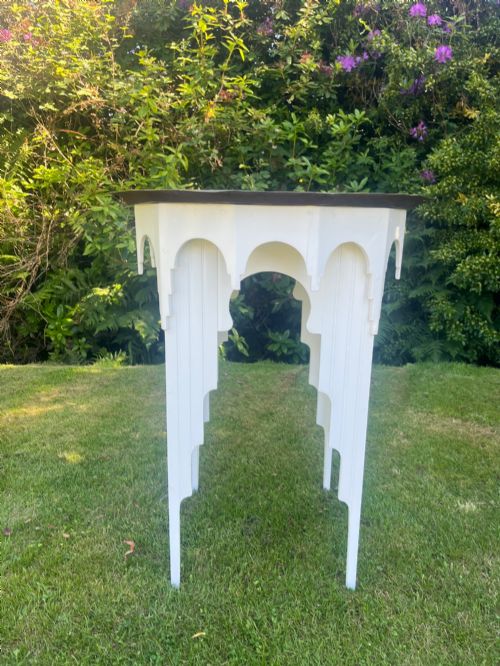
Makers constructed these pieces using dense hardwoods like walnut, teak, mahogany, rosewood, and sandalwood, often finished with black lacquering or ebonisation. Artisans carved intricate geometric patterns directly into the timber framework to create pierced panels and folding mashrabiya structures.
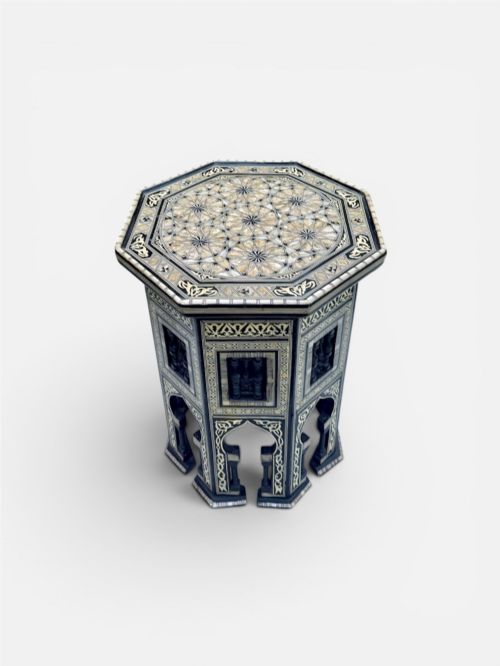
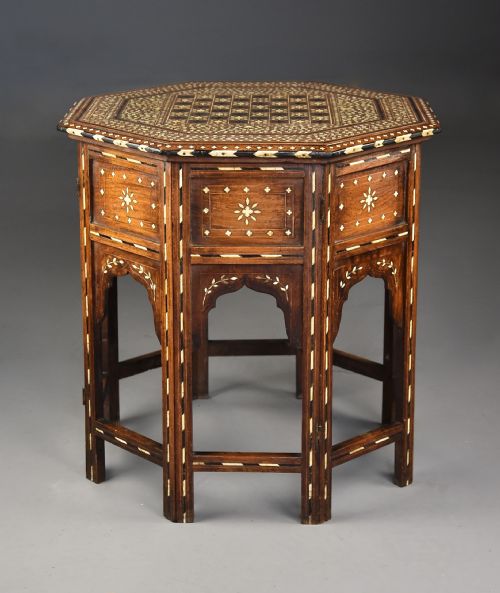
Surfaces receive elaborate inlay work utilising bone, mother of pearl, and sheet brass components. Pieces from specific hubs like Hoshiarpur integrate detailed bone and wood marquetry across folding star tables and tray tops.
Several folding tables still hide their original chessboards within the wooden star inlay.
Distinctions in craftsmanship
Quality rests upon the precision of the surface inlay and the depth of the hand carving. Pieces featuring dense, complete bone and mother of pearl work across the entire top demonstrate superior workshop execution compared to examples with sparse or plain wooden surfaces.
The integrity of the structural joinery, particularly on folding and hexagonal tables, determines lasting stability. Superior examples maintain crisp, sharp carving edges in the hardwood without excessive timber shrinkage or missing inlay fragments.
Liberty and Co
The Anglo Moorish Table Glossary
- Mashrabiya
- A architectural element adapted into furniture, consisting of turned wood lattices forming intricate geometric screens.
- Hoshiarpur
- A North Indian town renowned for intricate woodwork, specifically tables featuring dense bone and shesham or sandalwood inlay.
- Ebonisation
- A finishing technique that treats timber to imitate ebony, widely utilised by British firms during the aesthetic movement.
- Octagonal
- Having eight sides, describing the geometric form shared by many tables in this category.
- Marquetry
- The art of applying pieces of veneer to a structure to form decorative patterns, seen here with mother of pearl and bone.
Anglo Moorish Table: Frequently Asked Questions
Where were anglo moorish tables made?
These tables were produced both in British workshops influenced by eastern aesthetics and in international centres such as India, Syria, and North Africa.
British retailers like Liberty and Co collaborated with overseas craftsmen to import finished items and components for the domestic market.
How do you fold an octagonal table?
Many examples utilise a clever interlocking hinge system where the carved wooden base collapses flat into a series of intersecting panels.
The separate octagonal tray top then lifts off the folded support structure for compact storage or transport.
What woods are used in these pieces?
Carpenters utilised exotic and native hardwoods including teak, walnut, mahogany, rosewood, and sandalwood.
Surfaces were frequently ebonised or finished with dark lacquers to provide contrast against inlaid bone and mother of pearl.
How do I style a moorish side table?
These pieces function effectively as compact lamp tables, coffee tables, or bedside surfaces within contemporary or traditional interiors.
The rich inlay and carved geometric patterns allow them to serve as focal points without requiring heavy decorative accessories on top.