

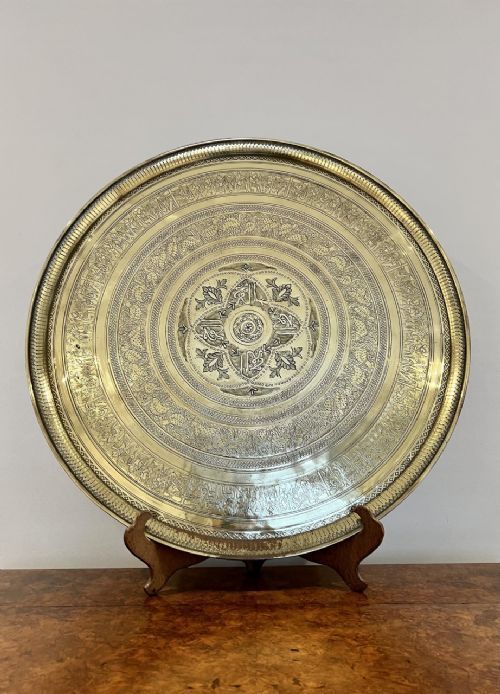
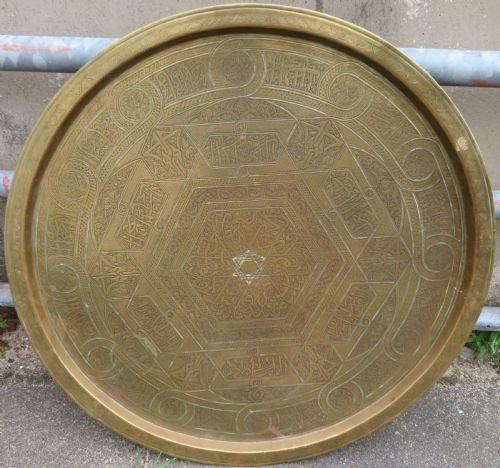


Islamic Engraved Brass
Islamic engraved brass pieces are tactile metalwork items shaped by centuries of tradition, prized by collectors for their intricate surface decoration.
Islamic Engraved Brass
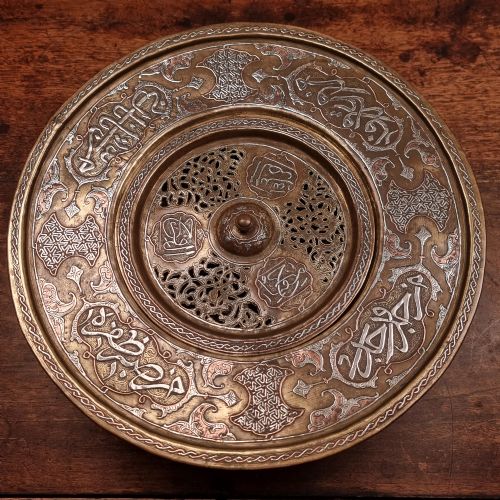
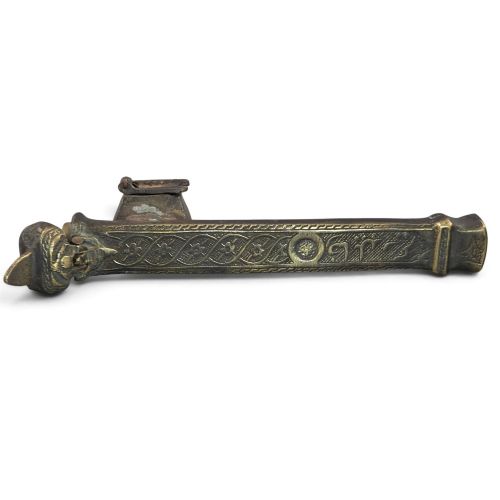
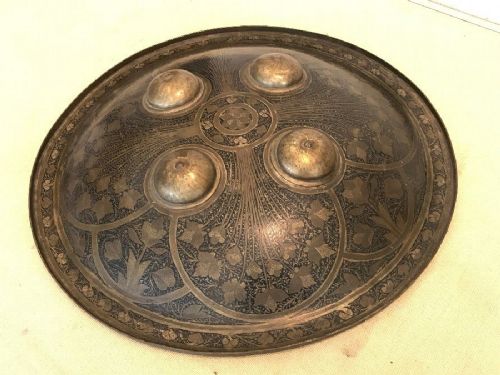
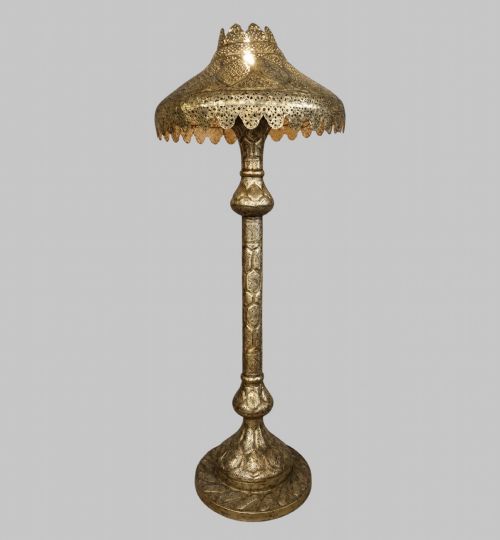
When you search for islamic engraved brass, you encounter a diverse array of metal objects spanning domestic vessels, furniture elements, and lighting. The selection encompasses utilitarian items like travelling pen cases, wash bowls, and heavy shields alongside large decorative trays and floor lamps.
The objects originate from various regional centres including Persia, Syria, Egypt, and Morocco, reflecting stylistic traditions such as Mamluk, Qajar, and Ottoman. You are most likely to meet 19th-century revival pieces and traditional vessels on this page, alongside occasional earlier examples dating back to the 16th century.
Forms range from deep basins and chargers to occasional table tops and candlesticks, each demonstrating distinct regional handling of metalwork. These items reveal the historical breadth of craftsmanship across the Middle East and surrounding regions.
Materials and construction methods
The primary structural material is brass, supplemented by copper, patinated copper, copper alloy, and mixed metals. Artisans frequently incorporated silver inlay into the base metal to create sharp contrasts within the engraved surface designs.
Engraving serves as the principal decorative technique, cutting linear patterns and inscriptions directly into the metal body. Selected pieces integrate wooden elements, such as hardwood boxes bound in brass, or combine steel and silver inlay.
Islamic Engraved Brass Retail Price Guide 2026
Typical asking prices for islamic engraved brass among the pieces listed under this phrase on Sellingantiques today, from the lower quarter to the upper quarter. They describe what is for sale here now, not the wider market.
Several pieces started life recording wartime munitions before being transformed into decorative domestic vessels.
Judging quality in metalwork
Quality rests upon the crispness and depth of the engraving work, where finer execution yields sharper details and more complex geometric or figural motifs. The integration of silver inlay demonstrates superior skill, particularly when the precious metal remains flush and secure within the brass ground.
The weight and gauge of the brass body also distinguish finer pieces from lighter production, as thicker metal supports deeper, more durable carving. Patination and the natural ageing of the alloy contribute to the visual depth of the surface, rewarding pieces that have developed an undisturbed skin over time.
The Islamic Engraved Brass Glossary
- Mamluk Revival
- A style of decorative art produced in the 19th century that emulates the distinctive brasswork of the medieval Mamluk Sultanate.
- Divit Qalamdan
- A traditional travelling pen case and inkwell combination, typically featuring an elongated body and a hinged ink compartment.
- Cairoware
- A term used for 19th and early 20th-century brassware produced in Cairo, heavily decorated with engraved patterns and often silver or copper inlay.
- Qajar
- Pertaining to the Iranian dynasty ruling from the late 18th to the early 20th century, known for distinct figural and floral metal engraving.
- Veneto-Saracenic
- Metalwork produced in the eastern Mediterranean or Venice during the Renaissance, combining Islamic engraving techniques with European forms.
Islamic Engraved Brass: Frequently Asked Questions
How do I clean engraved brass safely?
Maintenance requires minimal intervention to preserve the historic surface and any patination. Dusting with a soft brush prevents grime buildup without disturbing the metal.
Harsh chemical polishes must be avoided because they strip away the dark recessed areas that define the engraved details.
What is silver inlay on brass?
Silver inlay involves hammering thin wires or sheets of silver into shallow grooves chiselled into the brass surface. This technique creates high-contrast decorative patterns.
Examples of this work appear frequently on wash bowls and chargers from Persian and Syrian workshops.
How can I tell the age of these pieces?
Dating relies on stylistic markers, construction methods, and the composition of the metal alloy. Earlier pieces from the 16th century show distinct epigraphic styles compared to 19th-century revival work.
Examining the tool marks on the reverse of the object also helps establish the manufacturing period.
How were large brass trays used?
Large trays and chargers served primarily for communal dining or food presentation in domestic settings throughout the Middle East. They were placed on folding wooden stands to function as temporary tables when needed.
Later Victorian and revival pieces were frequently adapted specifically as decorative wall chargers or table tops.