



Antique Copper Vessel Lid
An antique copper vessel lid is the durable closure completing pitchers, coal bins, and urns shaped by centuries of metalwork.
Antique Copper Vessel Lid
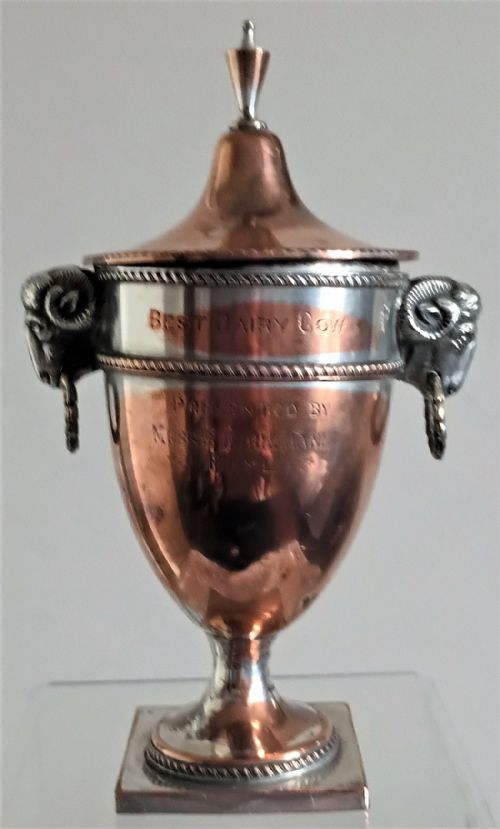
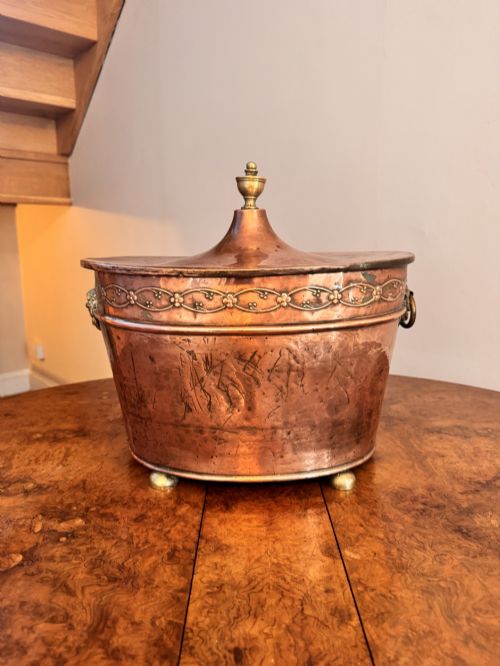
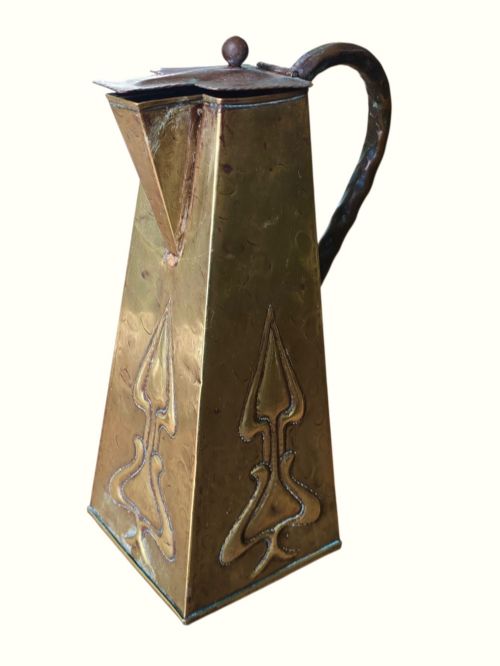
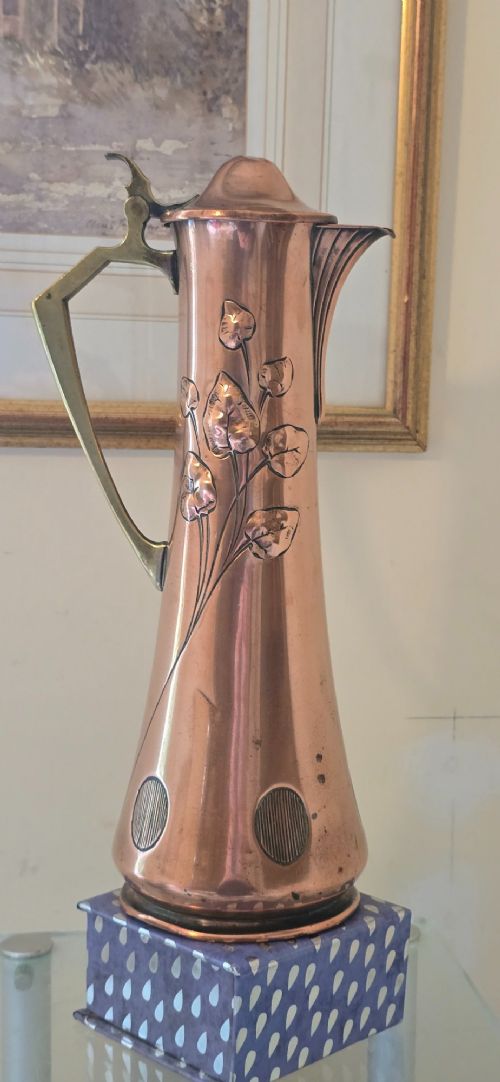
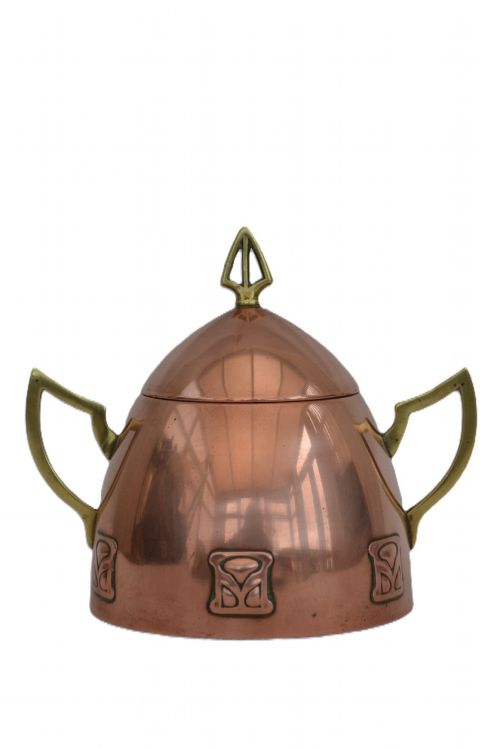
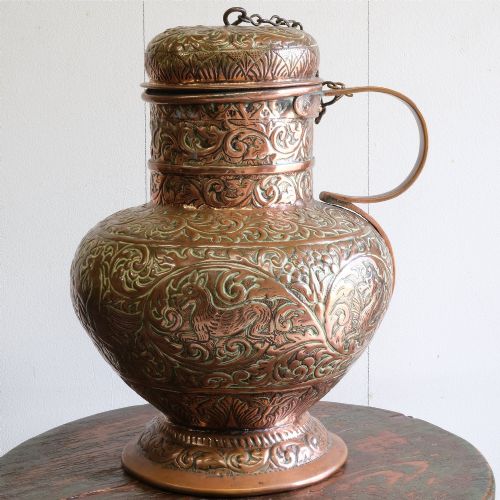
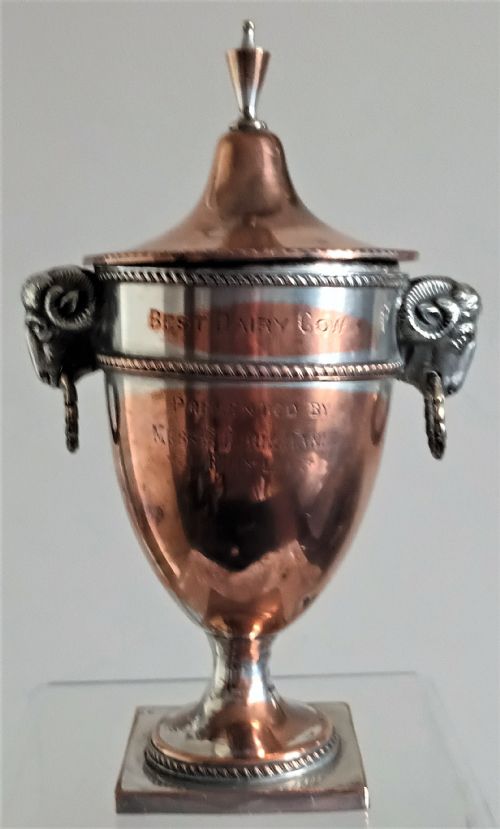
When searching for an antique copper vessel lid, buyers encounter covers belonging to diverse domestic and ecclesiastical forms, ranging from domestic log bins and water jugs to miniature chestnut urns and ciboria. The selection spans centuries of metalworking traditions, encompassing utilitarian kitchenware and decorative Art Nouveau table articles alike.
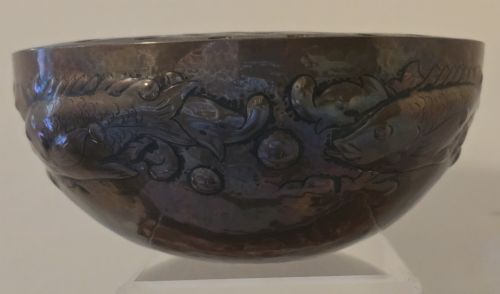
The pieces appearing on this page originate across various historical periods, including the eighteenth century, the Victorian era, and the early twentieth-century Arts and Crafts movement. Formats stretch from small lidded sugar bowls and rose bowls to colossal lidded copper pitchers and heavy iron-framed log bins.
Most items integrate matching metal covers designed to seal hollowware containers intended for water, fuel, or dry goods. These lids protect contents and complete the original silhouette of pitchers, ewers, and cauldrons produced in Britain, Europe, and beyond.
Materials and construction methods
Makers formed these items primarily from hammered or spun copper, frequently combining the metal with brass fittings, wrought iron frames, or Old Sheffield Plate elements. Some examples incorporate tin linings, silver inlays, wood handles, or gilded and engraved surfaces to enhance both utility and visual appeal.
Production techniques range from traditional hand-beating and riveting seen in early cauldrons and pitchers to the floral relief designs and specialised copper plating characteristic of continental metalwork enterprises. Handles, finials, and rims often utilise cast brass or iron to provide structural strength against daily wear.
Antique Copper Vessel Lid Retail Price Guide 2026
Typical asking prices for copper vessel lid among the pieces listed under this phrase on Sellingantiques today, from the lower quarter to the upper quarter. They describe what is for sale here now, not the wider market.
Current listings feature items spanning from the fifteenth century through the Art Nouveau period, utilising copper, brass, wrought iron, and Old Sheffield Plate.
Distinctions in craftsmanship and condition
Superior examples demonstrate meticulous hammer work, secure joinery, and well-proportioned decorative motifs such as floral reliefs or pierced ventilation patterns. The alignment between the lid and the vessel body reveals the maker's precision, particularly when lids feature original hinges, finials, or matching mounting frames.
Integrity of surface finish and the retention of original components dictate the standing of an item within its period. Pieces maintaining their original patination, uncompromised structural framing, and matching lids command greater appreciation among collectors than altered or heavily restored equivalents.
Joseph Sankey·Newlyn·WMF
The Antique Copper Vessel Lid Glossary
- Ciborium
- A covered sacred vessel used in churches to hold consecrated hosts, often featuring intricate engraving and gilding. These liturgical containers represent some of the earliest metalwork forms preserved from the fifteenth and sixteenth centuries.
- Old Sheffield Plate
- A composite material made by fusing a thin sheet of silver to a thicker copper base under high heat. This technique predates modern electroplating and appears on eighteenth-century tableware such as tankards and miniature urns.
- Bain Marie
- A heated water bath used in culinary contexts to keep food warm gently without scorching. Tabletop variants in copper often include tight-fitting lids to retain steam and heat during service.
- Coal Bin
- A large domestic container designed to store fuel near a fireplace, frequently outfitted with a robust lid and iron handles. Victorian and Edwardian examples often combine heavy copper bodies with structural iron mounts.
- Rose Bowl
- An open vessel featuring a pierced metal lid or grill designed to support cut flowers in water. The removable cover allows stems to stay separated and upright within the bowl.
Antique Copper Vessel Lid: Frequently Asked Questions
How do I clean antique copper?
Clean antique copper gently using mild soap and warm water, avoiding harsh abrasive compounds that strip away the natural historic patination.
Dry the surface thoroughly with a soft cloth to prevent water spots and preserve the metal finish over time.
Are lids usually original to the vessel?
Lids often stay with their original vessels if the forms match precisely in wear patterns, metal composition, and manufacturing style.
Inspect the interior rims and contact points to verify that the lid seats evenly and shares the same age patination as the base.
What is Old Sheffield Plate?
Old Sheffield Plate is an early composite material created by fusing silver and copper together through heating and rolling.
This method produces durable tableware where subtle traces of copper may show through the silver layer along high-wear edges.
How do I date an antique copper lid?
Date an antique copper lid by examining its manufacturing marks, construction techniques, stylistic markers, and the vessel it accompanies.
Art Nouveau pieces typically display floral motifs from around nineteen hundred, while eighteenth-century items show hand-beaten joinery and simpler Georgian profiles.