



Antique Censer Lid
These antique censer lid examples are protective and decorative covers for incense burners, sought after for their intricate craftsmanship and historical materials.
Antique Censer Lid
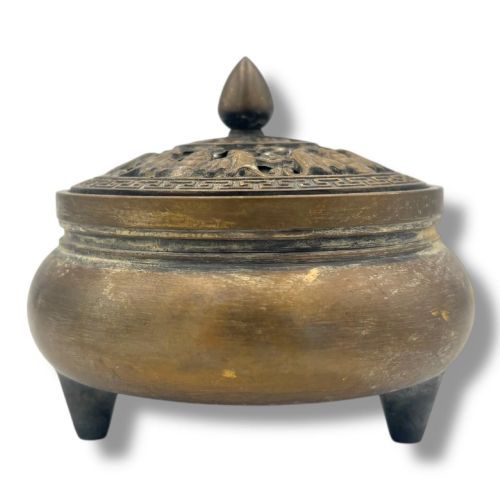
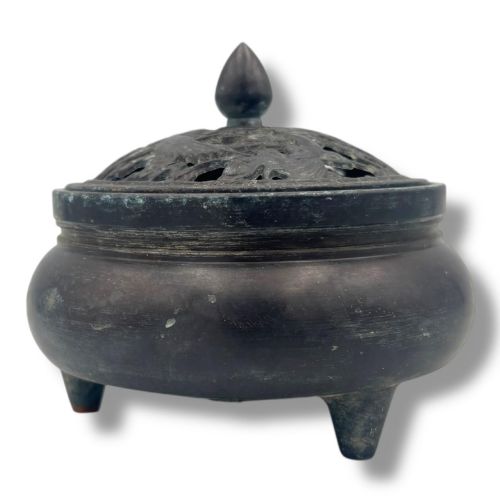
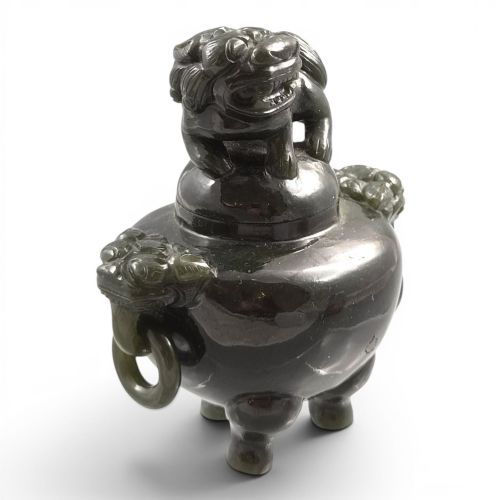
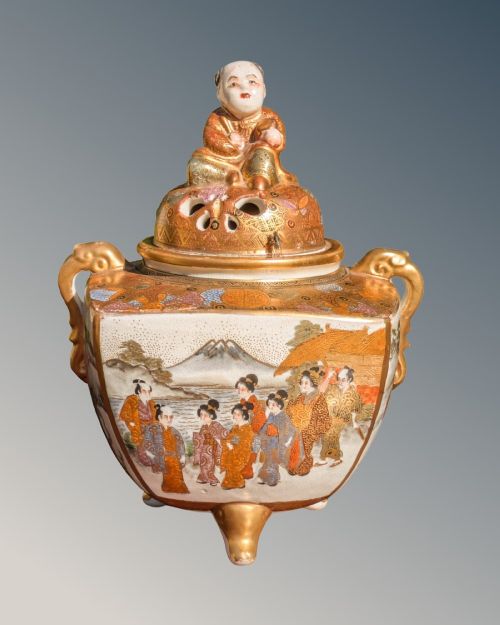
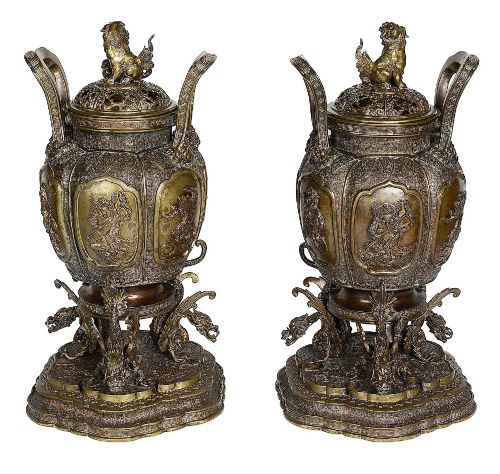
The pieces appearing on this page originate predominantly from the nineteenth century, encompassing Victorian and Edwardian periods as well as the Meiji period in Japan and the Qing Dynasty in China. You are most likely to meet bronze, brass, or porcelain covers featuring pierced designs or sculptural finials.
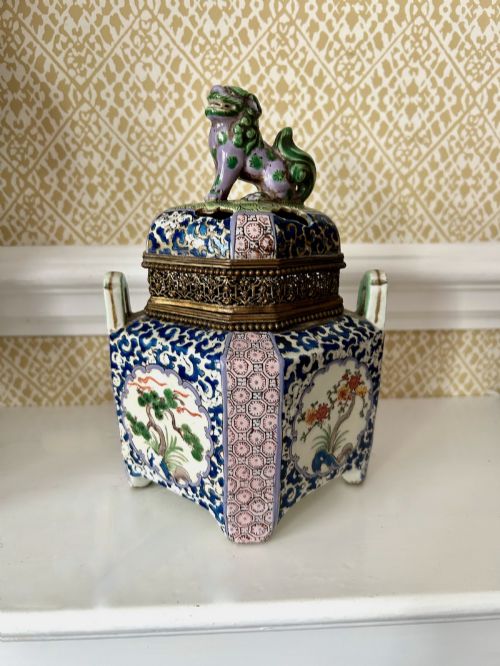
Many of these lids belong to larger items such as koro or tripod censers, though occasionally a cover appears independently. They display regional aesthetics ranging from Japanese Satsuma and Imari wares to Chinese cloisonné and bronze casting.
Materials and construction
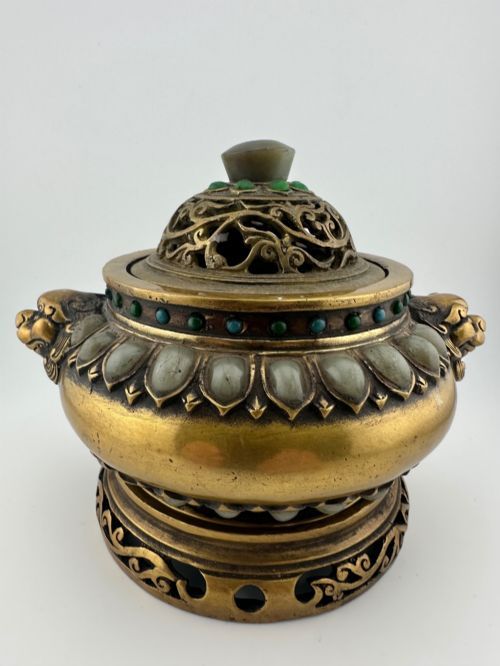
Metal censer lids are principally formed through bronze casting or brass shaping, frequently utilising lost-wax methods to achieve detailed relief work. Artisans then refine these metal surfaces through piercing, carving, or the application of gilt, silver, and hardstone inlays.
Ceramic covers rely on earthenware or porcelain bodies, shaped by hand or wheel before receiving intricate enamelling or traditional underglaze painting. Cloisonné examples incorporate delicate metal wires soldered to a base to create cells filled with coloured enamel pastes prior to firing.
Antique Censer Lid Retail Price Guide 2026
Typical asking prices for censer lid among the pieces listed under this phrase on Sellingantiques today, from the lower quarter to the upper quarter. They describe what is for sale here now, not the wider market.
Many of these bronze lids feature small mythical beasts guarding the smoke vents.
Distinctions in quality
The distinction between standard and superior censer lids lies in the crispness of the casting or the precision of the ceramic painting. Finer metal covers display sharply defined pierced work and securely set hardstone or silver elements, whereas simpler versions show softer surface detail.
Artistic execution dictates the upper tier of these objects, particularly in hand-painted Satsuma wares or heavily ornamented bronze dragons and foo dog finials. The weight of the metal and the complexity of the enamel work further differentiate workshop output.
Kotobuki do
The Antique Censer Lid Glossary
- Censer
- A vessel designed for burning incense, typically comprising a base and a fitted cover. These containers appear in various metals and ceramics across Asian and European traditions.
- Koro
- A Japanese term for an incense burner, often supplied with a decorative pierced lid. These burners frequently rest on three feet and take porcelain or bronze forms.
- Cloisonne
- An enamelling technique where metal wires are applied to a metal body to form compartments that hold coloured pastes. The piece is then fired and polished to a smooth finish.
- Foo Dog
- A mythical guardian lion frequently depicted as a sculptural finial on censer lids. These figures symbolize protection and authority in East Asian art.
Antique Censer Lid: Frequently Asked Questions
What is a censer lid used for?
A censer lid covers an incense burner to regulate the release of smoke and fragrance during burning. The pierced openings allow aromatic wisps to escape in a controlled manner.
Beyond functional ventilation, the cover serves as a decorative cap that completes the sculptural silhouette of the vessel below.
How do I identify a Meiji period lid?
Meiji period lids from Japan often exhibit characteristic bronze or Satsuma earthenware construction, reflecting the craftsmanship of late nineteenth century ateliers. Look for detailed metalwork involving silver accents or intricate enamel patterns.
These pieces typically accompany Japanese koro forms and display specific regional motifs distinct from contemporary Chinese production.
Are bronze censer lids heavy?
Bronze and brass censer lids can vary significantly in weight depending on their size and metal thickness. Larger examples, particularly those originating from Chinese workshops, use substantial metal casting.
Heavier lids usually indicate solid metal construction rather than thin sheet fabrication, contributing to a secure fit on the burner base.
What materials are common on these lids?
The listings show lids made from bronze, brass, porcelain, earthenware, and cloisonné enamel. Many incorporate hardstone inlays, gilt, or silver details to enhance their visual appeal.
Japanese examples frequently utilise Satsuma pottery or bronze, while Chinese pieces often feature bronze or cloisonné.