
Iron Umbrella Drip Tray
An iron umbrella drip tray keeps floors dry while holding heavy walking gear, taking the form of sturdy hallway stands from the Victorian and Edwardian periods.
Iron Umbrella Drip Tray
When searching for an iron umbrella drip tray, you are looking at hallway furniture designed to manage wet walking gear in damp weather. These pieces combine heavy metal bases with upright frames to hold long umbrellas and sticks safely.
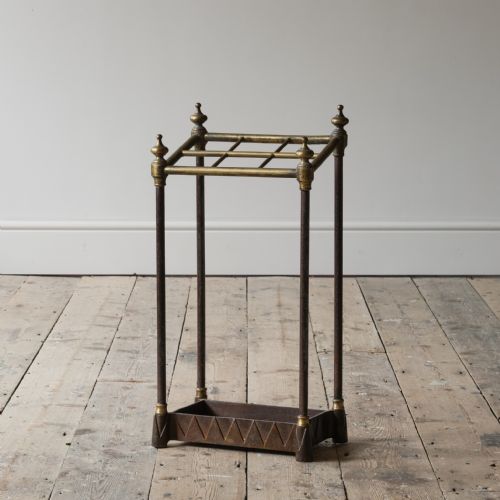
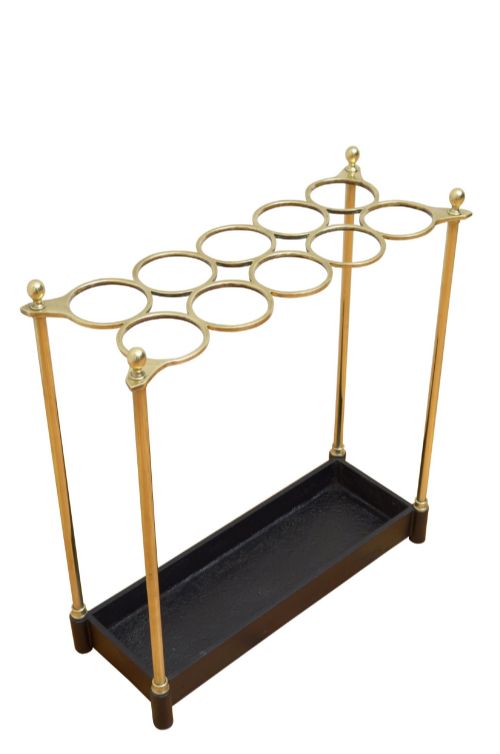
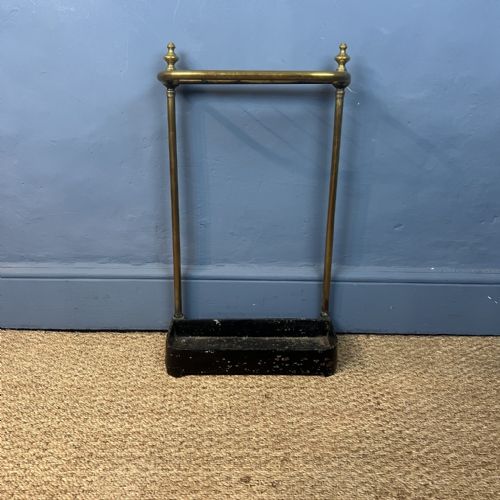
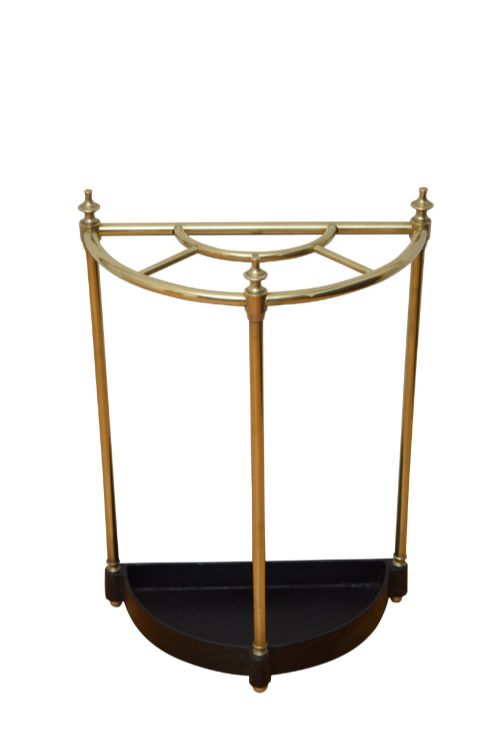
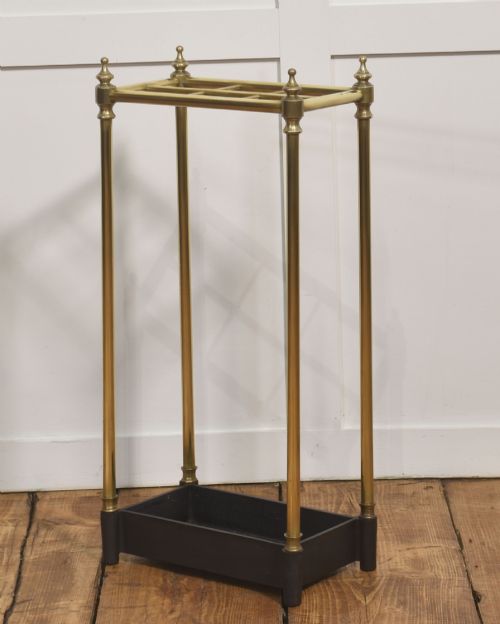
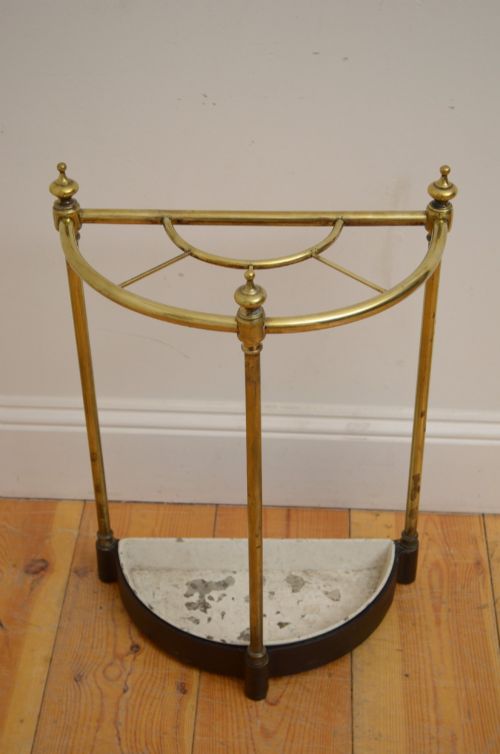
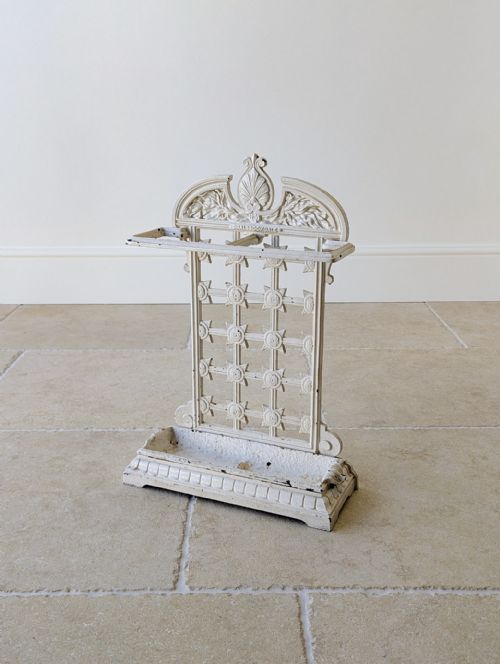
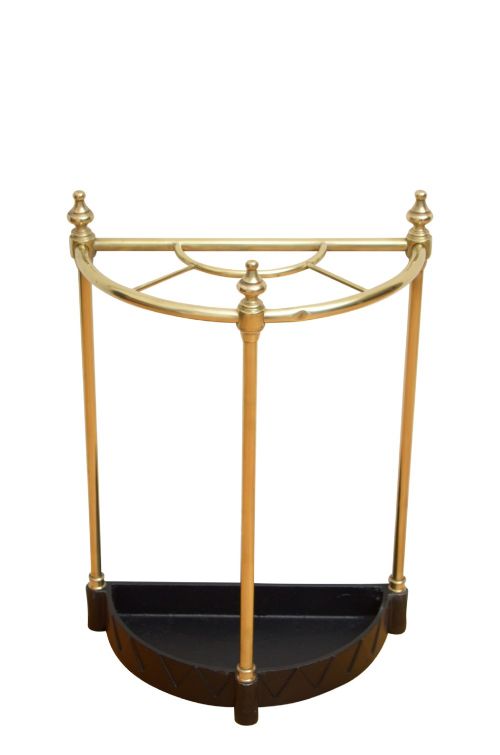
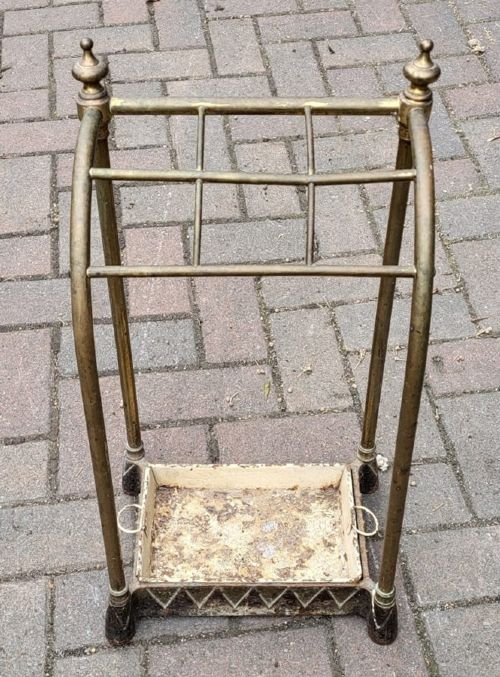
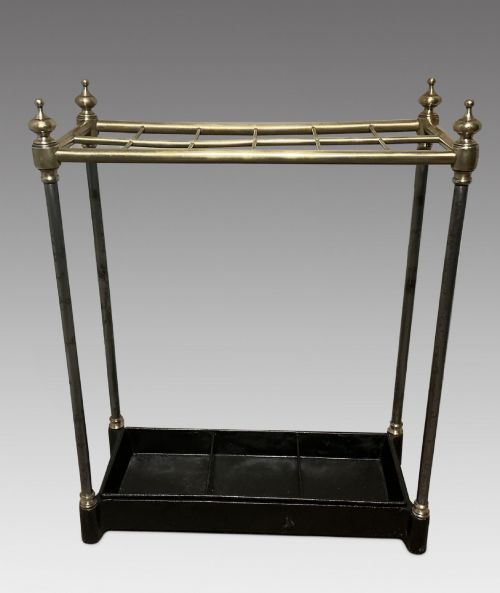
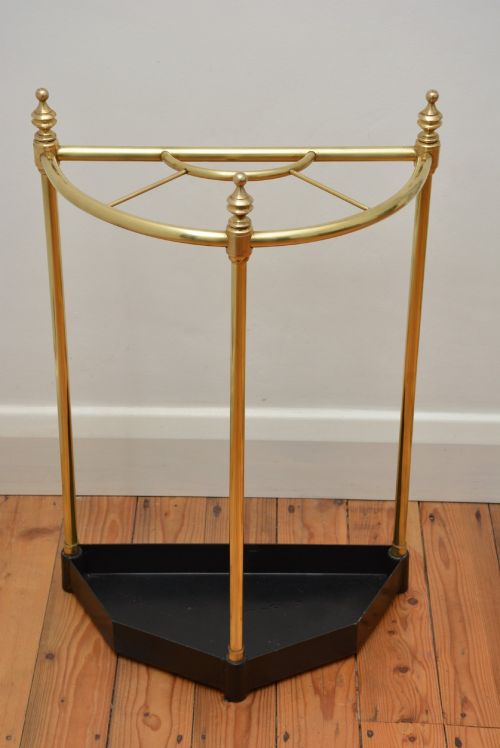
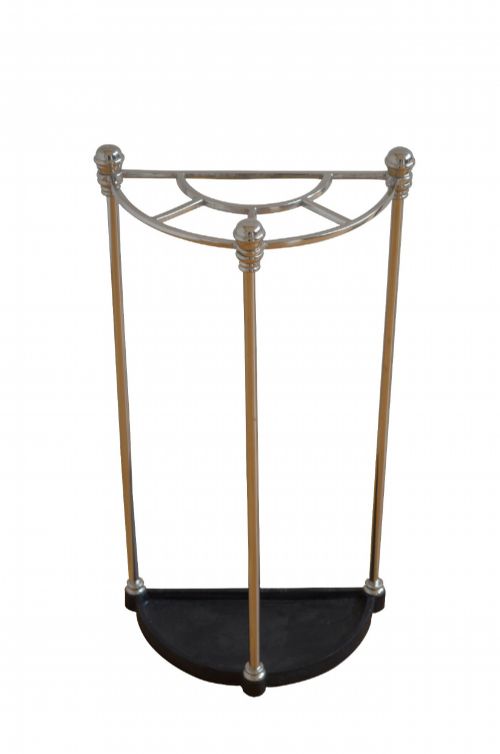
The version you are most likely to meet on this page is a Victorian or Edwardian hall stand made from cast iron or brass, often featuring a removable metal tray at the floor level to catch water runoff. Many adopt a demi-lune or half-moon shape to sit flush against a hallway wall.
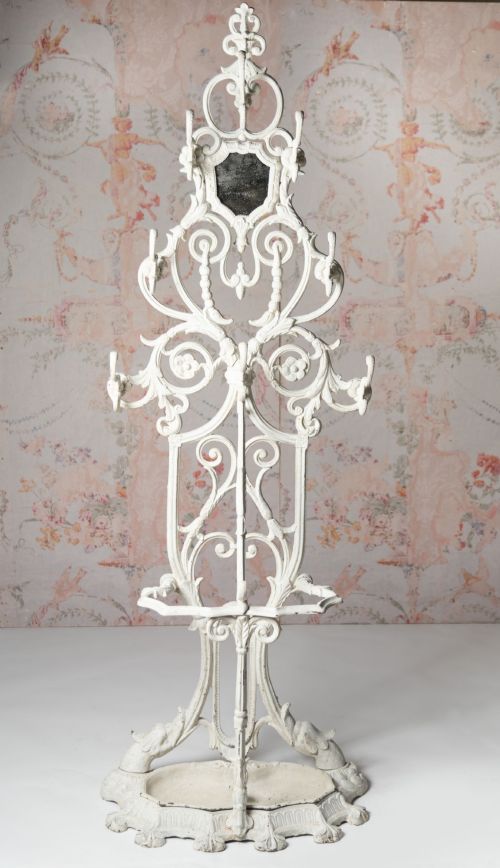
Makers produced these stands in various configurations, ranging from simple metal frames to combined coat and umbrella stands incorporating pitch pine or glass elements. Some heavier examples take sculptural forms depicting figures or animals like gun dogs.
Materials and construction techniques
Foundries utilised cast iron for structural strength and intricate decorative moulding, producing robust frames that resist tipping under heavy loads. Painted finishes and black coatings were commonly applied to protect the iron from rust.
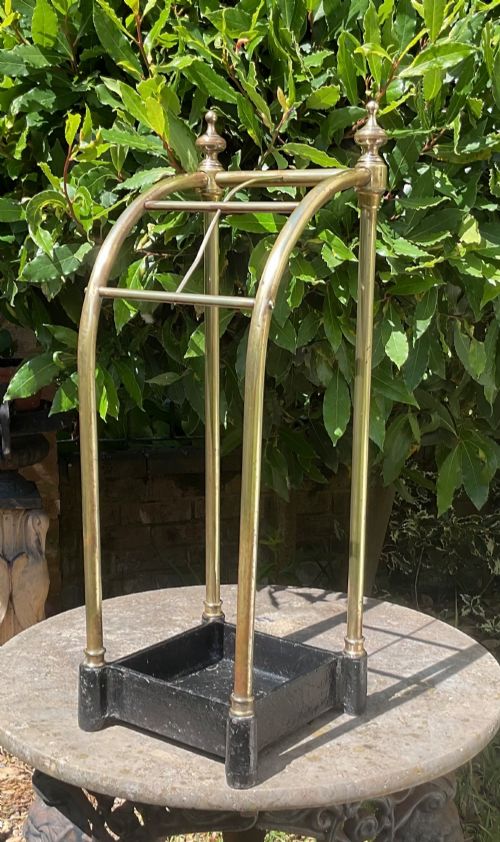
Brass elements such as rails, finials, and sheet drip trays provide a bright contrast to the dark iron, shaped through casting, sheet metalwork, and turning. Steel and nickel also appear in later Edwardian and Art Deco designs to offer a cleaner, metallic sheen.
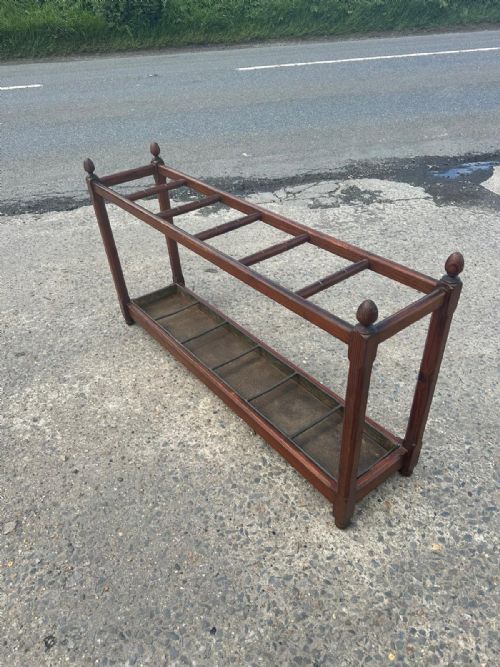
Secondary materials like pitch pine occasionally form the body of country house models, pairing timber uprights with metal lower pans to handle moisture from wet walking sticks.
Listings feature pieces spanning from the 1860s through the Art Deco period of the 1930s, showing a transition from ornate cast iron to sleeker nickel finishes.
Factors that distinguish quality
Quality rests in the crispness of the casting and the integrity of the integrated drip tray. Foundries known for high-grade ironwork produced cleaner lines and more defined figural details than anonymous makers.
The choice and combination of materials dictate the standard of the piece, particularly where heavy cast iron meets well-fitted brass rails and complete, original drip pans. Retaining the correct matching tray at the base elevates the piece significantly.
Coalbrookdale·A. Kenrick & Sons·Falkirk Foundry·Shoolbred
The Iron Umbrella Drip Tray Glossary
- Demi Lune
- A half-moon shape designed to fit flat against a hallway wall. This configuration saves valuable floor space in narrow entrances.
- Drip Tray
- A shallow metal pan positioned at the base of the stand to catch water from wet umbrellas. It protects floorboards and carpets from moisture damage.
- Aesthetic Movement
- A late 19th-century design style focusing on visual beauty rather than narrative meaning. Pieces from this movement often feature stylised natural motifs.
- Finial
- A decorative terminal ornament usually found on the top corners or posts of the stand. They add height and visual polish to the metal frame.
- Faux Bamboo
- A decorative technique moulding metal or carving wood to resemble natural bamboo stalks. This motif was popular during the Victorian period.
Iron Umbrella Drip Tray: Frequently Asked Questions
What is an iron umbrella drip tray used for?
These trays collect rainwater running off wet umbrellas and walking sticks stored in the hallway. They protect wooden floors and carpets from dampness and mud.
The removable pan design allows users to empty accumulated water easily after a rainy walk.
How do I tell Victorian stands from Edwardian ones?
Victorian stands typically feature heavier cast iron frames, Gothic or Rococo revival details, and robust figural elements. They often look ornate and substantial.
Edwardian examples tend to show lighter construction, cleaner lines, and occasional Art Nouveau curves or simpler brass and steel combinations.
Where should I place a half moon stand?
Demi-lune or half-moon stands sit flat against an entryway wall to maximise floor space in narrow hallways. They offer ample storage without blocking foot traffic.
Positioning them near the front door ensures wet gear is caught immediately upon entering the house.
What maintenance do cast iron stands require?
Cast iron and painted finishes need occasional dusting and protection from standing moisture to prevent rust development. Keeping the lower drip tray clean and dry is essential.
Applying a light wax or appropriate metal care product preserves the original surface sheen without altering the finish.