



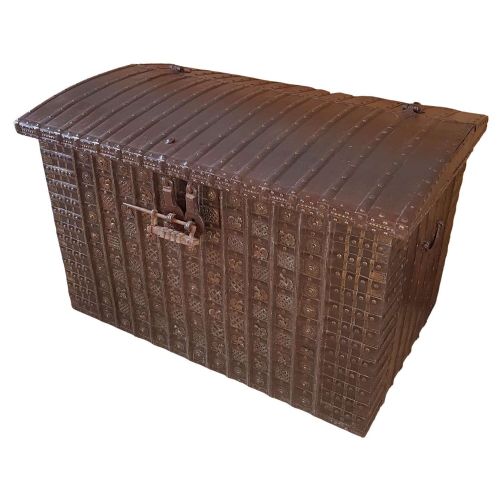


Iron Strap Chest
An iron strap chest combines utilitarian security with robust carpentry, offering rugged storage suited to travel and strongrooms alike.
Iron Strap Chest
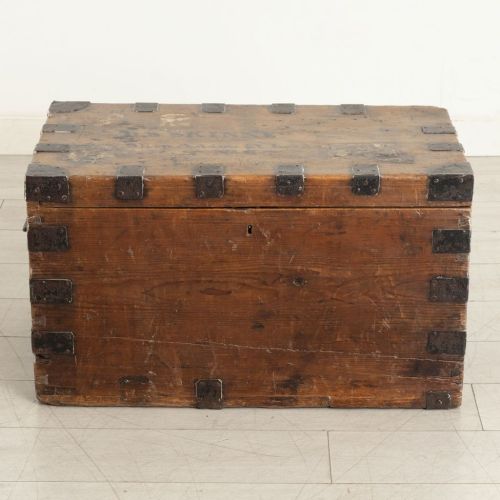
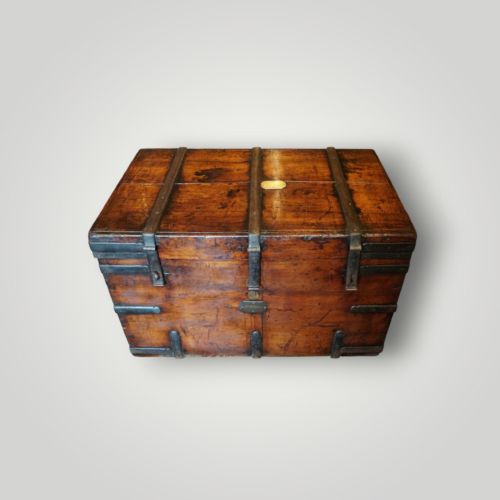
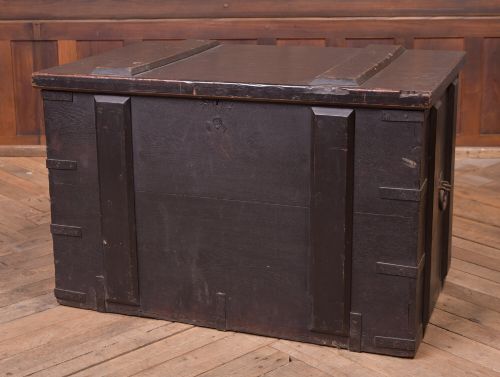
An iron strap chest is a heavy storage container reinforced with metal bands, straps, or hinges to withstand arduous transport and secure valuable contents. Pieces matching this phrase span centuries of domestic and commercial use, appearing in materials such as pine, oak, teak, and elm.
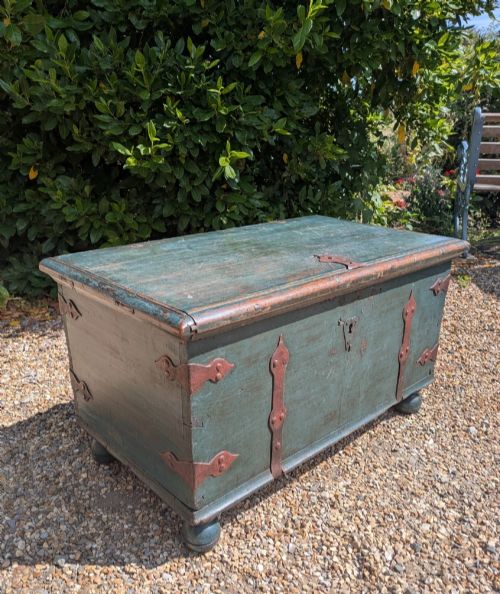
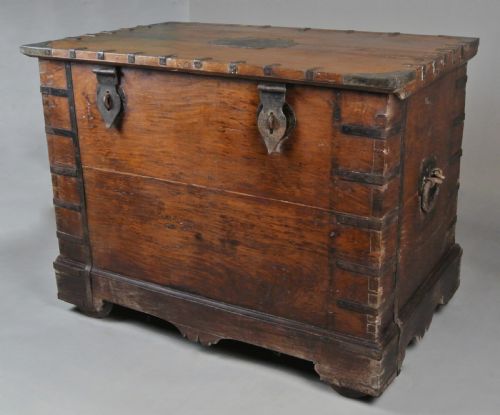
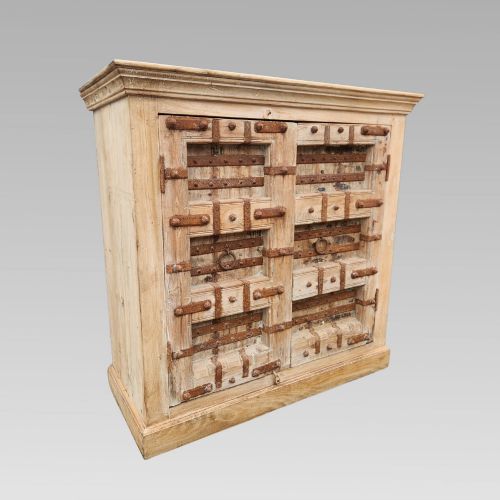
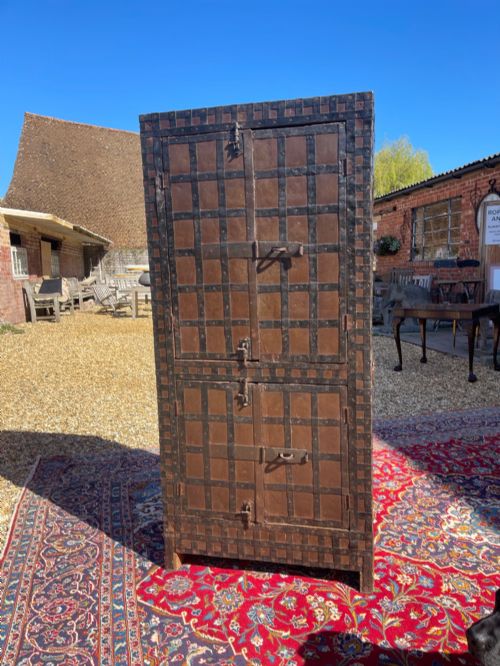
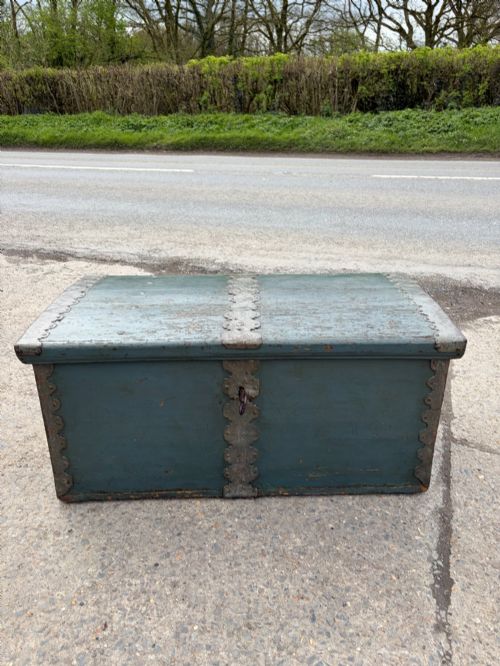
The versions most commonly met on this page date from the Georgian and Victorian eras, often taking the form of travel trunks, silver chests, or dowry coffers. Regional variations range from Scandinavian painted pine strong boxes to Anglo-Indian hardwood and metal bound trunks.
Makers fashioned these chests for specific roles, including military deployment, domestic linen storage, and maritime shipping. Their construction balances sturdy timber carcasses with functional ironwork designed to absorb heavy impacts during transit.
Construction and materials
Carpenters built the primary bodies from durable timbers like oak, pine, teak, and elm, utilising dovetail or nailed corner joints to bear heavy loads. These wooden carcasses provided stable foundations for the exterior metal reinforcements.
Blacksmiths and metalworkers secured the structures using hand-forged iron straps, bands, brackets, and hasps, fastened with clenched nails or rivets. Brass and iron studs frequently decorated the surface alongside functional locking mechanisms and side carrying handles.
Listings feature structural timbers spanning oak, pine, teak, elm, and walnut across centuries of production.
Assessing quality and integrity
Quality rests in the original integrity of the timber carcass and the completeness of the blacksmith-made iron strapwork. Pieces retaining original painted surfaces, working locks, and interior fittings command greater interest than heavily altered examples.
The finesse of the hand-forged ironwork and the thickness of the timber distinguish standard utility containers from bespoke travel chests commissioned for affluent owners.
Elkington
The Iron Strap Chest Glossary
- Strapwork
- Ornamental or reinforcing metal bands fixed across the exterior of a chest. These straps distribute stress and protect wooden corners from damage during handling.
- Coffer
- A heavy wooden box used for safekeeping valuables or documents. They frequently feature deep lids and robust locking mechanisms.
- Silver chest
- A specialised lined trunk designed to hold heavy silver flatware and holloware. These often include internal fitted trays and sturdy brass carrying handles.
- Dowry chest
- A traditional piece of furniture made to hold a bride's household possessions and linens. Examples from regions like Rajasthan often display elaborate brass and iron studwork.
- Dome top
- A rounded lid profile designed to shed water during travel. This shape also provides additional internal headroom for bulky textiles.
Iron Strap Chest: Frequently Asked Questions
What were iron strap chests used for?
These chests served primarily for the secure transport and storage of valuables, military equipment, and personal belongings during travel.
Domestic households also utilised them for heavy linens, silverware, and important documents that required protection from fire and theft.
How do I care for an old iron chest?
Keep the wood nourished with appropriate wax and maintain a stable indoor humidity level to prevent the timber from splitting.
Lightly oil the iron straps to inhibit rust without damaging the surrounding aged wood surface.
How can I tell the period of a chest?
Examine the construction joints, timber species, and the manufacturing marks on the ironwork and locks.
Georgian and Victorian pieces often show machine-sawn timber and standardised screws, whereas earlier 17th and 18th-century examples display hand-split boards and hand-forged nails.
Are replacement parts common?
Many surviving chests have undergone repairs to hinges, handles, and locks due to the heavy wear of travel.
Original locks and handles significantly enhance historical integrity, though period replacements remain entirely acceptable for functional pieces.