



Iron Pendant Light
An iron pendant light brings industrial strength and architectural presence into a room, suspended safely from above to cast an even downward glow.
Iron Pendant Light
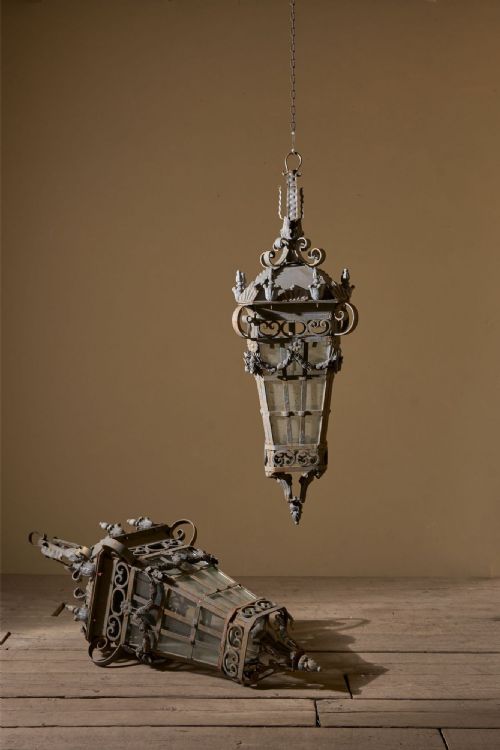
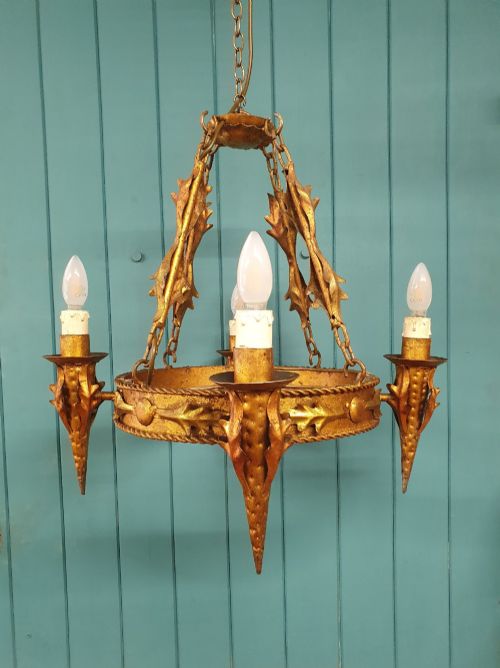
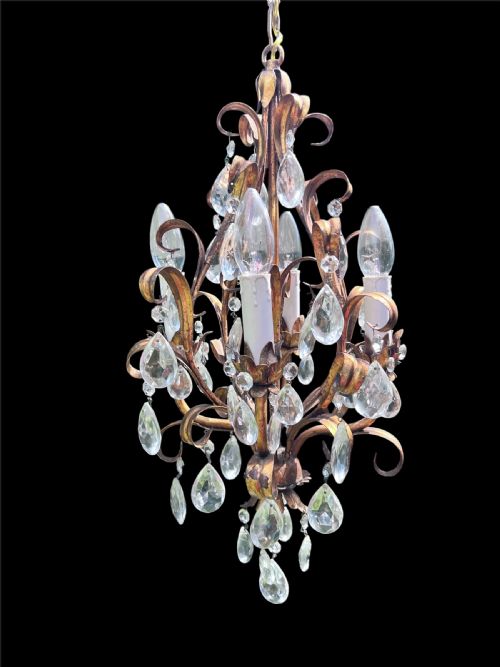
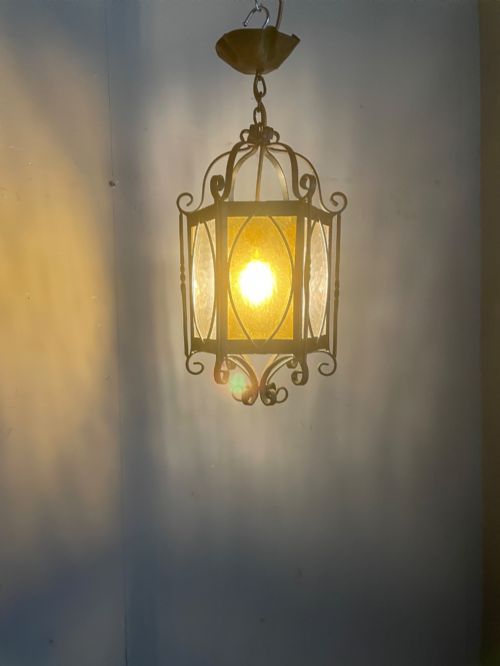
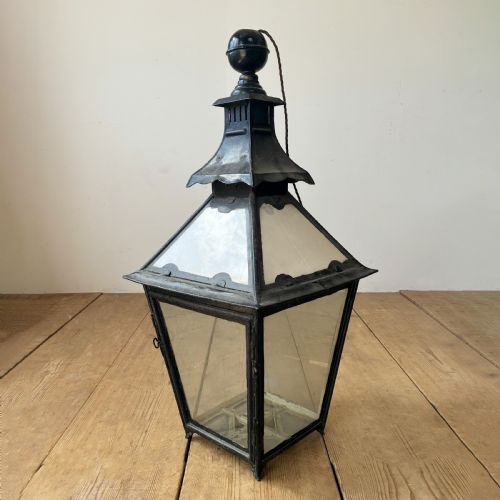
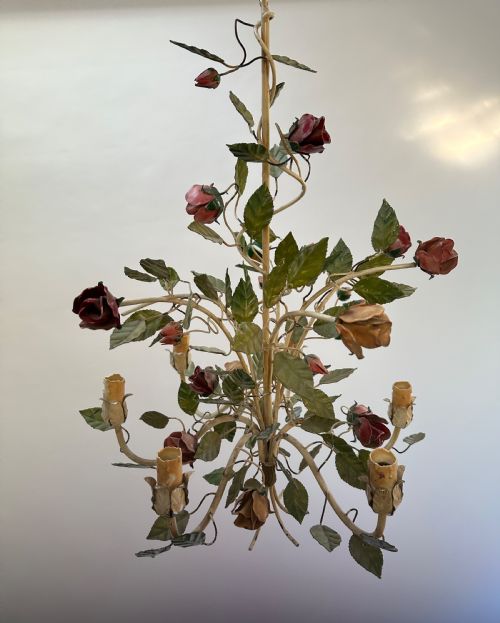
The selections available here lean heavily toward French and Italian aesthetic traditions, spanning simpler Arts and Crafts designs as well as decorative styles like Gothic Revival and Art Nouveau. You will frequently find hexagonal hall lanterns, multi-branch chandeliers, and utilitarian workshop fixtures.
Examples stretch chronologically from the eighteenth century through the Victorian era and into the 1930s. The most common survivals on this page are French hanging lanterns and wrought iron chandeliers dating from the early twentieth century.
Materials and construction
Makers shaped structural components primarily from wrought iron, cast iron, and steel, hammering and forging the metal into rigid frames and supporting arms. These iron elements were frequently paired with brass, gilt metal, or copper details to soften the dark metalwork.
Panels of clear, stained, or coloured glass were integrated to enclose the light source, sometimes secured within leaded frameworks. Surface finishes involved applied polychrome paint, gilding, or patination to protect the underlying metal and impart visual richness.
Materials documented across the collection include crystal, stained glass, gilt metal, and patinated bronze alongside plain iron.
Defining characteristics of quality
Quality rests in the dexterity of the metalwork, distinguishing stiff, repetitive machine stamping from the fluid, hand-forged scrollwork executed by skilled blacksmiths. The complexity of the iron construction and the integrity of the joinery dictate the durability and refinement of the piece.
The treatment of secondary materials separates standard utility pieces from exceptional commissions. Fine examples incorporate hand-blown or slumped glass panels, detailed crystal drops, and integrated decorative motifs rather than plain, utilitarian glazing.
Verrerie Des Vosge
The Iron Pendant Light Glossary
- Wrought iron
- Iron that has been heated and hammered into shape by hand, leaving characteristic surface textures and superior tensile strength. This material permits delicate scrollwork and sturdy structural framing.
- Toleware
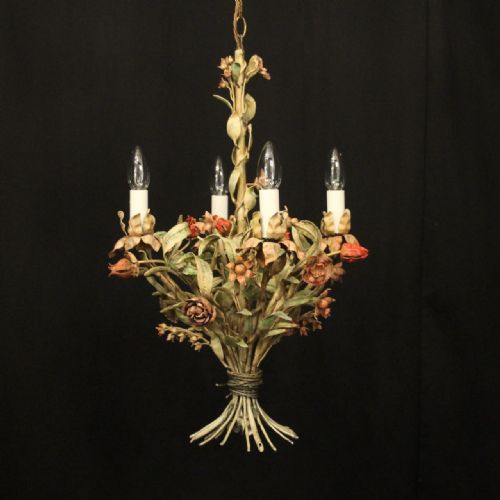
- Painted or lacquered metalware, frequently decorated with polychrome floral designs. It appeared on domestic lighting fixtures during the nineteenth and early twentieth centuries.
- Hall lantern
- A suspended ceiling fixture enclosed in glass panels, designed specifically to illuminate entryways and corridors. They frequently feature hinged access doors for candle or bulb replacement.
- Polychrome
- Decorated in multiple colours, often applied to metal or wood surfaces through painting or enameling. This technique added vibrancy to architectural light fittings.
- Arts and Crafts
- A design movement emphasising handcraftsmanship, traditional materials, and simple forms inspired by medieval structures. Items from this tradition reject heavy industrial ornamentation in favor of honest construction.
Iron Pendant Light: Frequently Asked Questions
How do I hang a heavy iron pendant light?
Suspension requires securing the fixture directly into ceiling joists or structural timber using a rated iron hook or bracket capable of supporting the combined weight of the metal and glass. Electrical wiring must be threaded safely through the primary suspension chain or rod.
Professional installation is recommended for older or heavier pieces, particularly large cast iron or multi-branched chandeliers that exceed standard domestic lighting weights.
What rooms suit an antique iron pendant light?
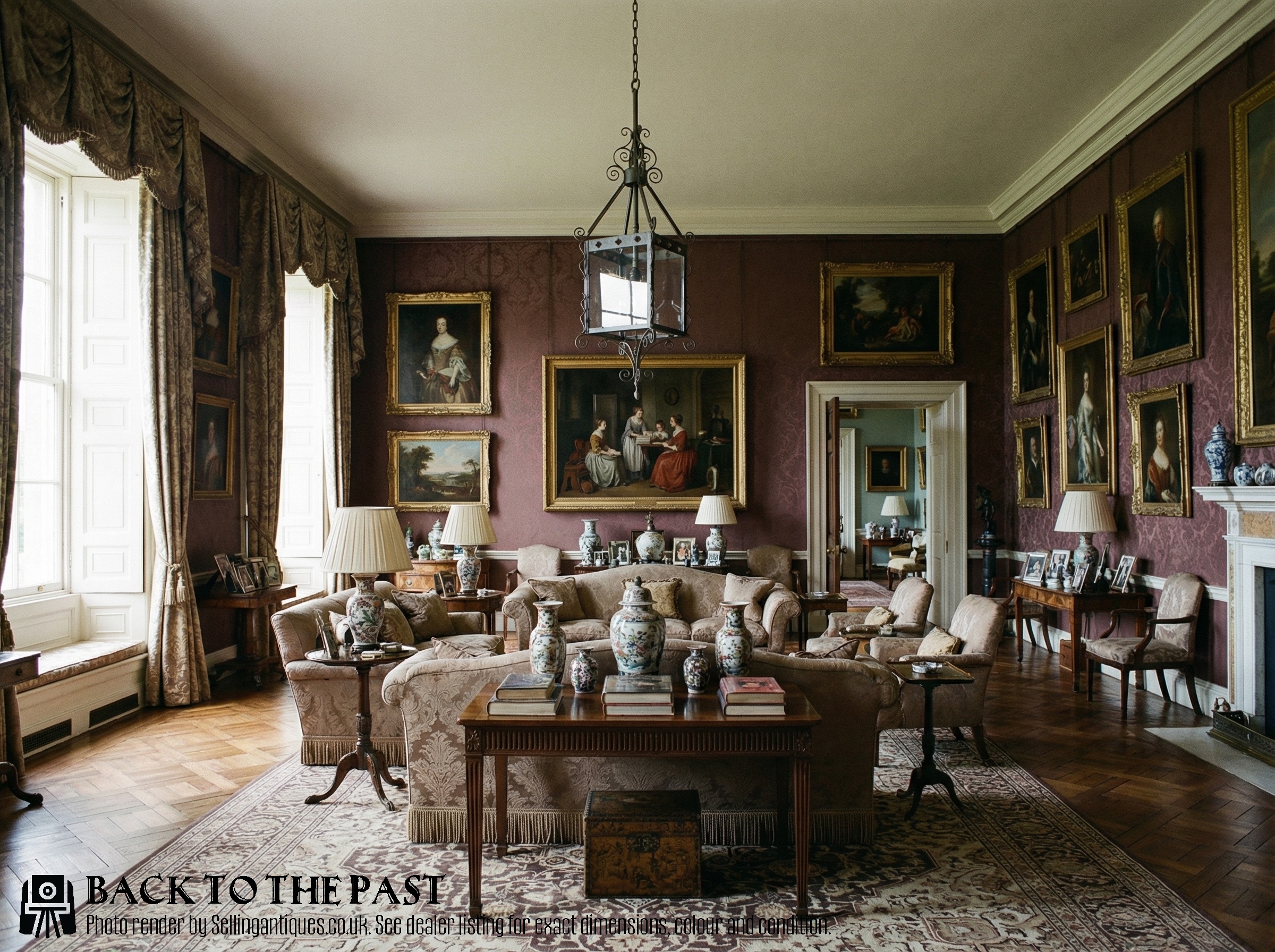
These fixtures suit entryways, stairwells, and high-ceilinged rooms where their vertical drop and architectural silhouette can function as a focal point. Hall lanterns and porch lights anchor transitional spaces effectively.
In kitchens or dining areas, simpler industrial or Arts and Crafts models provide direct downward illumination while adding historical character to the interior.
How should I clean antique iron and glass?
Dust metal surfaces regularly with a soft, dry cloth to prevent grime accumulation without disturbing the historic patina or paint finishes. Avoid harsh chemical cleaners that can strip gilding or applied polychrome.
Glass panels can be removed if safely secured, or wiped in place with a damp cloth and mild soap, ensuring moisture does not seep into old electrical components.
Were these lights originally electrified?
Many older examples began life holding candles or oil burners before undergoing conversion to electricity during the twentieth century. Evidence of early wiring methods or original candle drip pans remains visible on nineteenth-century pieces.
Rewiring with modern cable is standard practice to meet safety standards while preserving the exterior metal and glass housing.