



Iron Handle Pot
An iron handle pot combines heavy metal vessels with sturdy lifting bail handles for hearth or kitchen use.
Iron Handle Pot
When you search for an iron handle pot, you are looking at utilitarian vessels designed for cooking, preserving, and hearth use from the seventeenth century through the Victorian era. These pieces combine copper, brass, or bronze bodies with robust wrought iron or cast iron handles intended for heavy lifting.
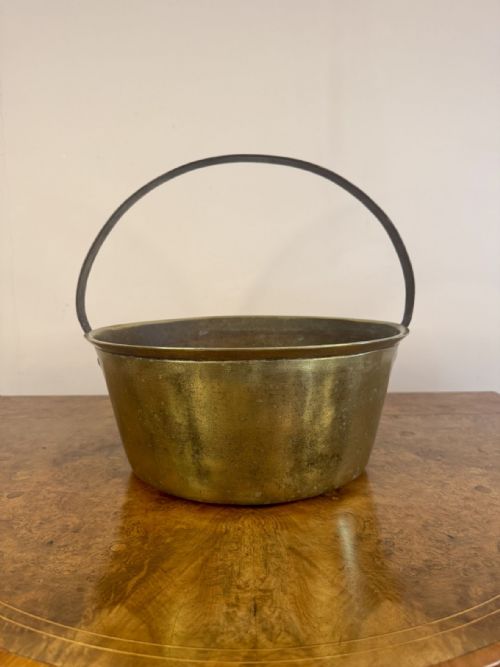
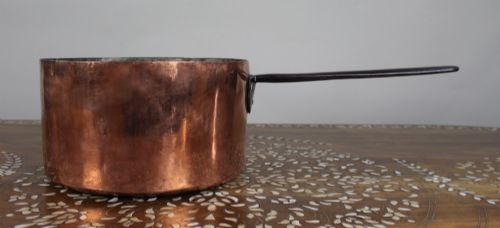
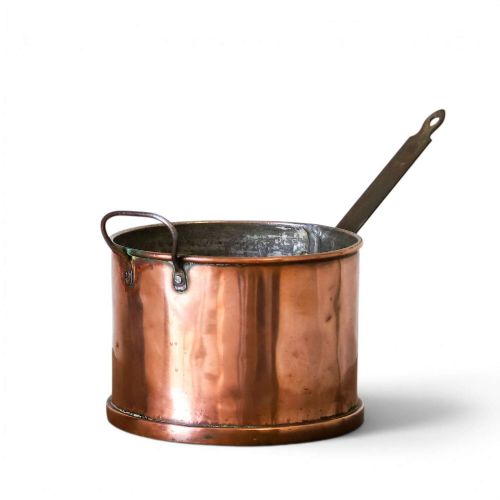
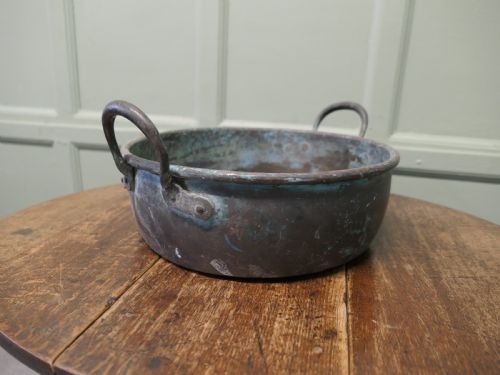
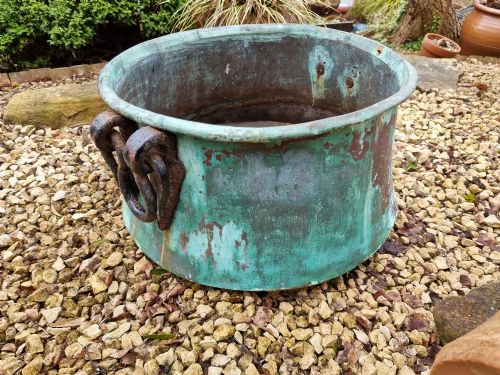
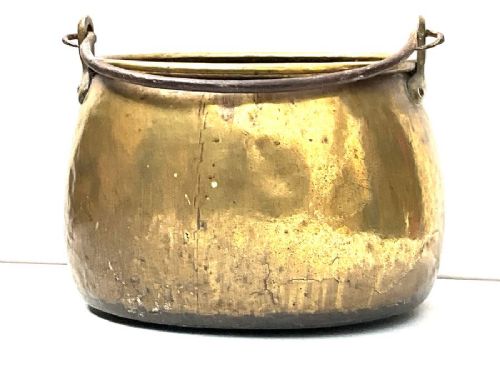
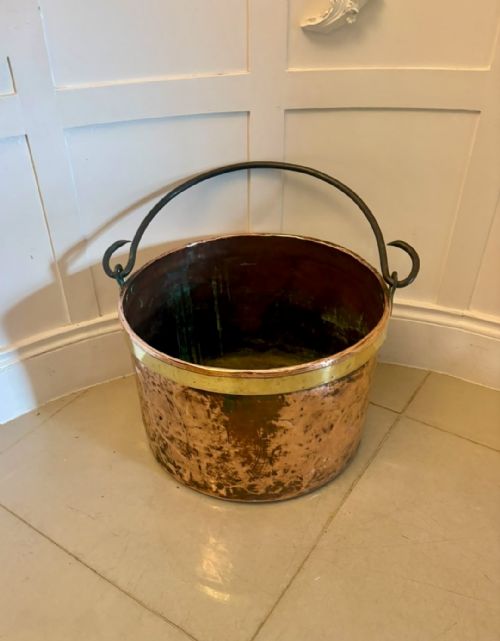
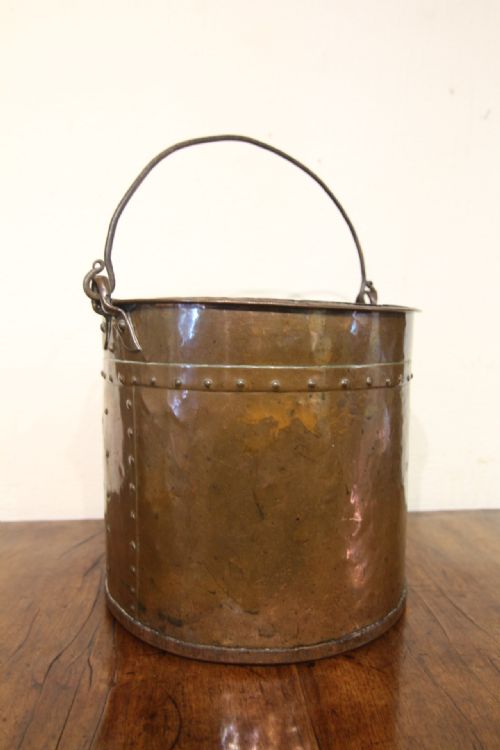
The most common examples on this page are heavy copper saucepans, preserving pans, and large cauldrons featuring iron swing handles. You will also find brass jam pails, log bins, and fireside buckets that utilise iron handles for daily utility and transport.
Originating across English, French, and Continental workshops, these vessels span Georgian, Victorian, and earlier periods. They were built for demanding domestic environments, moving seamlessly from open fires and kitchen ranges to hearthside display.
How they were made
Vessels were formed from heavy gauge copper, brass, or bronze, often hand-beaten to shape the body and provide structural rigidity. Rivets secured the overlapping seams and attached the handles firmly to the vessel walls.
Handles were forged from wrought iron or cast iron, shaped into secure loops or swing bails and fastened with heavy iron rivets. This combination of non-ferrous body metals and iron handles provided the necessary strength for hanging over fires or carrying heavy loads of liquid and preserves.
Iron Handle Pot Retail Price Guide 2026
Typical asking prices for iron handle pot among the pieces listed under this phrase on Sellingantiques today, from the lower quarter to the upper quarter. They describe what is for sale here now, not the wider market.
Listings feature vessels made from copper, brass, bronze, iron, wrought iron, cast iron, and tin across Georgian and Victorian periods.
What varies in quality
Quality rests in the thickness of the metal gauge and the integrity of the hand-beaten construction. Thicker copper and brass bodies resist warping under intense hearth heat and retain their structural form over centuries of use.
The craftsmanship of the iron handle attachment and the harmony between the metal body and its iron bail distinguish standard domestic vessels from superior examples. Well-proportioned riveted joints and maker stamps elevate certain pieces within their period.
Hodges and Sons·Griffiths Patent·Liptons·Mason
The Iron Handle Pot Glossary
- Wrought iron
- Iron that has been heated and worked with tools by a blacksmith. This material provides strong, fibrous handles capable of supporting heavy vessels.
- Gauge
- The thickness of the sheet metal used to form the pot body. Heavy gauge metal indicates a more substantial and durable vessel.
- Cauldron
- A large round pot with a large capacity, often featuring a swing handle. These were designed for open hearth cooking and boiling.
- Preserving pan
- A wide, shallow vessel used for making jams and preserves. They allow rapid evaporation and easy stirring.
- Verdigris
- The green patina that forms naturally on copper and brass over time. It results from oxidation caused by exposure to moisture and air.
Iron Handle Pot: Frequently Asked Questions
How were iron handle pots used?
These vessels served primarily in the kitchen for boiling water, cooking meals, and boiling down fruit for preserves. Their robust metal construction allowed them to sit directly on open hearths or kitchen ranges.
Larger versions functioned around the fireplace as log bins or coal buckets. Their sturdy iron handles made them easy to transport when filled with fuel or heavy liquids.
Can I cook with an antique pot?
Most antique copper and brass vessels require careful assessment and often professional re-tinning of the interior before food preparation. Historic pots may contain residues or lack modern food-safe linings.
Many collectors prefer to use these pieces for display, as planters, or as fireside accessories rather than daily cookware. Cleaning should be done gently to preserve the historic metal finish.
How do I date a copper pot?
Dating relies on manufacturing techniques, handle styles, and construction marks. Hand-beaten bodies and hand-forged iron rivets typically point towards Georgian or earlier seventeenth-century origins.
Later Victorian pieces often display more standardised machine rolling and specific patent stamps or maker names. Comparing the weight and rim construction helps place the vessel in its correct era.
Why do some pots have verdigris?
Verdigris is the natural green patina that forms when copper reacts with moisture and atmospheric oxygen over decades or centuries. It acts as a record of the piece's age and environmental exposure.
Some collectors appreciate this undisturbed surface appearance, while others prefer to polish the copper back to a bright metallic finish. The presence of verdigris does not harm the underlying metal structure.