

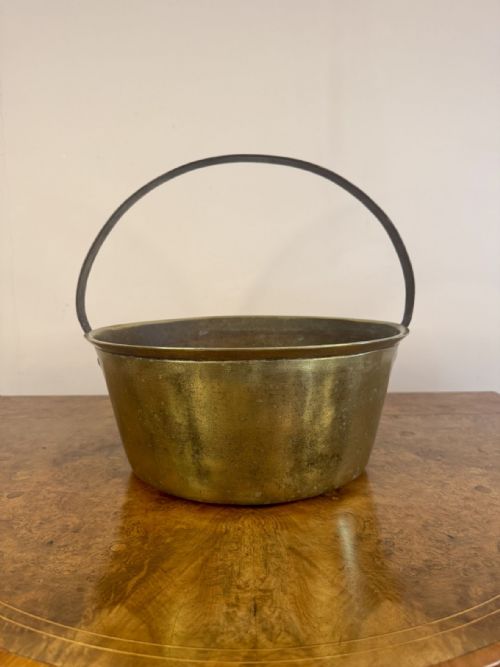
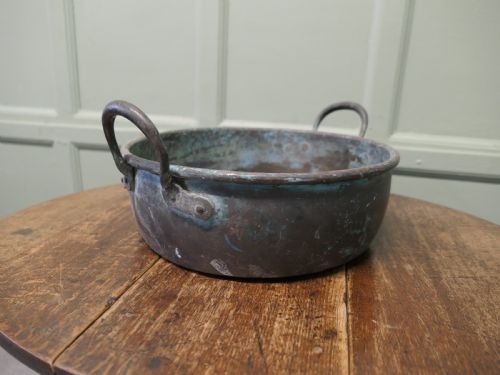
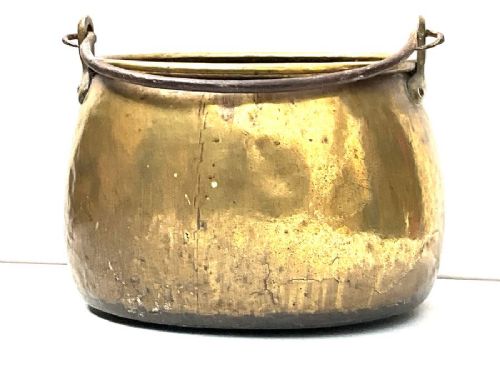


Iron Handled Jam Pot
An iron handled jam pot brings honest historic utility to the kitchen, offering sturdy metal vessels built for domestic preserving.
Iron Handled Jam Pot
When you search for an iron handled jam pot, you encounter heavy kitchenware, preserve pans, and cauldrons designed for boiling fruit and sugar over an open hearth or stove.
The pieces listed on this page span the Georgian and Victorian eras, drawing together copper, brass, and bronze bodies fitted with iron handles for lifting heavy loads of boiling preserves.
You are most likely to meet large copper preserving pans and brass jam pails originating from the eighteenth and nineteenth centuries, often reflecting rustic farmhouse or traditional kitchen origins.
How they were made
Metalworkers hammered or cast copper, brass, and bronze into deep vessel forms to distribute heat evenly across open fires or stoves during long preserving sessions.
Wrought iron handles and swing bails were securely attached to heavy metal bodies, providing a durable grip for moving boiling contents around the kitchen.
Iron Handled Jam Pot Retail Price Guide 2026
Typical asking prices for iron handled jam pot among the pieces listed under this phrase on Sellingantiques today, from the lower quarter to the upper quarter. They describe what is for sale here now, not the wider market.
Some pans survived centuries of vigorous stirring without ever losing their grip.
What varies in quality
Substance and metal thickness separate standard kitchen workhorses from superior examples, with heavier walls providing better durability and heat control.
The neatness of the hammering, the proportion of the iron handle, and the integrity of the metal joints determine the overall refinement of each surviving vessel.
The Iron Handled Jam Pot Glossary
- Jam pan
- A wide, shallow metal vessel designed for evaporating fruit juices and sugar quickly during jam making. These pans typically feature flat bases and sturdy handles for steady pouring.
- Cauldron
- A large round pot with a swing handle intended for suspension over an open fire. They appear in heavy bronze or copper across earlier periods.
- Wrought iron
- Iron beaten and shaped by hand while hot to create tough, fibrous structural elements like handles and bails. This material resists snapping under heavy kitchen loads.
- Preserving pan
- A specialised culinary vessel used for boiling fruits with sugar to create preserves. Their wide mouths allow steam to escape efficiently.
Iron Handled Jam Pot: Frequently Asked Questions
What is an iron handled jam pot used for?
These vessels served historic kitchens for boiling fruit, sugar, and jams over open hearths or early stoves. Their wide rims allowed steam to evaporate quickly during long preserving sessions.
Today, they function well as decorative display pieces, planters, or fireside hearth accessories rather than active cooking pots.
How do I date a copper or brass pan?
Dating relies on observing manufacturing techniques, handle attachments, and metal finishes. Earlier Georgian pieces often display different hammer marks and joinery compared to later Victorian kitchenware.
Makers' marks or stamps, when present, also help anchor a piece to a specific century or workshop.
Are these pans safe for modern cooking?
Most antique pans are collected and displayed for their historical craftsmanship and decorative presence rather than daily culinary use. Many older copper and brass vessels lack modern linings suitable for food preparation.
Consulting a specialist or checking the interior surface is advisable if you intend to use them for cooking.
How should I clean antique metal pans?
Maintenance depends on whether you prefer a bright polished shine or a dark, aged patina reflecting centuries of use. Gentle dusting and mild cleaning agents preserve the surface without removing historic character.
Avoid harsh abrasives that can scratch the soft copper or brass bodies.